Conventional vs Inverted Flat Roof Insulation: Which to Choose?
When you decide to insulate your flat roof, the contractor will ask: "Shall we do conventional or inverted?" If you don't know the difference, you risk choosing a system that doesn't
suit your needs or climate.
The difference is not in the materials used, but in the
order in which they are laid. This order completely changes
the behaviour, lifespan and cost of your flat roof.
1. Conventional Insulation (The Classic Method)
In conventional insulation, the logic is simple: First we lay the
"warm" layer (insulation) and on top we place the "waterproof" layer
(waterproofing) to protect it.
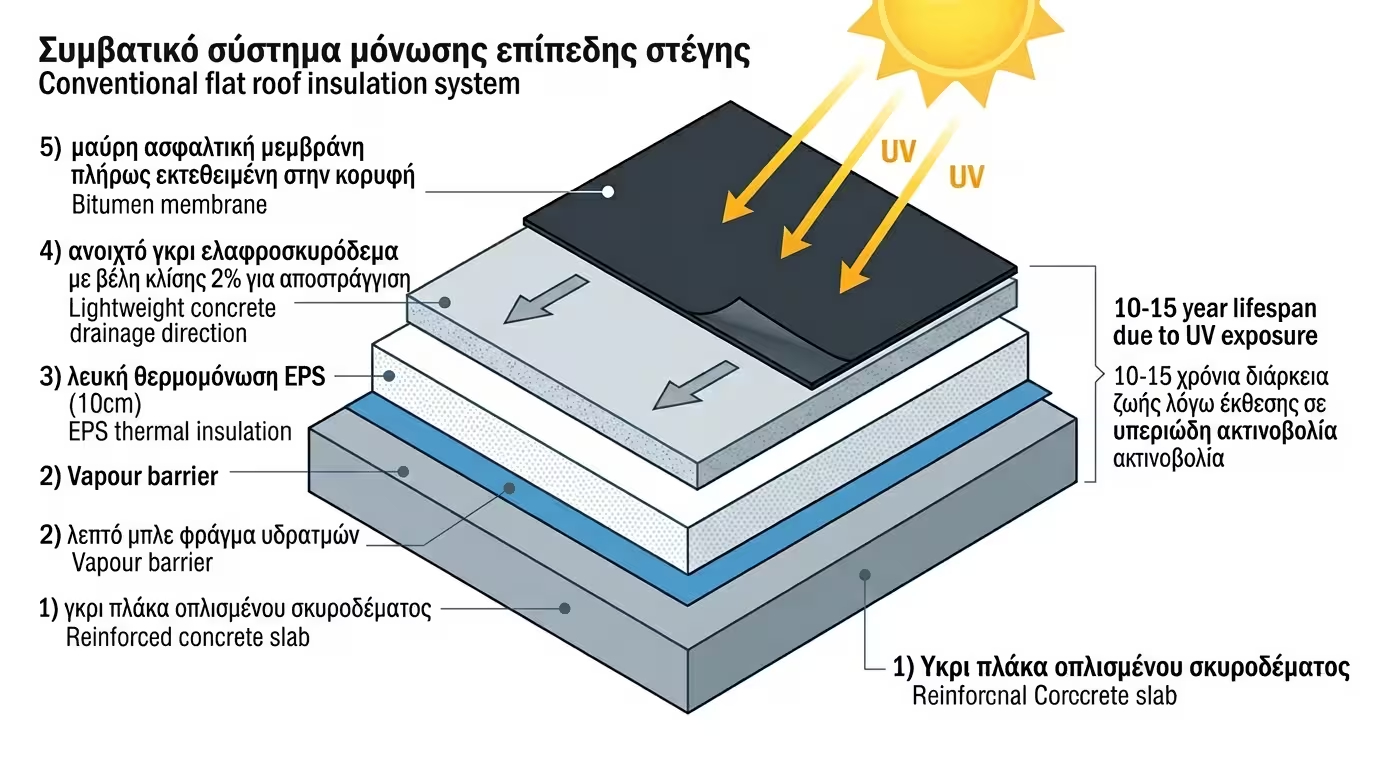
🏗️ Layer Order
From bottom to top: 1. Concrete slab.
2. Vapour barrier. 3.
Thermal insulation (typically EPS, XPS or Polyurethane).
4. Lightweight concrete (falls) to drain water. 5. Waterproofing on top (Bitumen membrane or liquid-applied polyurethane).
✅ The Pros
If the bitumen membrane punctures somewhere, you see it immediately and repair it easily (a simple patch). It is a lighter construction.
❌ The Cons
The waterproofing (bitumen membrane) is completely bare and exposed
to sun (UV radiation) and frost. This thermal shock ages it quickly,
so in 10-15 years it will need maintenance or replacement.
2. Inverted Insulation (The "Shield")
Here, the rules are turned upside down (hence "inverted"). The
waterproofing goes below the insulation!
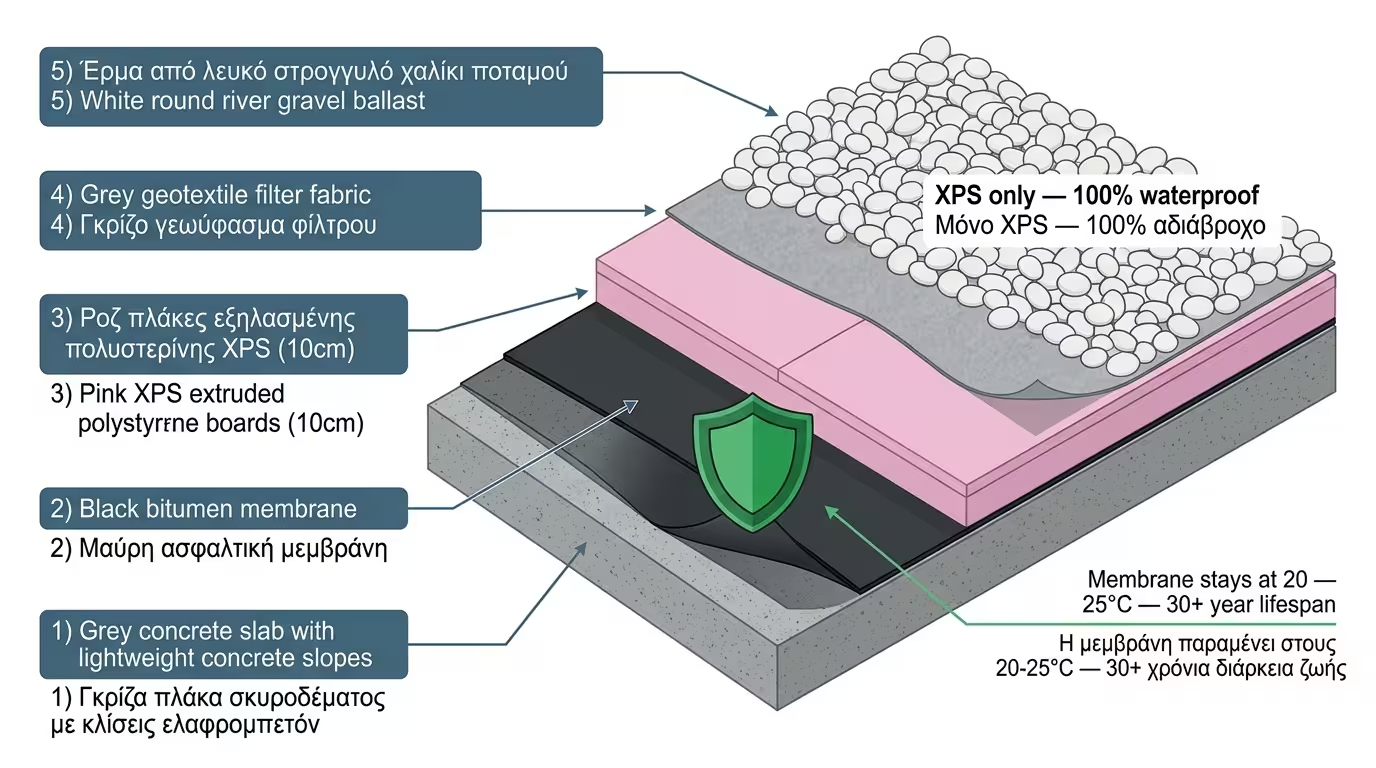
🏗️ Layer Order
From bottom to top: 1. Concrete slab & Lightweight
concrete (falls). 2.
Waterproofing (Bitumen membrane). 3.
Insulation (STRICTLY XPS only - Extruded Polystyrene).
4. Geotextile (soil filter).
5. Ballast (Paving slabs or gravel).
✅ The Pros (Longevity)
The bitumen membrane is protected below the insulation and gravel.
The sun never sees it, it never freezes and nobody walks on it. Practically,
it never deteriorates! The concrete slab stays at a
stable temperature year-round, so it doesn't expand and contract
(doesn't crack).
❌ The Cons
Only XPS may be used. If you use white EPS or mineral
wool, because rainwater passes through
their joints to reach the membrane, they will absorb water and be destroyed.
XPS is 100% waterproof. If the membrane punctures, finding the leak means
lifting the gravel and XPS (quite difficult).
3. The 10x10 Model Experiment
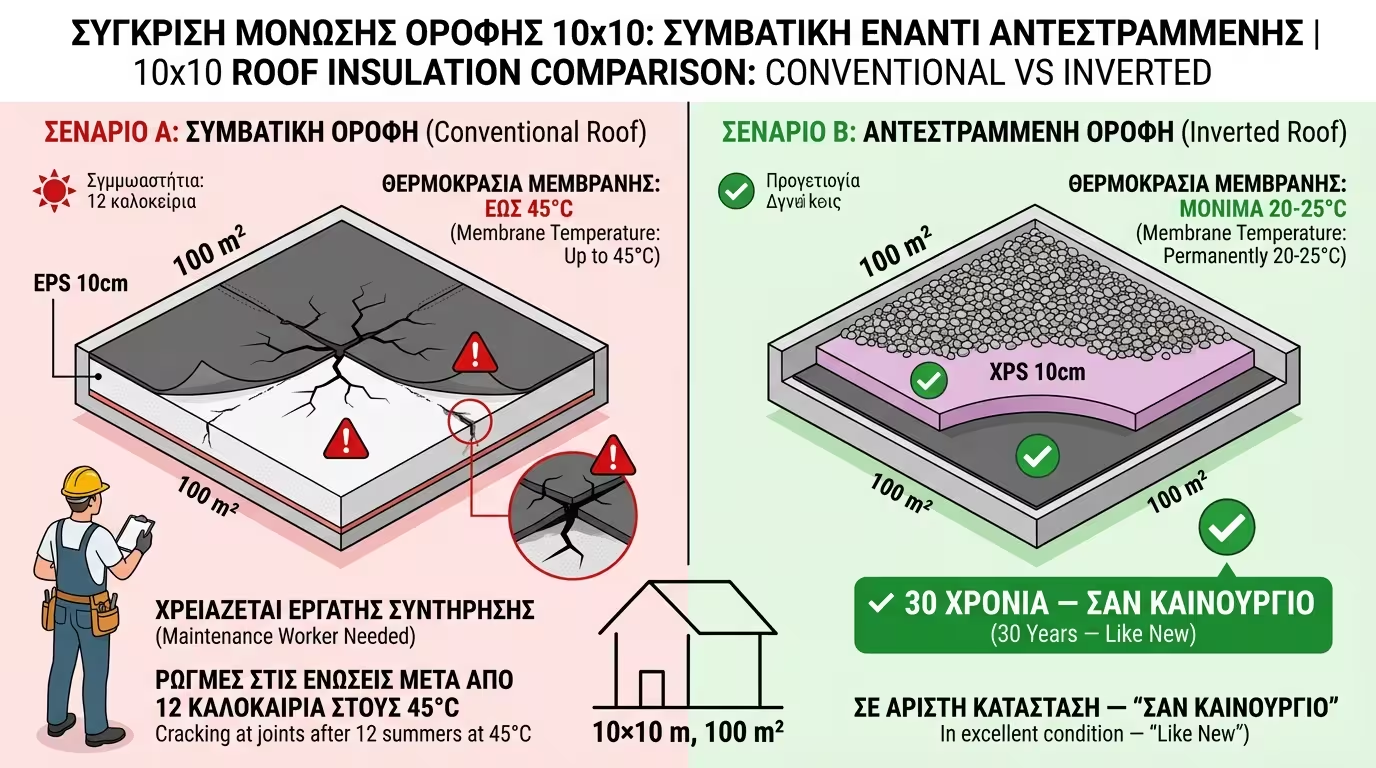
We have a 100m² flat roof and must decide.
❌ Scenario A (Conventional)
We lay 10cm EPS, create falls and bond an excellent chip-finished
bitumen membrane on top. The system is light. In winter the house is
warm. But after 12 summers of 45°C heatwaves, the membrane "cracks"
at the joints. We must call a worker to re-coat it with aluminium
paint or make patches.
✅ Scenario B (Inverted)
We create the falls, lay the bitumen membrane at the bottom, place
10cm XPS and cover everything with white, round river gravel.
Rainwater passes through the gravel and XPS joints, finds the
membrane and runs to the drain. The membrane permanently stays at
20-25°C, protected from UV. 30 years pass and the roof is as though
it were built yesterday.
The Final Conclusion: What to choose? If your building is
old and cannot bear extra weight, conventional
insulation is the only option (it is feather-light). But if the building
can bear the weight of gravel or slabs (checked by a structural
engineer), Inverted Insulation is the ultimate investment. It costs a little more upfront, but saves you from maintenance for an
entire lifetime!