🟢 Class A1 & A2
Non-combustible (e.g. cement, stone, rock wool). Never burn.
The biggest "elephant in the room" when discussing synthetic insulation materials (Expanded Polystyrene - EPS, Extruded Polystyrene - XPS and Polyurethane - PUR) is their origin. Being plastics (petroleum-derived), their natural tendency is to burn.
This has created the widespread urban myth that homes clad with external insulation are inherently dangerous in a fire. In reality, the materials used in modern construction bear absolutely no resemblance to everyday packaging plastic. They have undergone strict chemical treatment specifically designed to protect your life and property. Let us see how these materials are rated and how they actually behave when confronted with flames.
To know exactly what we are buying, the European Union has established a unified classification system called Reaction to Fire (Euroclasses). The scale runs from A (completely non-combustible) all the way down to F (highly flammable). Every insulation product sold in the EU must be tested and labelled according to this system.
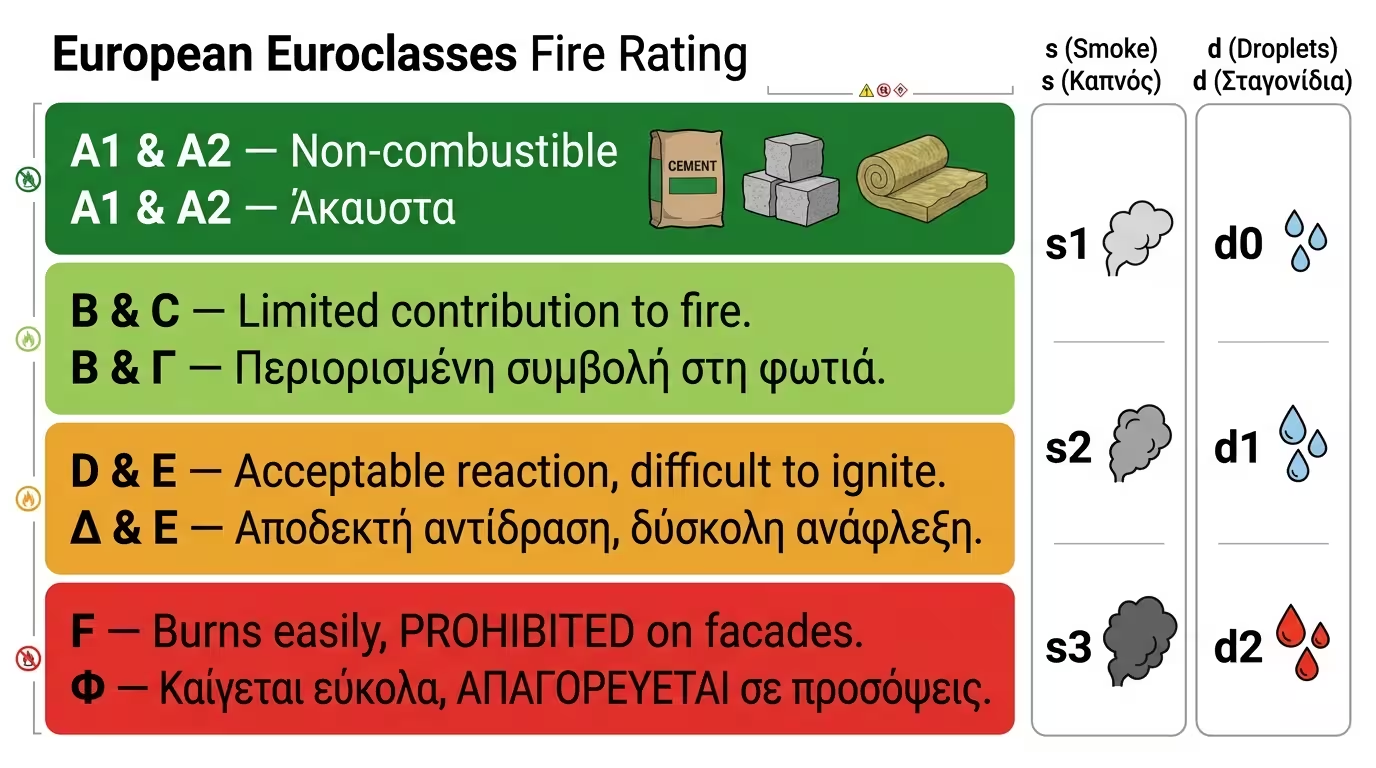
Non-combustible (e.g. cement, stone, rock wool). Never burn.
Combustible but with very limited contribution to fire spread.
Combustible with acceptable reaction (difficult to ignite).
Materials that burn easily and are strictly prohibited on building facades.
📋 Next to the letter, you will often see two indicators: s (Smoke) - how much toxic smoke they produce, and d (Droplets) - whether they drip burning droplets.
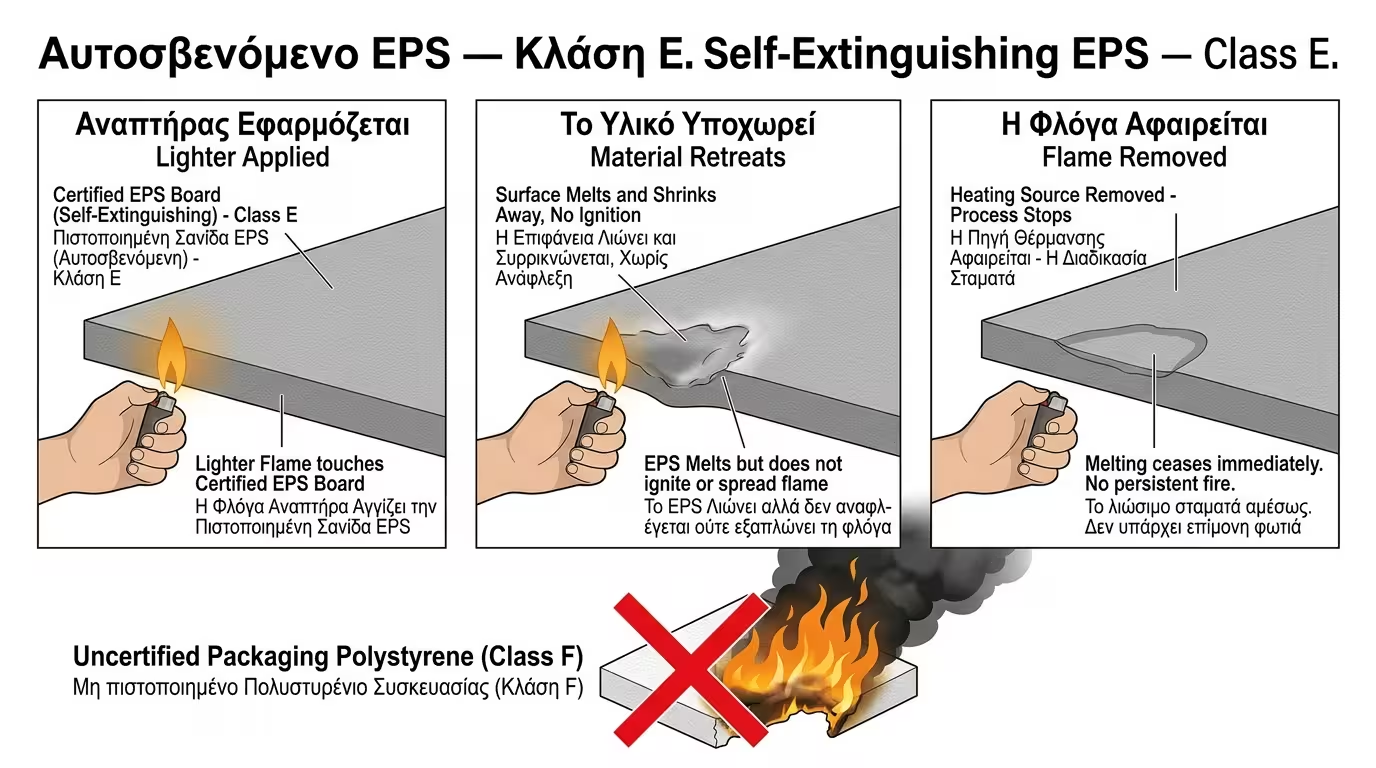
If you take a certified EPS board (white or graphite) or an XPS board and hold a lighter to it, you will observe something rather surprising: It will not catch fire. The material begins to melt, shrink and visibly "retreat" away from the flame source.
This happens because construction-grade insulation is manufactured as Self-Extinguishing. During the production process, special chemicals known as flame retardants are mixed into the polymer. These retardants mean that if the external fire source is removed, the material extinguishes itself within seconds. As bare, unprotected materials, both EPS and XPS are typically rated Class E on the Euroclass scale.
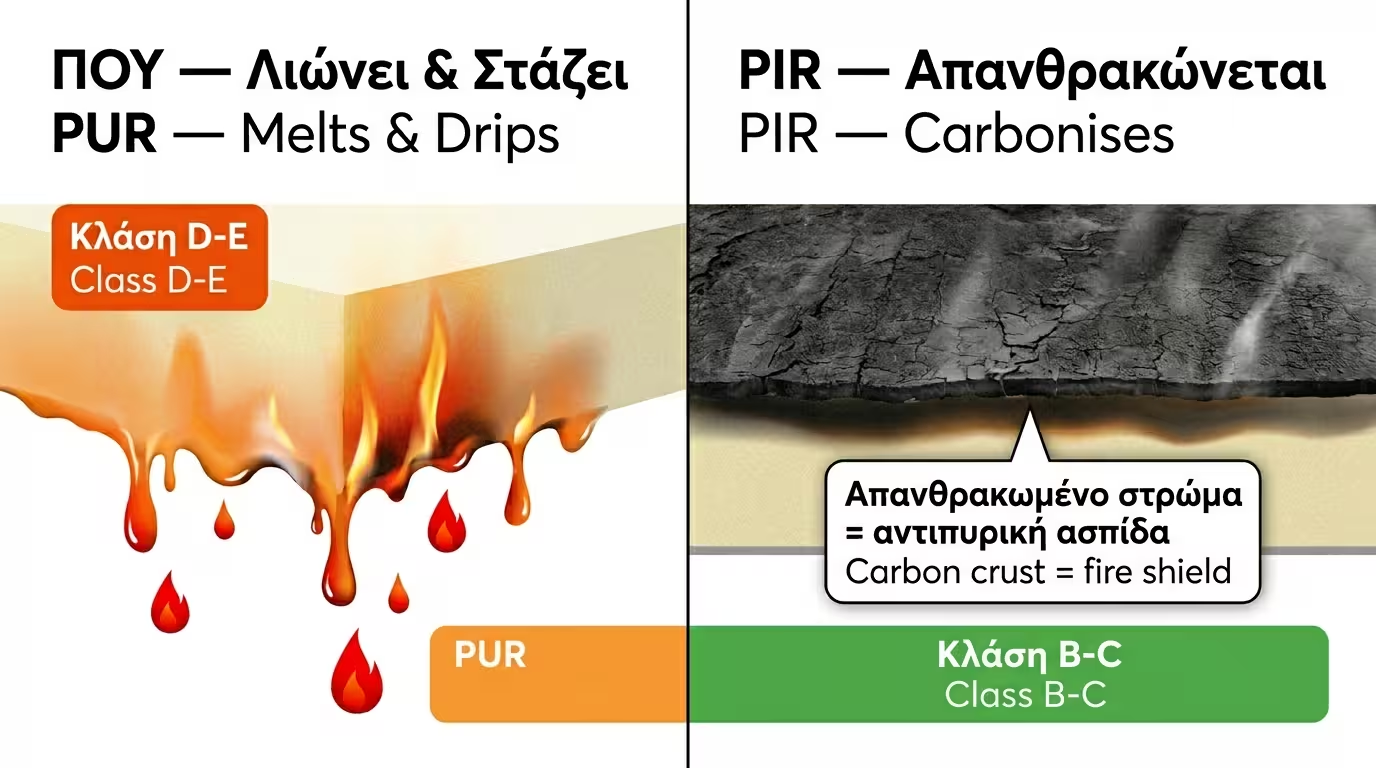
As we discussed in the previous article, polyurethane foam (PUR) evolved into polyisocyanurate (PIR) precisely for fire safety reasons. Unlike polystyrene which melts and retreats, PIR when exposed to an extreme flame does not melt and does not drip. Instead, its surface carbonises (forming a hard, black char layer). This carbon crust acts as a protective shield, blocking fire from penetrating deeper into the material. This is why PIR panels regularly achieve Class B or C ratings.
🛡️ The Big Secret: System vs Material. No house is left with bare polystyrene! In External Insulation (ETICS), polystyrene (Class E) is covered by cementitious adhesive, fibreglass mesh and render (5-7mm). A certified ETICS system is rated Class B (B-s1,d0) - your wall is practically impervious.
A fire breaks out in a rubbish bin right next to our digital house's external wall. The flame licks the wall.
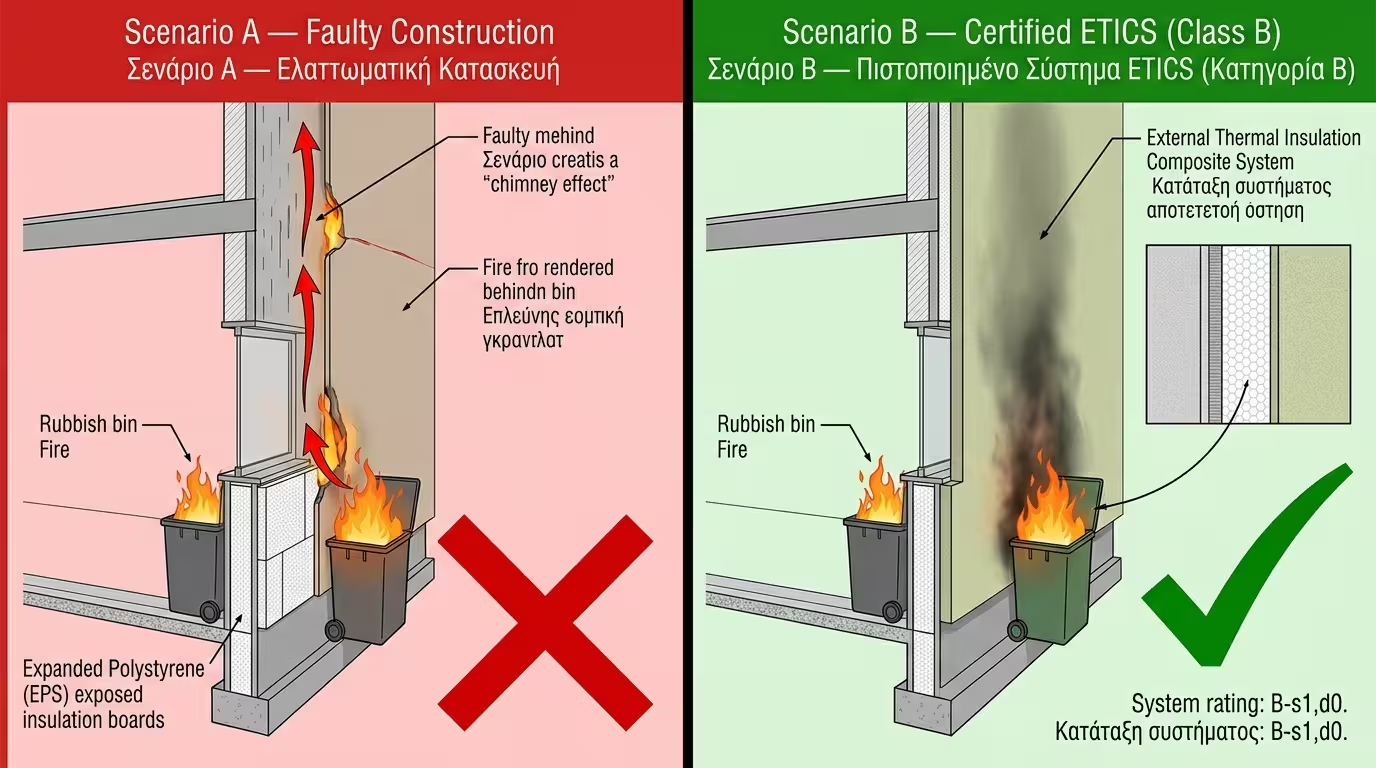
The contractor left the polystyrene unrendered at the base of the wall, or worse, used cheap packaging-grade polystyrene (Class F) instead of proper construction-grade material. The polystyrene melts rapidly, creating a void behind the render. This void acts as a chimney effect, channelling the flames and smoke upward through the wall cavity.
The certified, self-extinguishing EPS is flawlessly covered with properly reinforced render all the way down to ground level. The bin fire burns fiercely for a full 20 minutes. When the fire brigade arrives, the render has simply blackened from soot. The EPS insulation behind remains completely intact. The house, and your entire investment in the insulation, is saved.
💡 Conclusion: Synthetic polymers are perfectly safe for your home, with two strict conditions: They must bear CE marking as construction-grade/self-extinguishing (never "unknown origin") and must be applied within a certified, complete system that protects them from direct flame contact.
Return to category.
Go to categoryReturn to the central guide.
Go to guide