
Thermal Facade & Weather: When Is Installation Forbidden?

External Thermal Insulation (ETICS) is a system that is "built" live on your wall. The adhesive holding the polystyrene and the paste render giving it colour contain water. For these materials to develop the enormous strength the factory promises, that water must evaporate at a very specific, steady rate.

If the water escapes too quickly (from heat) or freezes (from cold), the system "dies" before it is even born.

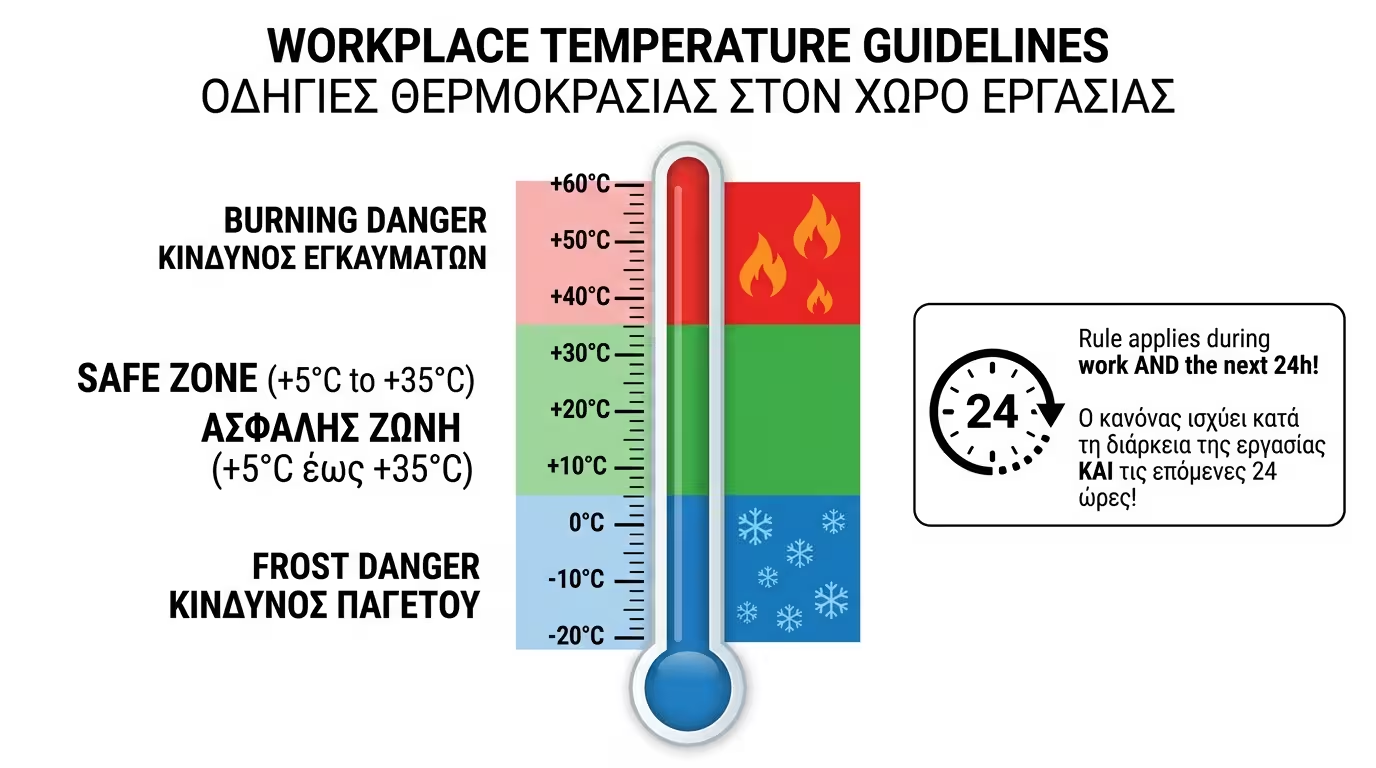
1. The Golden Rule: +5°C to +35°C

All certified thermal facade materials state an inviolable rule on their bags: Application is permitted only when ambient and wall temperature are between 5°C and 35°C.

And beware: this applies not just while the worker is on site, but also the following 24 hours while materials dry! If adhesive is applied at 3pm at 25°C but at night the temperature drops to 2°C, the adhesive will be destroyed.

Thermometer showing +5°C to +35°C zone - the golden rule

2. The Greek Summer Nightmare

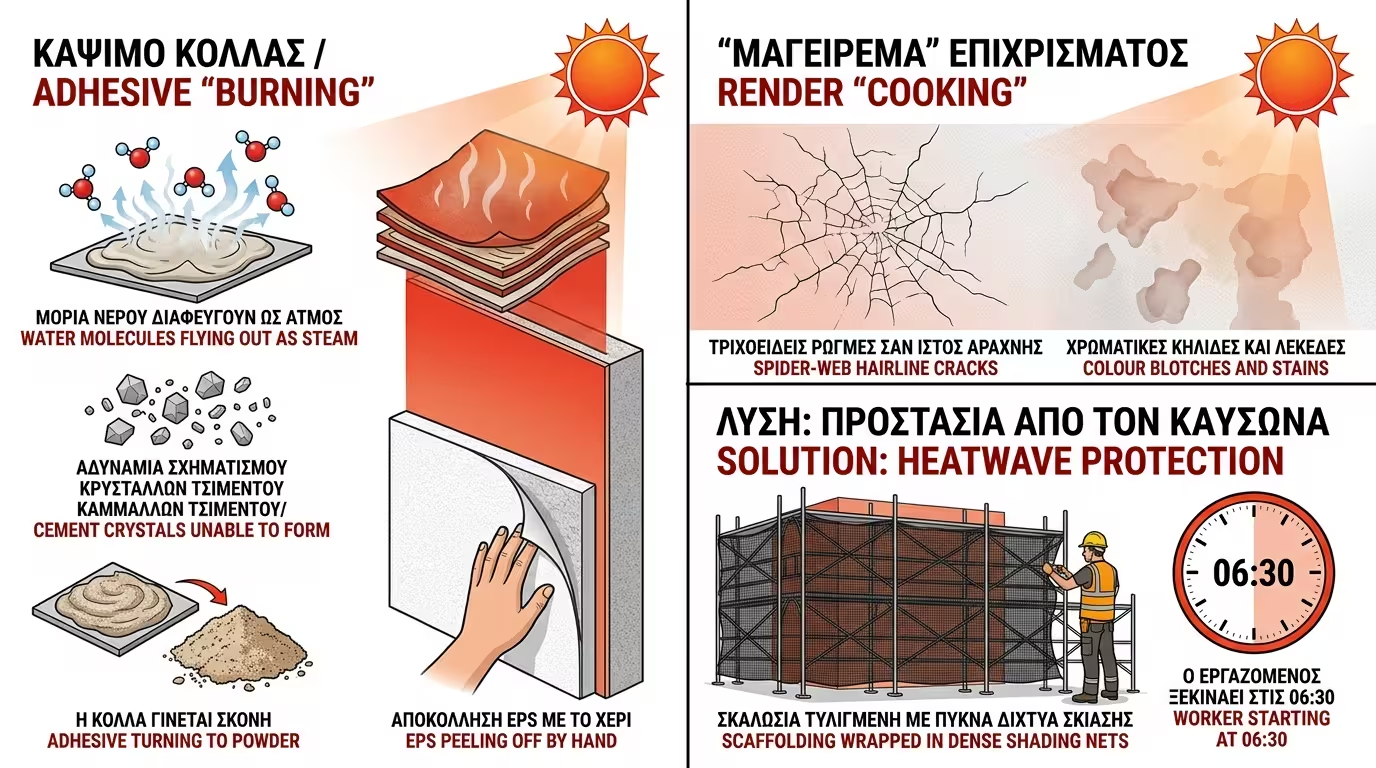
In Greece, the biggest problem is not the cold but the scorching July and August sun. When temperatures hit 40°C or when the sun beats directly on the wall, the surface temperature can reach 60°C!

Heatwave 40°C - render cracks, adhesive burns

🔥 What Happens to the Adhesive

The water inside the cementitious adhesive evaporates instantly, before the cement can crystallise (set). In construction this is called "burning" the material. The adhesive turns to powder and the EPS simply peels off by hand.
🎨 What Happens to the Render

The finishing render dries violently and unevenly. It fills with small "hairline" cracks (like a spider web) and its colour comes out with "shadows" and blotches.

The Solution: Professional crews in summer work very early morning or late afternoon. More importantly, they wrap all scaffolding with shading nets (hessian). This keeps the wall in shade and protected from the blazing sun.

3. The Winter Trap (Frost and Rain)

If you decide to insulate your house in January, things are equally dangerous.

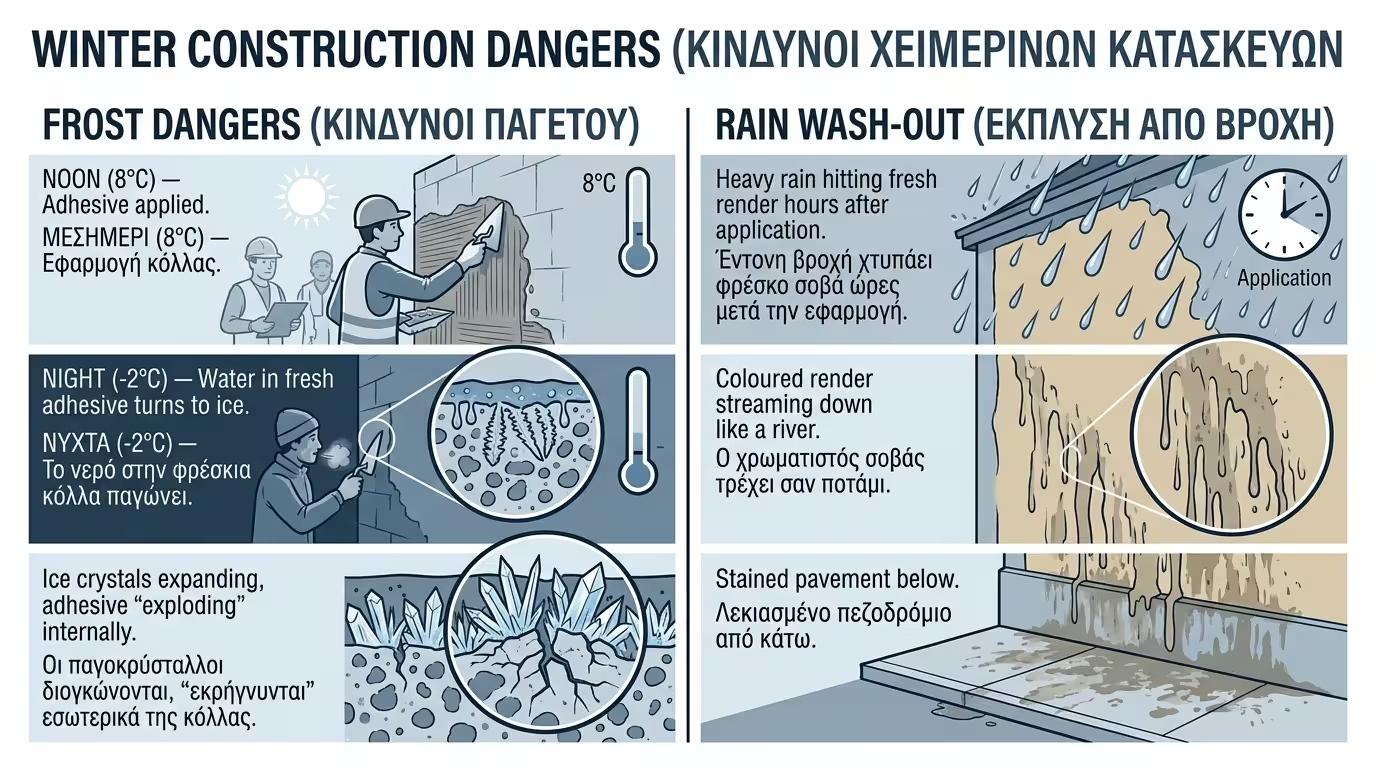
Frost at -2°C - fresh adhesive freezes and is destroyed

❄️ Frost

If the worker applies adhesive at noon (8°C) and at night the temperature drops below zero (-2°C), the water still inside the fresh adhesive will turn to ice. The ice expands and literally "blows" the adhesive apart from within. The material is permanently destroyed.

🌧️ Rain (Wash-out)

The acrylic/silicone render needs 1-2 days without rain to dry fully. If heavy rain falls just hours after application, the water will "wash out" the fresh render and send it streaming as coloured rivers down your pavement.

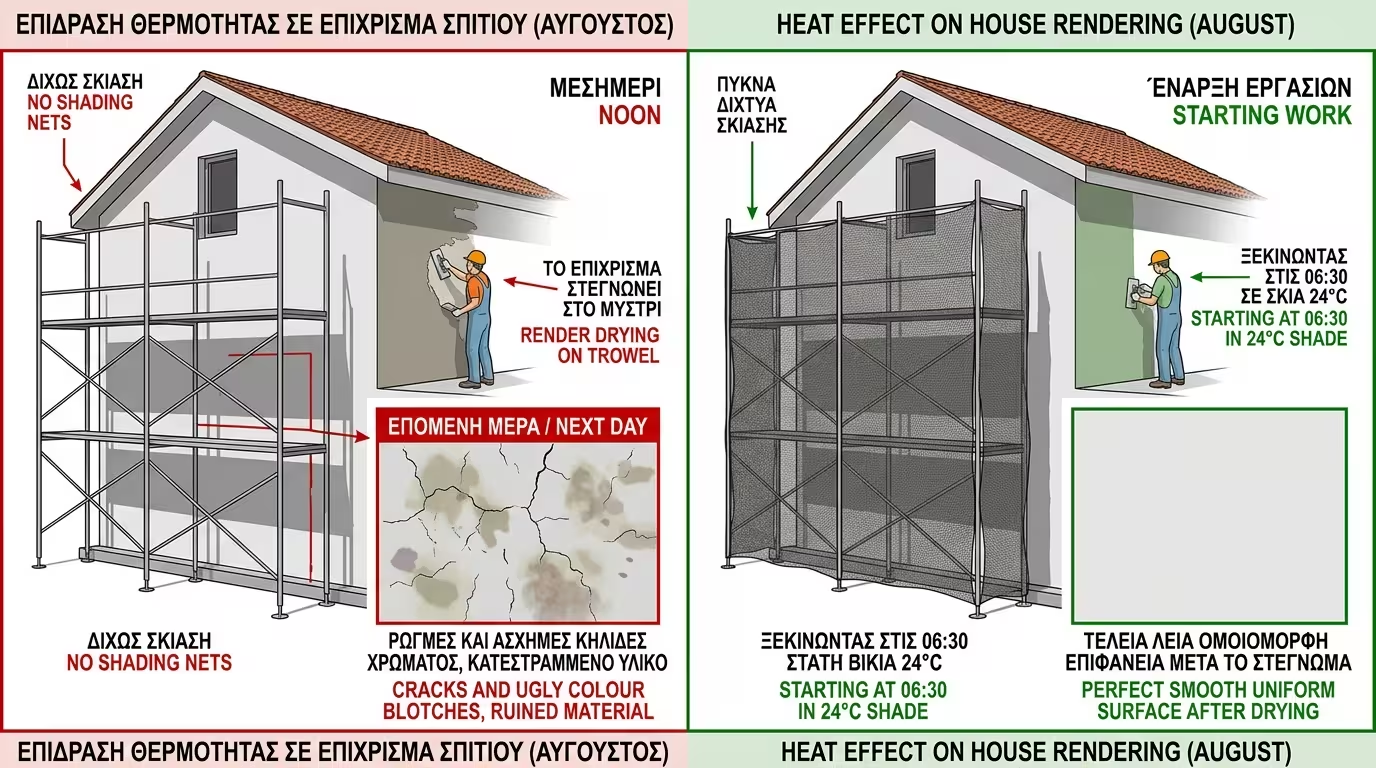
4. The 10x10 Model Experiment

10x10 experiment - render in heatwave vs proper shaded work

We decide to apply the final coloured render on the south wall on August 15th. The thermometer reads 38°C.

❌ Scenario A (The Rush)

The contractor hasn't put nets on the scaffolding and starts rendering at 12 noon. The sun scorches the wall. The render dries on the trowel before he can even spread it. To keep up, the worker adds extra water. The next day, the entire south wall is full of cracks and the colour has ugly "blotches" as if it were stained. The material is ruined.

✅ Scenario B (Professionalism)

The contractor sees the heatwave. He wraps the scaffolding with dense shading nets. He starts work at 06:30 when the temperature is 24°C and stops at 10:00. The material dries naturally in the shade. The result is a perfect, smooth and uniform surface that will endure for decades.

The Final Conclusion: Never pressure the contractor to finish "yesterday" if the weather does not allow it. If you see the weather service forecasting extreme heatwaves, frost or thunderstorms, insist that work stops. Delaying the project 3-4 days is infinitely preferable to having to strip a destroyed €5,000 system the following spring!

Related Articles

Application & Construction Details: Correct Installation Guide

Return to category.

Go to category

Preview