
Inspection, Maintenance & Documentation (Logbooks): Why Installing the System Is Only the Beginning of Your Obligation

Imagine buying a brand-new, expensive car. You drive it for 10 years without ever changing the oil, checking the brakes or passing its safety inspection (MOT). If you crash because the brakes failed, who is to blame?

The exact same principle applies to fire safety. The systems you install (fire-rated doors, smoke detectors, sprinklers, extinguishers) are "living" organisms. They wear out, collect dust, lose their pressure or get abused by building users. To ensure they function at zero-hour, you need a strict maintenance programme and the "Holy Grail" of legal protection: the Logbook.

What Is the Logbook (The Building's "Black Box")

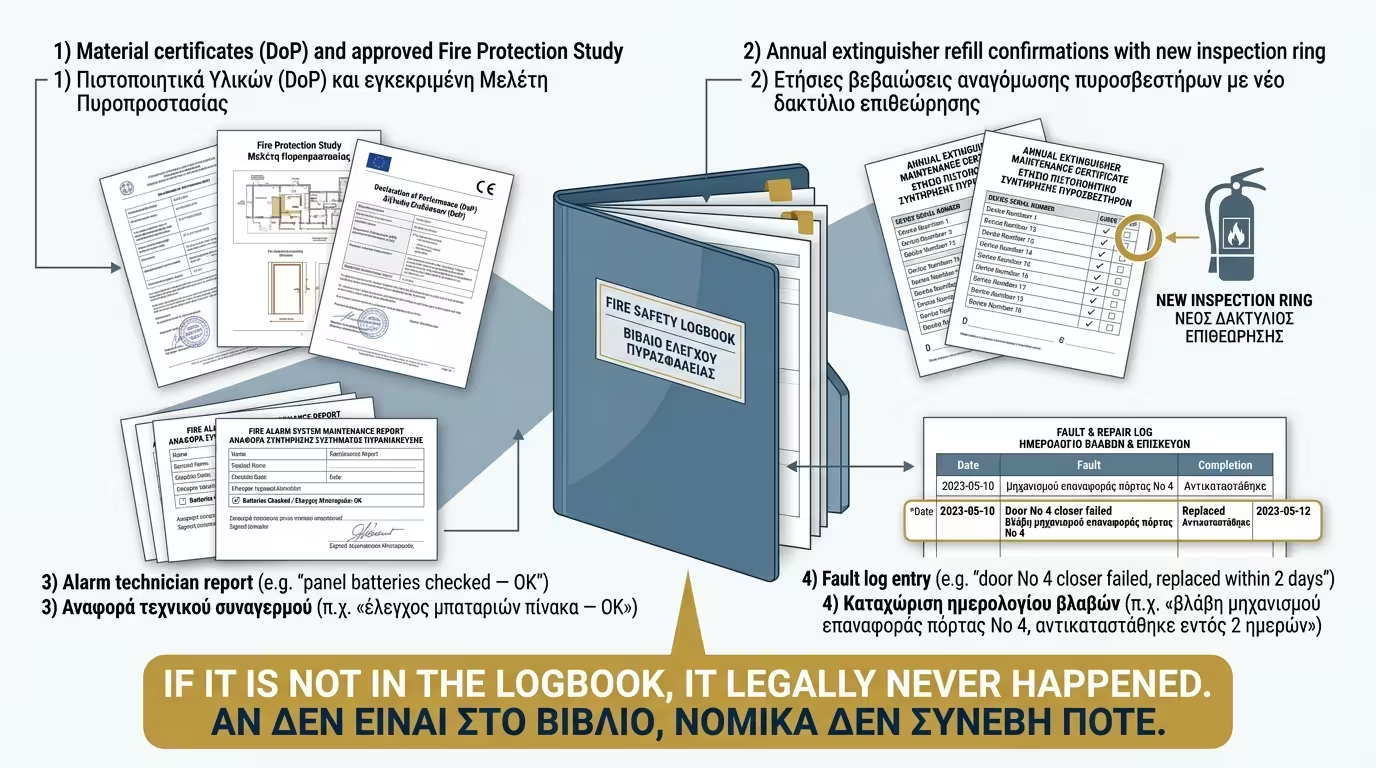
The Logbook is simply a physical binder or a digital file. It is the building's ship's log. Inside it, every action related to fire safety is recorded with date and signature.

What it must contain to protect you legally: all material certificates (DoP) and the approved Fire Protection Study, annual extinguisher refill confirmations, inspection reports from the alarm technician (e.g. "On 12/05 panel batteries checked - OK"), fault logs (e.g. "On 03/08 door No 4 closer failed, technician called, replaced on 05/08").

If it's not written in the Logbook, in the eyes of the law it never happened!

Fire safety logbook: binder with certificates, reports, declarations

The Inspection Routine: Who Does What?

Responsibility is divided into two levels: the daily checks (which you do) and the periodic checks (which the specialists do).

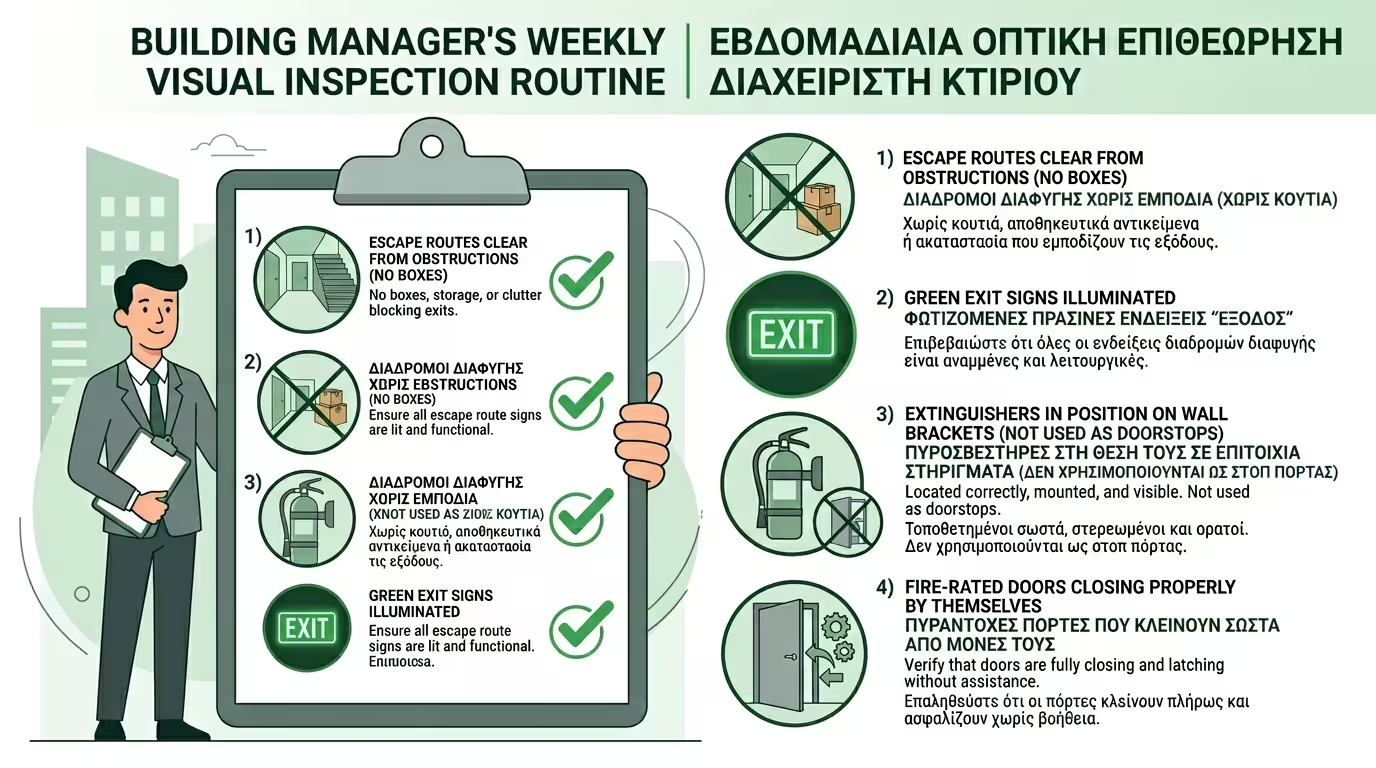
Your Role (Visual Inspection): As a building manager or employer, you should do a quick weekly walk-around. Are the escape routes free from boxes? Do the green lights (EXIT) come on? Are the extinguishers still in position, or has someone taken one to prop a door open? Do the fire-rated doors close properly when you let go of them?

Weekly visual check: exits, EXIT signs, extinguishers, doors

The Role of Certified Technicians (Annual Servicing):

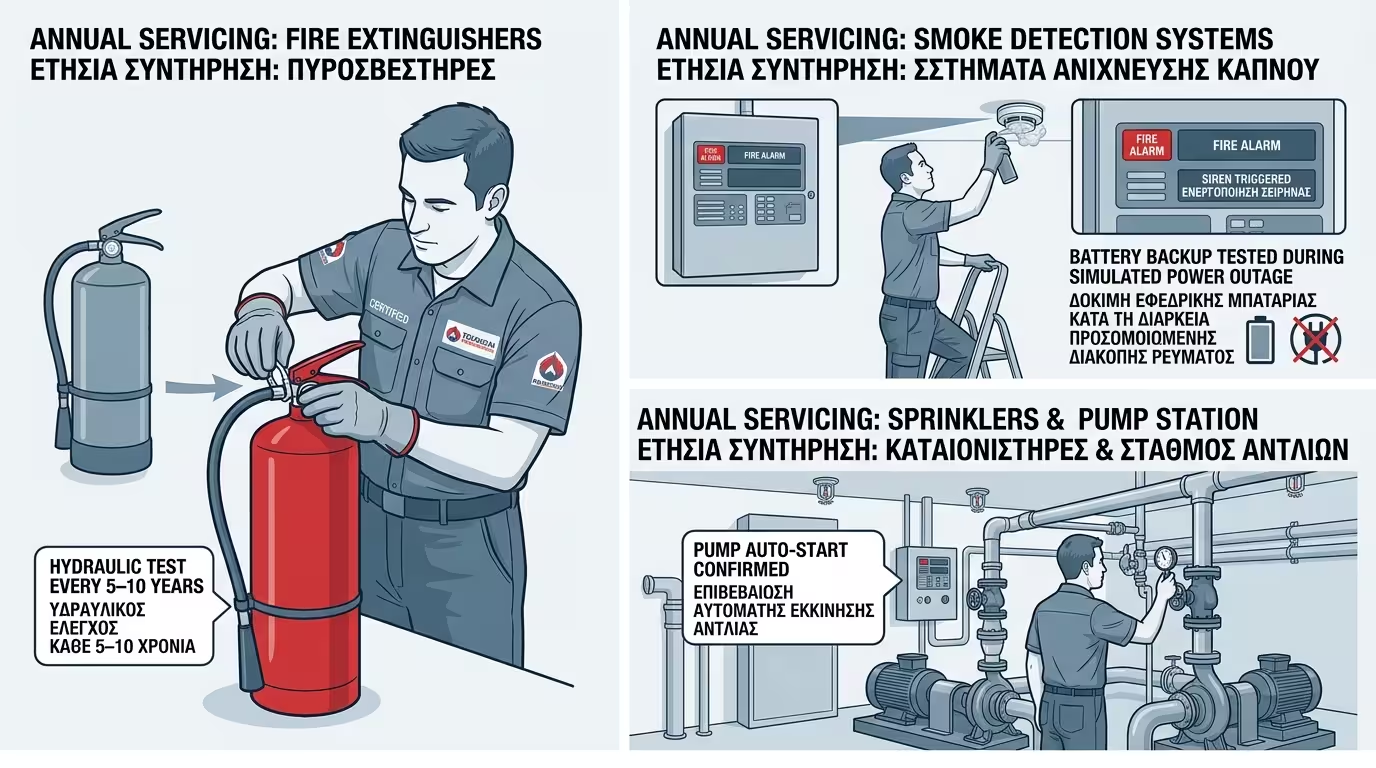
Extinguishers: Every year they require inspection by an authorised workshop (a new inspection ring is fitted). Every 5 or 10 years, a hydraulic test or full replacement is needed.

Smoke Detection: Once a year, the electrician must spray artificial smoke into the detectors (using a special aerosol) to check whether the siren triggers and test whether the panel batteries hold in a power outage.

Pump Stations / Sprinklers: These require frequent checking to confirm that the pipes have water pressure and the pumps start automatically.

Annual servicing: extinguishers, smoke detection, sprinklers

The Experiment in Our Model (The Trial Over the 4×4)

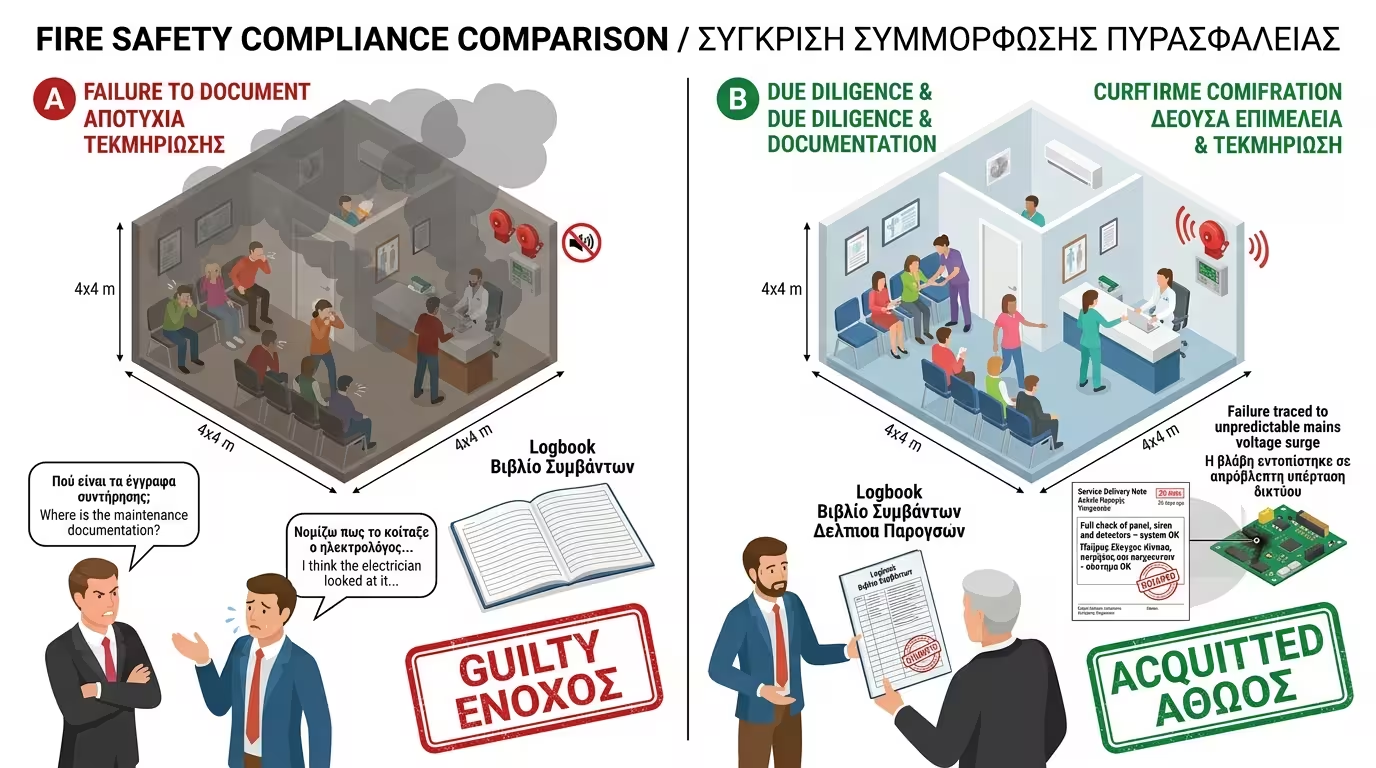
Experiment: clinic 4×4 - empty logbook vs complete documentation

We own a small clinic (the 4×4). A fire breaks out in the basement. The alarm never sounds. Smoke rises, people are trapped and there are tragic casualties. In court, we are charged with criminal negligence because the alarm didn't work.

❌ Scenario A (The Empty Logbook)

The Prosecutor asks us to prove when we last checked the alarm. We say "Our electrician looked at it last summer, I think, but we don't have a document." The court deems this unreliable. Since there is no documentation, the legal verdict is clear: We neglected a critical life-safety system. Guilty.

✅ Scenario B (Complete Documentation)

We present our Logbook. It contains a stamped and signed Service Delivery Note from a certified fire-safety company, dated just 20 days before the fire: "Full check of panel, siren and detectors - system OK." What happened? The system suffered a sudden, unpredictable failure due to a mains voltage surge at the moment of the fire. But we proved beyond all doubt that we were fully compliant with our obligations. We are acquitted of all criminal liability, because we acted exactly as the law requires.

Final Takeaway: Fire safety does not end the day the contractor leaves. It is a continuous, quiet routine. The Logbook is your defence counsel. Keep it up to date, maintain your systems, and you will sleep soundly knowing your building is ready to protect you at any moment!

Related Articles

Fire Protection: Passive Safety & Building Protection

Return to category.

Go to category

Preview