
Thermal Capacity vs. Thermal Resistance: The Difference That Saves Money

If you look at the U-Value of an old stone mansion with walls 60 centimetres thick, you will discover something shocking: thermally, it is a "sieve". Stone is an excellent conductor of heat and offers almost no thermal resistance.

And yet, in summer, these houses remain ice-cold inside without any air conditioning. How is this paradox explained? The answer lies in the difference between two fundamental physics concepts: Thermal Resistance and Thermal Capacity. Understanding this difference is perhaps the greatest secret to designing a house that consumes almost no electricity.

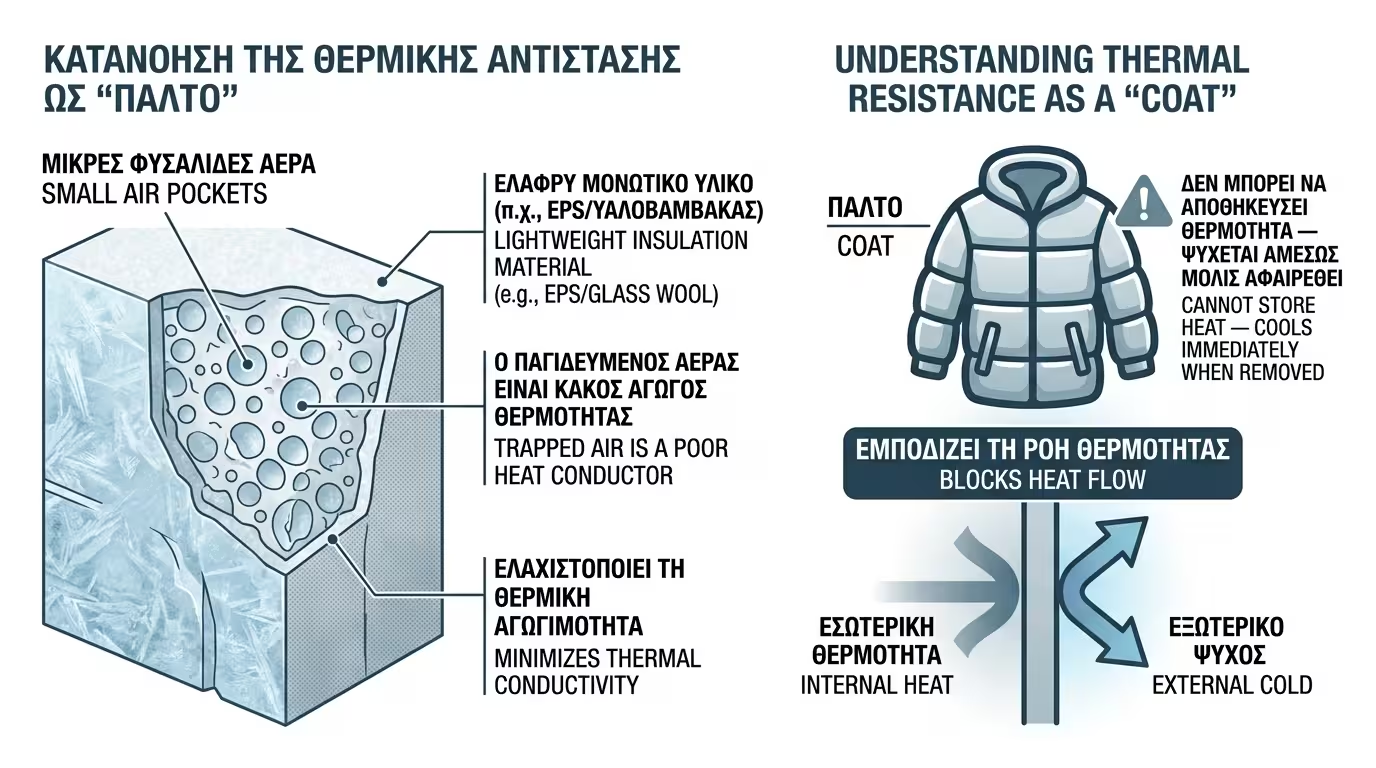
1. Thermal Resistance: The "Coat"

As we saw in the previous article (about U-Value), Thermal Resistance is a material's ability to block the flow of heat.

Materials with high thermal resistance are usually lightweight and full of air (such as polystyrene, glass wool or polyurethane). They work exactly like your winter coat: they do not let your body's heat escape outwards.

Thermal Resistance - lightweight air-filled materials like a coat
⚠️ Important: The coat (and polystyrene) has one characteristic: it cannot store heat. The moment you take it off, you cool down immediately.

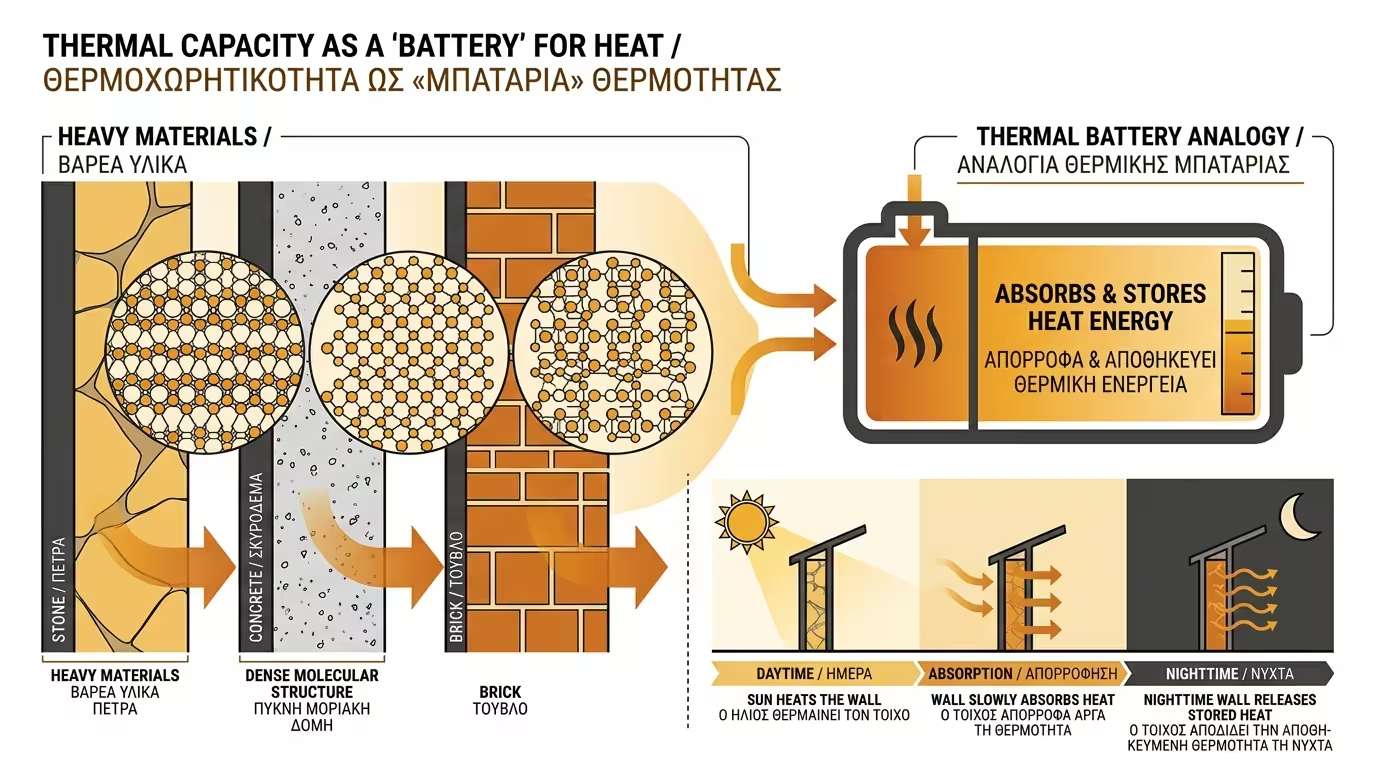
2. Thermal Capacity / Mass: The "Battery"

On the other hand, Thermal Capacity (or Thermal Mass) is a material's ability to absorb and store thermal energy.

Materials with high thermal capacity are heavy and dense (such as stone, concrete, brick, water, and also wood fibre). They work like an enormous sponge or like heat "batteries".

Thermal Capacity - heavy materials store heat like batteries

🏛️ The Secret of the Stone House

In summer, the thick stone walls soak up all the sun's heat. Because they have enormous mass, they need many hours (or even days) to "fill up". By the time they fill up and let the heat pass to the interior, night has already fallen! At night, the stone cools and the battery empties, ready to start again the next day. That is why the interior stays cool.
3. The Perfect Marriage: Put the Coat Outside the Battery!

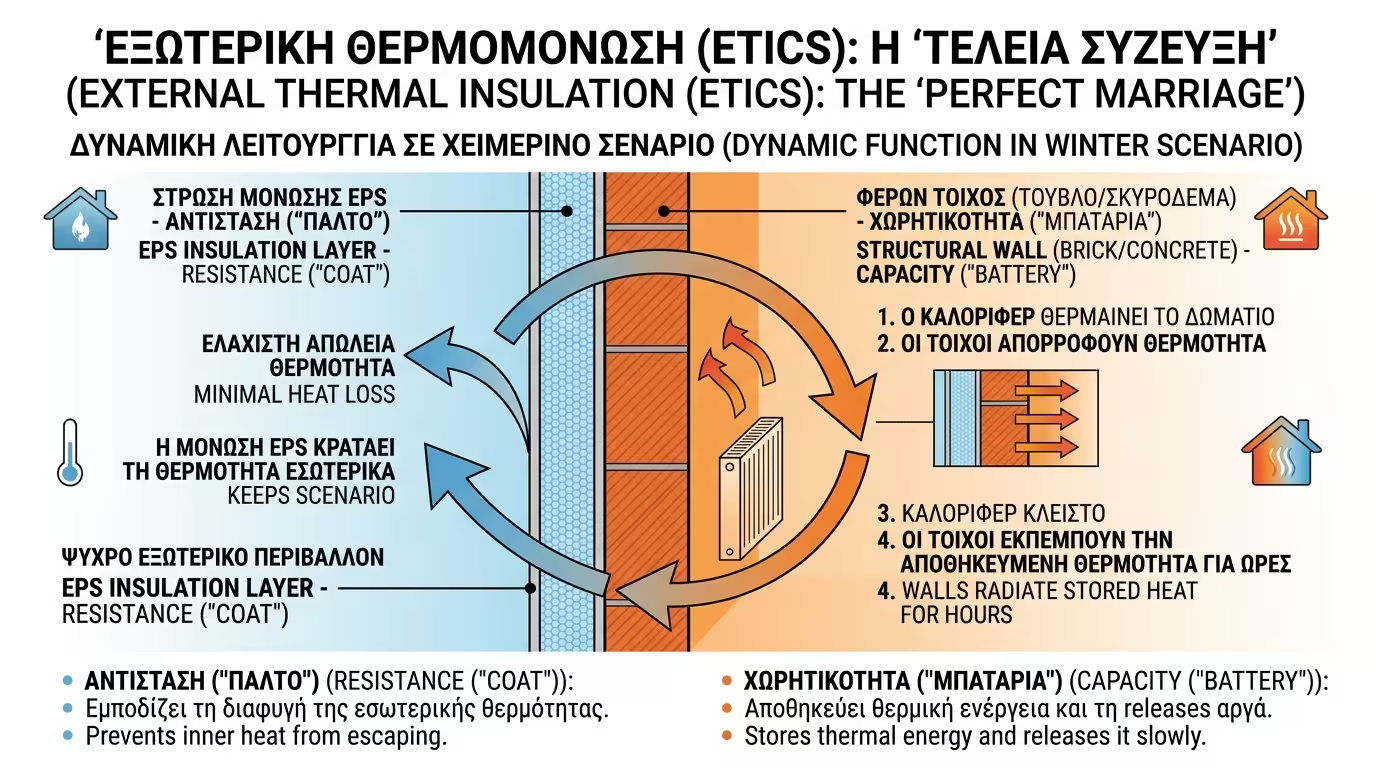
External insulation - the marriage of resistance and capacity

In modern construction we no longer build walls 60 centimetres thick. But how can we have both advantages? The answer is External Insulation (ETICS).

When you bond polystyrene (Resistance) to the external side of the wall, the brick wall and concrete (Capacity) are protected inside the house. In winter, you turn on the radiator. The heat warms the air, but also the walls (charges the battery). The external polystyrene does not let this heat escape. When you turn off the radiator, the heavy walls begin radiating the heat they stored, keeping the house warm for hours for free!

4. The 10x10 Model Experiment: Resistance Without Mass

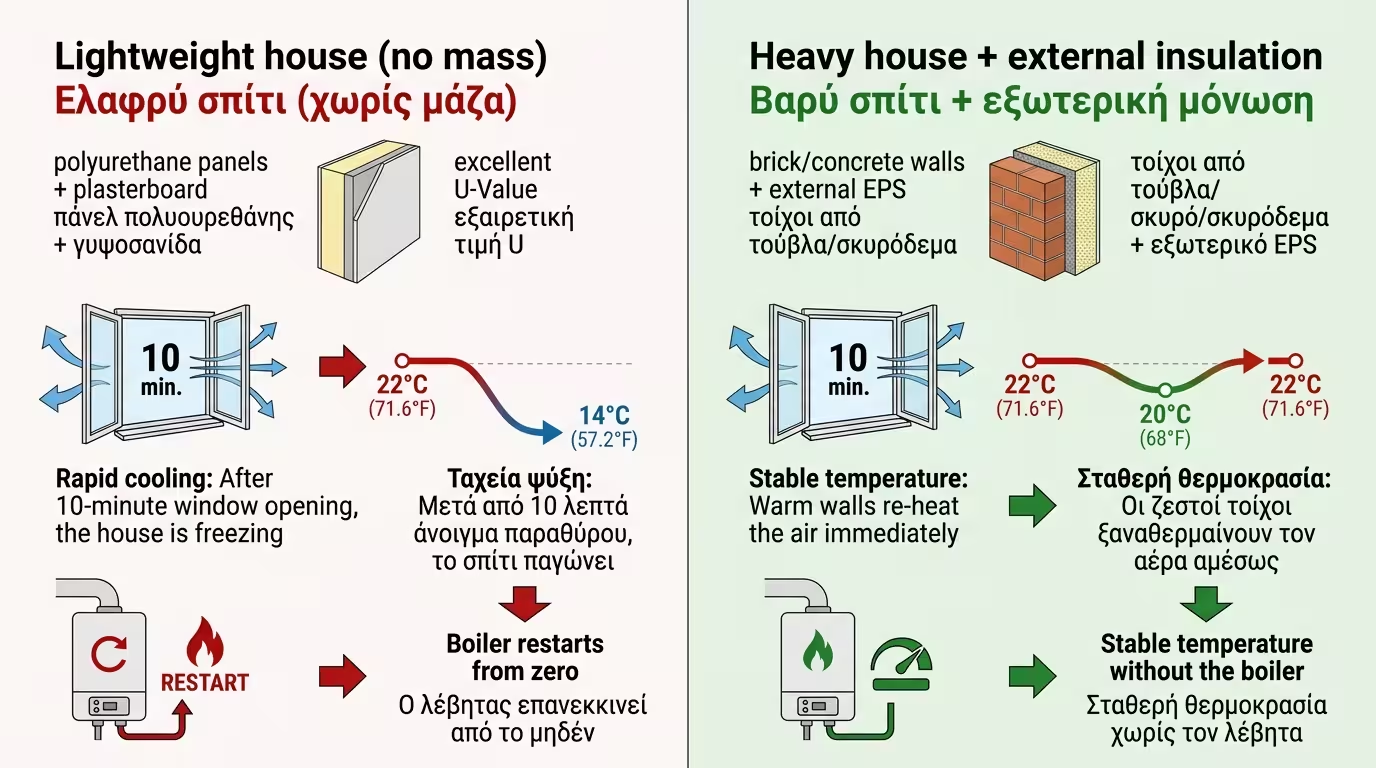
Let us see what happens to someone who has Resistance but no Capacity (Mass). We build a super-insulated house, but entirely from very lightweight materials (polyurethane panels and plasterboard, without any brick or concrete). The U-Value is perfect.

10x10 Model - super-insulated lightweight vs heavy-mass home

❌ Scenario A: Lightweight House (No Mass)

We turn on the heating and the house warms up in 5 minutes! Perfect. At some point we open the balcony door for 10 minutes to ventilate. The warm air escapes. We close the door. The house is freezing. Because the lightweight walls have no mass to store heat, the boiler must work again from zero.

✅ Scenario B: House with Mass + External Insulation

If you open the door, the air will cool. But once you close it, the heavy surfaces (walls, floors) that are already warm will re-warm the new air immediately, without the boiler firing up!

💡 Final Conclusion: Thermal resistance (insulation) protects you from the environment. Thermal capacity (building mass) gives you stability. A truly energy-efficient house needs both. Never insulate your heavy walls from the inside (internal insulation) unless absolutely necessary, because you lose your precious "battery"!

Related Articles

Thermal Physics & Calculations: From Theory to kWh and Euros

Return to category.

Go to category

Preview