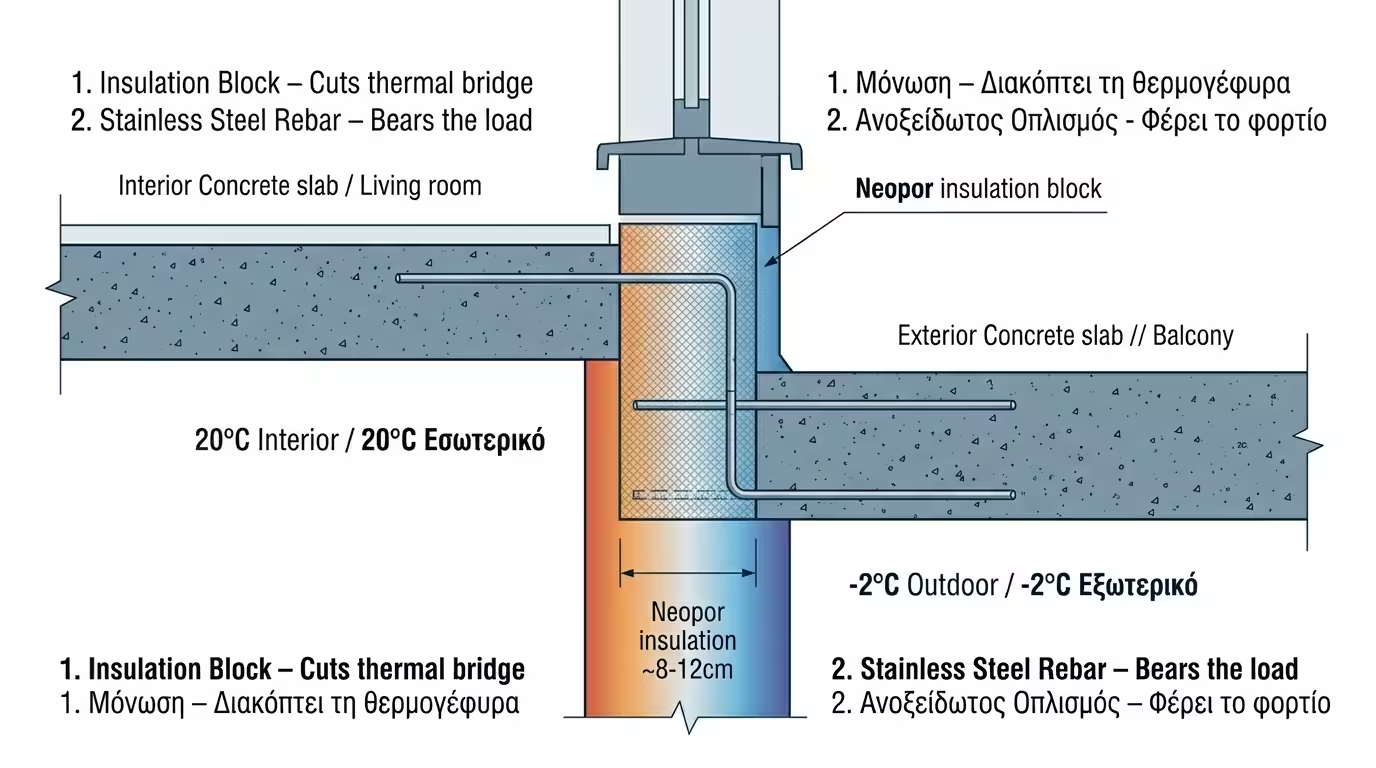
🧊 Thick Insulation Block (8-12cm Neopor)
This is inserted between the interior and exterior slab. It cuts the concrete thermal bridge clean.
If you ask a civil engineer what is their biggest nightmare in bioclimatic design, they will point at the balcony. The balcony is an enormous "cooling fin". Because it is the same concrete slab as your living room, in winter it freezes and sucks the heat from your feet outward.
Until recently, the only solution was to "dress" the balcony all around with insulating material, which is expensive, adds thickness and often creates problems with floor levels. Today, in new construction, the approach is radical: We do not let the balcony concrete touch the building concrete! How do we achieve this without the balcony falling on our heads? With Load-Bearing Thermal Break Elements (the most famous representative being the Isokorb technology by Schöck).
Imagine the moment when the builders are ready to pour the concrete for the floor slab. Instead of pouring concrete continuously from the living room to the edge of the balcony, they place, right on the imaginary line of the balcony door, a special, prefabricated element.
This element (the thermal break) consists of two basic parts:
This is inserted between the interior and exterior slab. It cuts the concrete thermal bridge clean.
These bars penetrate the insulation block and connect the living room rebar to the balcony rebar, bearing all the weight.
In simple terms: Your balcony literally "hangs" from these bars, while in between there is only insulation material! The cold from the balcony stops at the polystyrene and never reaches the living room.
You might wonder: "Since the bars pass through the insulation, don't they transfer the cold?"
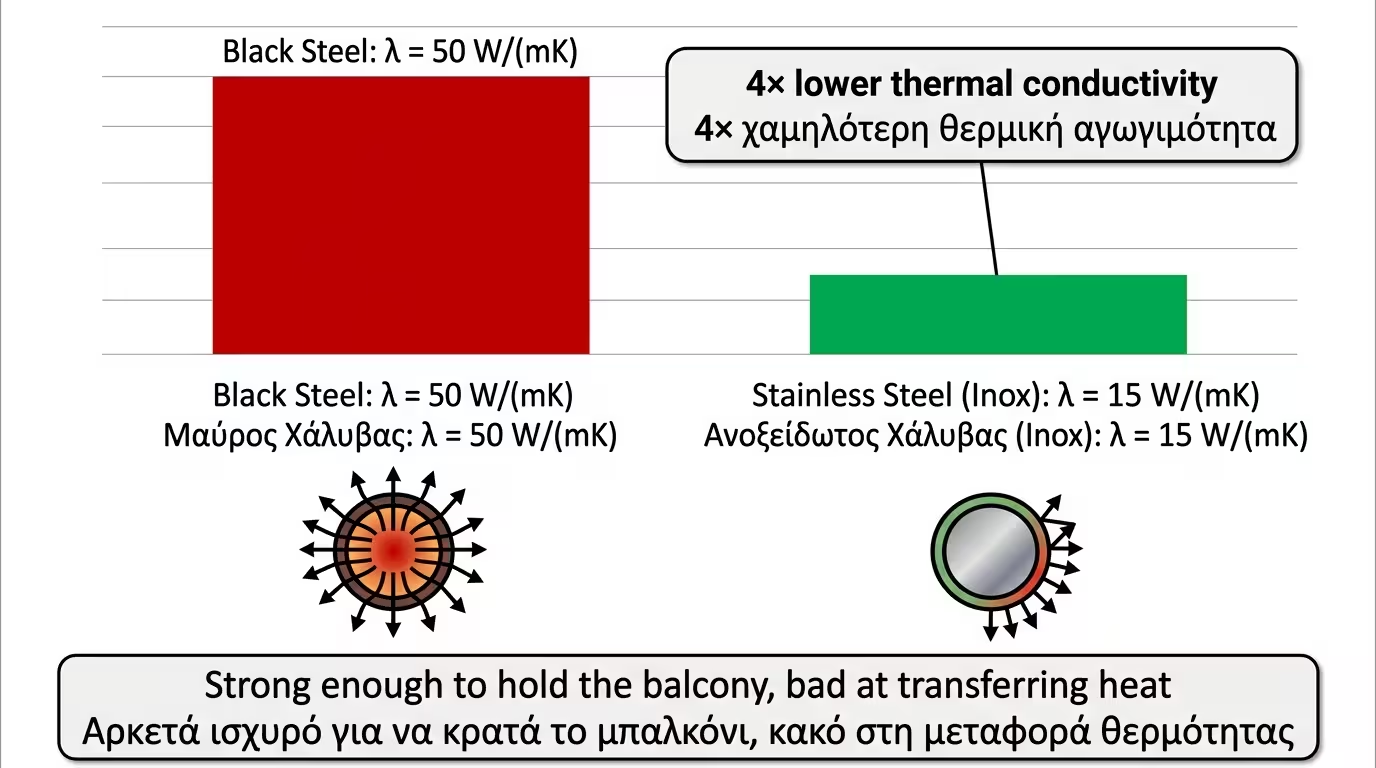
Here lies the brilliance of engineering. The bars that pass through the thermal break are not ordinary black reinforcement steel. They are stainless steel (Inox).
Stainless steel has a huge advantage beyond rust resistance: it has 4 times lower thermal conductivity than ordinary steel! So it is strong enough to hold the balcony, but very "bad" at transferring heat. Energy leakage is eliminated.
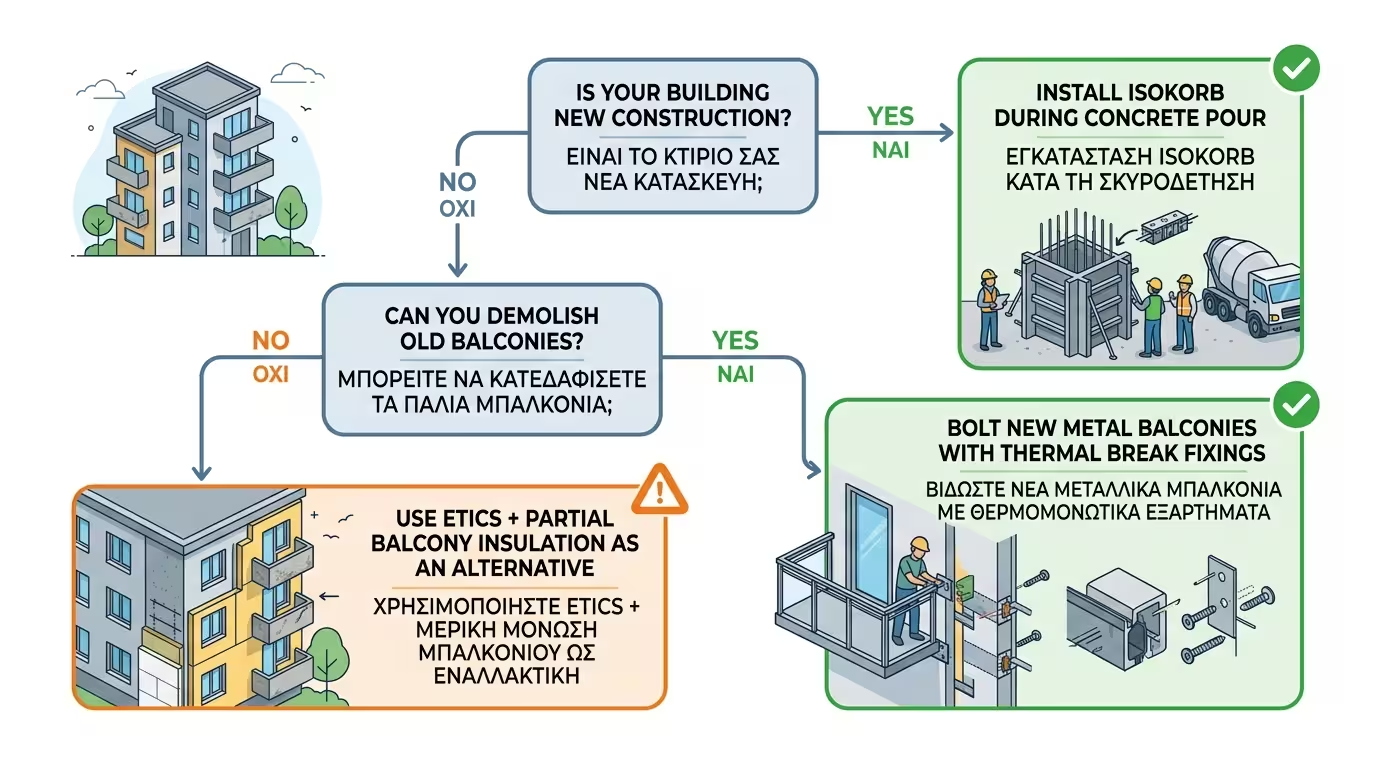
We must be clear: this technology applies almost exclusively to new buildings (where the concrete is still fluid and being formed). If you have a 30-year-old house, you cannot simply "cut" the balcony with a grinder and fit an Isokorb!
(In radical renovations, the only way to install a thermal break is if you completely demolish the old balconies and "bolt" new, metal balconies onto the old slab with special thermal break fixings).
We build our digital house from scratch. It has a large balcony (10 m²) on the south side. Outside it is -2°C.
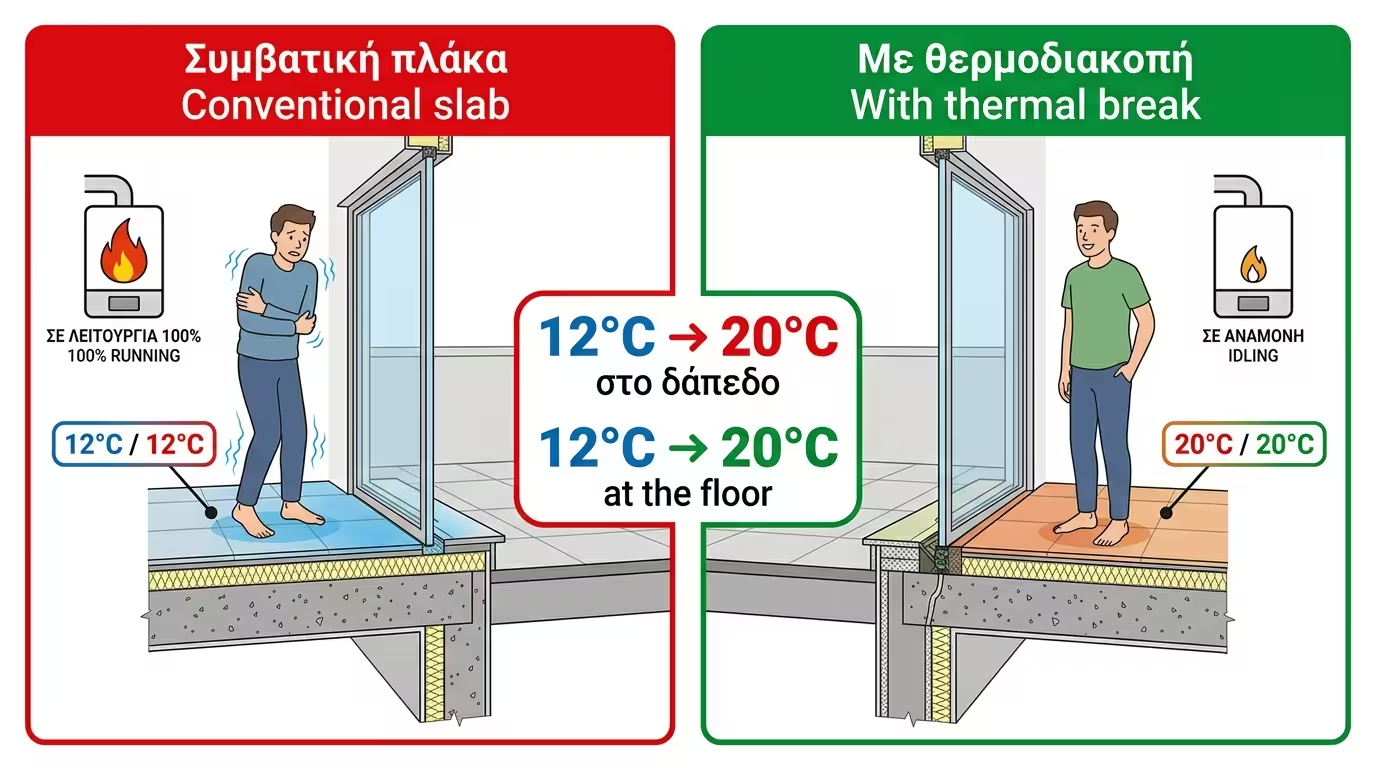
We pour concrete continuously. The entire balcony is freezing. Walking barefoot in the living room, one metre from the balcony door, the tile is freezing (at 12°C). The boiler works overtime to compensate for the floor loss.
We place the special element before the concrete is poured. The balcony outside is still freezing. But because the cold stops at the insulation block of the thermal break, the floor inside the living room is at exactly room temperature (20°C), even if you touch the tile right next to the glass! The thermal bridge... is dead.
💡 Final Conclusion: If you are planning to build a new house, the requirement for load-bearing thermal breaks in balconies is not a luxury; it is the "ticket" to truly achieving Passive House standards. The extra cost during construction is minimal compared to the electricity you will save (and the absolute comfort you will enjoy) for the coming decades.
Return to category.
Go to categoryReturn to the central guide.
Go to guide