What Are Thermal Bridges and How Much Electricity Do They Cost You?

You have bought the most expensive, thick and warm winter coat on the market. You wear it, but leave the zipper completely open. No matter how perfect the fabric is, the freezing air will enter through the gap and you will be cold.

In construction, this "open zipper" is called a Thermal Bridge. It is perhaps the sneakiest enemy of your wallet, because many times it is invisible to the naked eye, yet is responsible for enormous energy losses and the appearance of toxic black mould. Let us see how they work.

1. The Definition: The "Motorway" of Heat

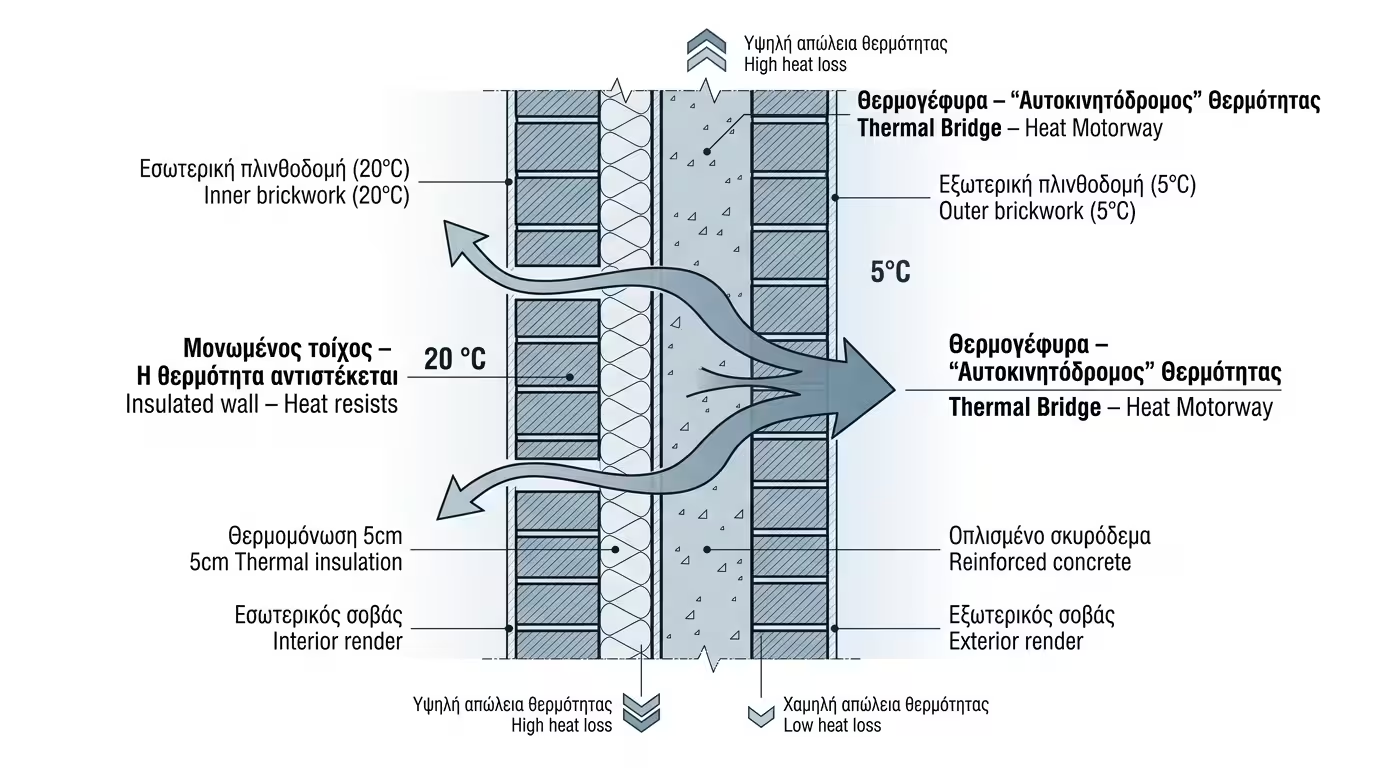
A thermal bridge is any point in your house's shell where the insulation... is interrupted. At this point there is usually a material with very high thermal conductivity (i.e. it transfers heat very easily) connecting the inside of the house with the outside environment.

In Greek houses, the number one culprit is reinforced concrete. Concrete is an excellent heat conductor. When the builder places insulation (e.g. DOW) only between the bricks and leaves the columns and beams "bare", they have just created a huge thermal motorway.

The heat from your radiator is... smart. It works like water: it always seeks the easiest route to escape. Instead of fighting through the insulated wall, it "runs" towards the bare concrete column and exits immediately!

Thermal bridge - heat motorway through concrete

2. The Double Cost of Thermal Bridges

A thermal bridge hits you mercilessly on two fronts:

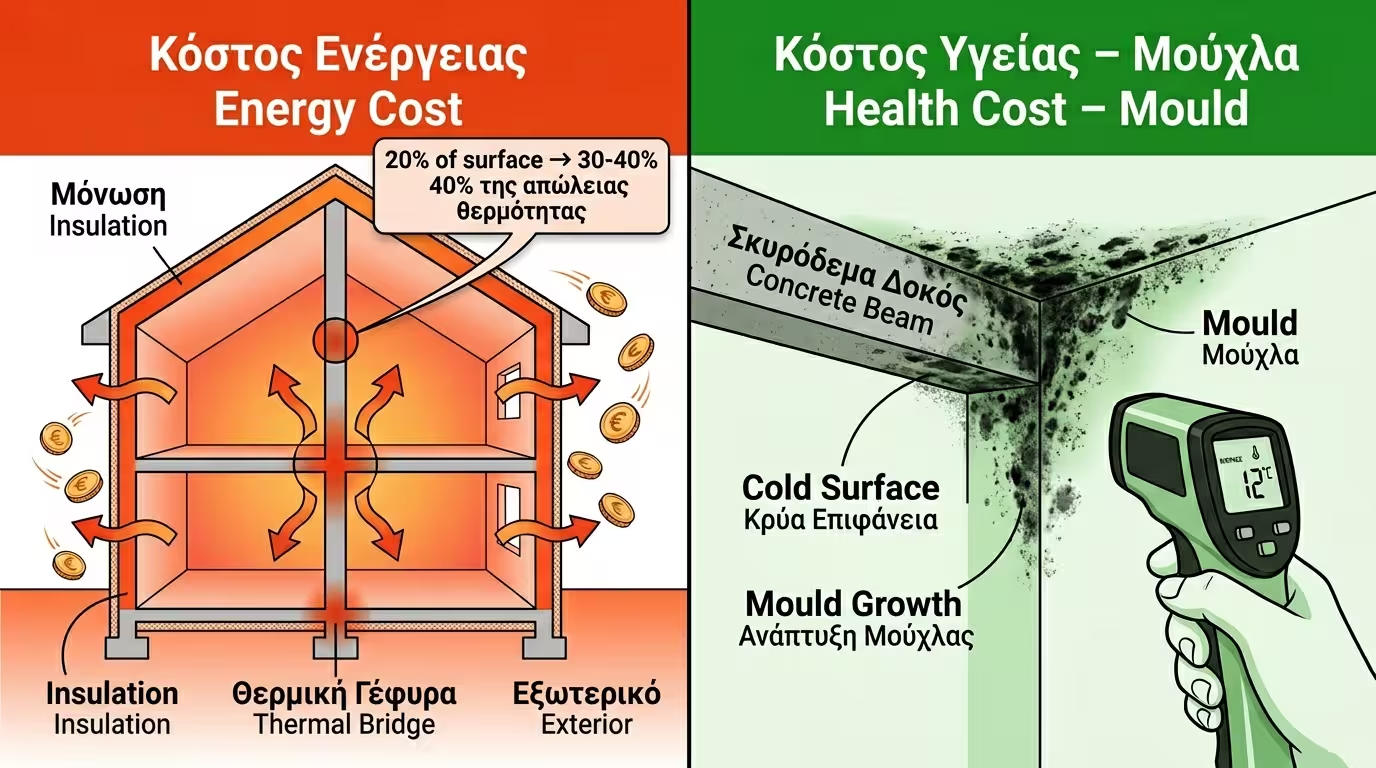
Double cost of thermal bridge - energy and mould

💰 Cost to the Wallet (Energy)

In an old, conventionally insulated house (where only the bricks have been insulated), bare columns and beams represent just 20% of the surface. Yet from this 20%, 30% to 40% of your total heat can escape! You pay for oil to heat the neighbourhood's air.

🦠 Cost to Health (Mould)

Remember the "Dew Point" we analysed in a previous article? Because the bare concrete column is freezing in winter (since it communicates directly with the cold outside air), its interior surface inside your living room is freezing. When the warm, humid air of the house touches it, it "sweats". That is why mould almost always appears in the high corners (on the beams) and around the columns!

3. The 10x10 Experiment: The Thermal Camera Reveals

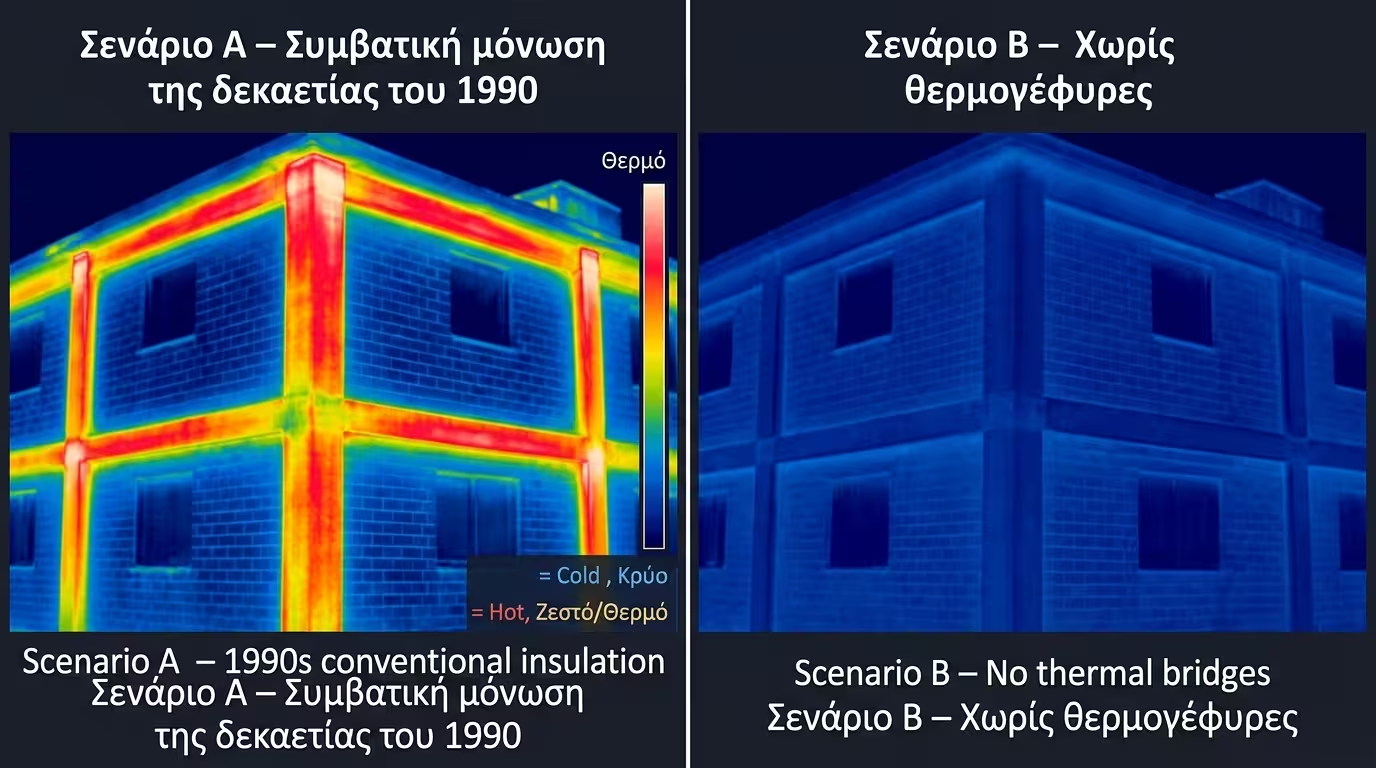
Thermal camera - thermal bridges in the 10x10 house

Let us take our house and fire up a Thermal Camera (Infrared Camera) on a cold winter night. We stand outside on the street and look at the facade.

❌ Scenario A: Insulation only in the bricks (1990s construction)

On the thermal camera screen, the brick walls appear dark blue (they are cold on the outside, so they keep the heat inside). However, the 4 corner columns and the horizontal beams "light up" with an intense, bright red/yellow colour! The house is "bleeding" energy from its structural elements. An open zipper.

✅ Scenario B: House without thermal bridges

We have "dressed" the entire house externally (both bricks and columns) with a continuous layer of insulation. On the thermal camera, the entire house appears uniformly dark blue. No leakage. The zipper is closed.

4. The Final Conclusion

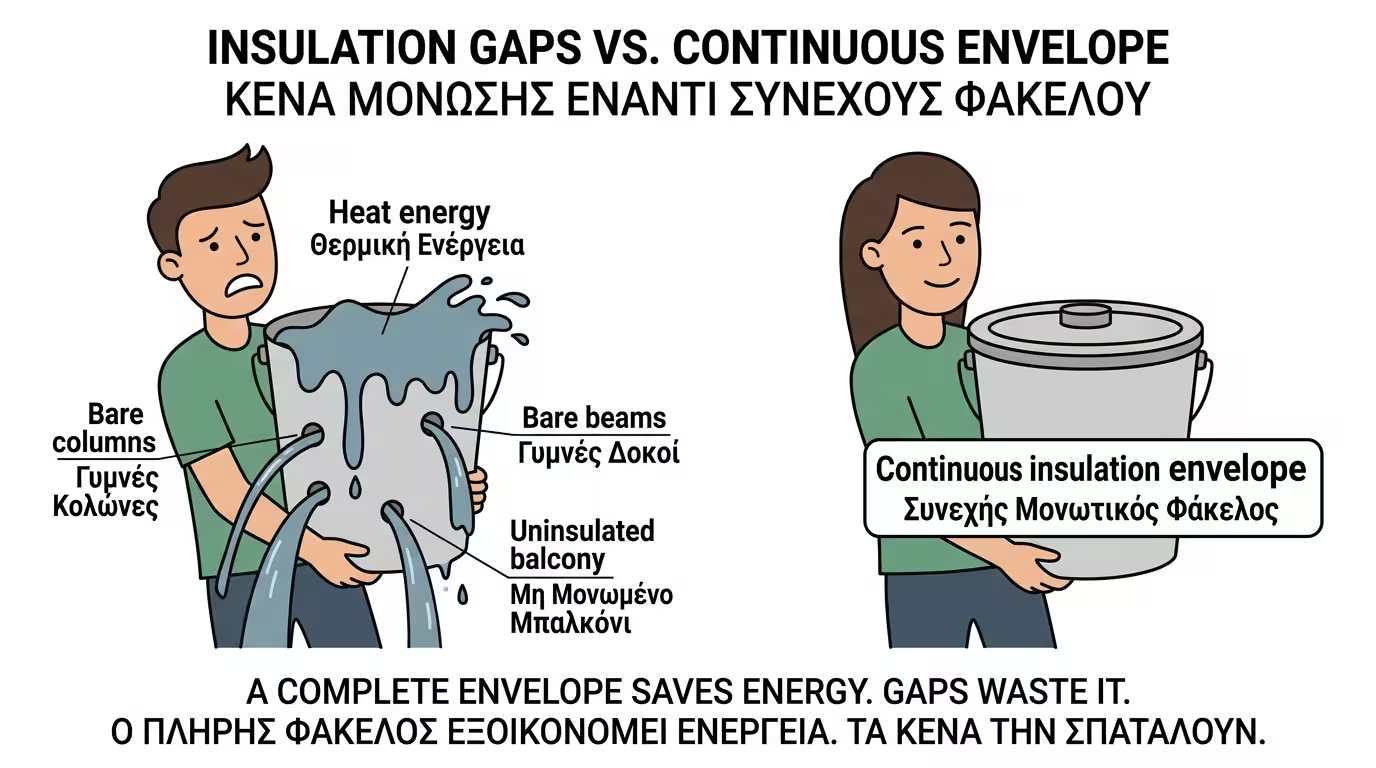
Insulating a house while leaving thermal bridges is like trying to carry water in a leaky bucket. Quality energy upgrading is not judged only by the thickness of the material, but by how perfectly and without interruption that material "hugs" every centimetre of your building.

Leaky bucket metaphor for thermal bridges

Related Articles

Thermal Physics & Calculations: From Theory to kWh and Euros

Return to category.

Go to category

Preview