🔴 Hot Spots
Red, Orange and Yellow colours indicate hot spots.
Imagine you had X-ray glasses that, instead of seeing bones, could see heat and cold. This is exactly what a Thermal Camera (or Infrared Camera) does.
Every object in the universe with a temperature above absolute zero emits infrared radiation (IR). The human eye cannot see this radiation. The thermal camera, however, reads this invisible energy and converts it into a colourful image on its screen, called a Thermogram.
In the most common colour palette used by engineers:
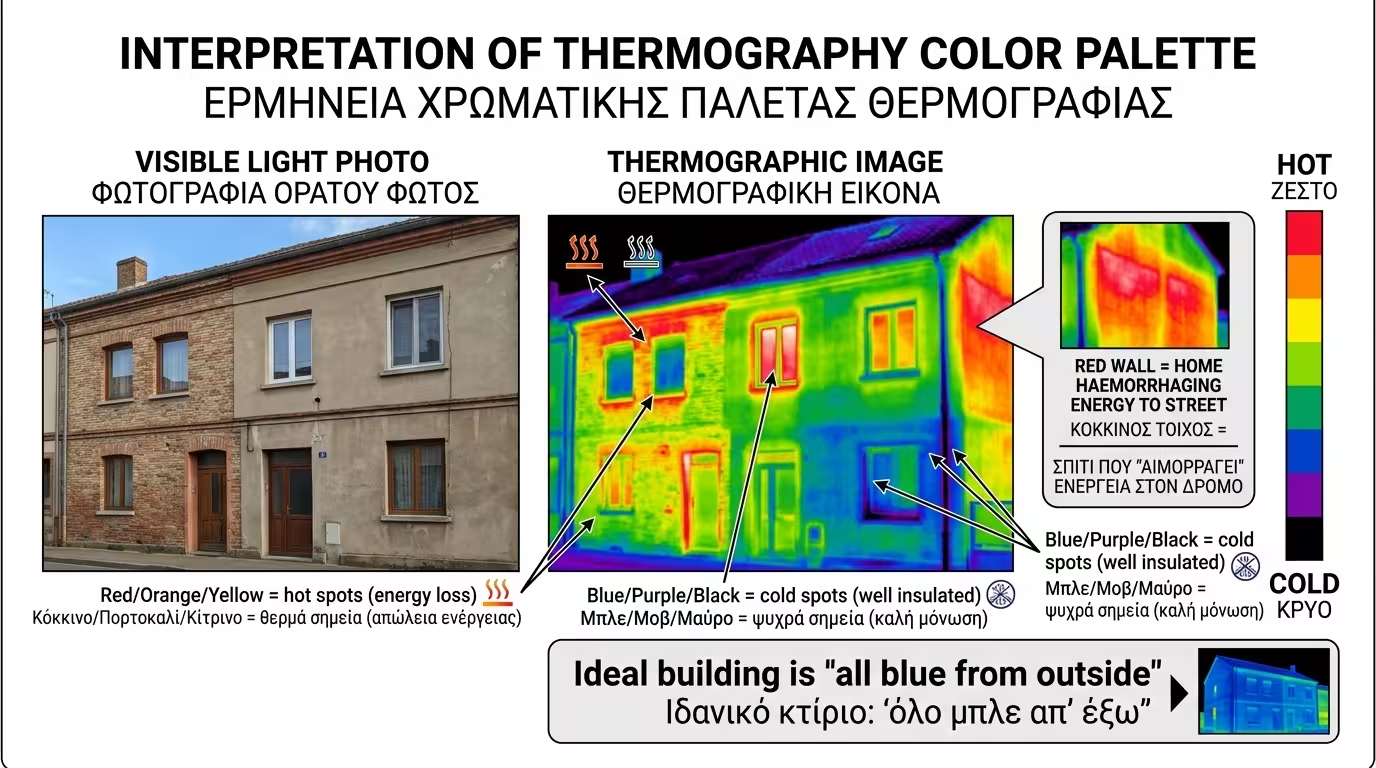
Red, Orange and Yellow colours indicate hot spots.
Blue, Purple and Black colours indicate cold spots.
If you stand outside your home on a cold winter night and look at it with the thermal camera, ideally you want to see it entirely blue (meaning the external surface is cold, so the heat has stayed trapped inside). If instead you see your wall "glowing" with bright red or yellow, it means your home is haemorrhaging energy to the street!
Thermography is the ultimate "autopsy" for the energy condition of a building. It shows us with surgical precision problems hidden under tiles or behind plaster:
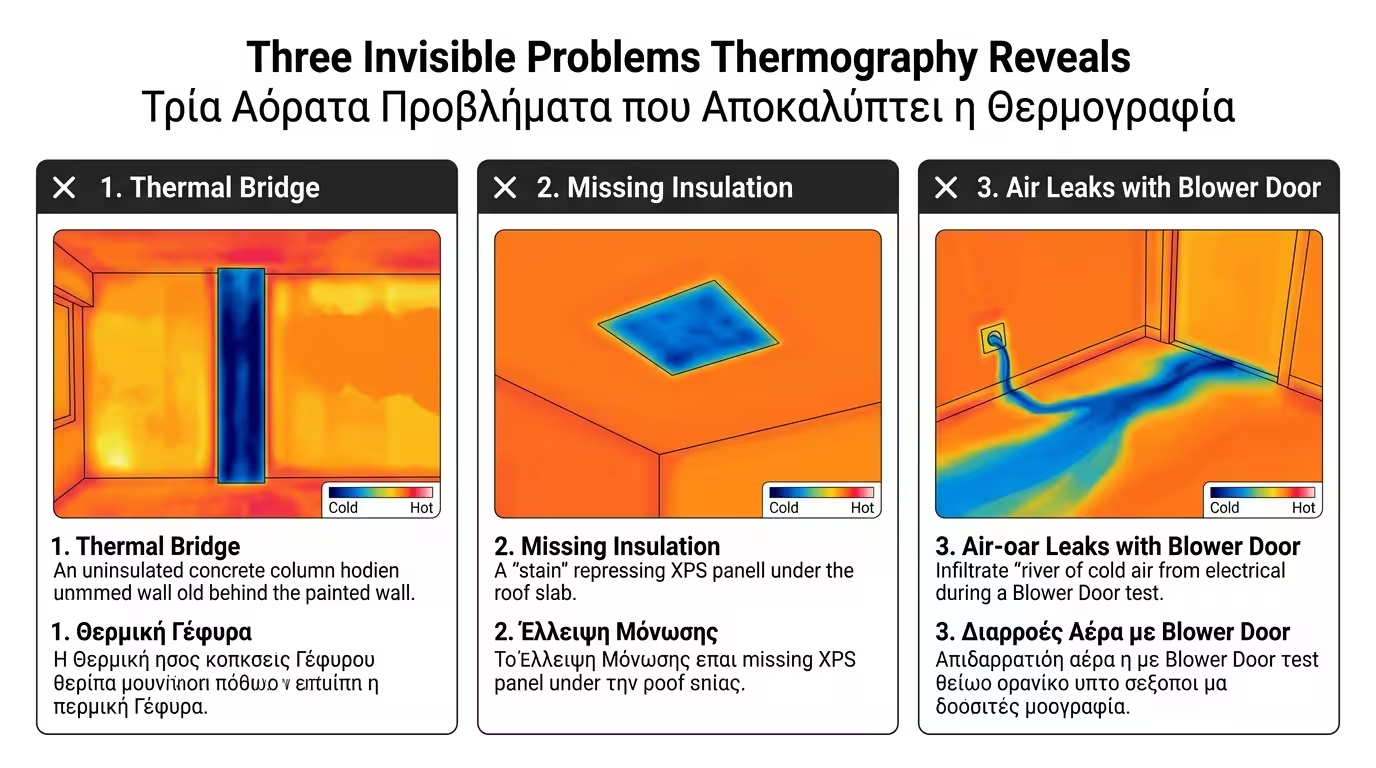
Looking at the wall from inside (in winter), you see a perfectly painted surface. The thermal camera, however, shows you a huge, dark blue vertical stripe. This is the concrete column (the structural frame) that was never insulated and channels the freezing cold of the street directly into your living room.
You look at the ceiling (below the terrace) and see a blue "stain" in a square shape. Right there, beneath the slab, a piece of extruded polystyrene (XPS) is missing - the contractor forgot to install it or cut it crookedly.
When the home is under negative pressure, the camera "sees" the freezing air sneaking in. On the screen, it looks like a blue "river" that springs up from under the door or through a socket and flows across the warm (orange) floor!
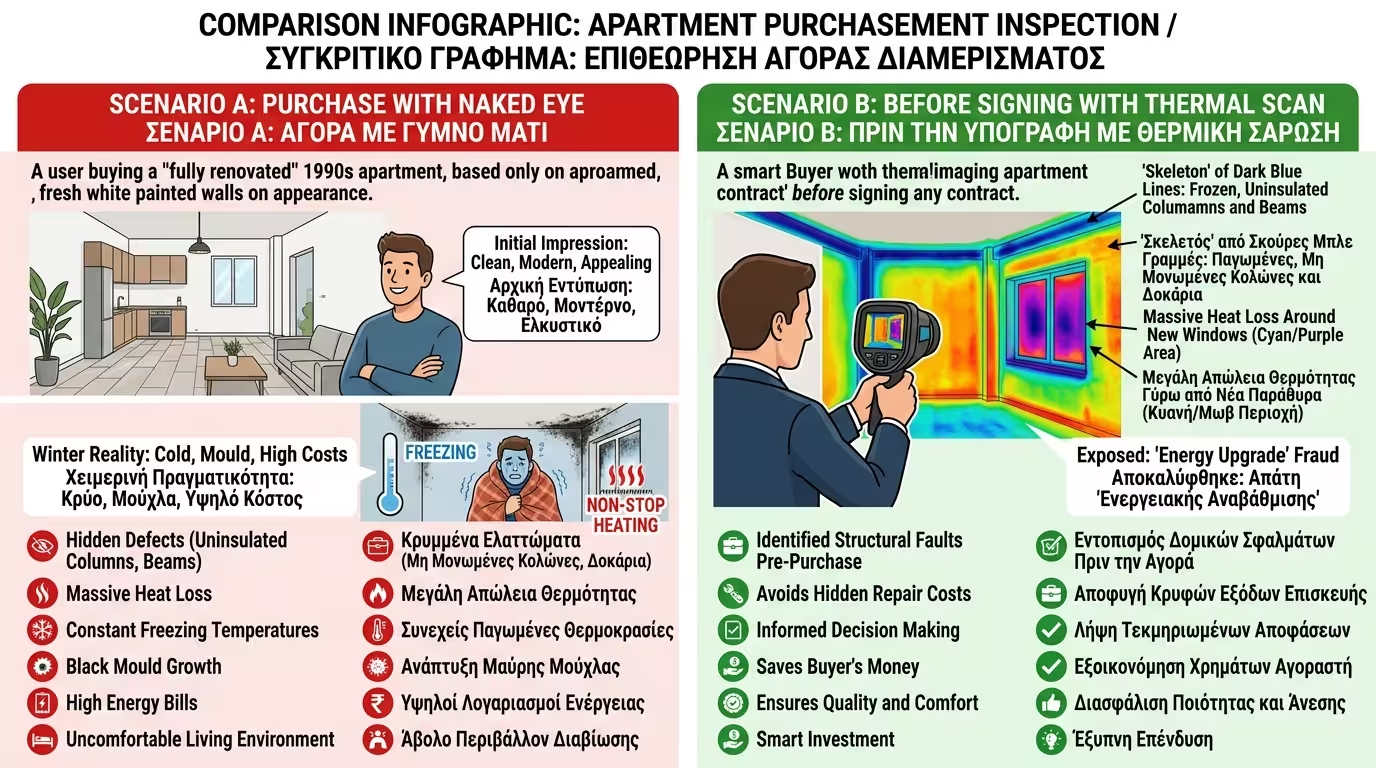
We find a 1990s apartment being sold as "fully and luxuriously renovated". We walk in: everything sparkles, the walls are pure white and smooth.
We are impressed by the new tiles, we buy the home at a high price. The first winter, the radiators run non-stop, we freeze and the ceiling corners fill with black mould. The "renovator" simply painted the walls and did not add a single centimetre of insulation.
Before signing, we bring an engineer with a thermal camera. It is winter, we turn on the heating. The engineer scans the walls. The camera reveals a "skeleton" of dark blue lines (the frozen columns and beams) and enormous heat losses around the new windows. We immediately understand that the "energy upgrade" was a fraud. We save our money!
The Final Conclusion: Don't guess where your home leaks. Don't start demolishing walls searching for the problem. Thermography is a non-destructive, fast and absolutely precise method that shows you exactly where the building "hurts", so you can direct your investment precisely where it is needed.
Return to category.
Go to categoryReturn to the central guide.
Go to guide