Thermal Cameras & Waterproofing: Seeing the Invisible Path of Water Beneath Tiles

The thermal camera (or infrared camera) is perhaps the most impressive tool in a modern engineer's arsenal. When you point it at a wall, you don't see white paint or wallpaper. You see a "colour map" where every colour represents a different temperature.

Hot spots show as red, orange or yellow. Cold spots show as blue, purple or black. And that's where the secret lies.

1. How the Camera "Sees" Water (The Physics of Evaporation)

Let's clear up a myth: The thermal camera does not see water. It sees the temperature difference that water causes!

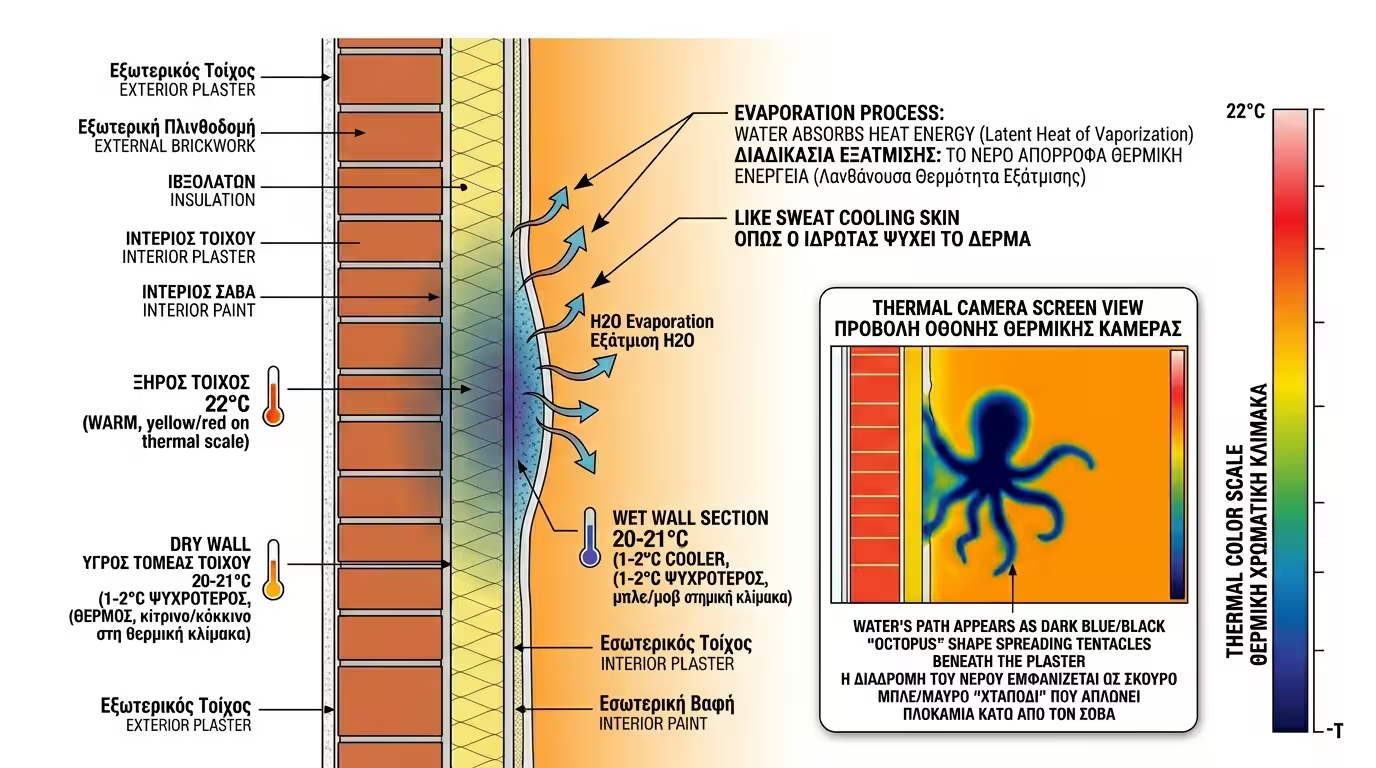
Evaporation physics - wet wall 1-2°C cooler

🌡️ The Principle

When a wall or ceiling is wet internally, water tries to evaporate. Evaporation absorbs heat (exactly like sweat cools your body in summer). This means the wet section of the wall is typically 1-2 °C cooler than the dry surrounding area.

🐙 What You See

The thermal camera captures this tiny difference. On screen, the water's path appears as a huge, dark (blue/black) "octopus" spreading its tentacles beneath the plaster!

2. The 3 "Life-Saving" Applications

Where does the thermal camera change the game?

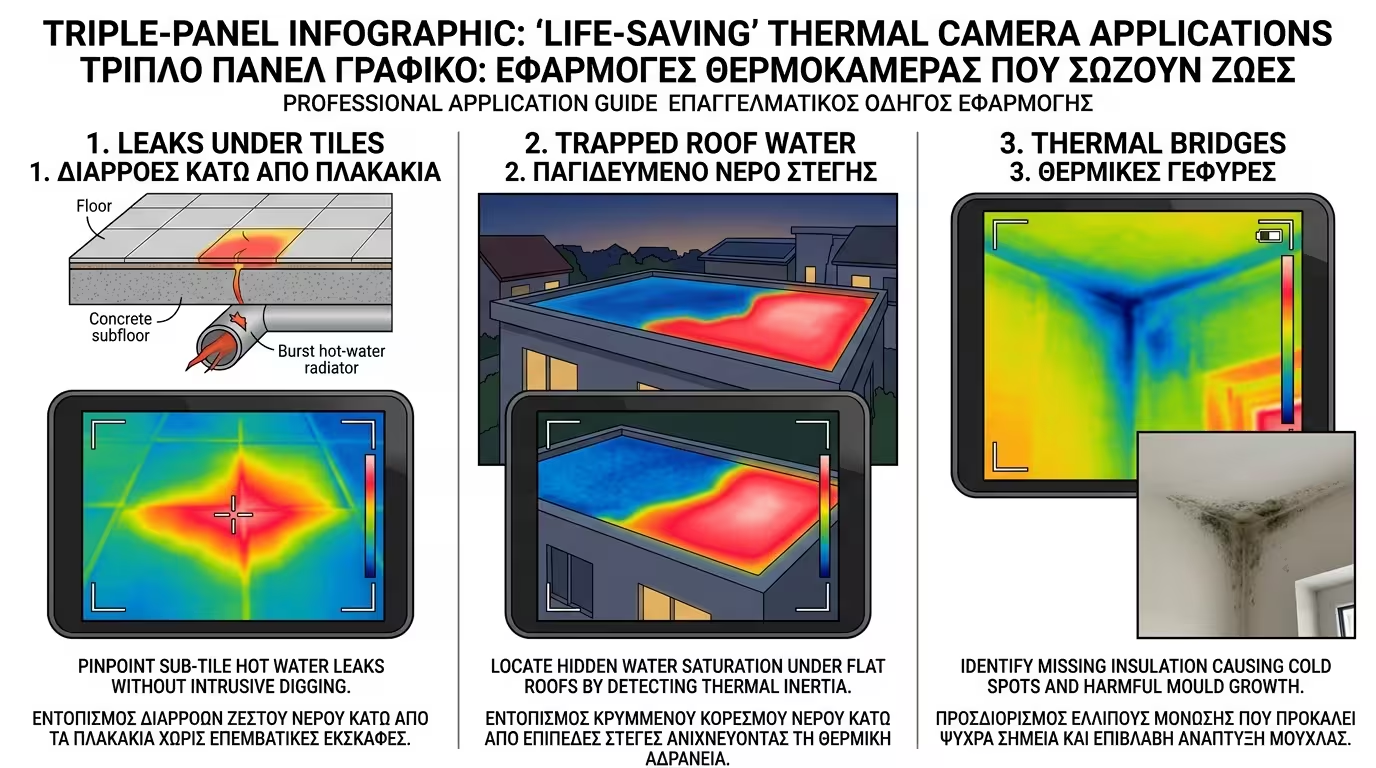
3 applications - tiles, roof, thermal bridges

🏠 Leaks Under Tiles

If a hot-water pipe (e.g. from the radiator) bursts under the floor, the camera shows a glowing red/yellow "lake" of heat spreading beneath the tiles. You know exactly which tile to break, with centimetre accuracy!

☀️ Trapped Roof Water

In summer, the sun heats the roof. At night, the roof cools down. But if the membrane has been punctured and water is trapped beneath the insulation, that water retains heat for much longer because it has a higher thermal capacity than dry concrete. If you go up with the camera at dusk, the dry section of the roof appears blue (cold), but the spot hiding water underneath "glows" red and is clearly visible!

🧊 Thermal Bridges (The Source of Mould)

As we saw in the previous article, mould gravitates towards the coldest spots. The thermal camera shows you exactly where insulation is missing from the building envelope (the so-called thermal bridges), explaining why that particular living-room corner keeps blackening with mould year after year.

3. Limitations & The Experiment

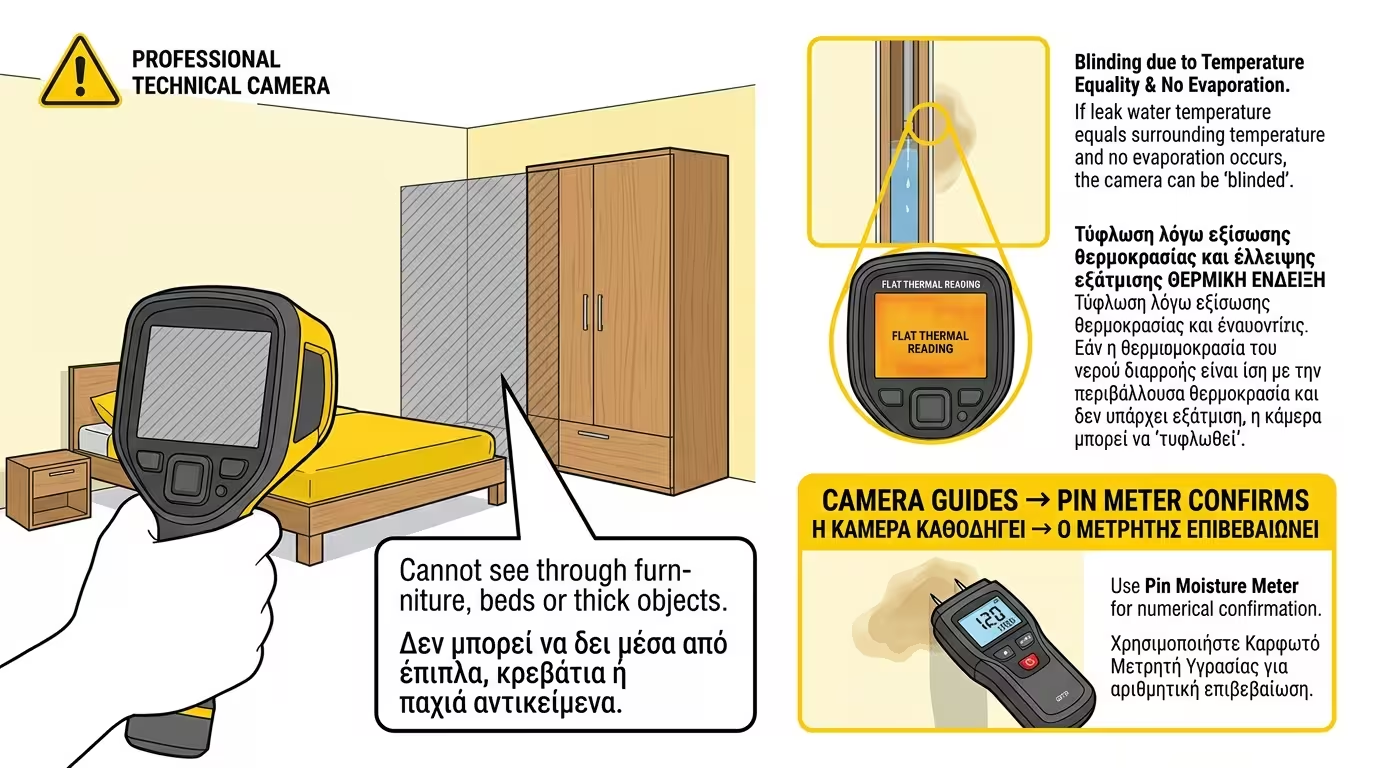
The technology is magical, but it has limits. It is not "Superman" X-ray vision - it cannot see through wardrobes, beds or thick furniture. Also, if the leak water has exactly the same temperature as the surrounding materials and is not evaporating at all, the camera can be "blinded." That is why a proper engineer (a certified Level II thermographer) always confirms what they see on the screen by probing the suspect spot with a pin moisture meter. The camera guides you to the right area; the pin meter confirms the finding with a numerical reading.

Limitations - can't see through furniture
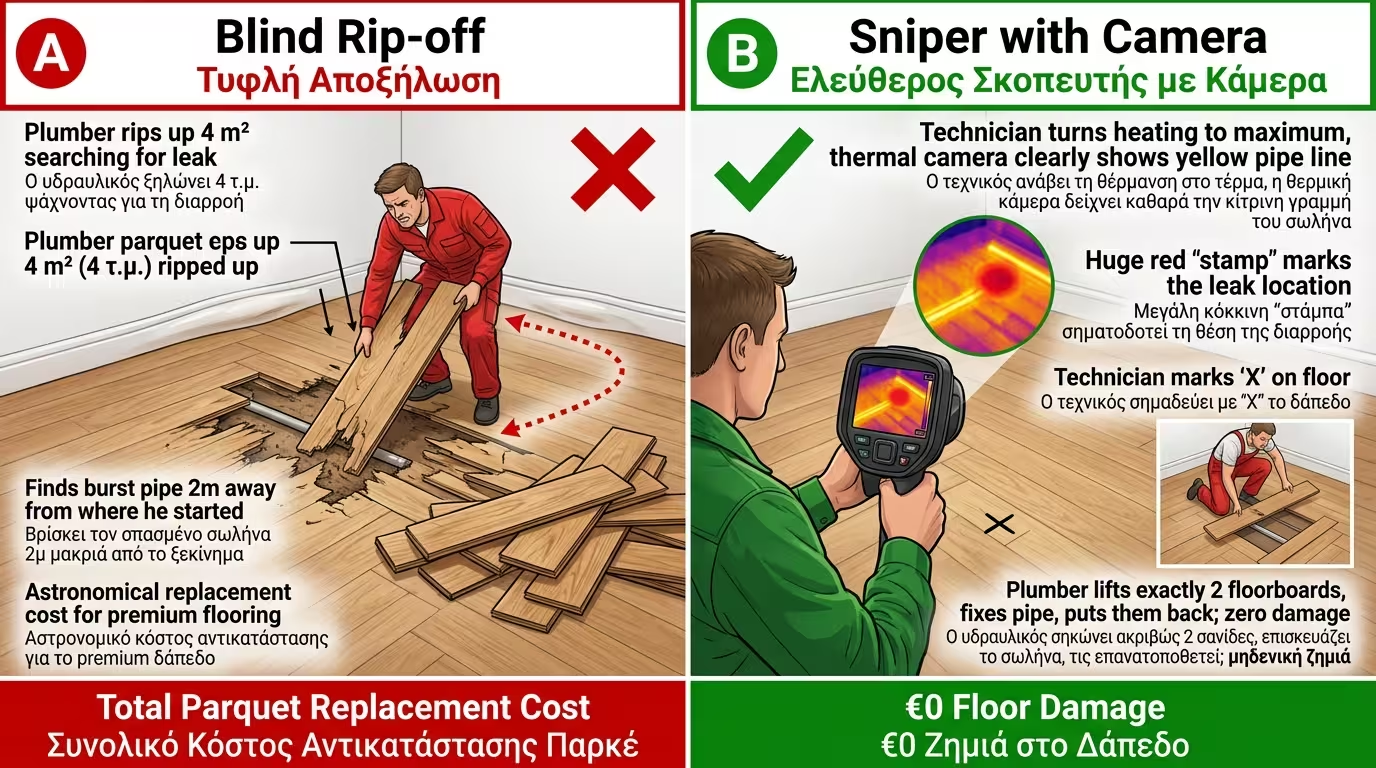
Experiment - blind parquet rip-off vs camera sniper

Our living-room wall is swelling at the skirting. Behind it, radiator pipes run beneath the oak parquet floor.

🔴 Scenario A (The Blind Rip-off)

The plumber says: "A pipe's burst somewhere under the wood." He starts ripping up the expensive oak parquet from the wall towards the centre, removing 4 m² to finally find the leak 2 metres away. The cost of replacing the parquet is astronomical.

🟢 Scenario B (The "Sniper" with the Camera)

We bring a technician with a thermal camera. We turn the heating to maximum. On screen, we clearly see the yellow line (the pipe) running under the floor. At one spot, the yellow line makes a huge red "stamp." The technician marks an "X" on the floor. The plumber lifts exactly two floorboards, fixes the pipe, and puts them back. Zero damage!

Bottom Line: The thermal camera has changed the rules of construction forever. It turns leak detection from an expensive, destructive game of blind man's bluff into a surgical, non-destructive operation.

Related Articles

Waterproofing: The Ultimate Shield Against Moisture

Return to category.

Go to category

Preview