
🌋 Perlite or Pumice
Natural, porous volcanic minerals that create a layer of trapped air within the render.
In the construction and renovation industry, an extremely appealing claim circulates frequently: "Forget thick polystyrene boards and scaffolding. Apply this 2-centimetre insulating render and you will get exactly the same insulation!"
If it sounds too good to be true, that is because, according to the laws of thermodynamics, it is not true. Insulating renders are real and extremely useful materials, but they were designed to solve specific problems, not to replace a complete ETICS system. Let us separate myth from reality.
A common render consists of cement, sand and water. It is a "cold" and heavy material. In insulating renders, the heavy sand is replaced by lightweight, insulating aggregates:
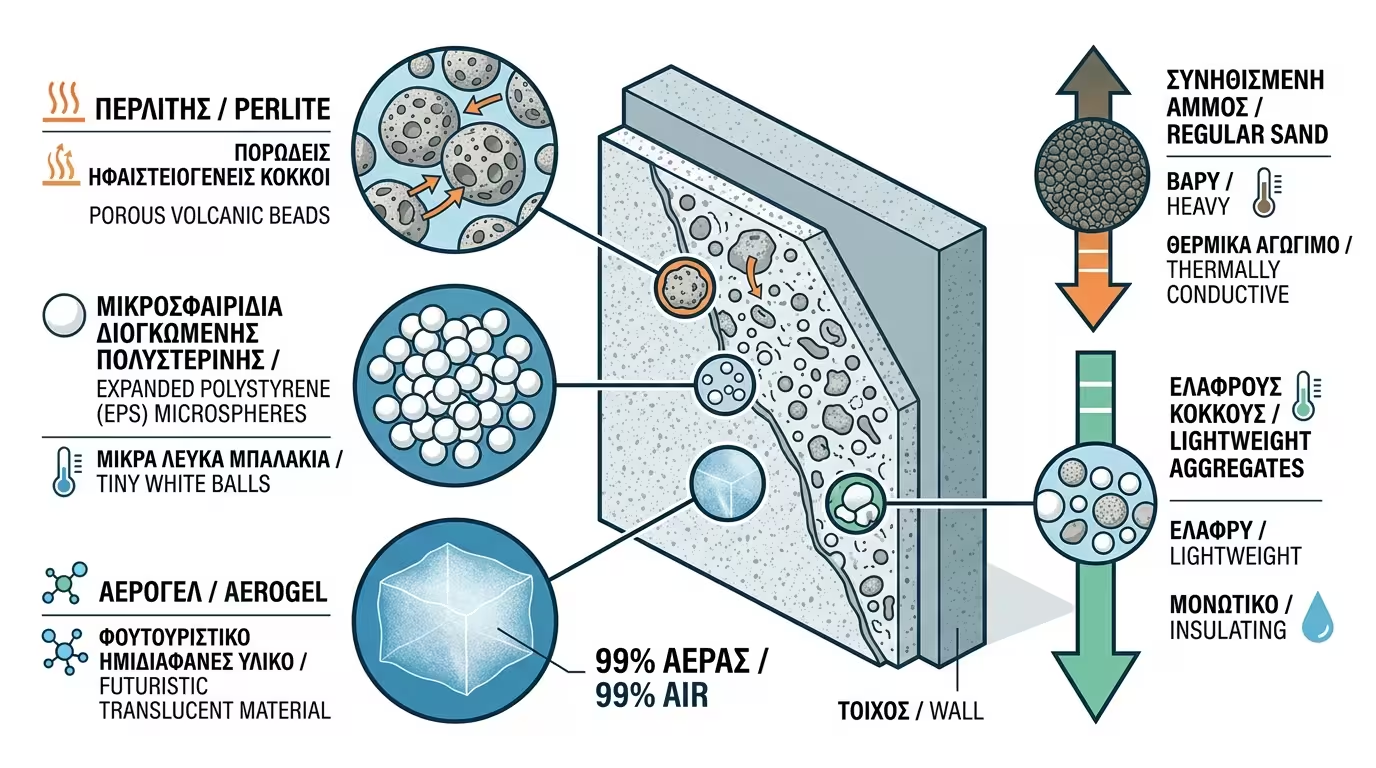
Natural, porous volcanic minerals that create a layer of trapped air within the render.
Microscopic balls of expanded polystyrene mixed into the cement, drastically reducing thermal conductivity.
The most advanced (and extremely expensive) nanomaterial in the world, consisting of 99% air.
These additives make the render extremely lightweight and give it insulating properties that ordinary render does not have at all.
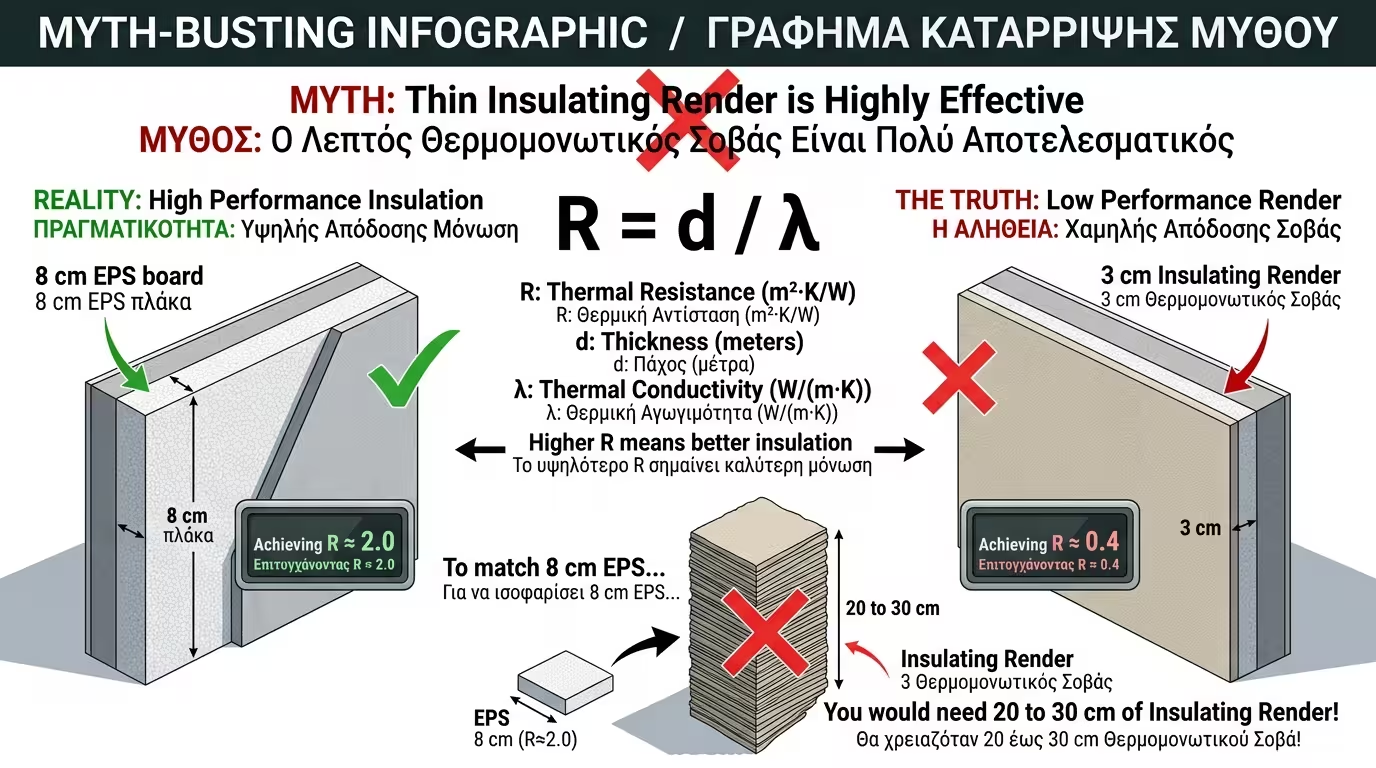
The thermal resistance of a wall (how well it insulates) obeys a strict physical formula: R = d / λ, where d is the thickness of the material and λ (lambda) is the thermal conductivity coefficient.
For serious insulation you need both a good material (low λ) and adequate thickness (d). Even the best insulating render (with perlite or EPS) typically has double or triple the λ of a pure graphite polystyrene board. This means in practice that to achieve the insulation provided by 8cm of pure EPS, you would need to apply 20 to 30 centimetres of insulating render!
Obviously, nobody applies 30cm of render. Typically 2-3 centimetres are used. Therefore, the claim that it "replaces conventional insulation" collapses mathematically.
If they do not replace ETICS, then why do we use them? Insulating renders truly "shine" in three very specific cases:
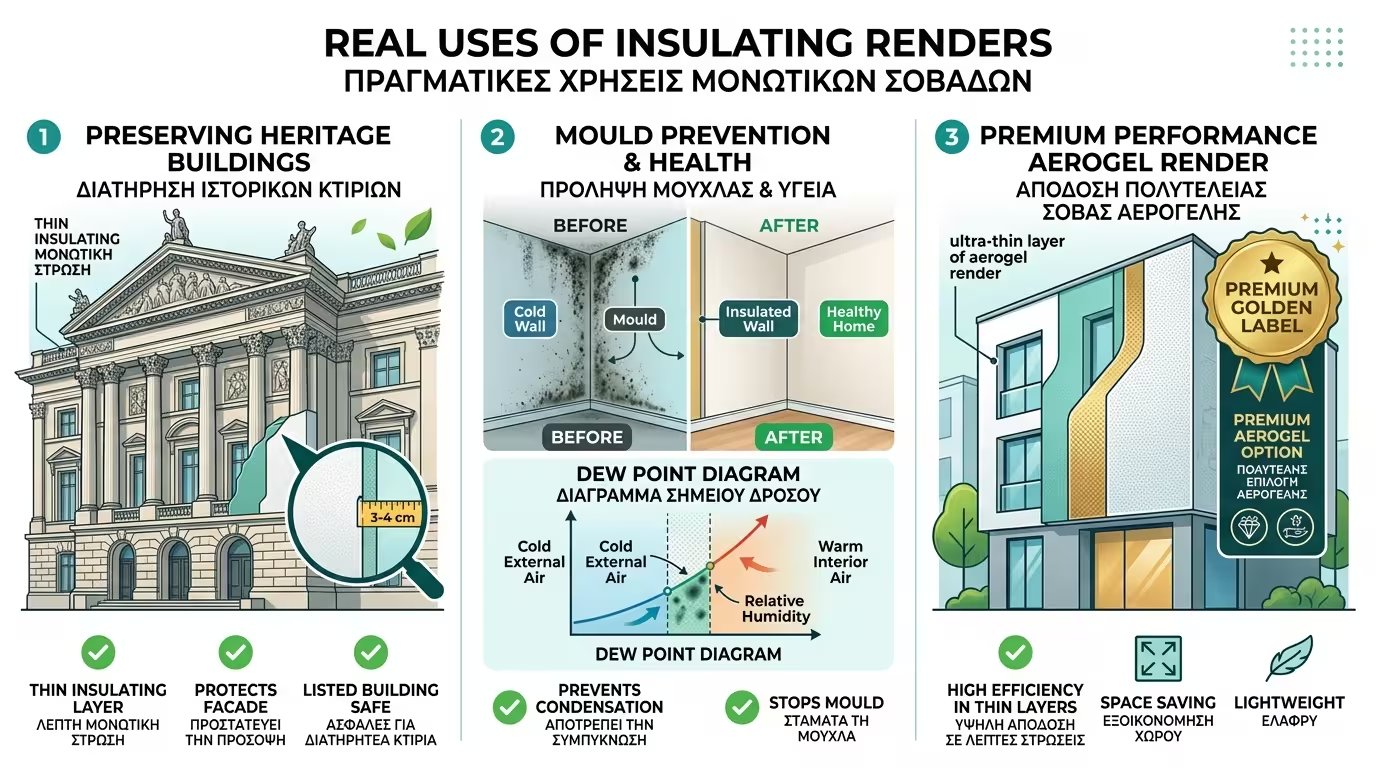
In traditional or listed buildings, altering the façade is forbidden. If the old render has deteriorated, replacing it with 3-4cm of insulating render noticeably improves the building's energy behaviour while preserving 100% of its architectural character (cornices, arches around windows).
Insulating render is not "frozen" like pure cement. It raises the internal surface temperature slightly. If you have a spot (e.g. a corner or beam) that "sweats" and grows mould, a 2cm coat of internal insulating render can raise the temperature above the Dew Point, eliminating mould permanently!
There is one exception to the thickness rule: renders containing Aerogel. Aerogel has such a low λ that 2cm of this render equals approximately 5-6cm of conventional insulation. The ultimate solution when space is lacking. However, its cost is prohibitive for the average consumer, many times that of a full ETICS system.
We have the old, uninsulated wall with a U-Value of 2.50 W/m²K.
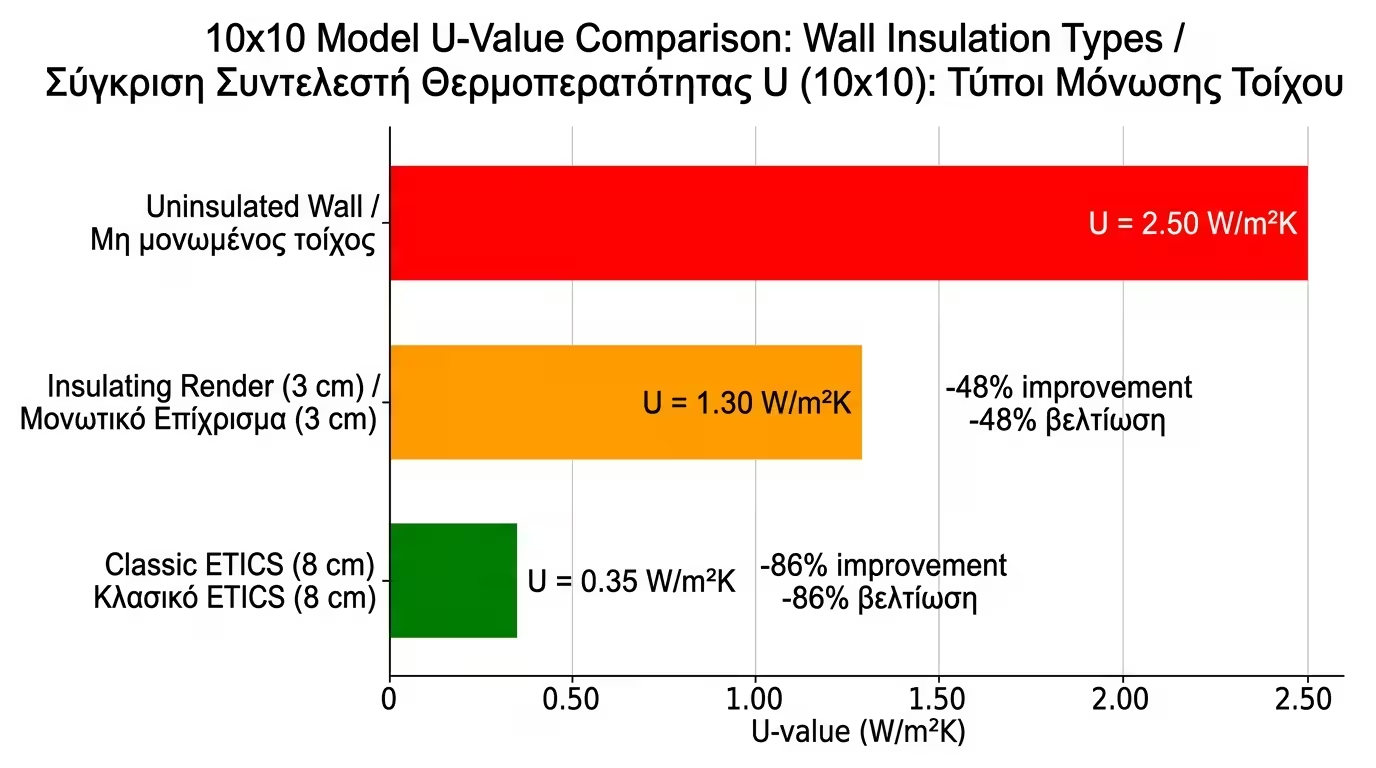
The U-Value drops to 0.35 W/m²K (massive energy saving).
The U-Value drops to 1.30 W/m²K. The improvement is approximately 50% compared to the uninsulated wall. It is clearly not ETICS, but the room is noticeably warmer and the "iciness" of the wall has been broken.
💡 Conclusion: Do not buy insulating renders believing you will create a "Passive House". Buy them as an excellent, supplementary upgrade solution when you cannot, are not allowed to, or do not have the space to install proper, thick insulation.
Return to category.
Go to categoryReturn to the central guide.
Go to guide