🤔 Logic Says...
70 dB + 70 dB = 140 dB. If that happened, your eardrums would burst, because 140 dB is the noise of a fighter jet taking off right next to you!
If you buy 1 kilogram of potatoes and add another kilogram, you have 2 kilograms. If you walk 10 metres and then another 10, you've covered 20 metres. We're all accustomed to thinking in this linear way.
But when we enter the world of acoustics and try to insulate a house, this logic collapses. The unit for measuring sound intensity is the decibel (dB). And decibels hide an enormous mathematical trap: they are logarithmic, not linear.
Let's run a thought experiment. You switch on your vacuum cleaner. The sound meter reads 70 dB. Now you bring a second, identical vacuum cleaner and switch it on right next to the first. How much noise do you have in total?
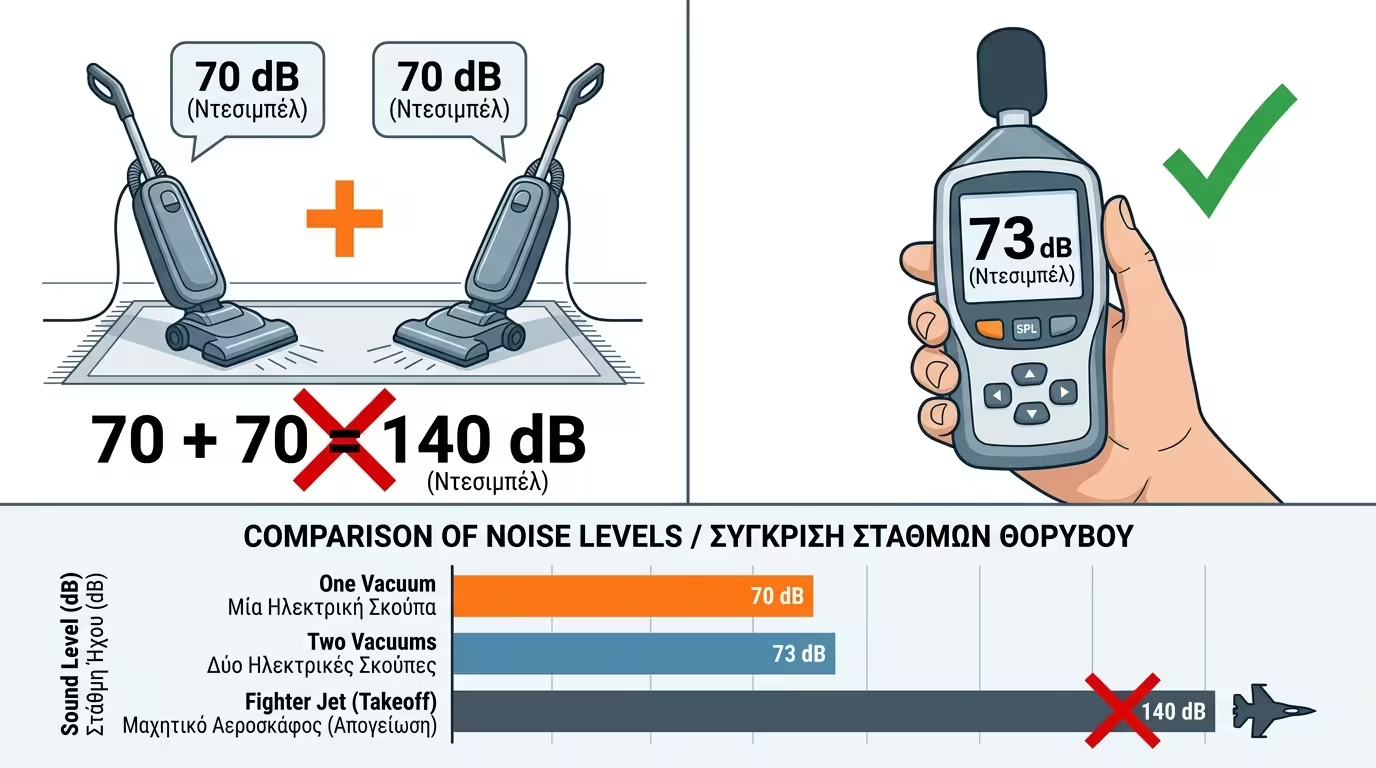
70 dB + 70 dB = 140 dB. If that happened, your eardrums would burst, because 140 dB is the noise of a fighter jet taking off right next to you!
70 dB + 70 dB = 73 dB. Just 3 decibels more! This happens because decibels aren't "normal" numbers - they follow a logarithmic scale. Every time the acoustic energy doubles, the reading goes up by only 3 dB.
Human hearing has a colossal range. We can hear from the infinitesimal rustle of a leaf to the deafening roar of thunder (which carries billions of times more acoustic energy). To fit all these numbers onto a readable scale, scientists use logarithms.
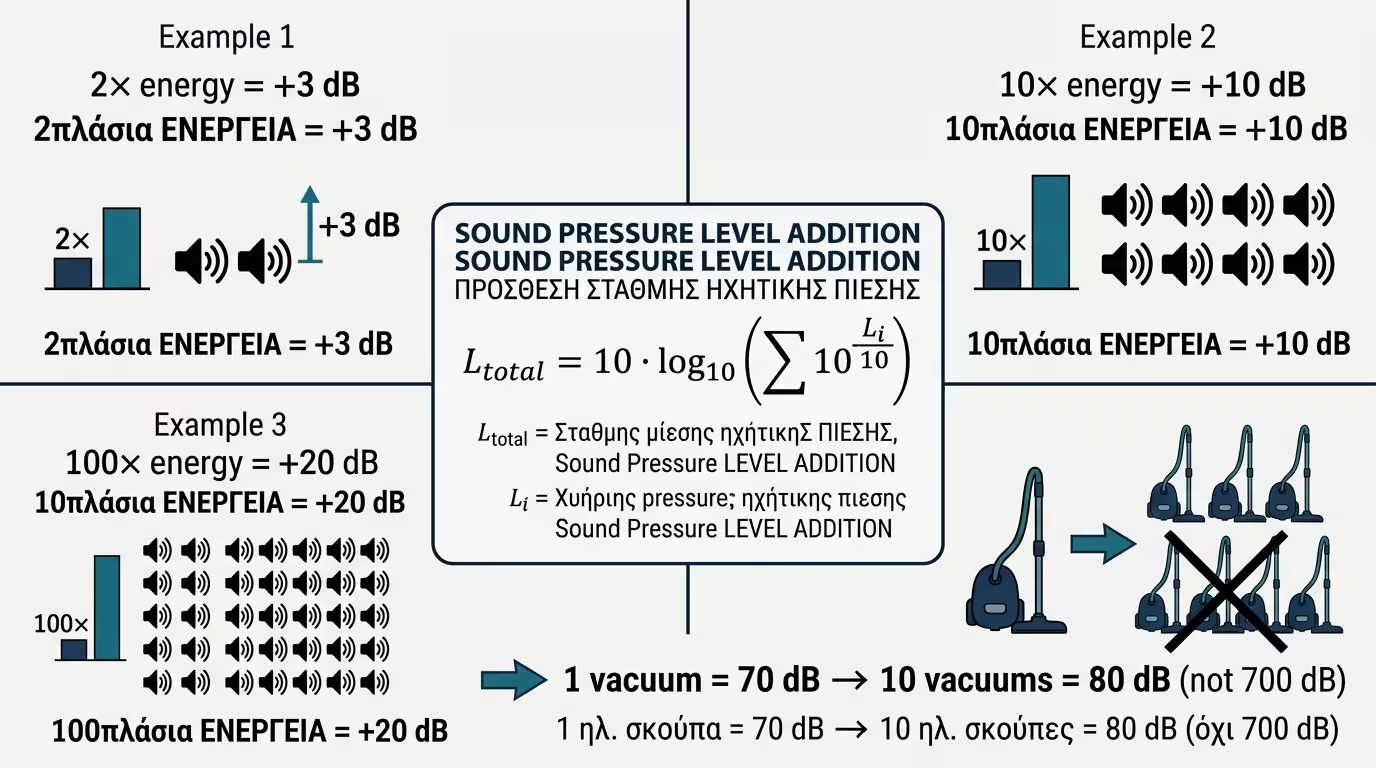
The formula for adding sound pressure levels (where L is the noise level in decibels) is: L_total = 10 · log₁₀(Σ 10^(Lᵢ/10)). Thanks to this formula, every time the acoustic energy doubles, the meter reading rises by only 3 dB.
Doubling energy = +3 dB. This means that if you put 10 vacuum cleaners together (10× energy), the noise doesn't become 700 dB but just 80 dB (70 + 10). The logarithmic scale "compresses" enormous differences into humanly readable numbers.
Here lies the biggest secret you need to know before paying for soundproofing. There is a huge difference between what the instrument shows (physical energy) and how our brain "translates" it (psychoacoustics).
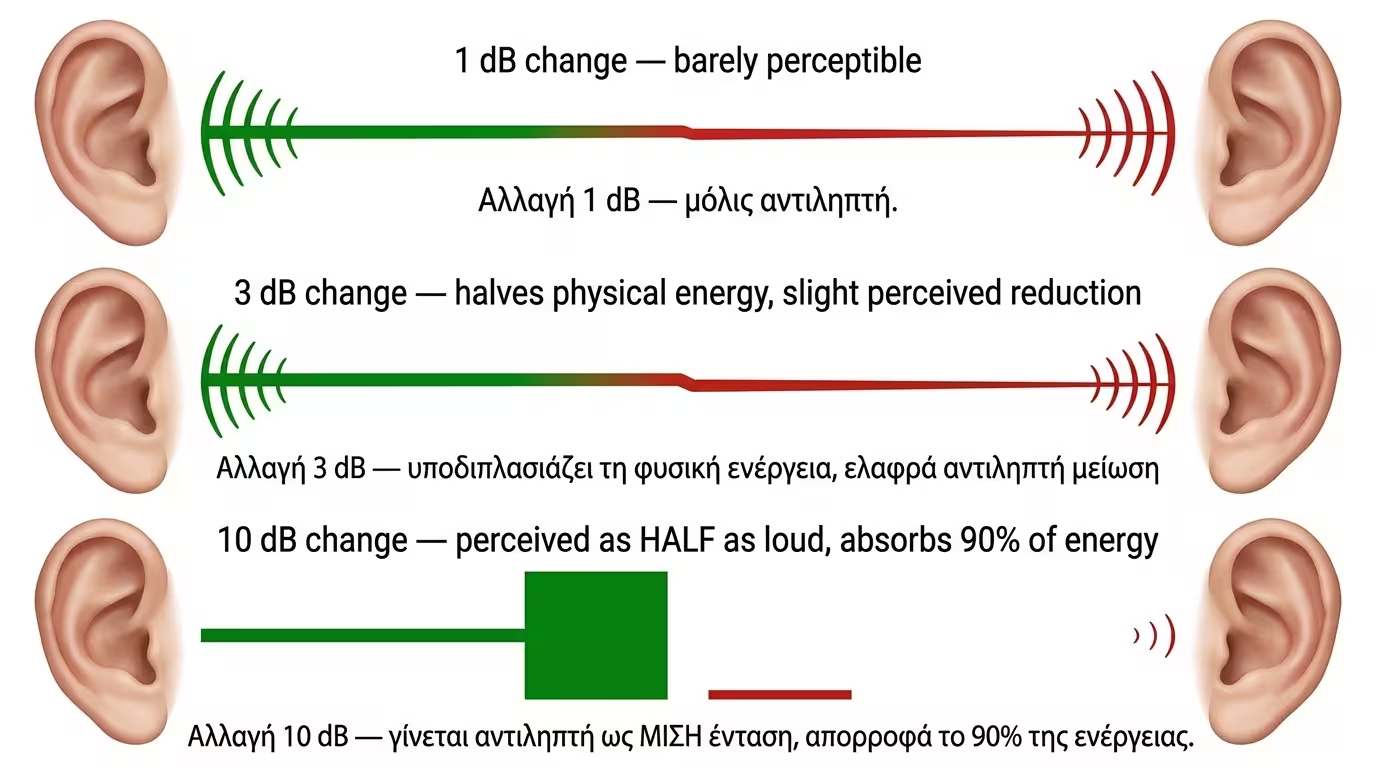
Barely perceptible to humans. You can detect it only under laboratory conditions, with headphones and complete silence.
The instrument reads that the acoustic energy has halved. Our ear, however, perceives only a slight reduction in loudness. Not enough to feel a noticeable difference at home.
For the human brain to perceive that a noise has "halved", the insulation must drop the level by a full 10 decibels. In reality, to lower sound by 10 dB means we have absorbed 90% of the acoustic energy!
💡 Note: When a material says it reduces noise by "only" 10 dB, don't be disappointed! Those 10 dB mean that to your ear, the noise will literally sound half as loud.
To know what you're up against when the neighbour plays music, here's where everyday sounds fall:
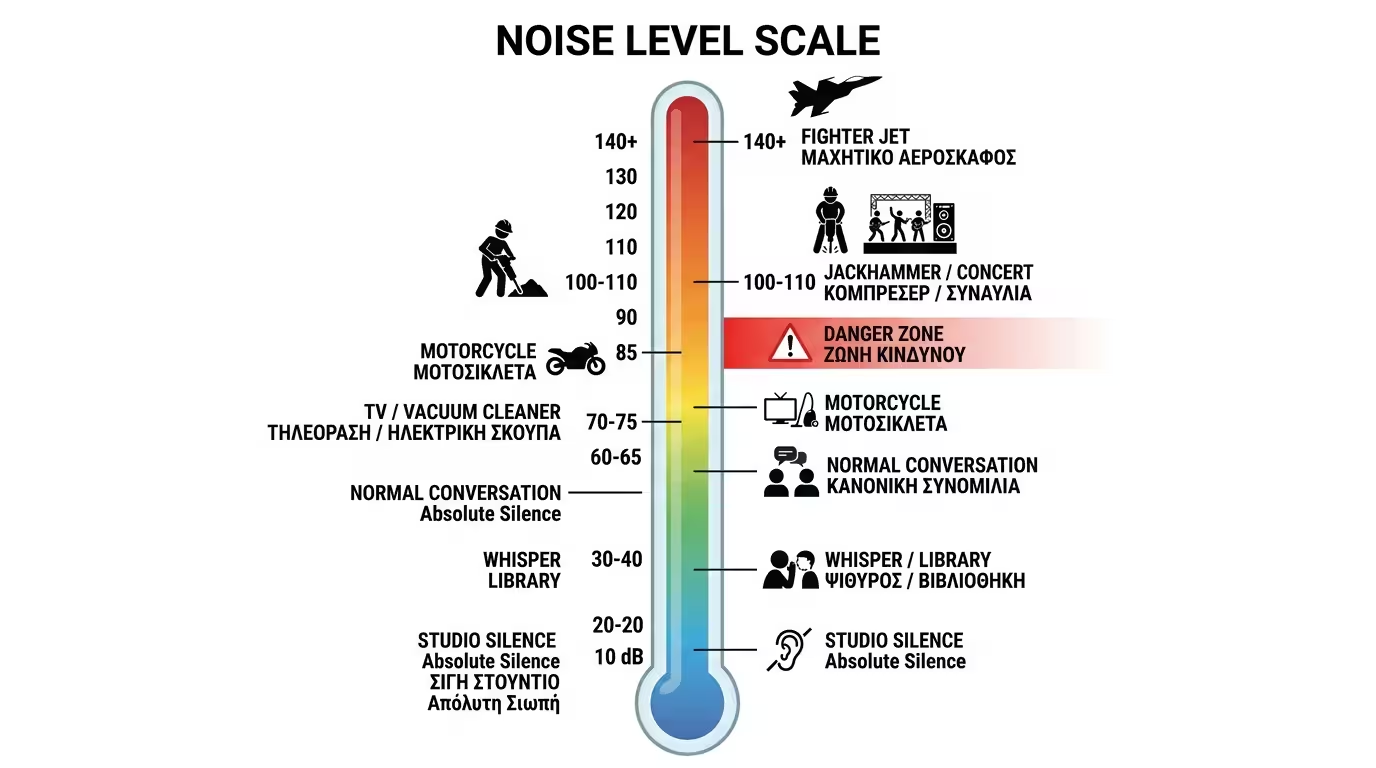
| Sound Source | Level (dB) | Effect |
|---|---|---|
| Absolute silence (Studio) | 10 – 20 dB | You hear your own breathing |
| Whisper / Library | 30 – 40 dB | Calm environment |
| Normal conversation | 60 – 65 dB | Tolerable |
| Loud TV / Vacuum cleaner | 70 – 75 dB | Annoying from next door |
| Motorcycle on the street | 85 – 90 dB | Long-term damage threshold |
| Jack-hammer / Concert | 100 – 110 dB | Ear pain after a short time |
| Fighter jet | 140+ dB | Immediate hearing damage |
The Bottom Line: Sound insulation is a tough battle. When you buy a material that claims to reduce noise by "only" 10 dB, don't despair! Those 10 dB mean your ear will literally hear half the noise. Don't judge materials by the logic of a tape measure, because with decibels… appearances are deceiving.
Return to category.
Go to categoryReturn to the central guide.
Go to guide