🔍 What It Examines
Can the element continue to support the building's weight while being roasted in flames, without buckling or collapsing?
In the world of building materials, nothing is absolutely "non-combustible" or "invulnerable" forever. If temperatures reach 1,000 °C and the fire burns for days, almost everything will collapse.
That's why legislation and engineers don't talk about "whether" a material will be destroyed, but about how long it will endure before failing. This time-based endurance is called Fire Resistance.
To obtain a fire-resistance certification, a structural element (e.g. a wall, a door, a column) is placed in special test furnaces and rigorously examined on three separate criteria: R, E and I.
R (Resistance / Load-bearing capacity) concerns exclusively the elements that "carry" the weight of the building, such as columns, beams and load-bearing walls.
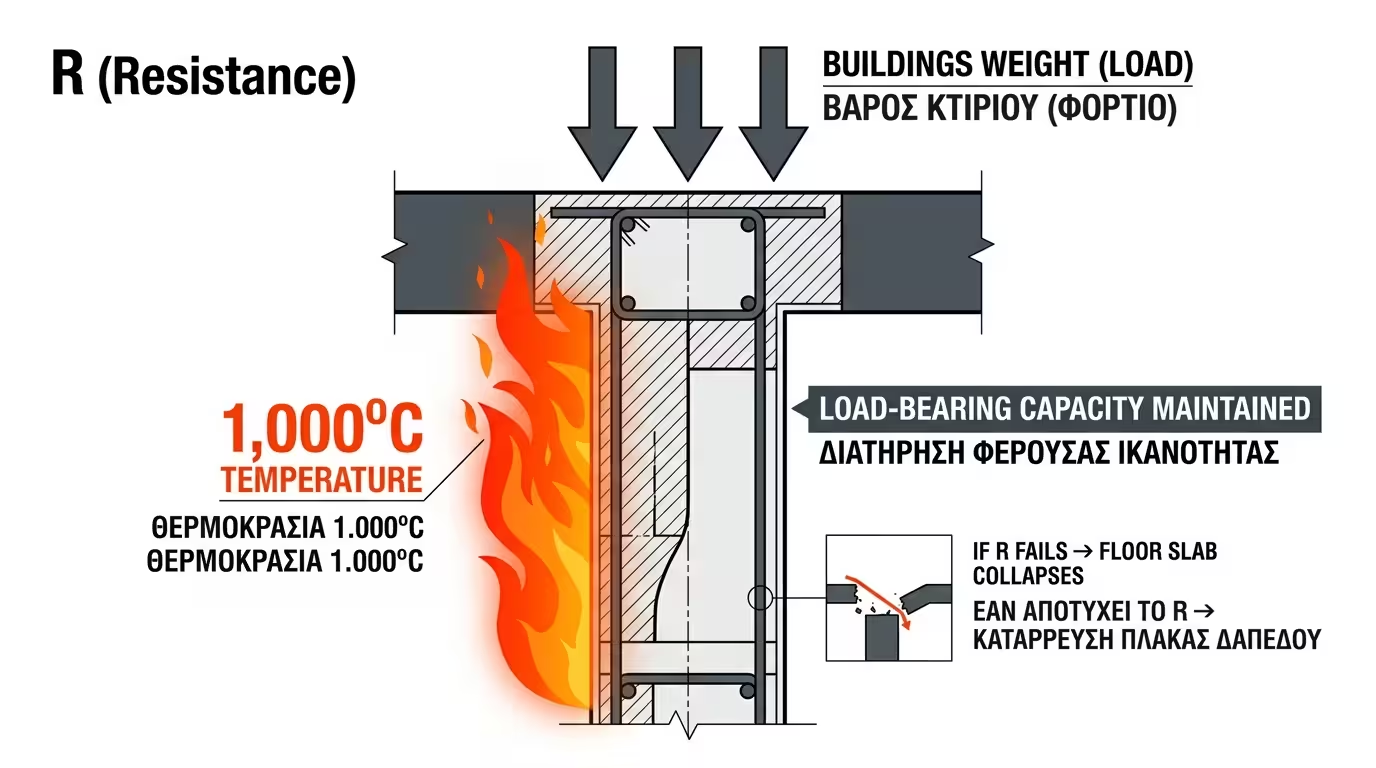
Can the element continue to support the building's weight while being roasted in flames, without buckling or collapsing?
If a column loses its load-bearing capacity (its R rating), the floor slab will fall, crushing those trying to escape as well as the firefighters who have entered to help. A structural element may burn externally, but internally it must retain its strength!
E (Integrity) concerns primarily separating elements, such as partition walls, doors and glazing.
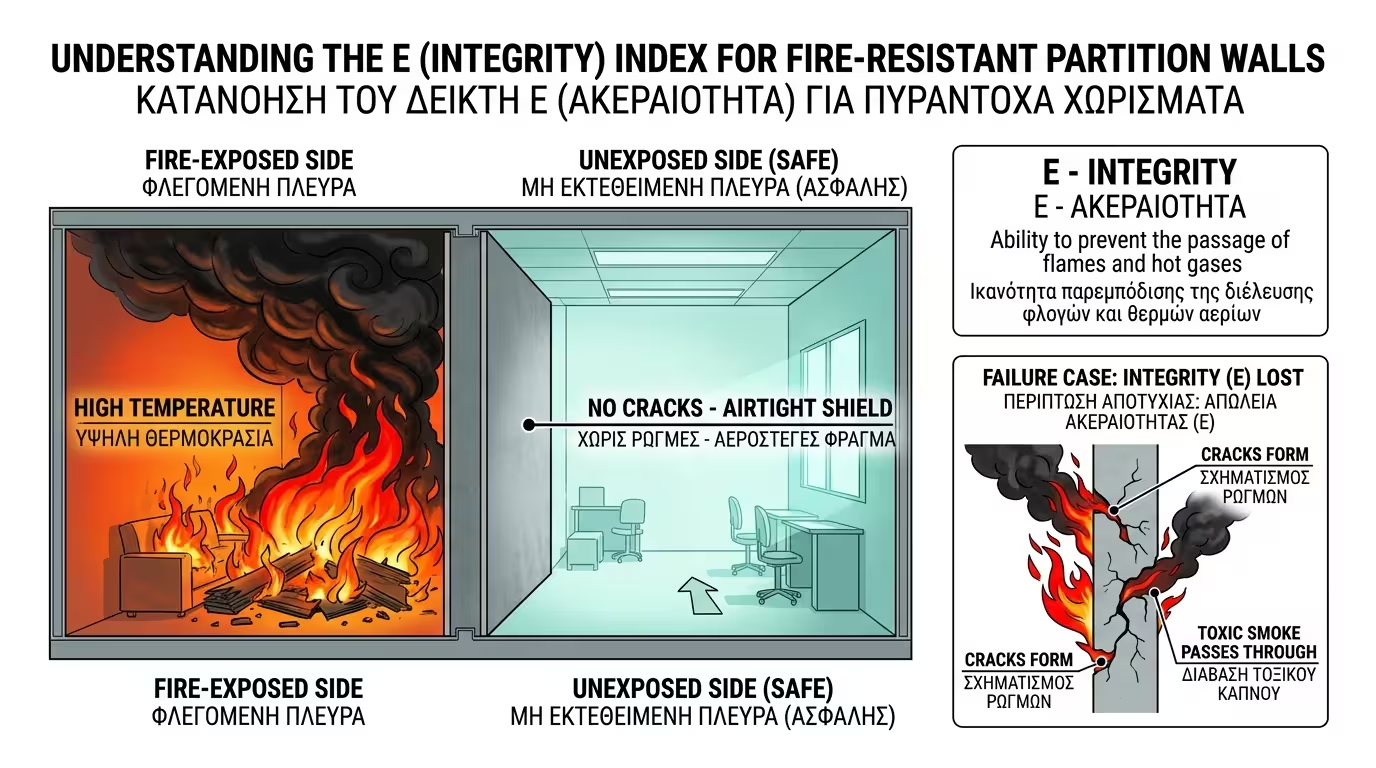
Can the wall or door remain solid, without cracking, splitting or developing holes from the fire?
If a wall fails the E criterion and cracks, flames and - more importantly - toxic black smoke will pass through the gaps into the adjacent (safe) room or escape corridor. Integrity (E) ensures the element acts as an absolutely airtight physical "shield".
I (Insulation) is perhaps the most misunderstood, yet the most "treacherous" criterion.
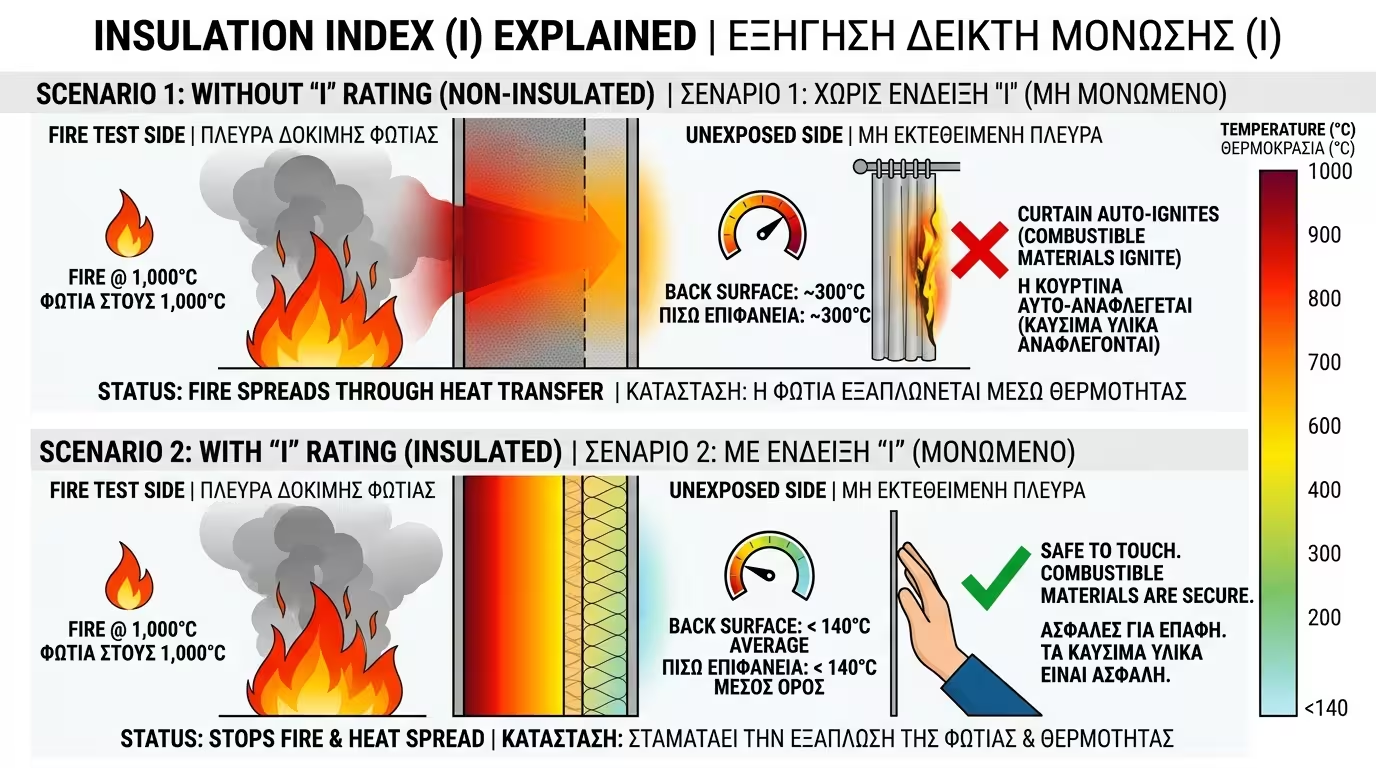
How much heat passes from the burning side to the back side of the wall or door?
Imagine the fire is burning in the neighbouring flat. Your wall hasn't collapsed (it has R) and hasn't cracked (it has E). But it's made of a material that conducts heat like a frying pan. The back surface (the one facing your living room) reaches 300 °C. The moment that scorching surface touches your curtain, your sofa, or simply a pile of papers, they will auto-ignite! The fire has jumped into your room without a single flame passing through!
Insulation (I) guarantees the unexposed side will remain cool enough (typically below 140 °C on average) so you can touch it without being burned and so your space won't catch fire.
When you see these indices, they are always accompanied by a number (in minutes).
Concrete Column R 90: This column guarantees it will support the building's weight for at least 90 minutes during a fire. (It has no E and I rating because a column doesn't separate rooms).
Fire-Rated Door EI 60: This door (which bears no load, hence no R) guarantees it will hold back flames (E) and won't let its back surface heat dangerously (I) for 60 minutes.
Load-Bearing Wall REI 120: The ultimate fortress. It will carry its load (R), won't crack (E) and won't overheat on the back (I) for a full 2 hours!
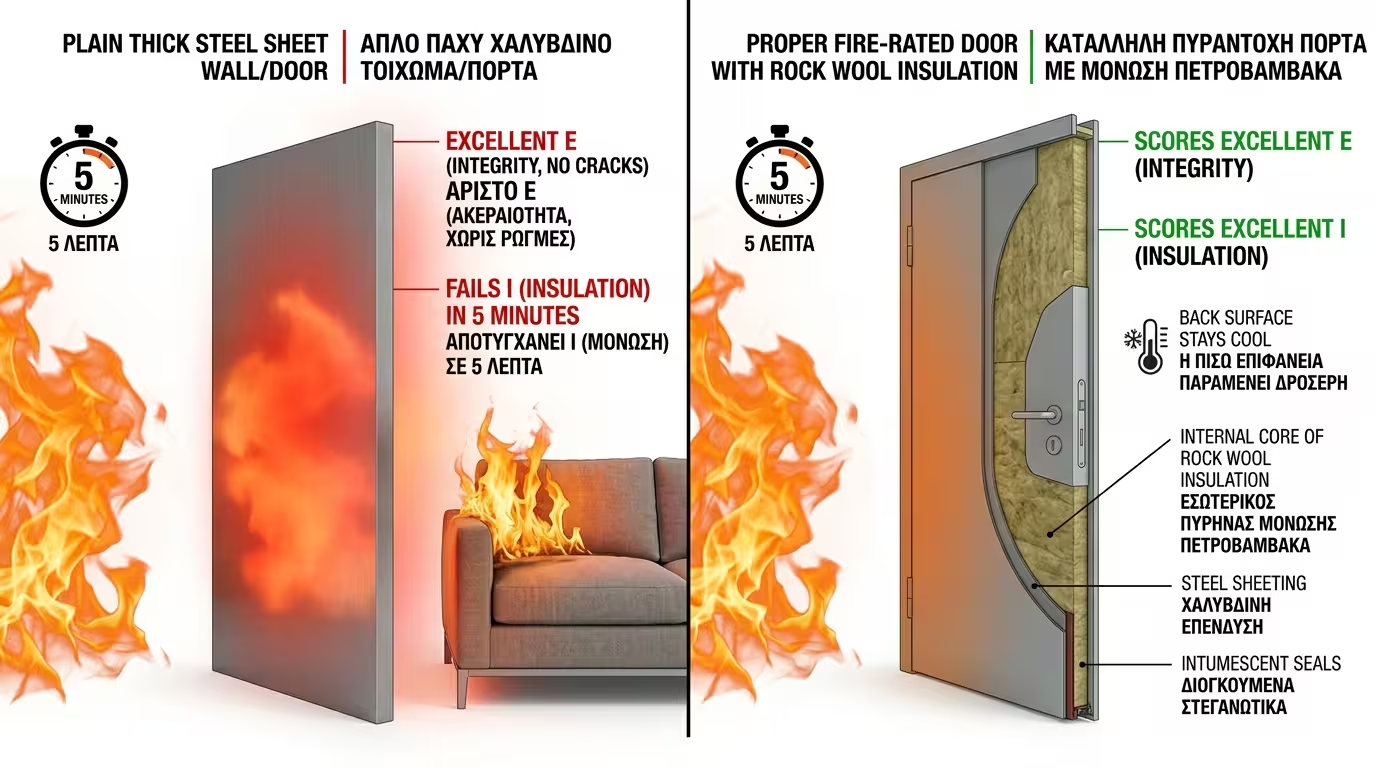
⚠️ The Plain Steel Sheet Example: If you build a wall (or a door) from a single, thick steel sheet, it will certainly score excellent E (Integrity), because metal won't crack easily to let flames through. However, it will fail spectacularly on I (Insulation). Within 5 minutes, the metal will glow red-hot and ignite anything touching it on the other side. That's why proper fire-rated doors aren't plain steel - they conceal special insulating materials (like rock wool) inside!
The Bottom Line: Fire safety isn't just about not seeing the flames. It's about the building standing upright (R), not choking you with smoke (E) and not radiating deadly heat (I). When choosing materials, make sure they cover all three letters in accordance with your engineer's requirements!
Return to category.
Go to categoryReturn to the central guide.
Go to guide