🏗️ Floor & Ceiling
Usually made of solid concrete, which naturally resists fire, as long as it has adequate cover.
Think of a warship submarine. If it's hit by a torpedo and water enters at one point, the entire vessel doesn't sink. It has heavy, watertight doors (bulkheads) that seal airtight. Water floods only that specific section, while the rest of the submarine stays dry and continues its voyage.
That is precisely the central idea of Fire Compartmentation in buildings. Instead of water, we have fire. And instead of watertight doors, we have fire-rated materials.
The goal isn't to prevent fire from ever starting (that's impossible - someone will always forget a stove on or a cable will short-circuit). The goal is, when fire breaks out, for it to stay locked inside the room where it started, until the Fire Brigade arrives.
A Fire Compartment is practically a "box" inside the building, made entirely of materials that resist fire for a specific time (e.g. 60 minutes – REI 60).
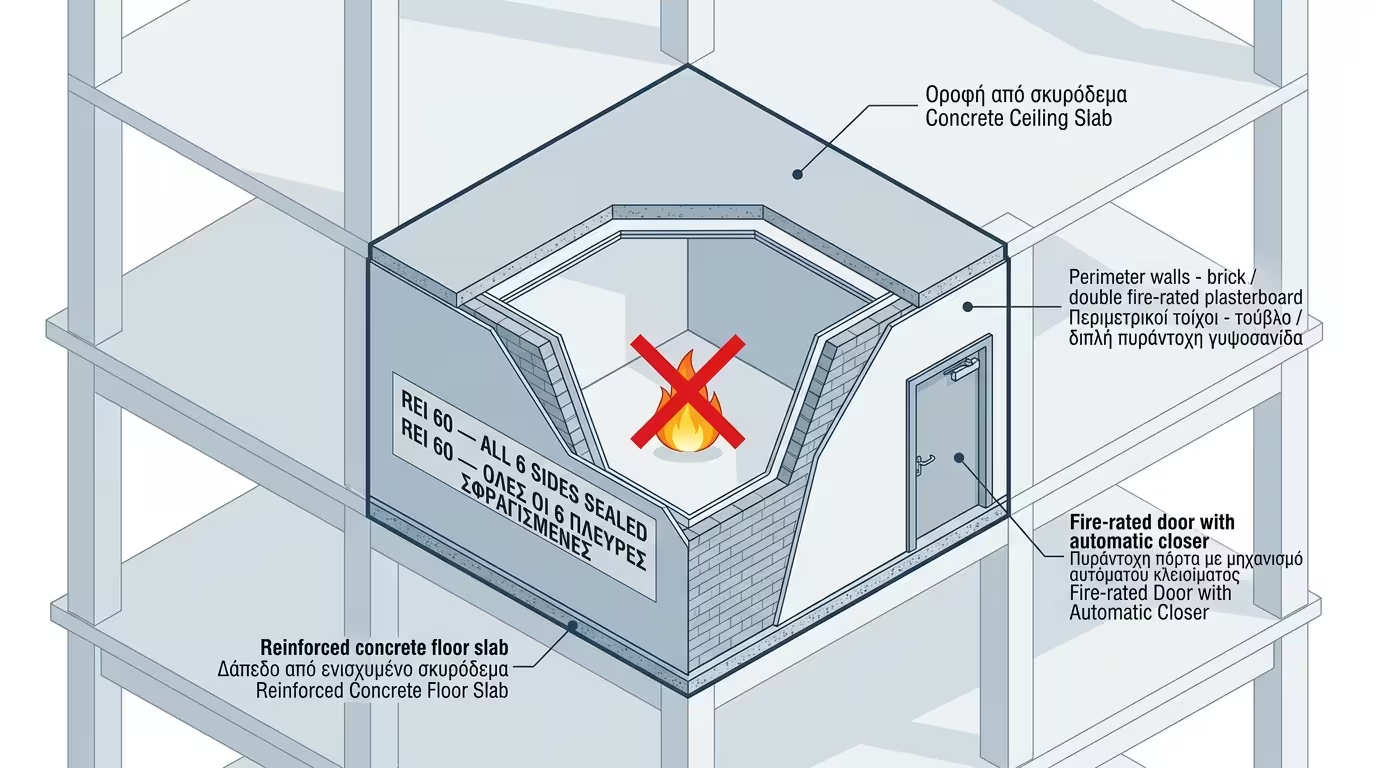
Usually made of solid concrete, which naturally resists fire, as long as it has adequate cover.
Built from bricks, aerated concrete (Ytong) or double fire-rated plasterboard. The wall must extend strictly up to the concrete slab and not stop above the false ceiling!
Every opening in these walls must be closed with a certified fire-rated door (with an automatic closing mechanism).
The box must be impenetrable from all 6 sides. A single crack is enough for fire or toxic smoke to pass through.
Fire compartmentation is not optional in commercial spaces or large residential buildings. It is mandated for three critical reasons.
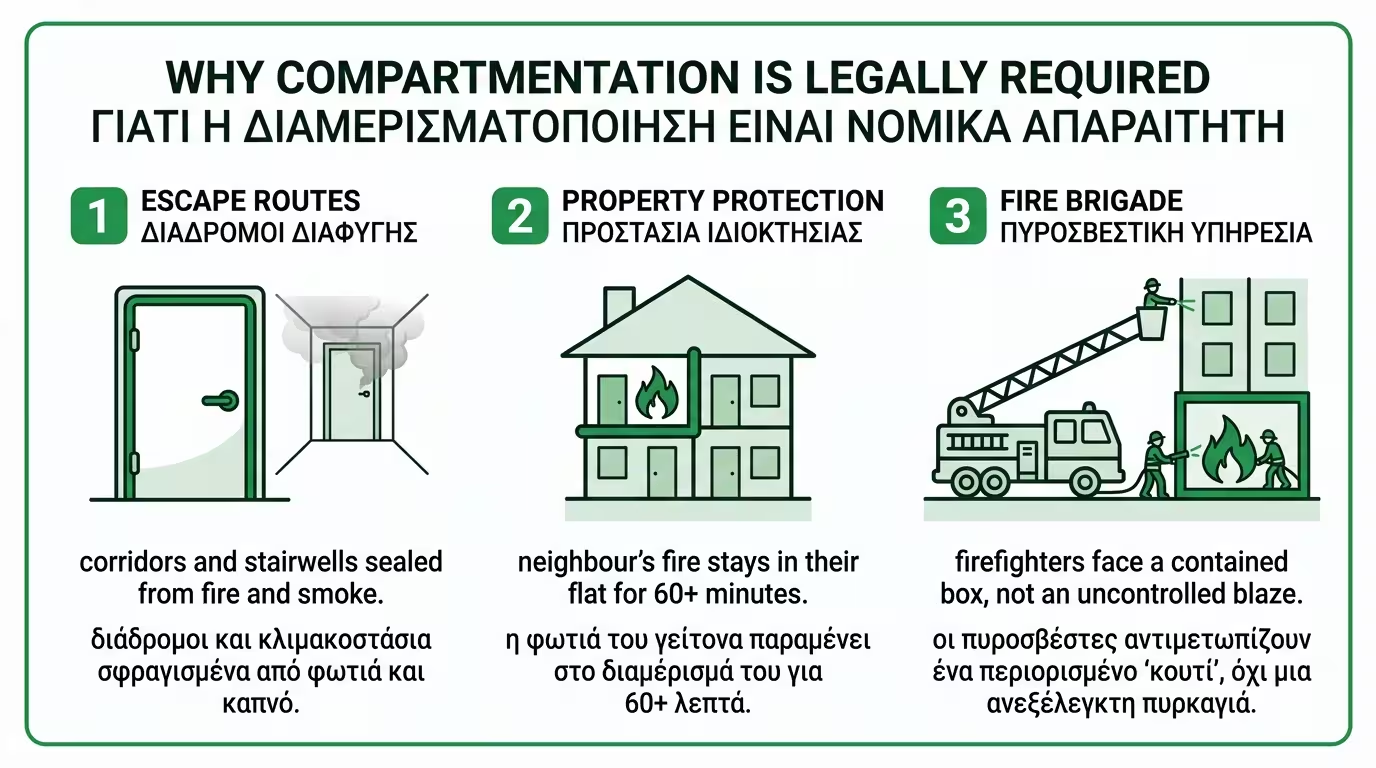
Corridors and stairwells are "Sacred" Fire Compartments. They are completely "sealed" from adjacent rooms, so people can run to the exit without breathing toxic smoke.
If you live in flat 3A, compartmentation guarantees that if your neighbour in 3B sets fire to their living room, your home will suffer absolutely nothing for at least 60 minutes.
Firefighters know they're dealing with a "box" of specific dimensions and not a fire running uncontrollably through the entire building.
It sounds perfect in theory. We build fire-rated walls and we're saved. However, a building must "breathe." Drainage pipes, power cables, fibre optics, heating pipes and air-conditioning ducts must all pass through.
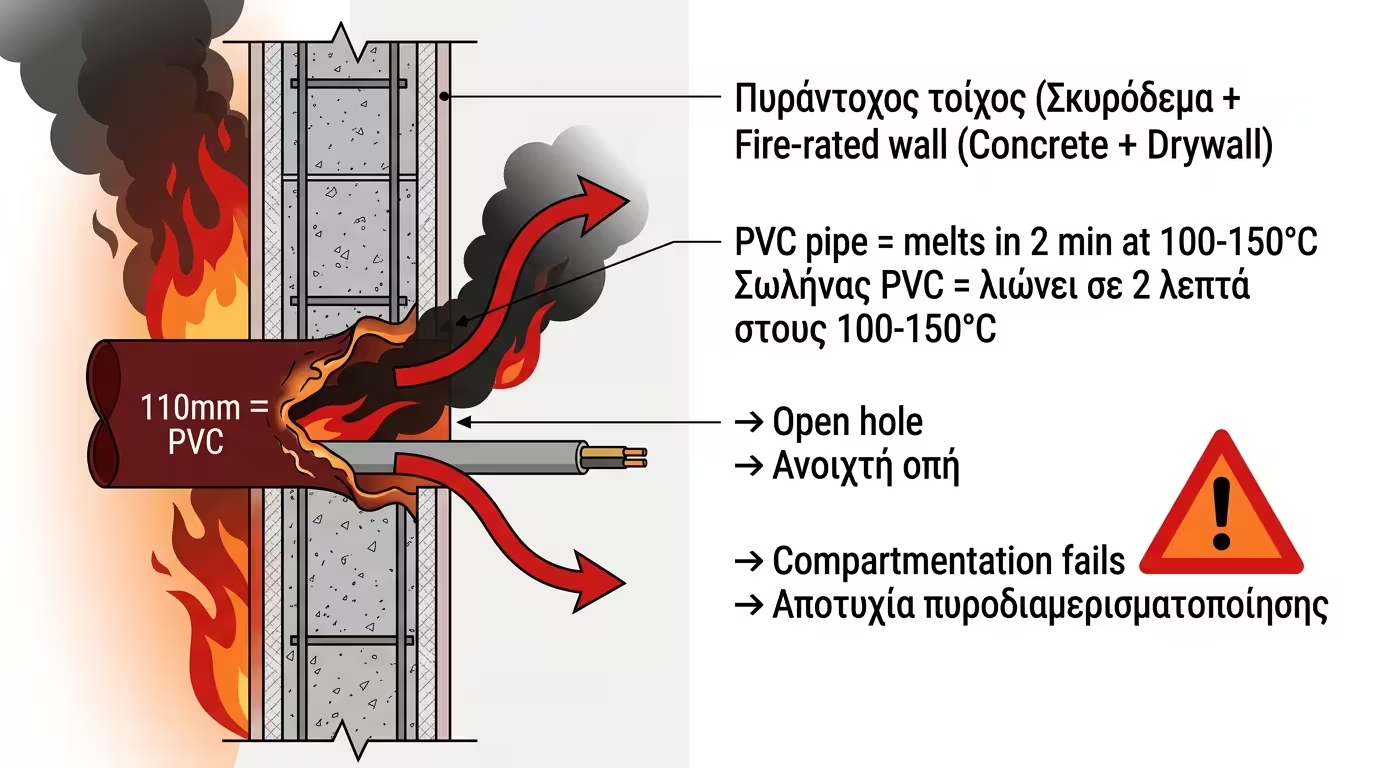
Every time the plumber or electrician drills through your perfect fire-rated wall to pass a plastic pipe… the compartmentation collapses!
The plastic pipe will melt in the first 2 minutes of fire, leaving a huge, wide-open hole through which fire will pass into the adjacent (safe) room.
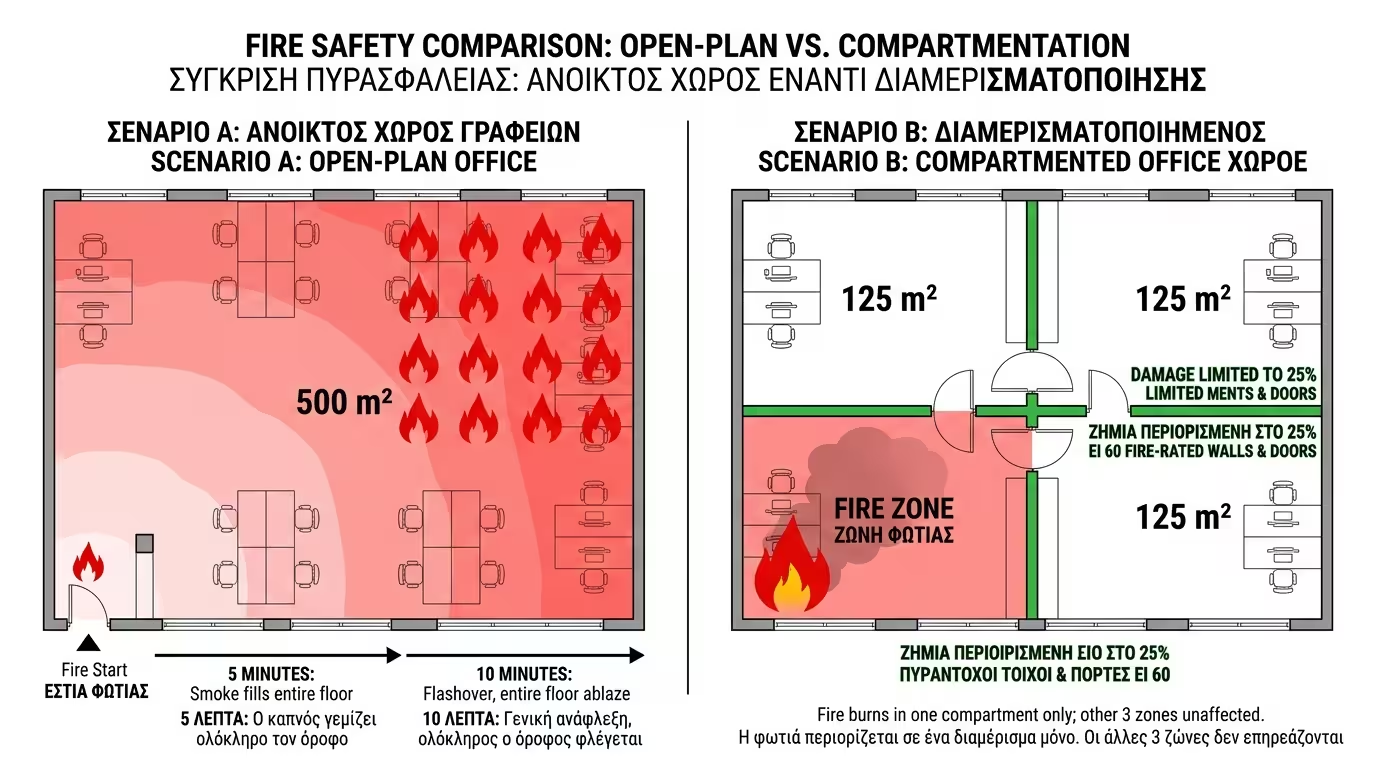
We rent a large floor and build offices.
We create a huge, unbroken open space of 500 m² with glass partitions. A computer catches fire in the corner. In 5 minutes, smoke has filled the entire floor. In 10 minutes, thermal radiation ignites the desks at the opposite end (Flashover). The entire floor is an inferno.
The engineer "divided" the floor into 4 separate fire compartments with fire-rated walls and doors (EI 60). The same fire starts in the computer. The room (125 m²) burns completely. But the flames stop at the wall. The other 3 zones of the floor notice nothing! People evacuate calmly. The damage was limited to 25% of the building.
Final Takeaway: Fire compartmentation is fire's "quarantine." Just as we confine a virus to one room to stop others catching it, we imprison the flames in exactly the same way. It is the safest and most effective way to save lives and property.
Return to category.
Go to categoryReturn to the central guide.
Go to guide