Rising Damp (Capillary Rise): Why Plaster Blisters and Paint Peels at
the Bottom of Your Walls
If you live in a ground floor, detached house or semi-basement, you've
probably seen this: the bottom of the wall (usually up to about one
metre high) looks like it has a "skin disease". Paint blisters, plaster
cracks and falls off, and a white, salty powder appears above the
skirting board.
Most homeowners call the decorator, scrape the wall, repaint with the
most expensive "waterproof" paint, and the following spring the problem
returns worse. Why? Because the source of the evil isn't in the wall.
It's under your feet, in the ground.
1. The Physics of Destruction: What Is Capillary Rise?
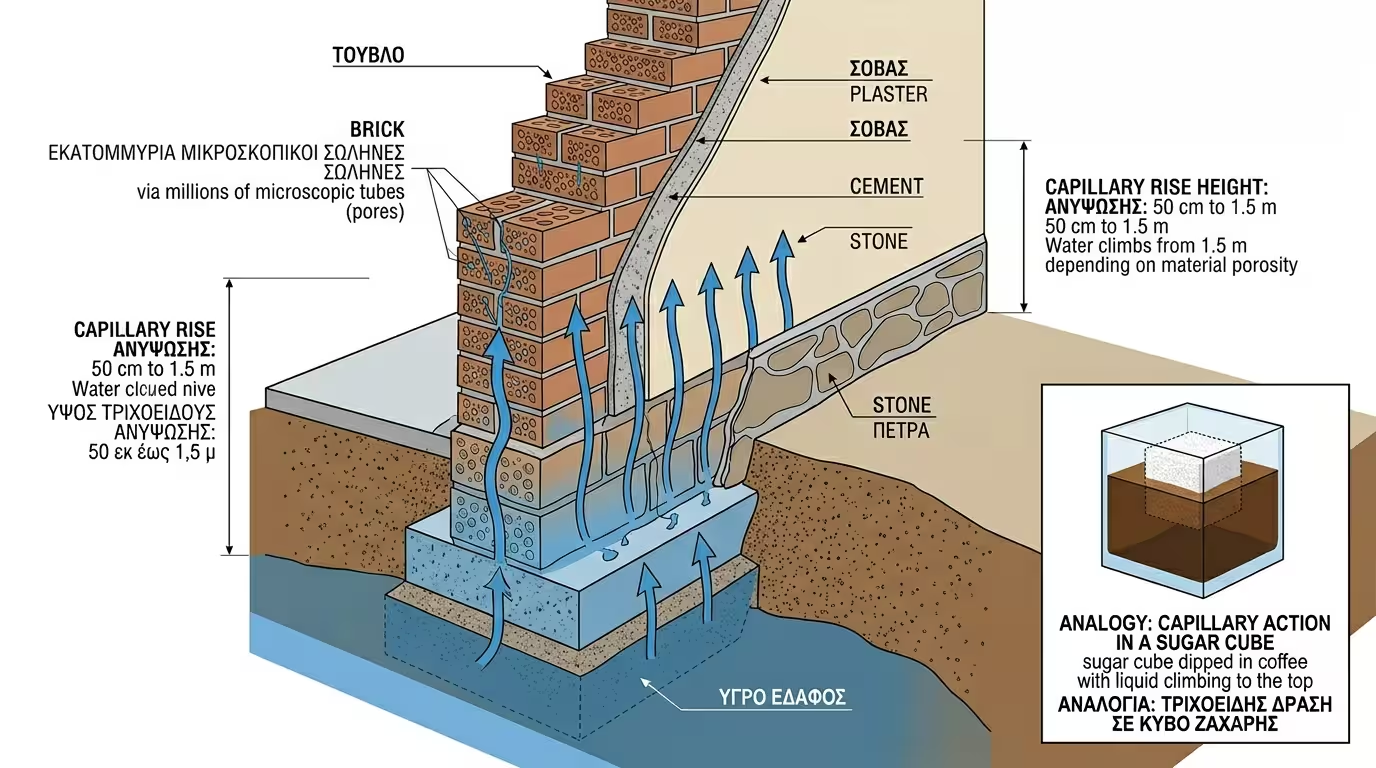
To understand how water rises upward, think of a sponge or a sugar
cube. If you dip just the base of the sugar cube in coffee, you'll see
the coffee "crawl" rapidly to the top.
🧱 Porous Materials
This is exactly what building materials do. Brick, plaster, cement
and stone are not perfectly solid. Inside they hide millions of
microscopic, invisible tubes (pores). When a building's foundations
rest on wet ground without proper waterproofing applied during
construction, these tiny pores silently suck up groundwater from
below. This phenomenon is known as
Capillary Rise (and its visible result is called Rising Damp).
📐 Rise Height
Water can "climb" inside the wall from
50 cm to 1.5 metres depending on how porous the material
is and how wet the ground is.
2. Why Does the Plaster Crack? (The Role of Salts)
Water alone wouldn't destroy plaster so violently (it would just make
it wet). The real destruction is caused by a hidden "passenger" the
water carries:
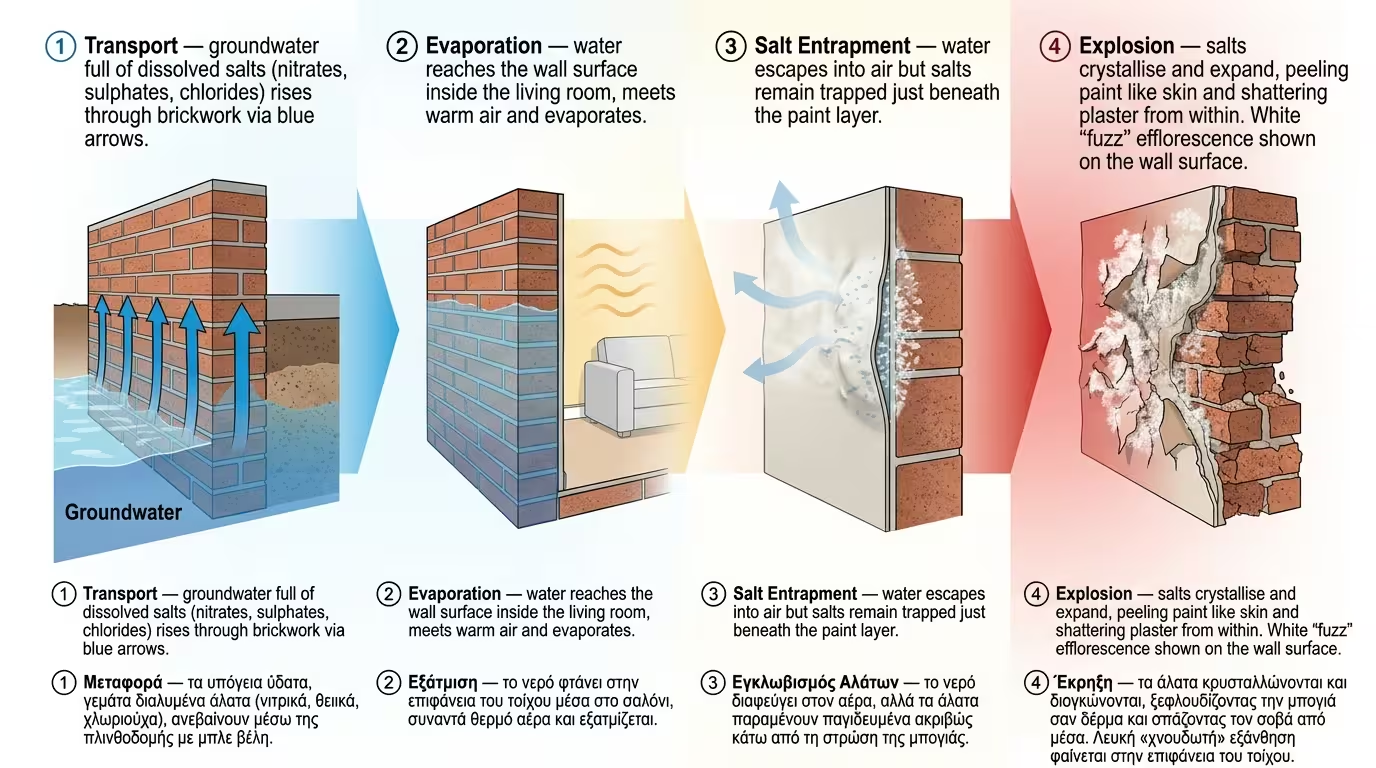
underground salts (nitrates, sulphates, chlorides) .
1️⃣ Transport
Groundwater (full of dissolved salts) rises through the brickwork.
2️⃣ Evaporation
When it reaches the wall surface (inside your living room), it meets
warm air and evaporates.
3️⃣ Salt Entrapment
The water escapes into the air, but the salts stay behind, trapped
just beneath the paint.
4️⃣ The Explosion
As the salts dry, they crystallise and expand .
This expansion peels the paint like a skin and shatters the plaster
from within! The white "fuzz" you see on the wall is these exact
salts (efflorescence).
3. The Ground-Floor Experiment
Our digital house is built directly on the ground with no foundation
waterproofing. In winter, the living room wall blisters.
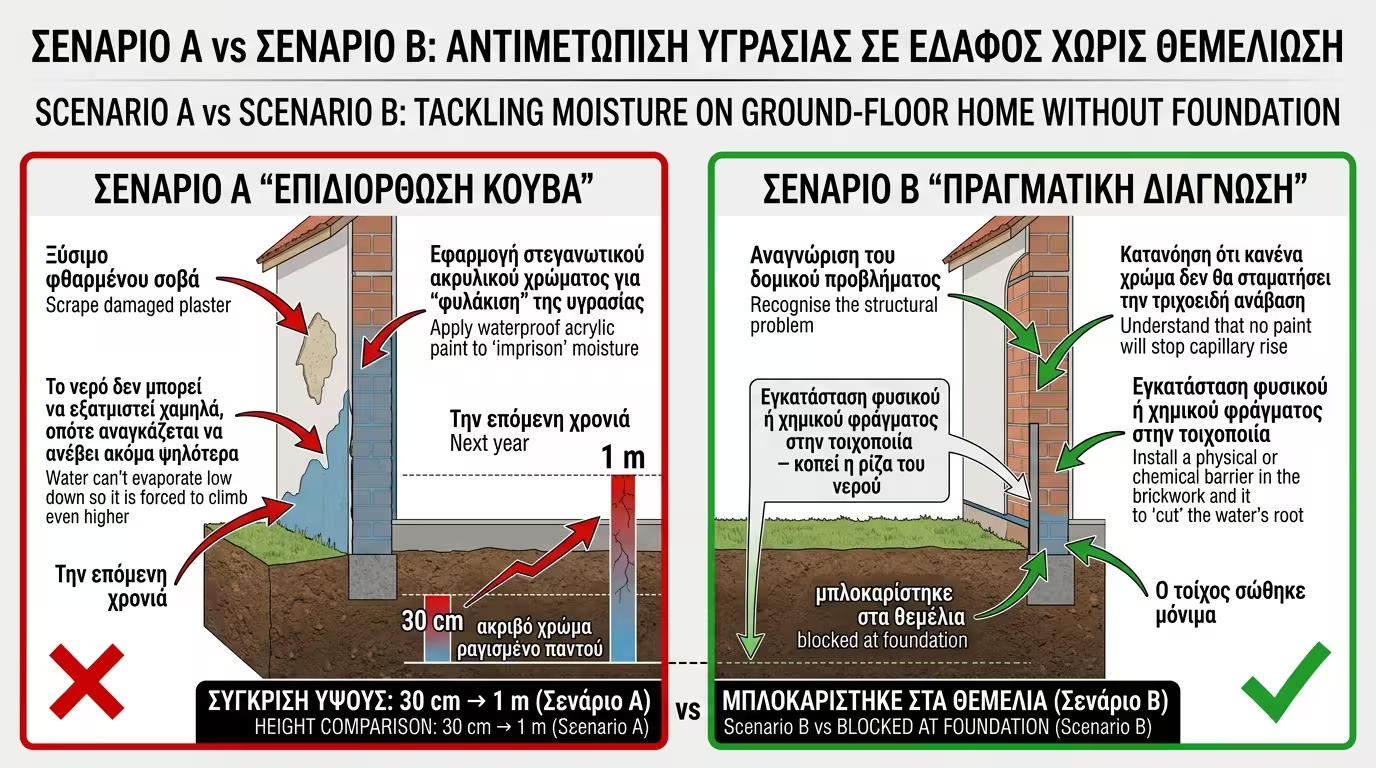
🔴 Scenario A (The "Bucket" Fix)
We decide to fix it cheaply. We scrape the damaged plaster, apply
some filler and paint the wall with an "waterproof" acrylic, hoping
to "imprison" the moisture. What did we achieve? The water keeps
rising from the ground, but now it can't evaporate low down because
our new waterproof paint blocks it. So it is forced to climb even higher! Next year, instead of moisture at 30 cm, we have a blistered wall at
1 metre, and our expensive paint has cracked
everywhere.
🟢 Scenario B (The Real Diagnosis)
We recognise that the problem is structural (mechanical) in nature.
The water comes from below, rising through the foundations. We
understand that no paint and no plaster will ever stop it unless we
"cut" the root of capillary rise inside the brickwork itself. The
house needs a barrier - a physical or chemical break
that prevents water from climbing any further.
The Final Conclusion: Rising damp isn't just a stain. It's
a relentless "pump" pulling water and salts from the earth into your living
room. Don't waste money on paints and simple fillers. To save the wall, we
must build a barrier that tells the water: "This far and no further."