🧪 Component A (The Powder)
A bag that looks like ordinary cement but contains special quartz aggregates and chemical additives.
When tiling a balcony, we need a waterproofing system that does three things at once: stops water, doesn't tear when the building contracts, and provides the perfect "keyed" substrate for the tile adhesive to grip.
This triple combination is achieved only with Two-Component Cementitious Coatings.
At a building supplies shop, this product doesn't come in a single can. It's sold as a "set".
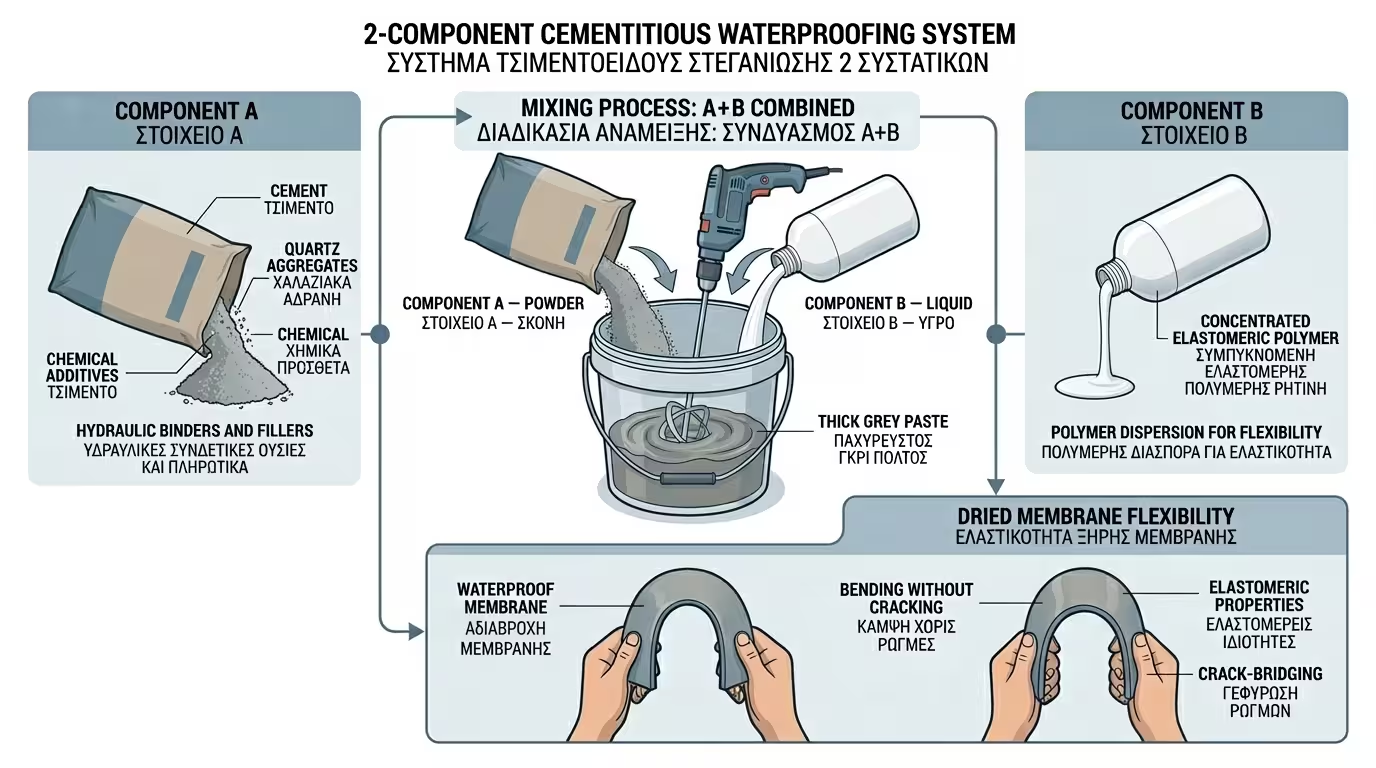
A bag that looks like ordinary cement but contains special quartz aggregates and chemical additives.
A bottle that looks like white milk. It's pure, concentrated resin (elastomeric polymers).
When the installer mixes the bag with the liquid (instead of water), a thick paste forms. The cement provides strength and hardness, while the resin provides absolute waterproofing and flexibility. The result? A "cement" that you can literally bend with your hands without breaking once it dries!
Three critical advantages make 2-component cementitious products irreplaceable:
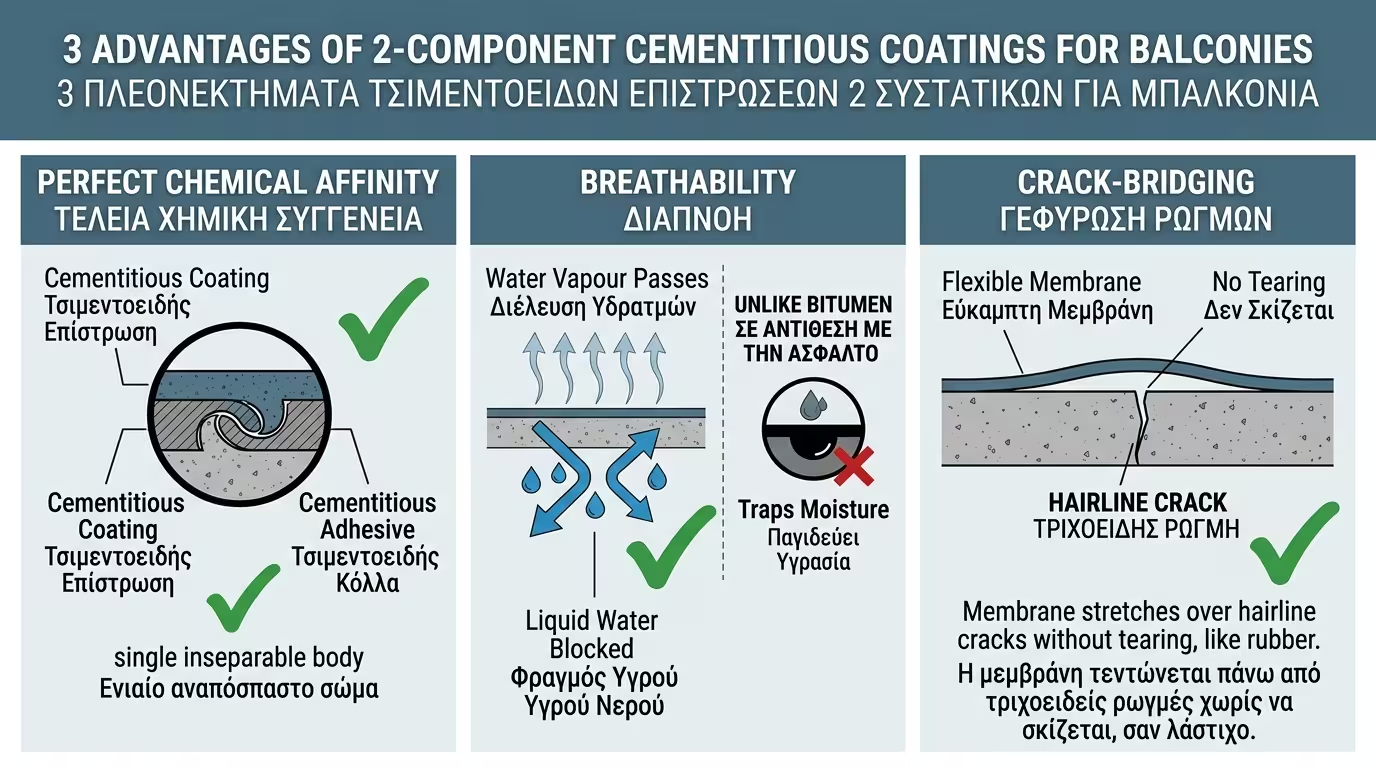
Tile adhesive (also cementitious) looks for a rough, cement surface to grip onto. The cementitious coating offers exactly that kind of textured, mineral surface. When the two materials meet, they "bond" into a single, inseparable body that cannot be pulled apart.
Unlike bitumen sheet that "suffocates" concrete by trapping all moisture underneath, the cementitious coating allows water vapour (the residual moisture that may still be trapped inside the concrete slab) to evaporate freely upward through the membrane. This means no blisters form that could lift or pop the tiles off.
Because it's extremely elastic, if the balcony develops a hairline crack from an earthquake or thermal contraction, the membrane will stretch like rubber and keep water out.
Application is relatively simple, but demands care with timing and cleanliness:
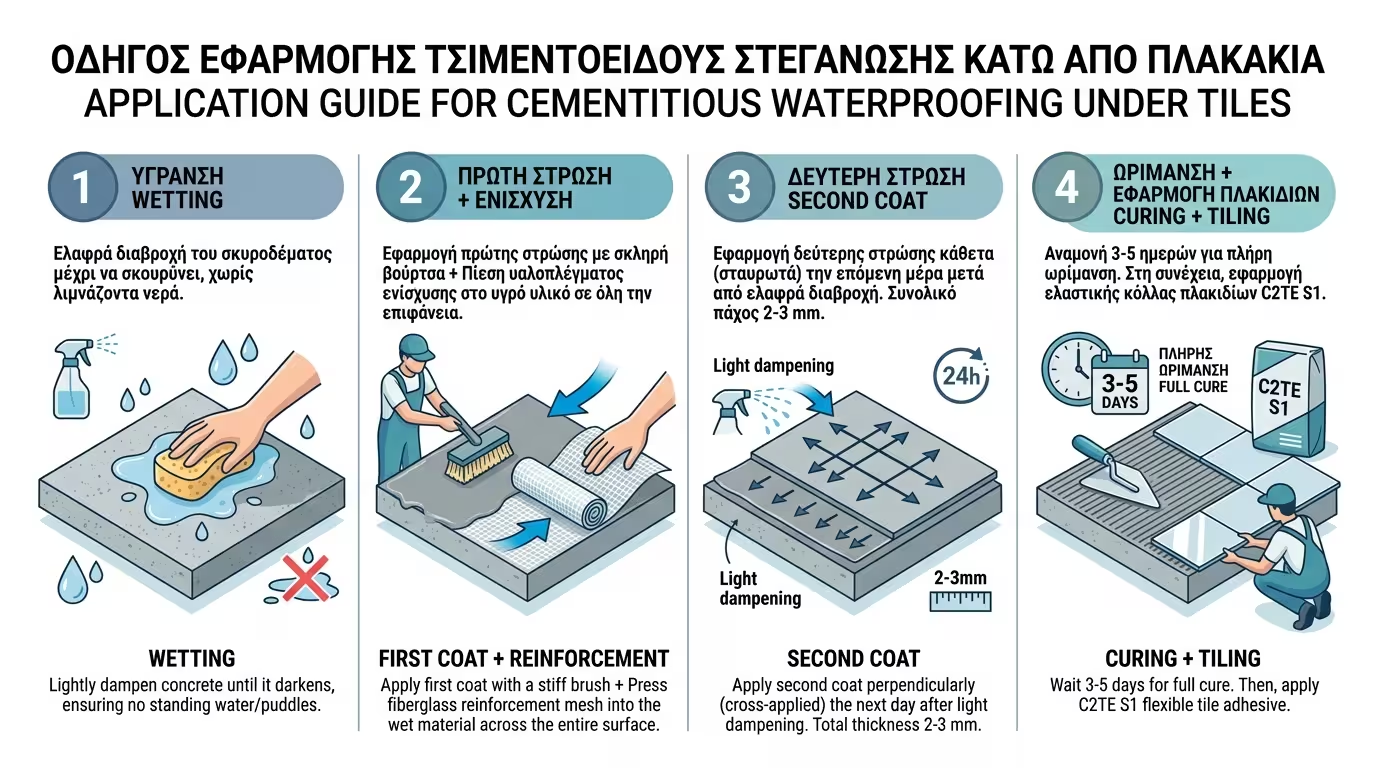
Unlike polyurethane that needs the surface "bone-dry", the cementitious coating requires dampening. Lightly wet the concrete (until it darkens), but don't leave puddles. This stops the dry concrete from "sucking" the mix's moisture too quickly.
Spread the material with a stiff brush. While it's still completely wet, "press" a reinforcement mesh (fibreglass) into it across the entire surface. The mesh is the skeleton that prevents future tearing.
Once the first coat has "pulled" (usually the next day), lightly dampen again and apply the second layer perpendicular to the first (cross-applied). Total membrane thickness reaches about 2-3 mm.
Wait 3 to 5 days for the system to fully cure. Then the tiler can bond the tiles using strictly flexible adhesive (class C2TE S1).
Our balcony is ready for tiles.
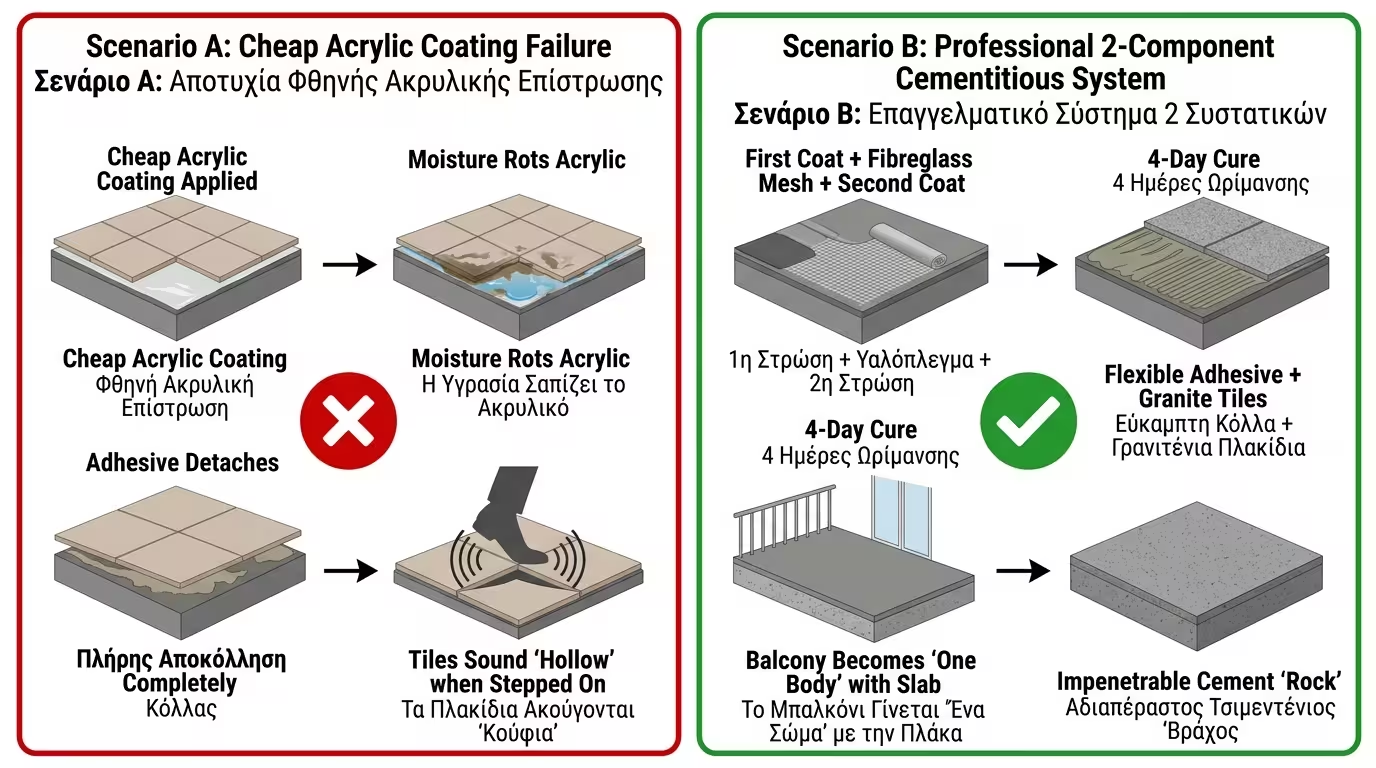
We decide to use a cheap acrylic coating (like paint). We apply the adhesive and tiles. The acrylic can't withstand constant moisture entrapment under the adhesive. It rots, pulps and the adhesive completely detaches. The tiles sound "hollow" when you step on them.
We mix the 2-component cementitious product. Apply the first coat, embed the fibreglass mesh, apply the second coat. Wait 4 days. Spread the flexible adhesive and lay the granite tiles. The balcony has become "one body" with the slab. No matter how much rain falls or how often we hose it down, the water meets an impenetrable, cement "rock".
The Final Conclusion: Two-component cementitious coatings are the "unsung hero" of balconies. They hide permanently beneath your tiles, you never see them, but they are the sole reason your building's reinforcement stays dry and safe.
Return to category.
Go to categoryReturn to the central guide.
Go to guide