Cementitious Waterproofing Coatings: Materials That Withstand Enormous, Permanent Water Pressure

Imagine the wall of a swimming pool or a lift shaft. Water pushes relentlessly against the concrete, looking for a way through. If you brush a soft, flexible membrane onto such a wall, the water pressure (whether from outside in or inside out) will inflate it like a balloon and eventually burst it.

To withstand these conditions, we need a material that shares the same "nature" as concrete. These are Cementitious Waterproofing Coatings. They consist of special cements, quartz sand and active polymers. When they dry, they don't merely form a "membrane" on the wall - they root into the pores of the concrete, becoming one body with it!

1. The 2 "Fighters" in This Category (1- vs 2-Component)

Depending on the demands of your project, cementitious coatings fall into two major sub-categories:

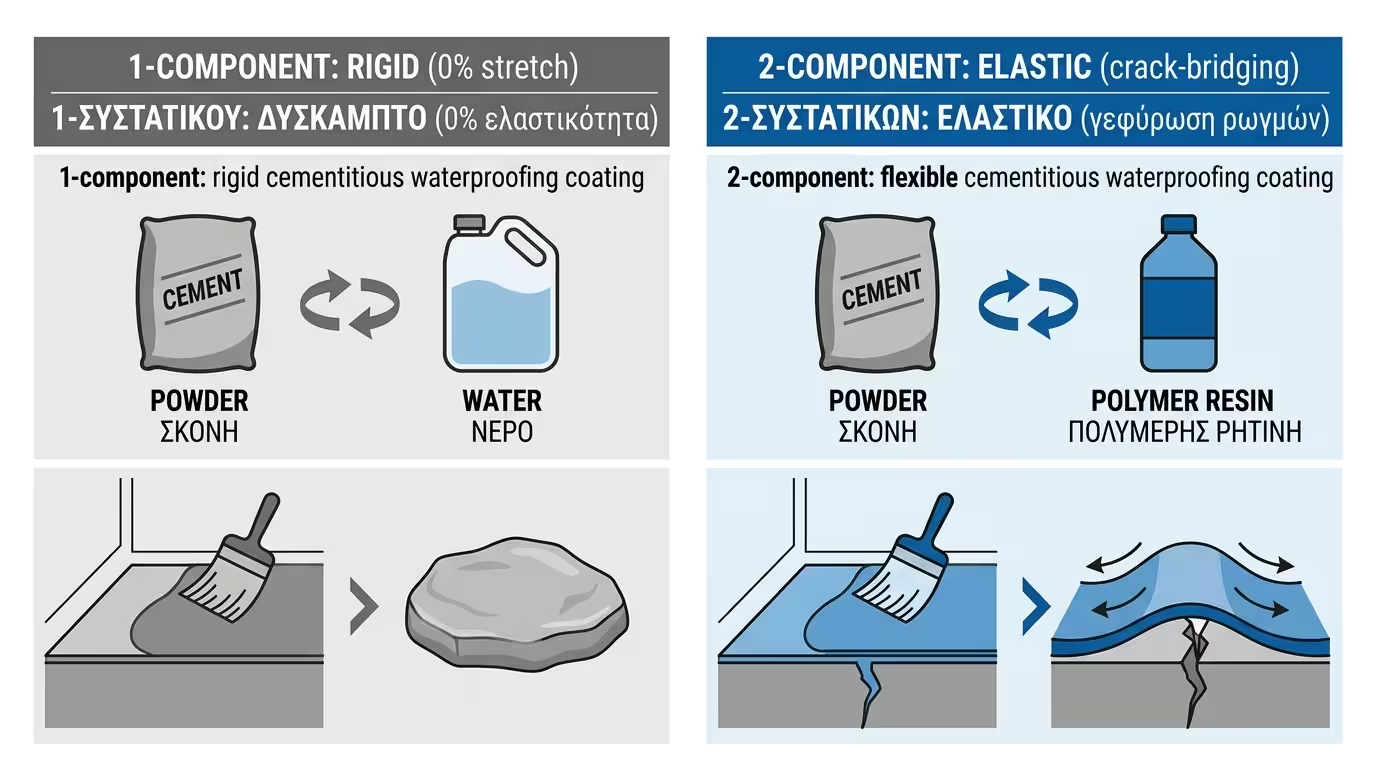
Cementitious coatings - 1-component (bag) vs 2-component (bag + resin)

🪨 Rigid (One-Component)

Sold in bags (like ordinary cement) and mixed only with water. Once cured, they literally turn to "stone". They have zero elasticity.

Where they go: Ideal for basement retaining walls, lift shafts and water tanks that are absolutely stable (no vibrations or cracks) and subjected to enormous hydrostatic pressure.
🧱 Flexible & Elastic (Two-Component)

Sold as a "kit" (one bag of powder and one container of resin/emulsion). You add no water - you mix the powder with the resin. The result is an "elastic cement". It can bridge cracks (crack-bridging) that will form in the future due to thermal movement or earthquakes.

Where they go: The top choice for external walls of deep basements (subjected to soil pressure), roofs, swimming pools and under balcony tiles.

2. The Big Application Secret: Pre-Wetting the Wall

The most common mistake made by unskilled workers is treating cementitious coatings like paint. They are not! If you brush a cementitious product onto a bone-dry, hot concrete wall, the wall will instantly suck the moisture out of the mix. The material will "burn", crumble like sand and peel off.

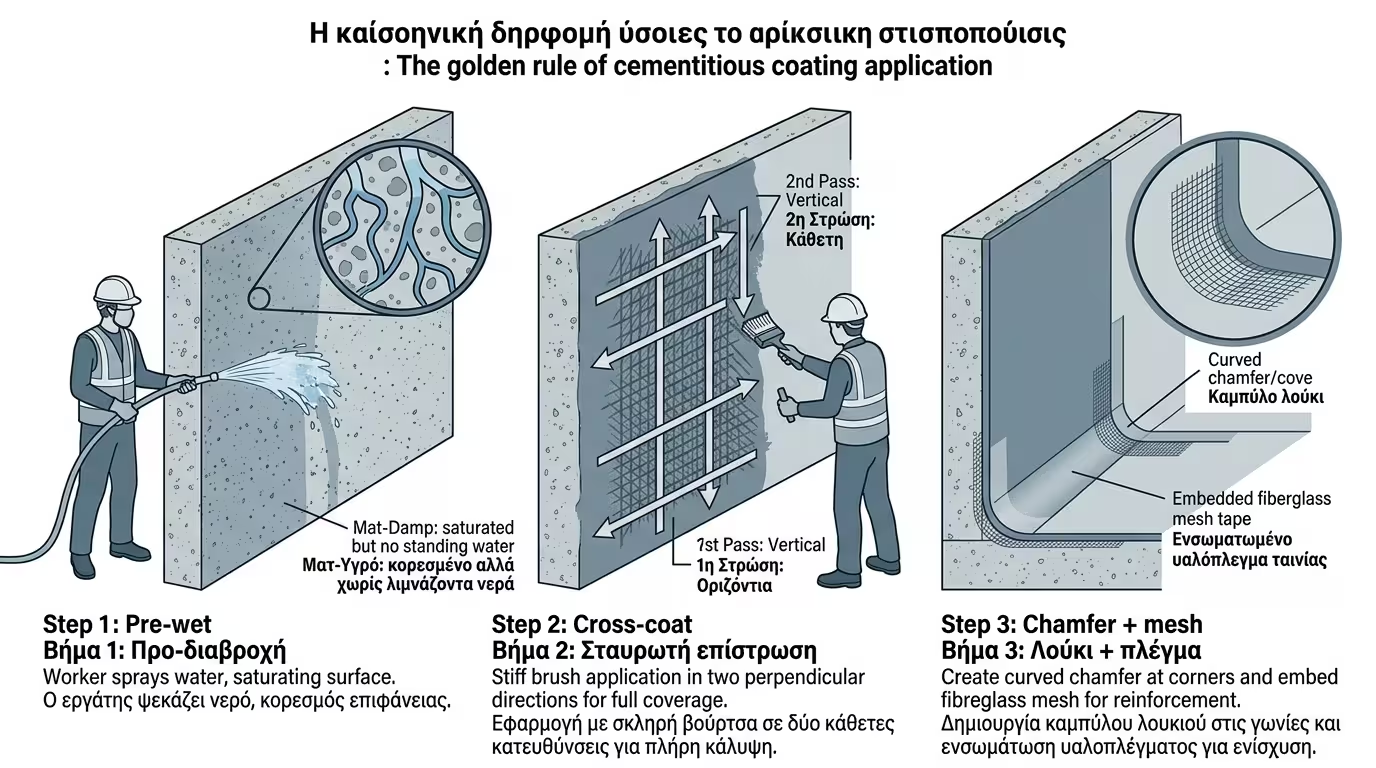
Cementitious coating application - pre-wetting and cross-coat technique

💧 The Golden Rule (Pre-Wetting)

Before applying the first coat, thoroughly wet the concrete with a hose. The wall should be saturated but without standing water (Mat-Damp). Only then do the concrete pores open up to let the material penetrate and "lock in" chemically.

🔄 Cross-Applied Coats

Apply 2 to 3 coats cross-hatched (one horizontal, the next vertical) with a stiff brush. Cross-coating ensures full coverage with no "blind spots" and adequate film thickness.

📐 Chamfer at Corners

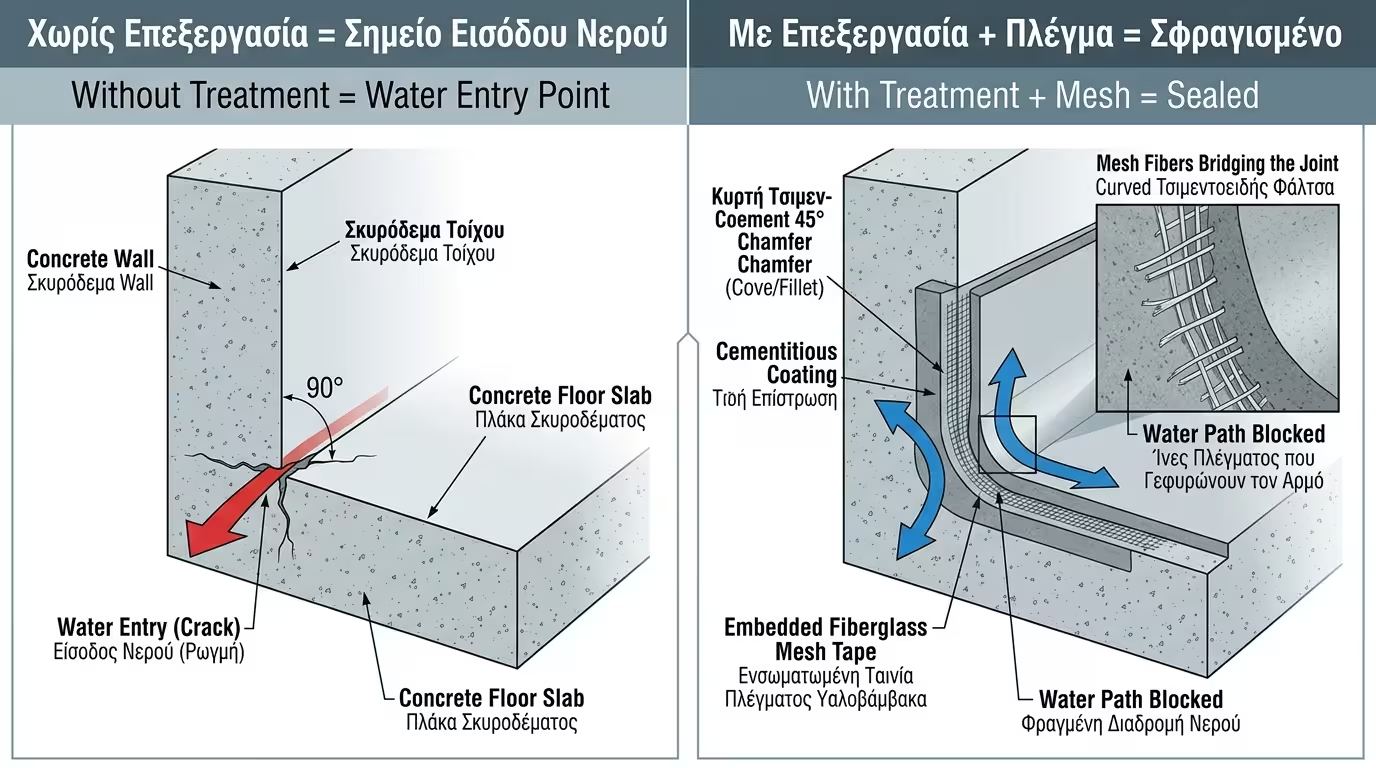
At corners (where the floor meets the wall) always form a curved "chamfer" and embed fibreglass mesh tape, because that is where water always finds a way in!

3. The Model Experiment (The 10×10 Basement)

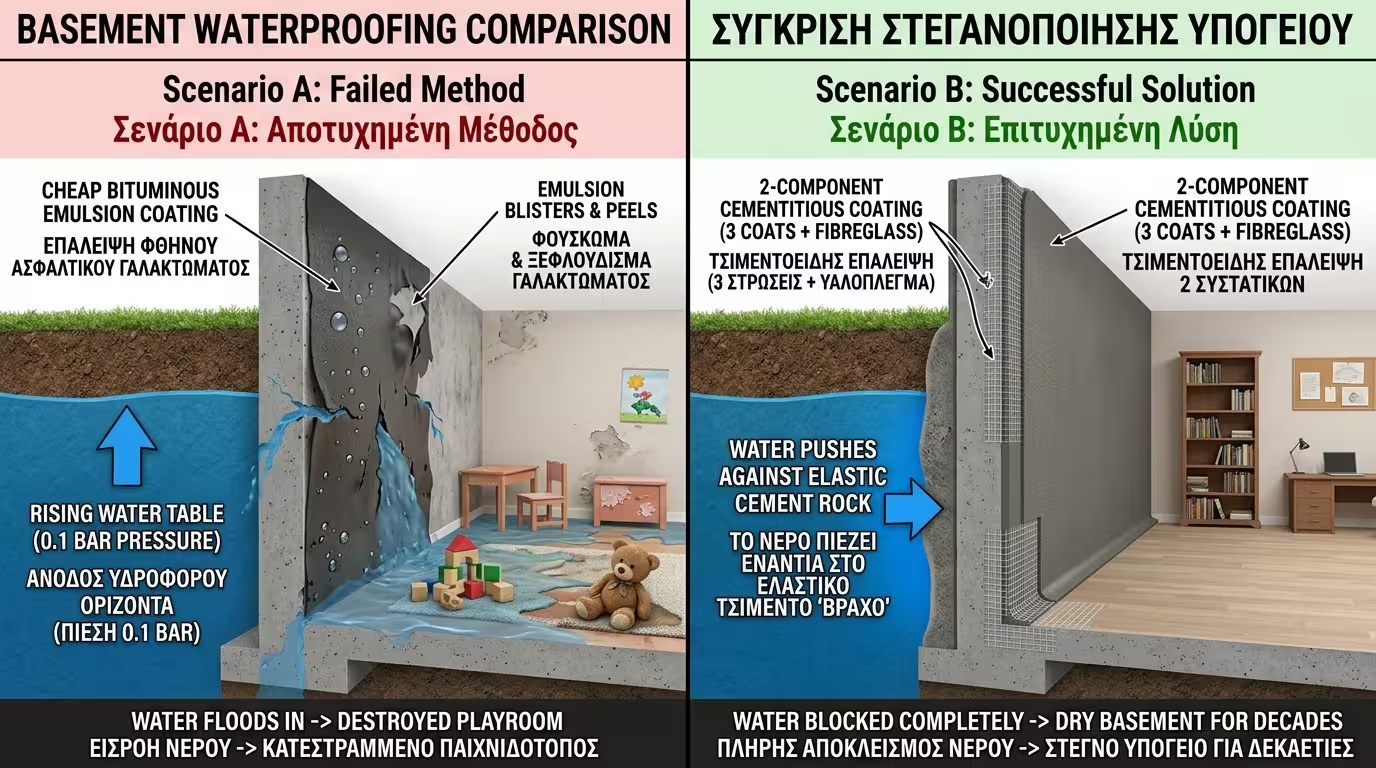
Basement experiment - bitumen emulsion vs 2-component cementitious

Our basement is built in an area with a high water table. In winter, groundwater reaches 1 metre above the foundations.

🔴 Scenario A (The Cheap "Tar")

The contractor talks us into a simple water-based bituminous emulsion to save money, saying "everyone uses this". December brings 10 days of rain. Groundwater rises and exerts 0.1 bar of pressure across the entire external wall. The soft "tar" cannot withstand the hydrostatic pressure, blisters, peels off and water floods the basement. Our playroom is destroyed.

🟢 Scenario B (The 2-Component "Tank")

We pre-wet the external walls and apply 3 coats of 2-component cementitious coating (with fibreglass mesh at the foundation corners). The material hardens and becomes one with the reinforced wall. When the water table rises, water hits an elastic, cementitious rock that shrugs off the pressure. Our basement stays perfectly dry for decades!

Final Verdict: When the problem is not just a little ground moisture but real, standing water under pressure (pools, tanks, deep basements), cementitious waterproofing coatings reign supreme. They cost more than bituminous products, but they guarantee you will never have to dig up your garden again!

Chamfer and fibreglass mesh at corners - critical application detail

Related Articles

Waterproofing: The Ultimate Shield Against Moisture

Return to category.

Go to category

Preview