📐 The Unit of Measurement
The unit of measurement is W/(m²K) (Watts per square metre per degree Kelvin).
If you have ever held an Energy Performance Certificate (EPC) in your hands to rent or sell a home, you will surely have seen the term U-Value or, in Greek, Thermal Transmittance Coefficient.
Engineers talk about this number constantly, regulations (KENAK) set strict limits on what it must be, and programmes like "Exoikonomo" only subsidise you if you bring it below a specific figure. But what exactly is this "U-Value" and how is it calculated? Let us look at it without incomprehensible jargon.
In very simple terms, the U-Value measures how much heat manages to escape through one square metre of your wall in one hour.
Unlike the λ (Lambda) coefficient we saw in previous articles, which refers to a single material (e.g. polystyrene alone), the U-Value refers to the entire wall (i.e. the render, the brick, the insulation and the plasterboard together as a sandwich).
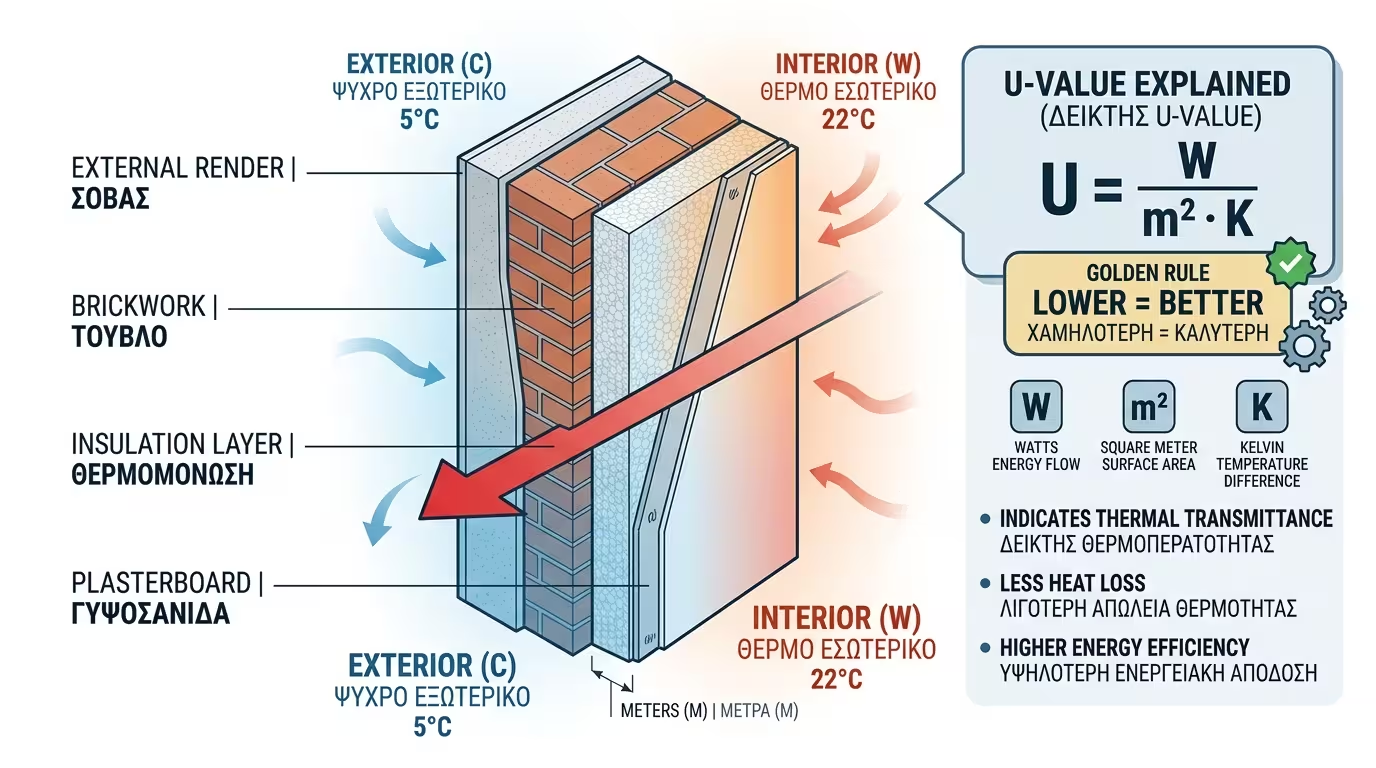
The unit of measurement is W/(m²K) (Watts per square metre per degree Kelvin).
With U-Value, "the lower, the better" applies. A low number means your wall is "tight" and does not let heat through. A high number means your wall leaks heat like an open window.
To find the U-Value of a wall, we must first calculate how much "Resistance" (R) each layer of the wall individually presents against heat leakage.
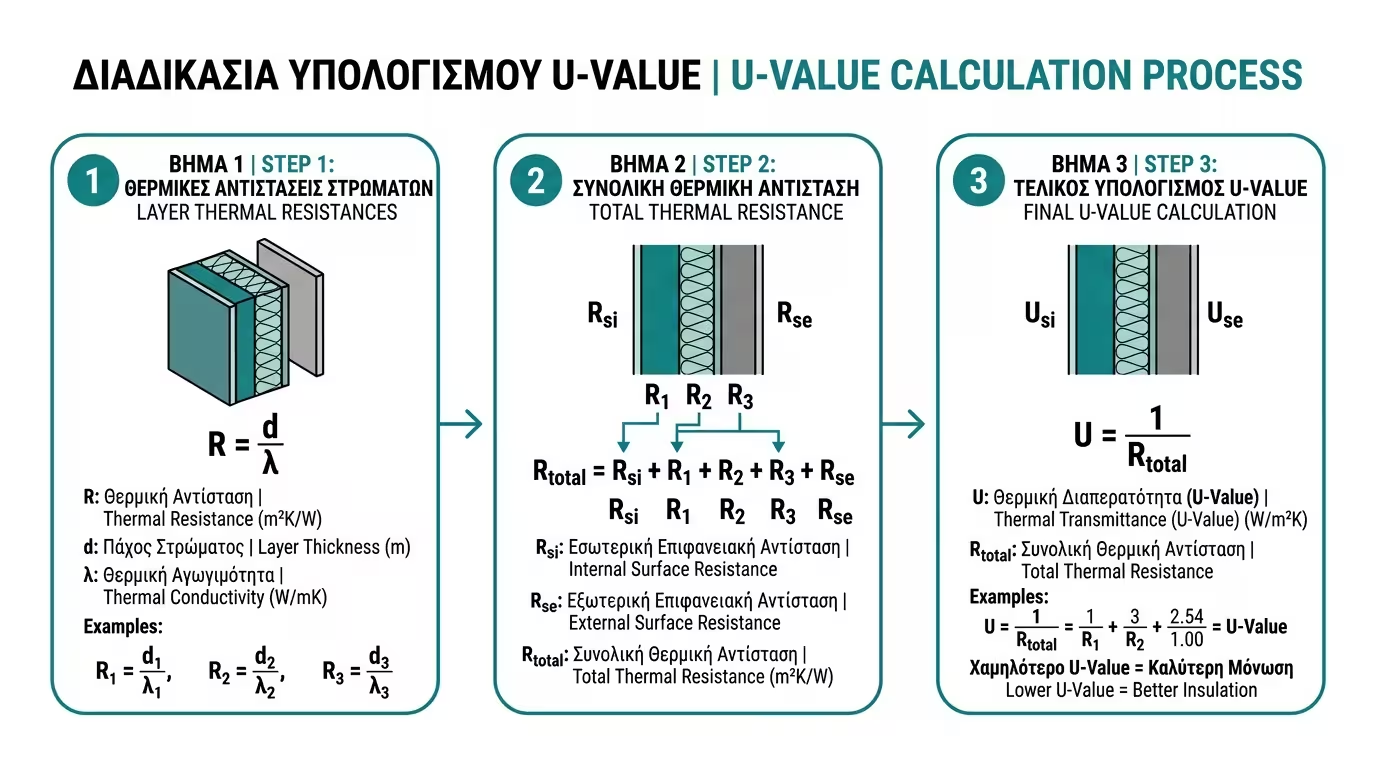
The Thermal Resistance (R) of a layer depends on its thickness (d) in metres and its conductivity coefficient (λ), according to the formula: R = d / λ.
The engineer calculates R for the brick, R for the render and R for the insulation. Then adds them all together (along with two small constant resistances for the air touching the wall inside and outside, Rsi and Rse), to find the Total Thermal Resistance (Rtotal): Rtotal = Rsi + R1 + R2 + R3 + ... + Rse.
The final step is very easy. The U-Value is simply the inverse of the total resistance: U = 1 / Rtotal. This is exactly what the engineer's software does when issuing your energy certificate!
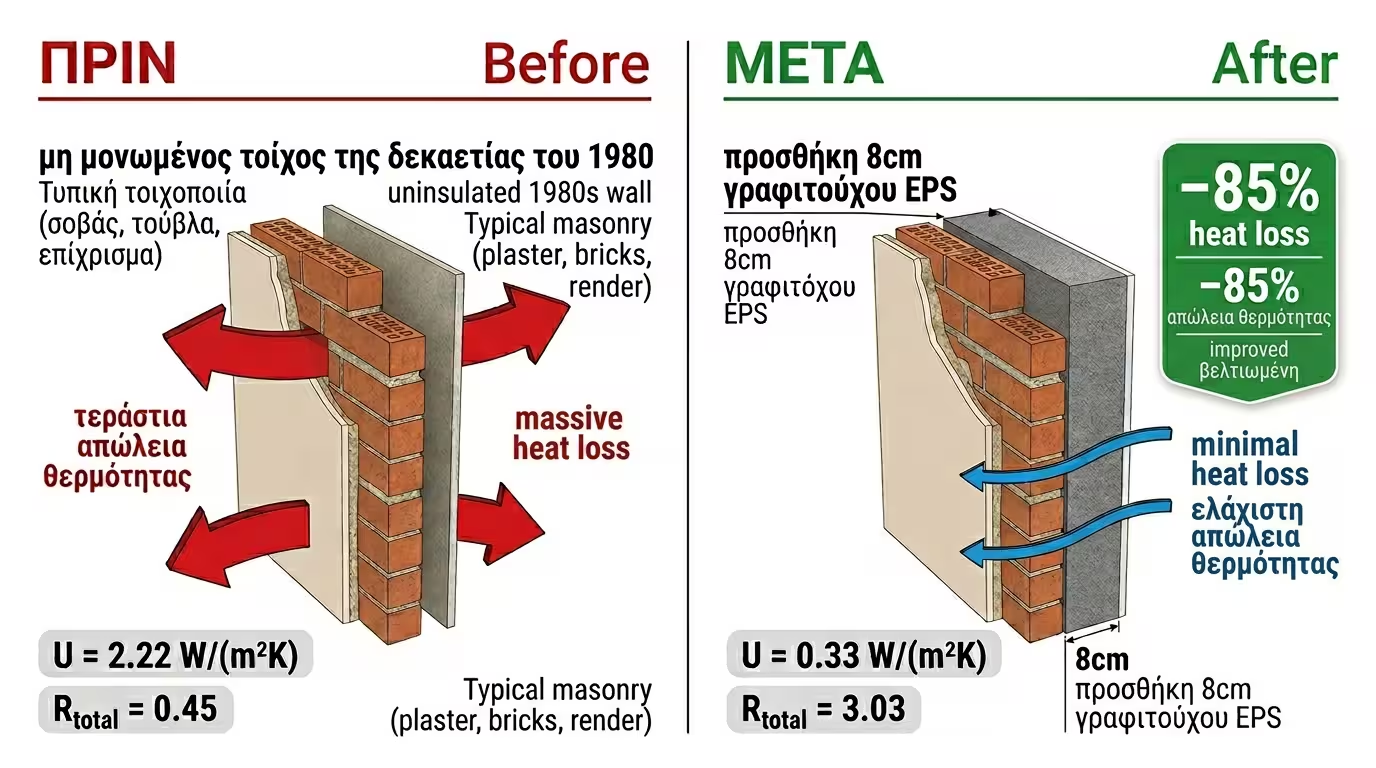
Let us take an external wall from our digital house and see how the mathematics change our pockets.
The wall has only double brick and render. The resistance calculation gives us a total Rtotal of approximately 0.45. Calculation: U = 1/0.45 = 2.22 W/(m²K). Result: The wall is a "sieve". You lose enormous amounts of energy.
We decide to bond Graphite Polystyrene 8 centimetres thick (λ = 0.031) externally. The resistance of this material alone is enormous (R = 0.08 / 0.031 = 2.58). The new total resistance shoots up to Rtotal = 3.03. Calculation: U = 1/3.03 = 0.33 W/(m²K). We just reduced heat losses by 85%! The boiler will now fire for only a few minutes per hour.
💡 Final Conclusion: The U-Value is not just a number for bureaucracy. It is the "grade" your house receives in the insulation exam. When renovating, ask your contractor or engineer to calculate the final U-Value of the wall before you decide on the insulation thickness.
Return to category.
Go to categoryReturn to the central guide.
Go to guide