Mass Loaded Vinyl (MLV): The Thin "Miracle" That Blocks Low Frequencies

If you pick up a piece of MLV, you will think you are holding a thin rubber car mat. It is only 2 to 5 millimetres thick. But when you try to lift a full roll, you will understand the truth: one square metre of 3 mm MLV can weigh from 5 to 10 kilograms!

This is Mass Loaded Vinyl. It is a flexible plastic (PVC or vinyl) that has been laboratory-enriched with barite (barium sulphate) or other heavy inert fillers, so it gains enormous mass without gaining bulk.

The Physics Behind "Limp Mass"

Why not just add another plasterboard? Because plasterboard, wood and concrete are rigid materials. When a low frequency (the "thump-thump" from the bass) hits them, it makes them resonate and vibrate.

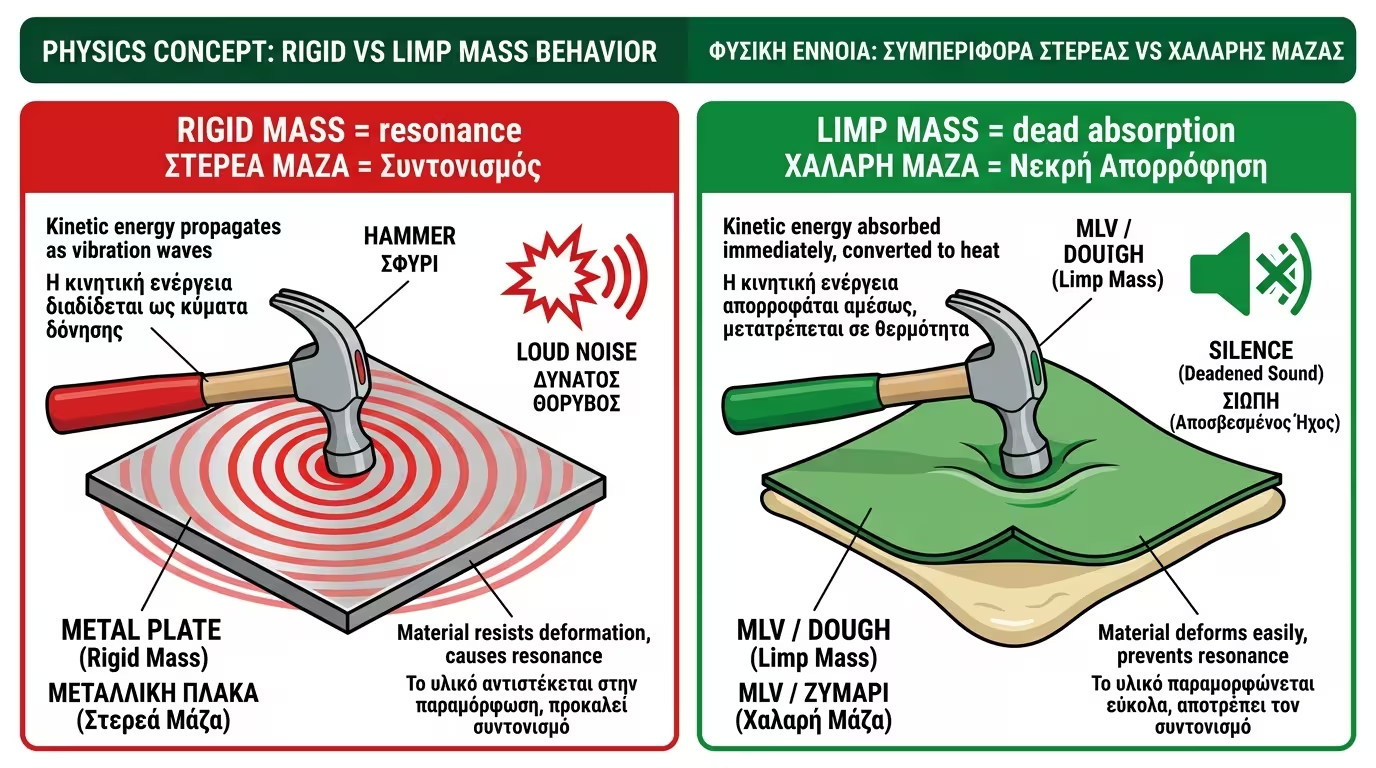
MLV, on the other hand, works on the principle of "limp mass". It is an utterly "dead" material. Imagine hitting a metal plate with a hammer (it makes a huge noise and vibrates) and then hitting a lump of raw dough with the hammer (it just goes "plop" and the energy dies instantly). MLV is the acoustic "dough". It never resonates. When bass hits it, the energy is simply exhausted trying to move the heavy, limp rubber.

Limp Mass: comparison of a metal plate (vibrates) vs MLV (energy dies out)

Where and How Is It Installed? (The Sandwich)

MLV is NEVER applied superficially like wallpaper, nor left exposed. Its absolute and most efficient position is sandwiched between two layers of plasterboard.

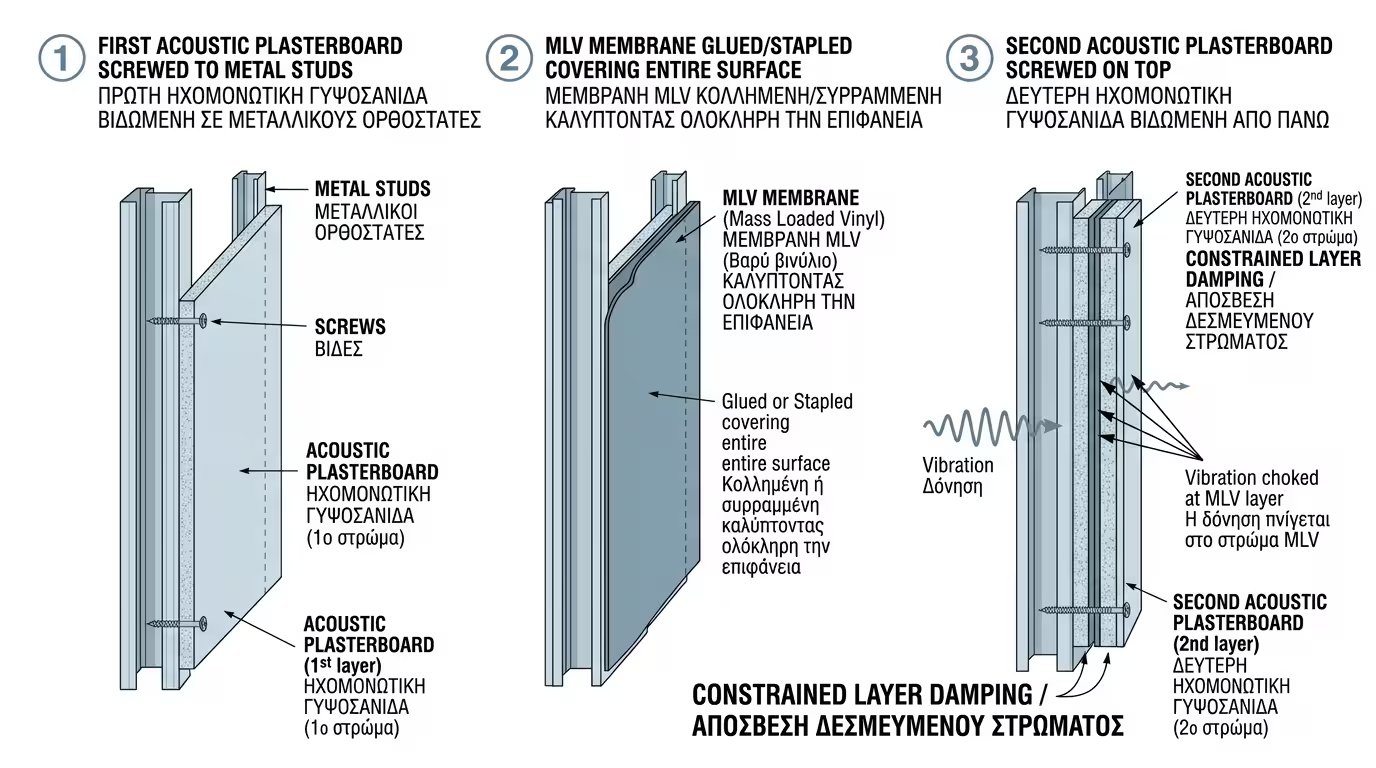
  1. The builder screws the first acoustic plasterboard onto the metal studs.
  2. On top, he glues or staples (with double-sided tape or mesh reinforcement) the MLV membrane, covering the entire wall surface without leaving any gaps at the joints.
  3. He then screws the second acoustic plasterboard on top, "pressing" the MLV between the two gypsum layers.

This creates a system called Constrained Layer Damping. When the wall tries to vibrate, the two plasterboards try to move independently, but the elastic MLV in the middle brakes them, absorbing the vibration and converting it into heat.

MLV installation: sandwich between two plasterboards - Constrained Layer Damping

The Experiment in Our Model (The Subwoofer of the 4×4)

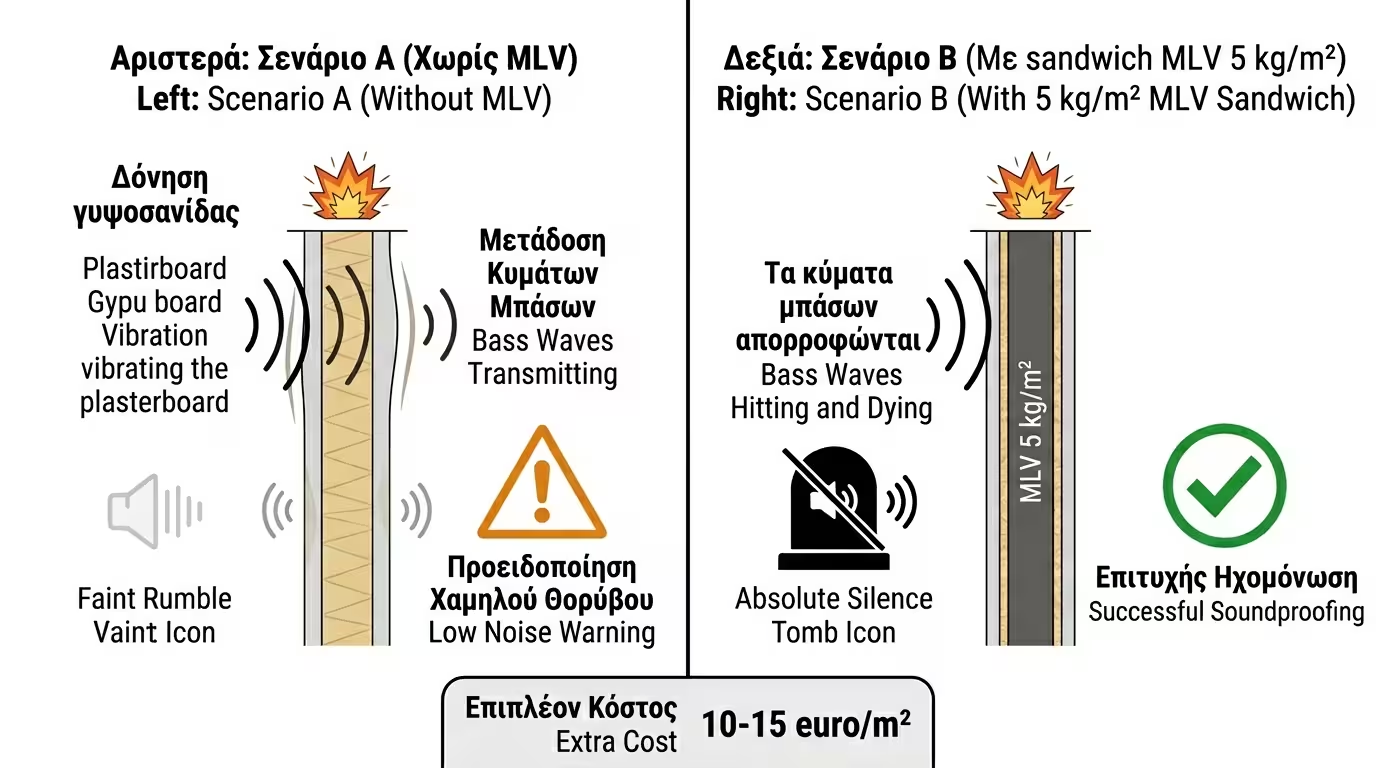
Experiment: without MLV (faint bass vibration) vs with 5 kg MLV (vibration choked)

The neighbour is watching an action film with explosions. We have built our wall with a cavity, rock wool and double acoustic plasterboard.

❌ Scenario A (Without MLV)

The actors' voices are completely inaudible. However, when a bomb goes off in the film, we feel a faint, muffled vibration in our wall. Low frequencies manage to get through because the plasterboards, though heavy, remain rigid and transfer the bass.

✅ Scenario B (The Active Sandwich)

We have paid extra (about €10-15/m²) and added a 5 kg MLV membrane between our plasterboards. The bomb goes off. The sound wave penetrates the rock wool, hits the first plasterboard, but as it tries to transfer to the second, it slams into the heavy "rubber". The vibration is choked instantly. The room remains a "tomb"!

The Final Conclusion: If your problem is exclusively voices, you can skip MLV and stick with standard acoustic plasterboards. But if you are fighting motorbikes, music with bass or drums, MLV is the only solution that adds enormous mass and damping without stealing even a single centimetre of precious space!

Related Articles

Sound Insulation: Silence and Noise Protection

Return to category.

Go to category

Preview