🧱 The Core
An extremely porous, compressed material (usually fumed silica or aerogel) that functions as the panel's "skeleton", preventing it from collapsing under atmospheric pressure.
If you ask a physicist what the best thermal insulation material in the universe is, the answer will not be polystyrene, nor rock wool. They will tell you: Nothing (A Vacuum).
Heat needs some "medium" (such as air, water or solid materials) to travel. If we completely remove the air from a space creating a vacuum, heat simply… gets trapped. This is exactly the operating principle behind the thermos flask that keeps your coffee hot, and this is the technology that Vacuum Insulation Panels (VIP) bring to construction.
A VIP panel resembles no other construction product. It is perhaps the most delicate and complex item that can be placed inside a wall. It consists of two essential parts.
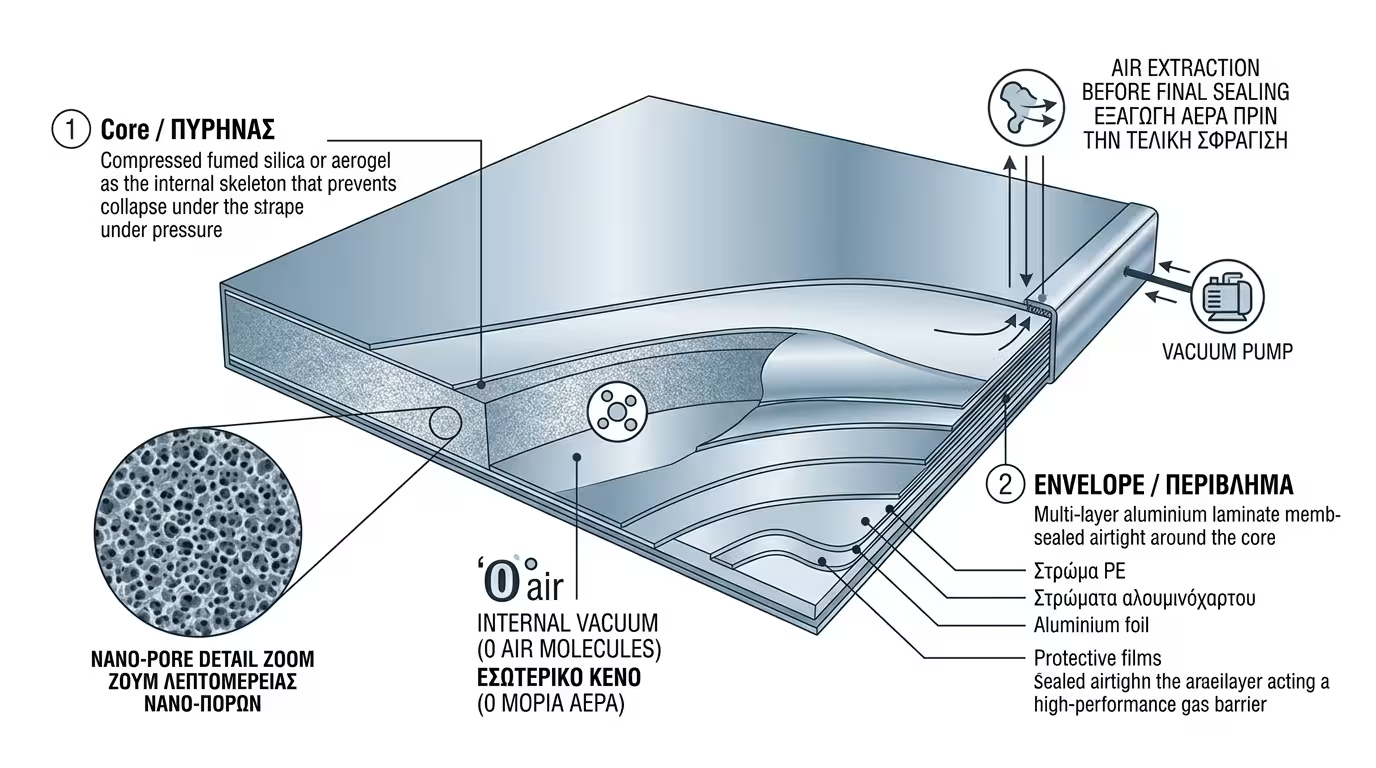
An extremely porous, compressed material (usually fumed silica or aerogel) that functions as the panel's "skeleton", preventing it from collapsing under atmospheric pressure.
The core is wrapped in a special, multi-layer metallic membrane (aluminium laminate), which is sealed airtight. Just before the final sealing at the factory, specialised pumps extract all the air from inside the panel.
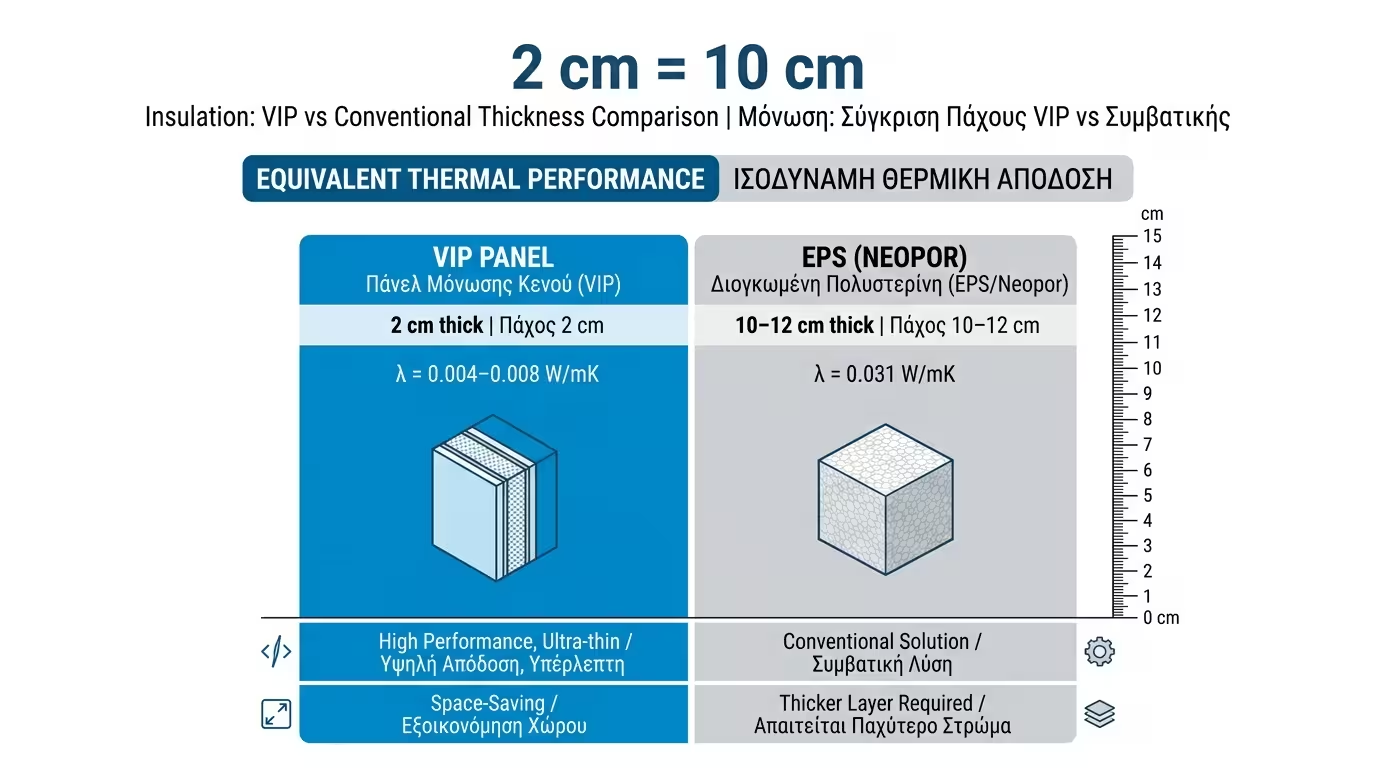
Because there is no air inside the panel to transfer heat, the thermal conductivity coefficient (λ) plummets to extraordinary levels.
While the best graphite polystyrene (Neopor) has λ = 0.031 W/mK, a VIP panel achieves the unthinkable λ = 0.004 to 0.008 W/mK! What does this mean in practice? That a VIP board just 2 centimetres thick provides exactly the same thermal insulation as a conventional polystyrene board 10 to 12 centimetres thick! It is the ultimate solution when there is simply no space available.
Naturally, such an exotic technology has enormous limitations. VIP has one fatal weakness: its envelope.
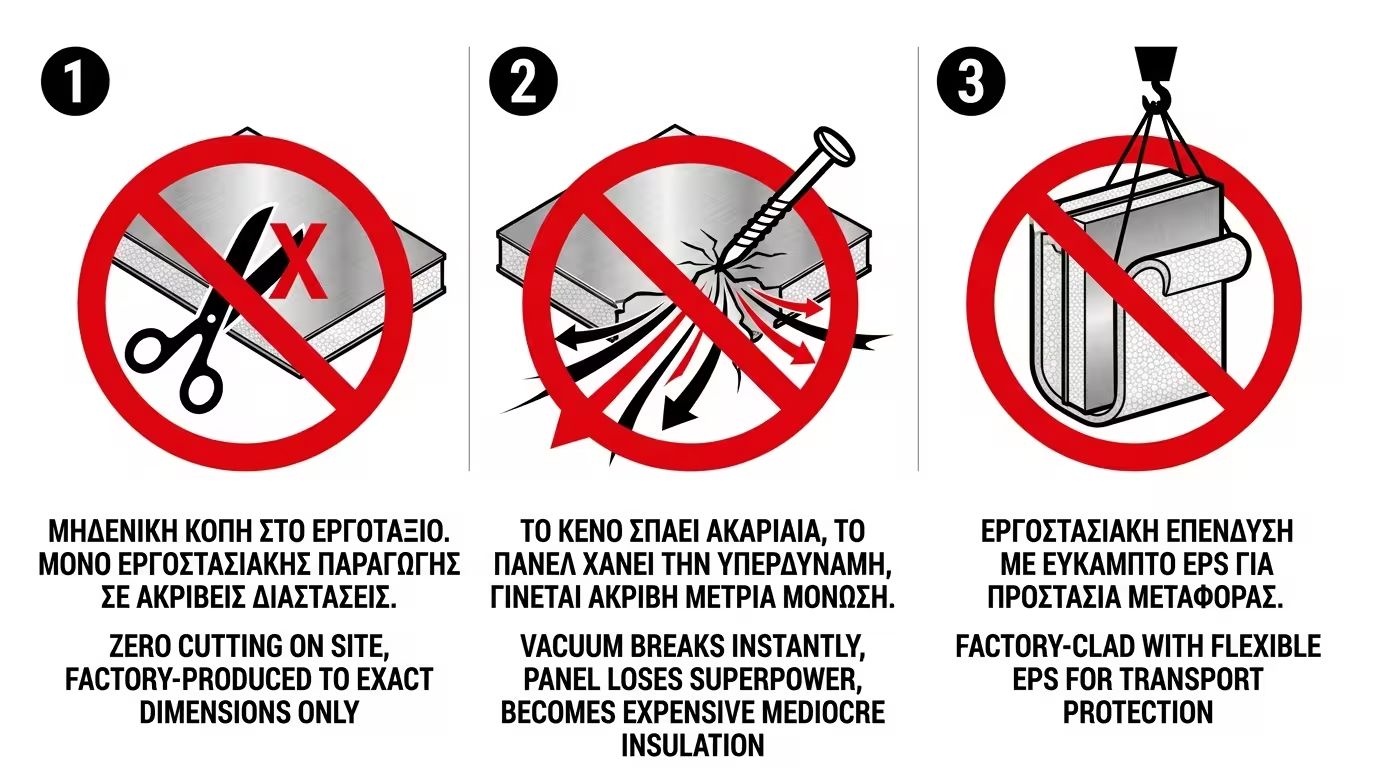
VIP panels are never cut on site. They are factory-produced in specific dimensions, made to order, exactly to the measurements of your wall.
If a worker accidentally punctures the panel with a nail or screw, the vacuum "breaks", air rushes in and the panel instantly loses its superpower. It becomes a simple (and extremely expensive) board of mediocre insulation.
For this reason, VIP panels are usually factory-clad with a thin layer of flexible EPS to protect them from impact damage during transport.
We want to insulate the balcony floor of our digital house, which sits directly above the neighbour's heated living room. The problem? If we raise the floor by more than 3 centimetres, the balcony door will not open!
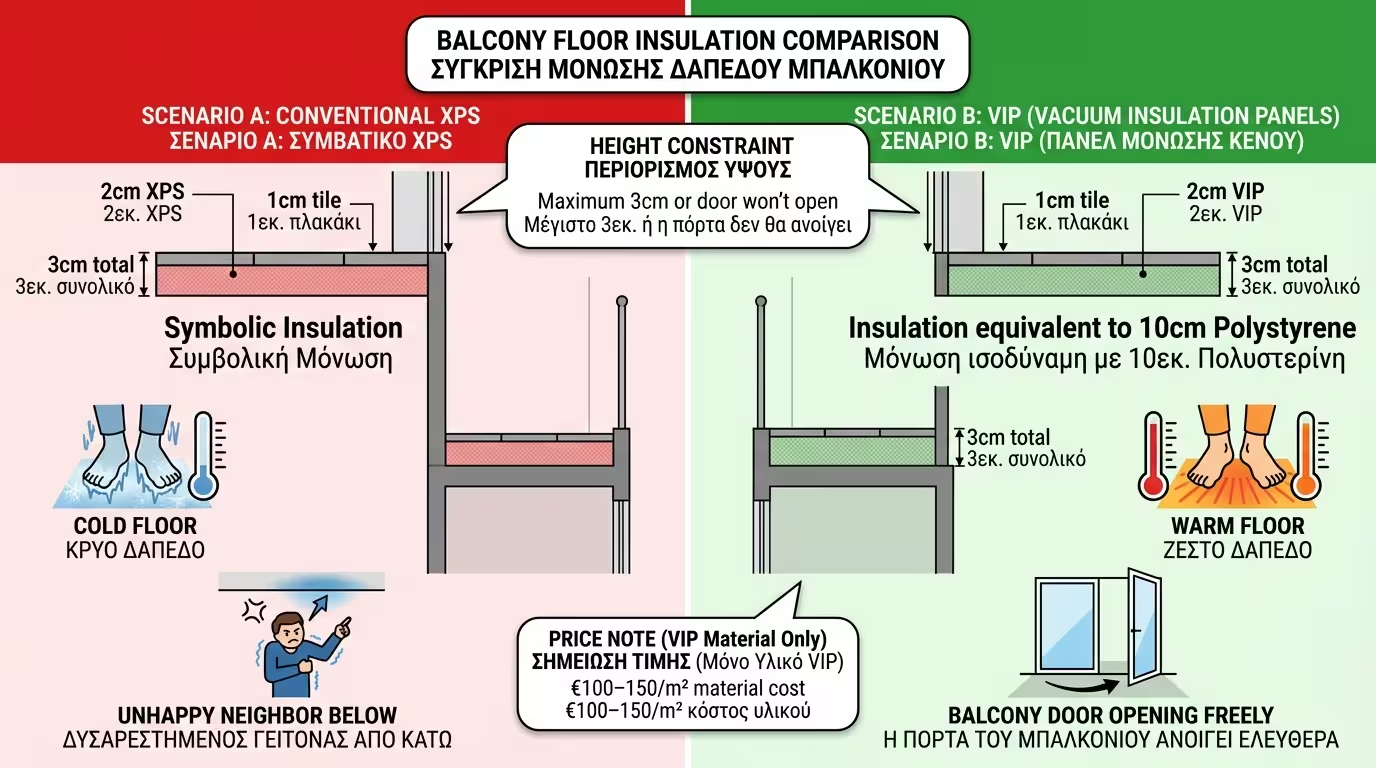
We install 2 centimetres of extruded polystyrene and 1 centimetre of tile. The insulation is, at best, "symbolic". The neighbour below feels the cold, and our floor in winter is freezing.
We order VIP panels 2 centimetres thick, manufactured exactly to the balcony's dimensions, and carefully bond them in place. Tiles go on top. With just 3 centimetres of total thickness, we achieved insulation equivalent to 10 centimetres of polystyrene. Problem solved, the balcony doors open freely, and the home is fully protected.
💡 Conclusion: Vacuum insulation panels are very expensive (often exceeding €100–€150 per square metre for the material alone) and demand surgical precision during installation. They are not intended to clad your entire house. They are, however, the ultimate "Special Ops" solution when you need to insulate very narrow balconies, heritage facades with cornices, or floors where headroom is strictly limited.
Return to category.
Go to categoryReturn to the central guide.
Go to guide