💧 Hydrophilic Material
This cord is hydrophilic. When it contacts water, it doesn't repel it - it absorbs it like a sponge. As it absorbs, it expands (increases in volume) by up to 300 – 400%!
Suppose you are building a swimming pool or a deep basement. On Monday, the crew forms and pours the floor slab (the "raft"). On Wednesday, they form and pour the vertical walls.
Here lies a huge physics problem: Wednesday's fresh, wet concrete will never bond perfectly (at molecular level) with Monday's dry concrete. Between them, a microscopic, invisible crack forms, running the entire perimeter of the basement. This is called a Construction Joint. When groundwater builds up pressure, it will find this "seam" and water will pour in as if you turned on a tap!
It looks like a simple, flexible strip of rubber (usually blue, red or black) roughly 20 × 20 mm. But its chemistry is remarkable.
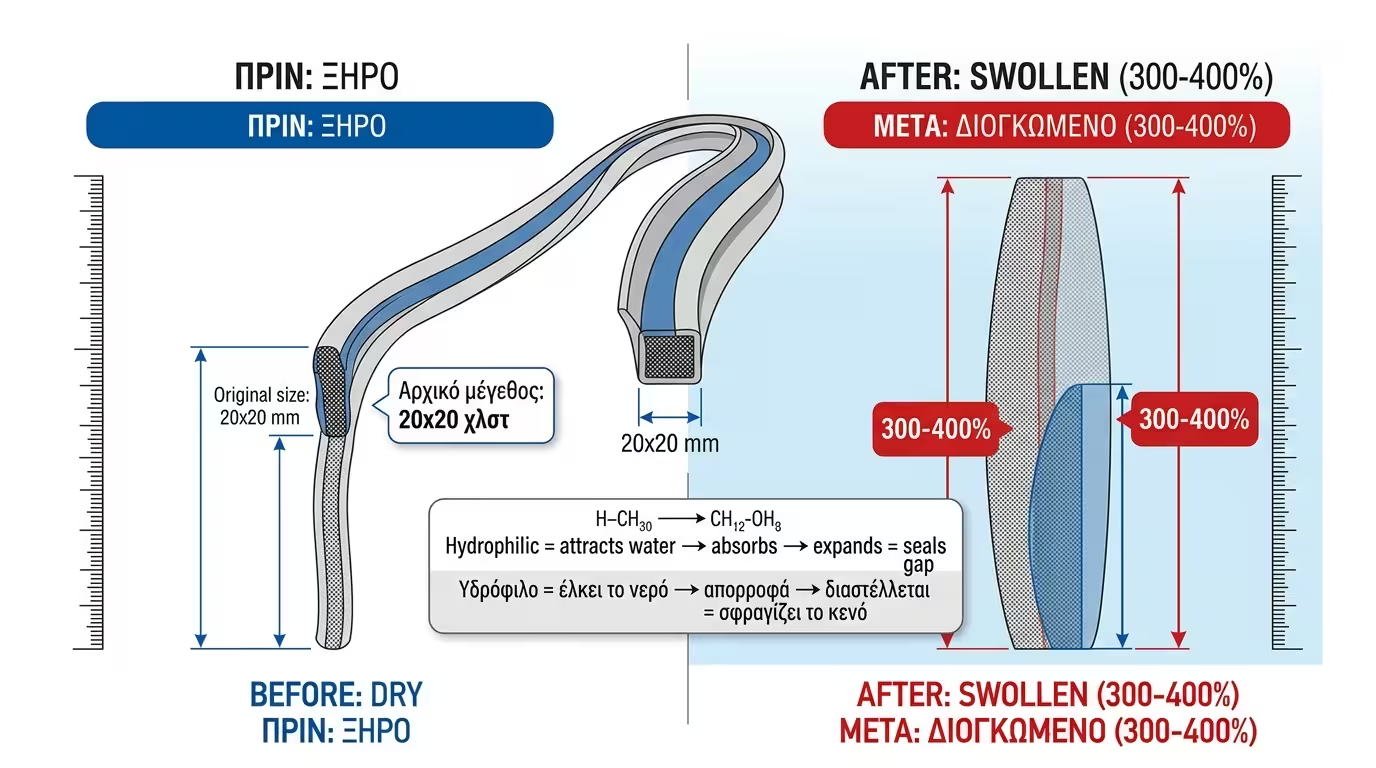
This cord is hydrophilic. When it contacts water, it doesn't repel it - it absorbs it like a sponge. As it absorbs, it expands (increases in volume) by up to 300 – 400%!
Installation is done strictly during construction:
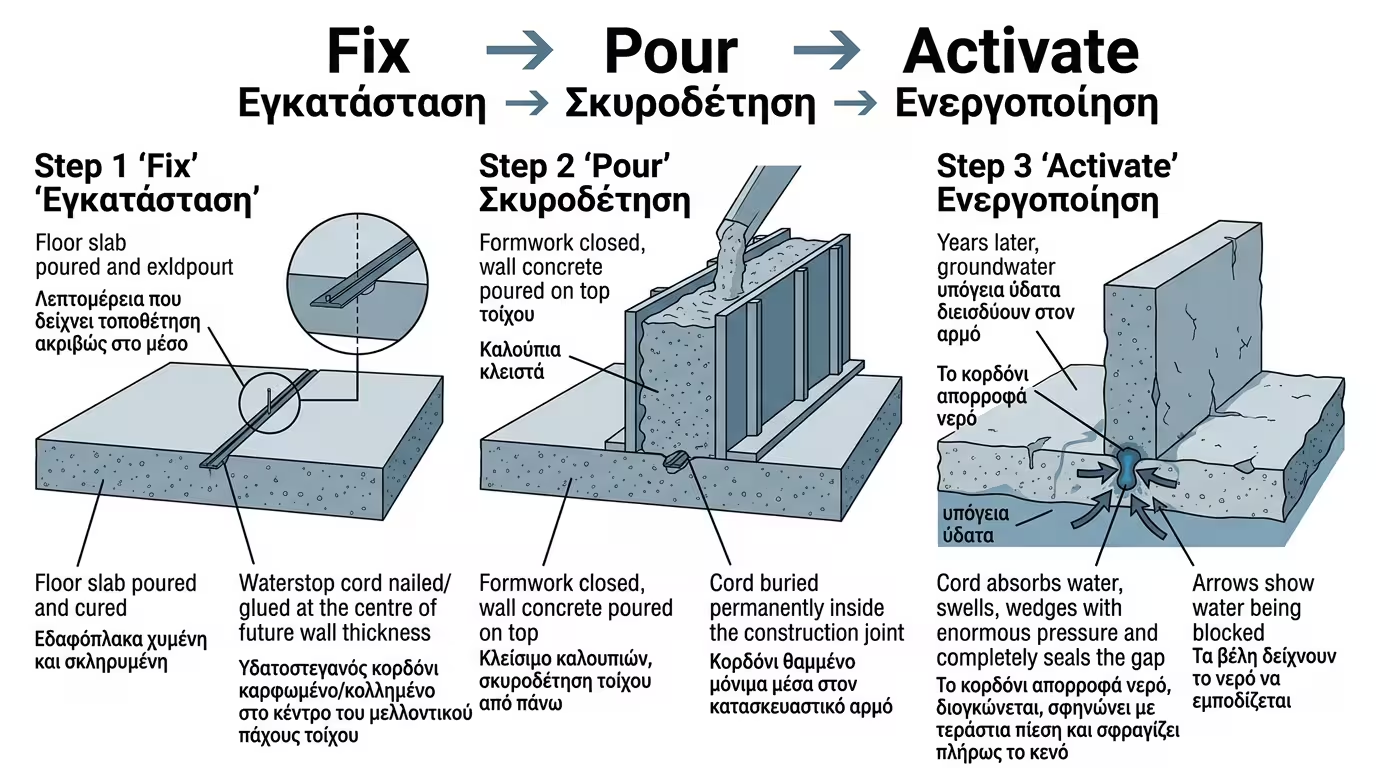
After the floor concrete has been poured and cured, workers nail (or glue with polyurethane mastic) the cord around the perimeter, exactly at the centre of the future wall thickness.
Formwork is closed and wall concrete poured on top. The cord is buried permanently inside the concrete, exactly at the junction point (the construction joint).
When (years later) groundwater manages to penetrate the junction, it meets the cord. The cord absorbs the water, "swells" inside the narrow gap and wedges with enormous pressure. The gap is completely sealed from inside out! Water is blocked for good.
Because the cord swells with tremendous force, there is one inviolable rule:
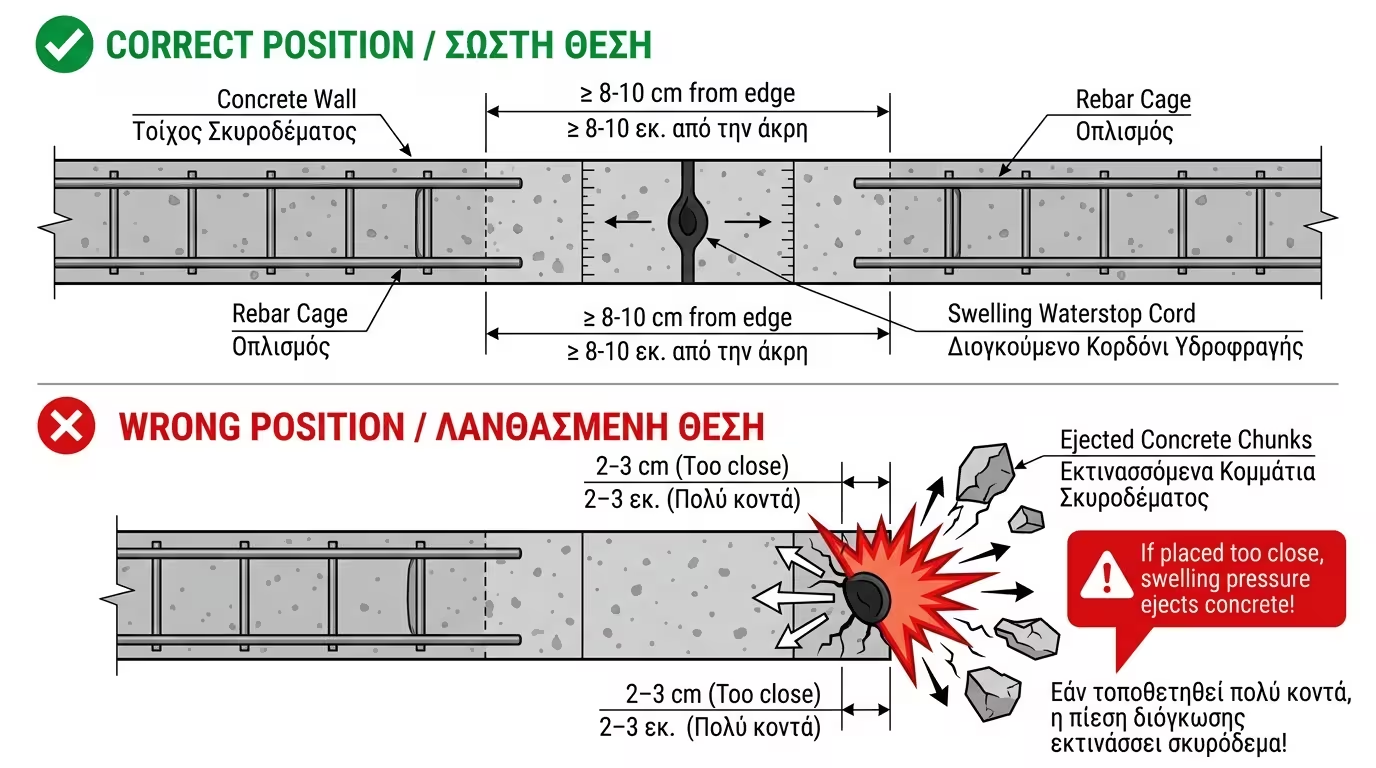
It must be at least 8 to 10 cm from the wall edge (face). If the worker places it too close to the edge, when the cord gets wet and swells the pressure it exerts will "blow out" the concrete and eject chunks of cement!
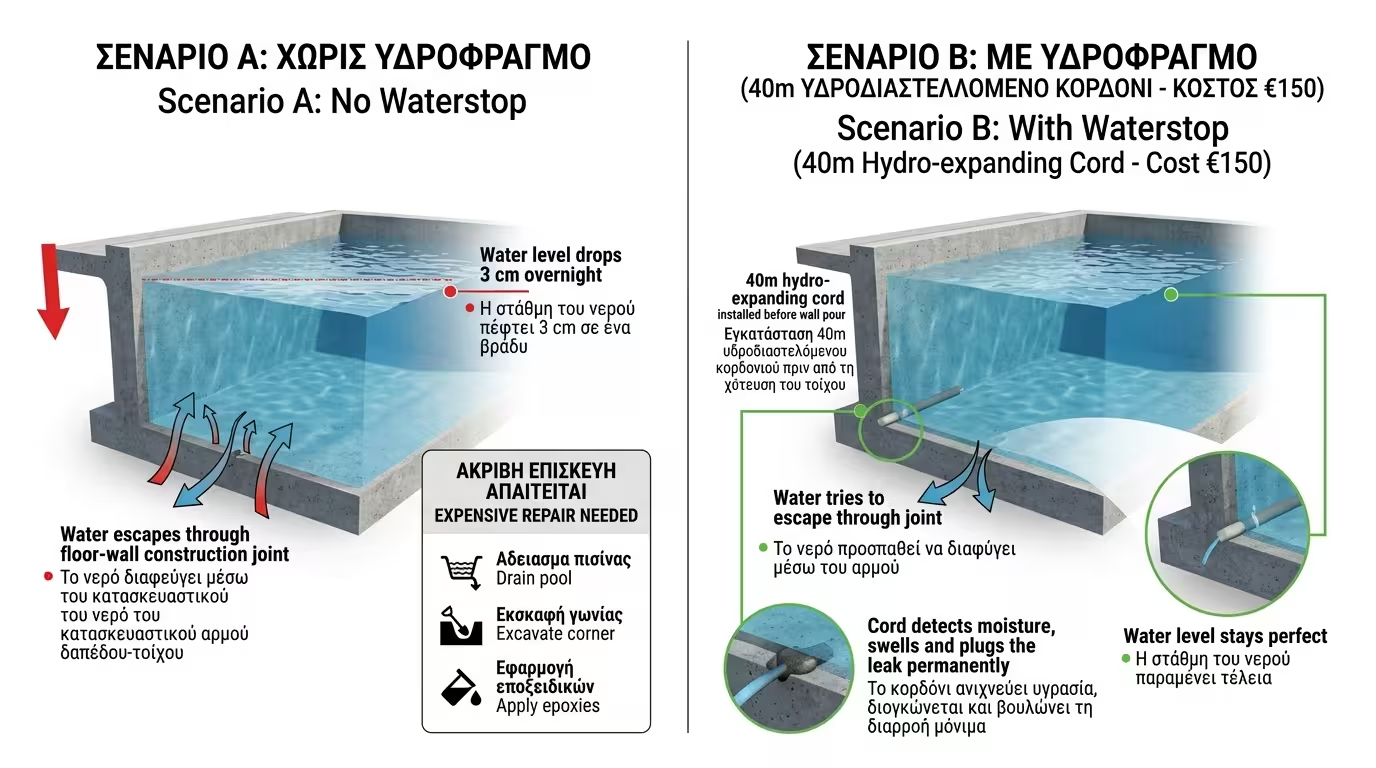
We are building our concrete swimming pool. We have poured the floor slab and are preparing for the side walls.
The contractor skips the waterstop. Walls are poured. We fill the pool. The next day, the water level has dropped 3 centimetres. Water escapes from the corner (where the floor meets the wall). To fix it, we must drain the pool, excavate the entire corner internally and apply expensive repair compounds and epoxies.
We buy 40 metres of hydro-expanding cord (cost around €150). We nail it to the centre of the floor slab, beneath where the walls will be cast. We pour the walls. We fill the pool. Water tries to escape through the joint; the cord detects it, swells and "plugs" the leak permanently. The water level doesn't drop a single millimetre.
Final Verdict: The hydro-expanding cord (or waterstop tape) is the cheapest yet most critical "insurance" in a concrete structure. If you forget to install it during construction, there is no way to add it later. You will fight construction-joint leaks for a lifetime.
Return to category.
Go to categoryReturn to the central guide.
Go to guide