🔬 How It Works
The remarkable thing is that they do not clog the pores. The wall continues to breathe (water vapour passes through), but liquid water can no longer "climb" upward. Capillary rise is neutralised!
When an old building suffers from rising damp, the only permanent solution is to cut the water's path. Since we cannot physically insert a plastic sheet under an existing wall, science found a way to make the bricks themselves waterproof!
This method is called a Chemical Damp Proof Course (DPC) and is the most reliable, non-destructive technique for tackling the problem.
Instead of demolishing the wall, we give it "injections". Special hydrophobic creams or liquids (based on silanes and siloxanes) are used. These materials have a remarkable property: once inside the wall, they spread into the microscopic pores of the brick and mortar, coating them with an invisible water-repellent film.
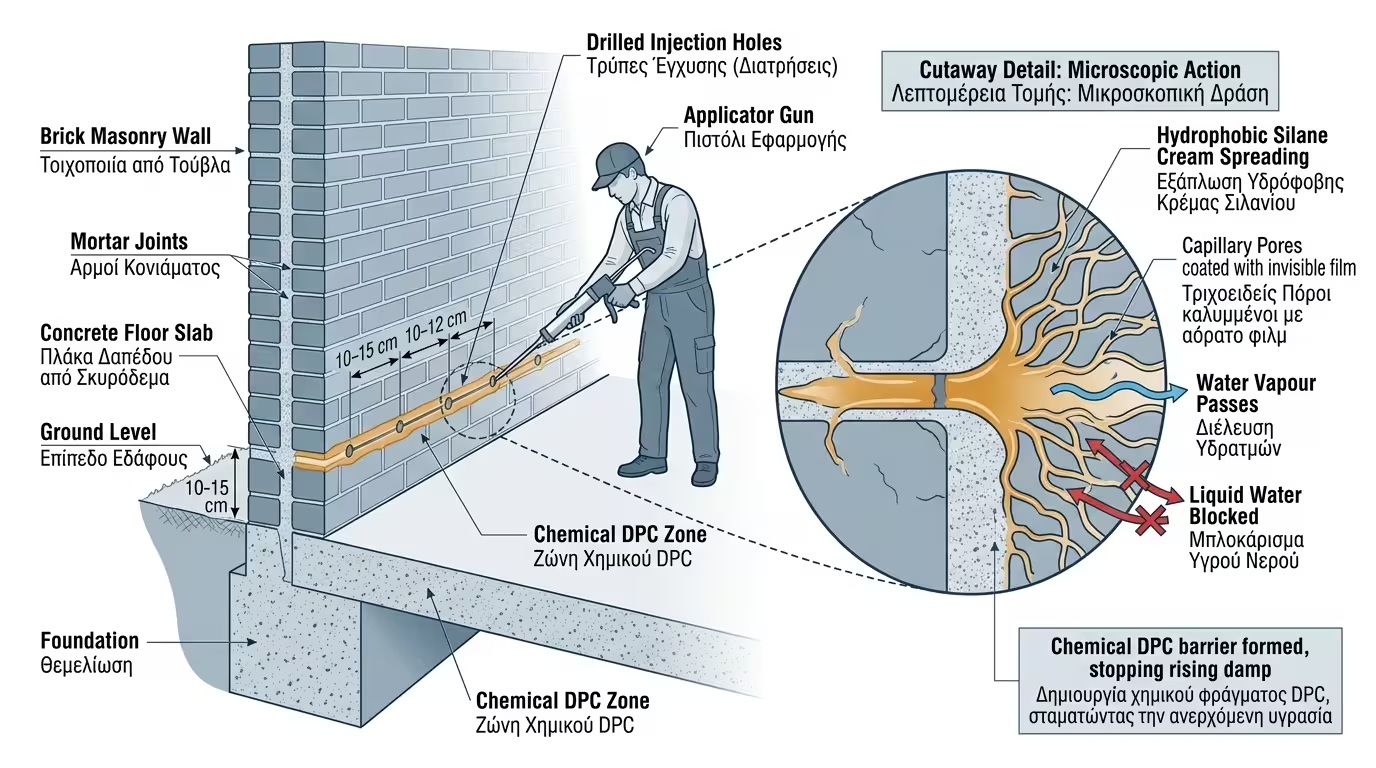
The remarkable thing is that they do not clog the pores. The wall continues to breathe (water vapour passes through), but liquid water can no longer "climb" upward. Capillary rise is neutralised!
Applying a chemical DPC is precision work and follows specific steps:
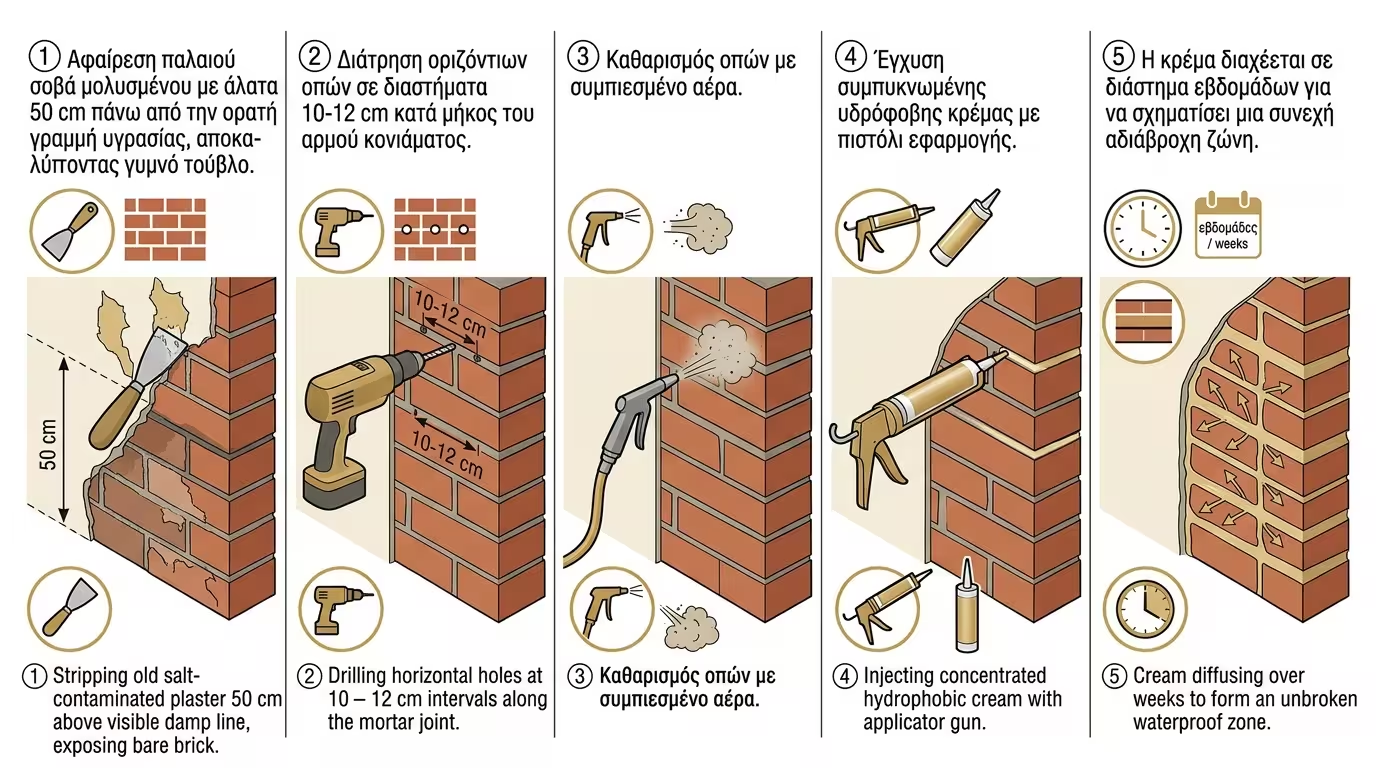
The old, salt-contaminated plaster must be removed. Crucially, it is stripped at least 50 cm ABOVE the last visible damp mark, because water has already travelled internally. The bare brick or stone is exposed.
Low down on the wall (about 10-15 cm above floor level), a row of horizontal holes is drilled. They are typically placed along the mortar joint (between the bricks) at 10-12 cm intervals.
Using compressed air or special brushes, the holes are thoroughly cleaned of dust so the material can penetrate properly.
Using a special applicator gun (like a large silicone gun), the technician fills each hole with the concentrated hydrophobic cream.
Over the following weeks, the cream melts and spreads left and right inside the wall, creating an unbroken, invisible "zone" that water cannot pass.
If you think the cream injection alone finishes the job, you are making a big mistake! The wall ABOVE the chemical barrier is still wet and, more importantly, it is saturated with salts.
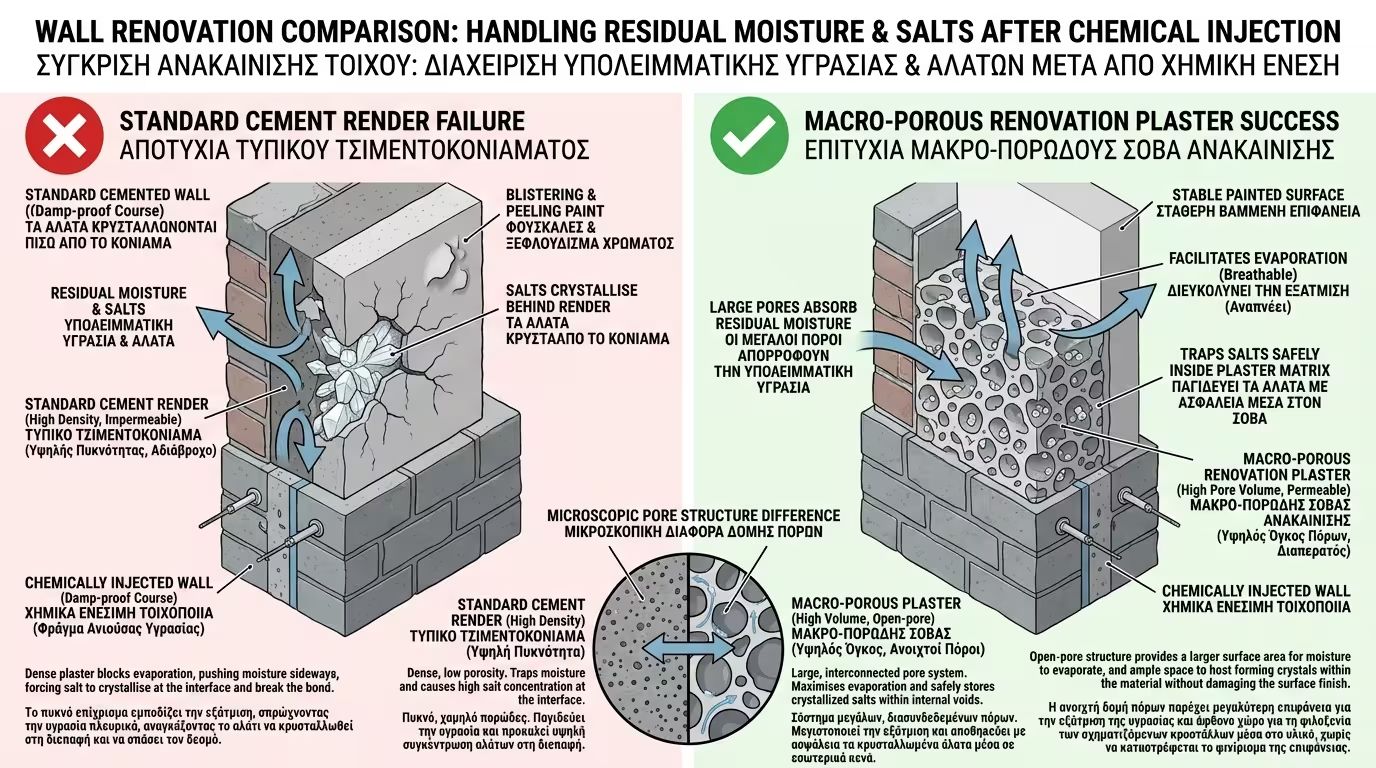
If you immediately apply a standard cement render, the trapped salts will crystallise and blow it off again!
Re-plaster the wall with a Renovation Plaster (macro-porous). This special (slightly more expensive) plaster has very large pores. It acts like a sponge: it absorbs residual moisture from the wall, allows it to evaporate quickly into the room, and traps the salts inside itself, without the paint blistering.
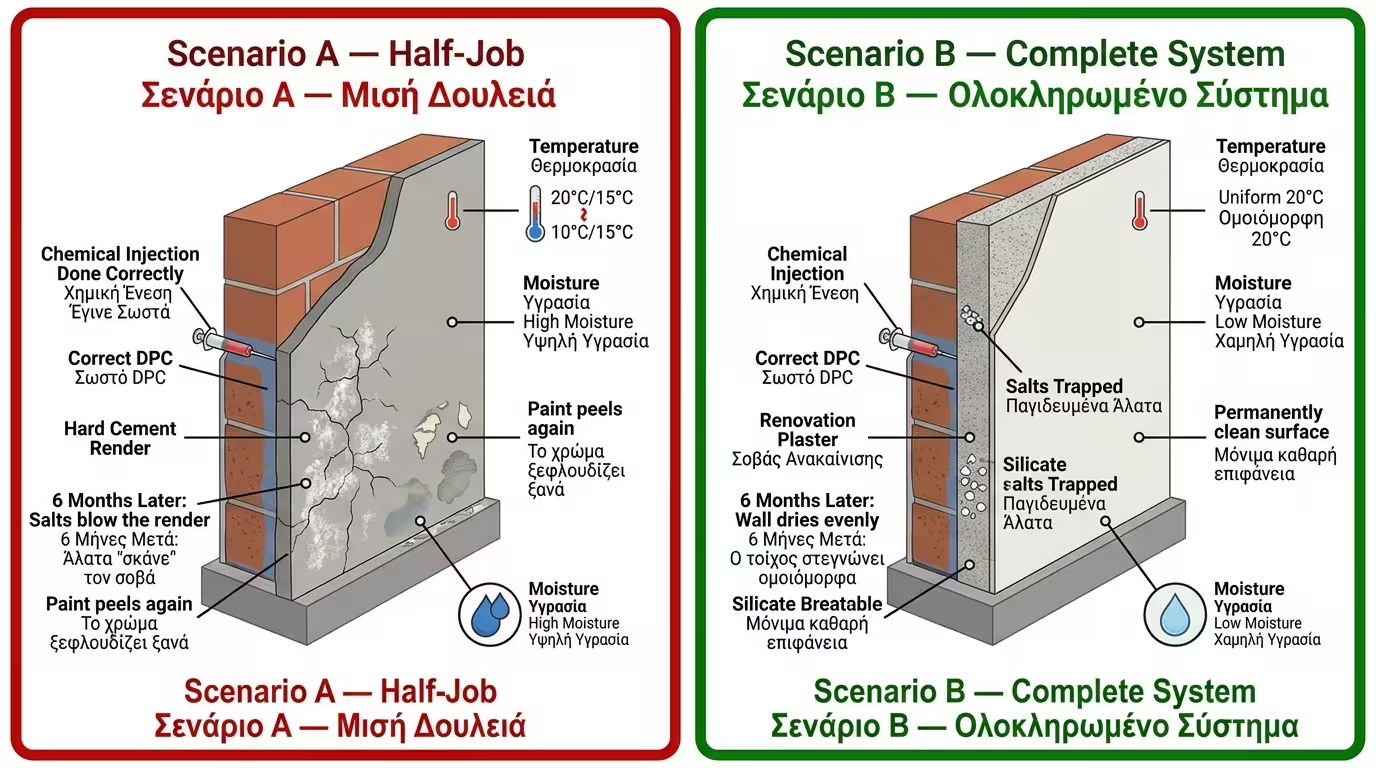
The ground-floor wall has swollen up to 1 metre. We decide to inject resin.
We strip the plaster, drill the holes and inject the chemical barrier. The next day, the plasterer applies a hard cement render topped with plastic paint. Six months later, the old salts crystallise, "blow" the new hard render and the paint peels off again. The chemical barrier worked perfectly (no new water rose), but we were destroyed by the old moisture!
We strip the old plaster up to 1.5 m (50 cm above the damp mark). We inject cream into the mortar joint. We wait a few days for the material to act. Then we re-plaster with renovation plaster and finish with a silicate breathable paint that lets the wall breathe. The wall dries evenly, the salts are trapped and our living room is permanently clean!
Final Verdict: Chemical DPCs are a remarkable, non-invasive solution that saves old buildings from demolition. However, the injection is only half the system. The other half is proper management of the moisture already trapped inside, using specialist breathable plasters.
Return to category.
Go to categoryReturn to the central guide.
Go to guide