🚪 Clear Corridors
Escape corridors won't fill with smoke.
When you see the label EI 60 on a fire-rated door, you now know it will hold back flames (E) and heat (I) for 60 minutes.
But what happens at the 61st minute? Does the door vanish with a magic "poof"? Not exactly. The laboratory that certified it simply stops guaranteeing that smoke won't pass through or that the handle won't be scorching hot. In building design, these numbers (30, 60, 90, 120 minutes) are carefully chosen by the engineer, based on three different survival stages.
The minimum fire-resistance time required almost everywhere is 30 minutes (e.g. REI 30 or EI 30). This is the "golden time" of evacuation. In a typical two-storey building, office or small shop, occupants (if they hear the alarm) need 3 to 10 minutes to reach the street safely.
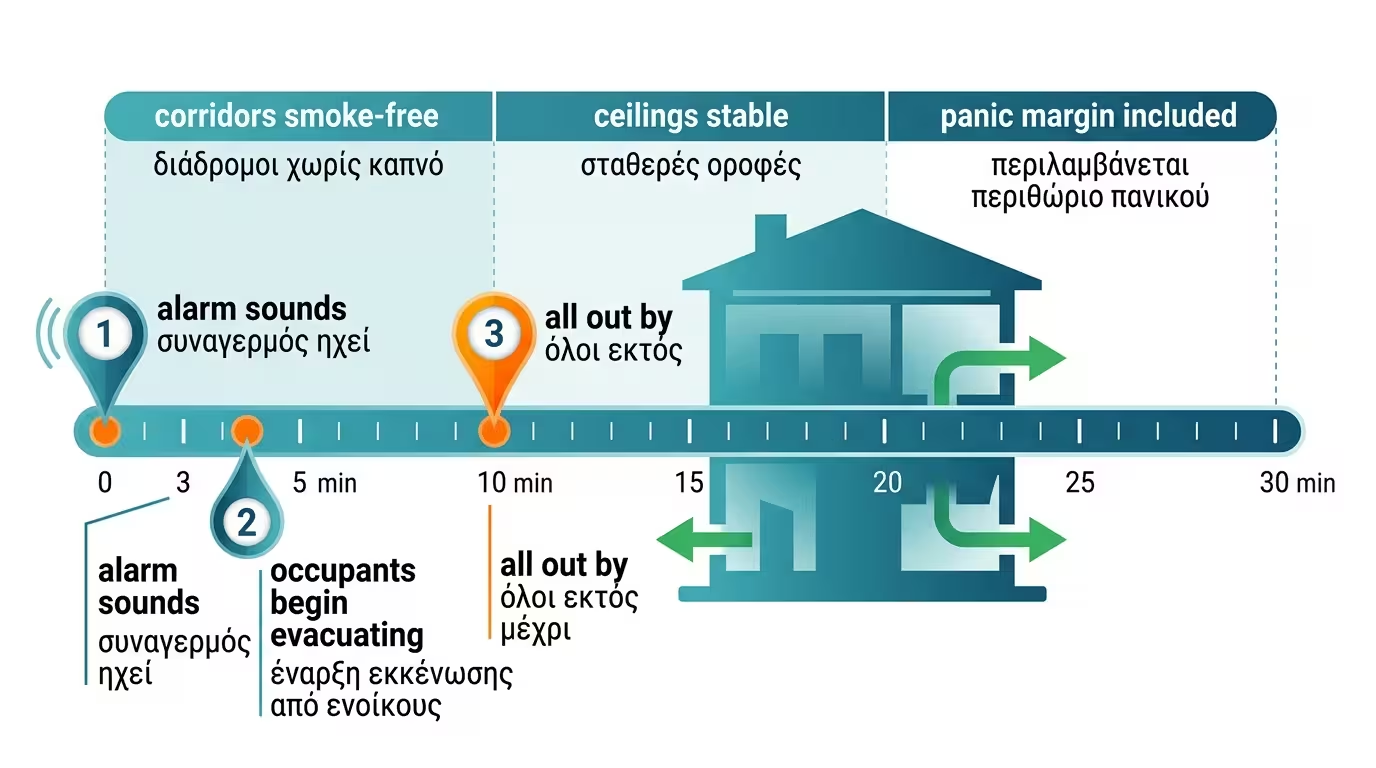
Escape corridors won't fill with smoke.
Ceilings won't collapse on the heads of those running towards the exit.
Even if someone panics or is delayed, the building will remain standing and passable.
As the building grows (e.g. 5-storey blocks, large hotels, shopping centres), 30 minutes aren't enough. Here, ratings of 60 or 90 minutes are required. Why? Because evacuating from the 5th floor via the stairwell takes time. But more importantly: The firefighters need to get inside!
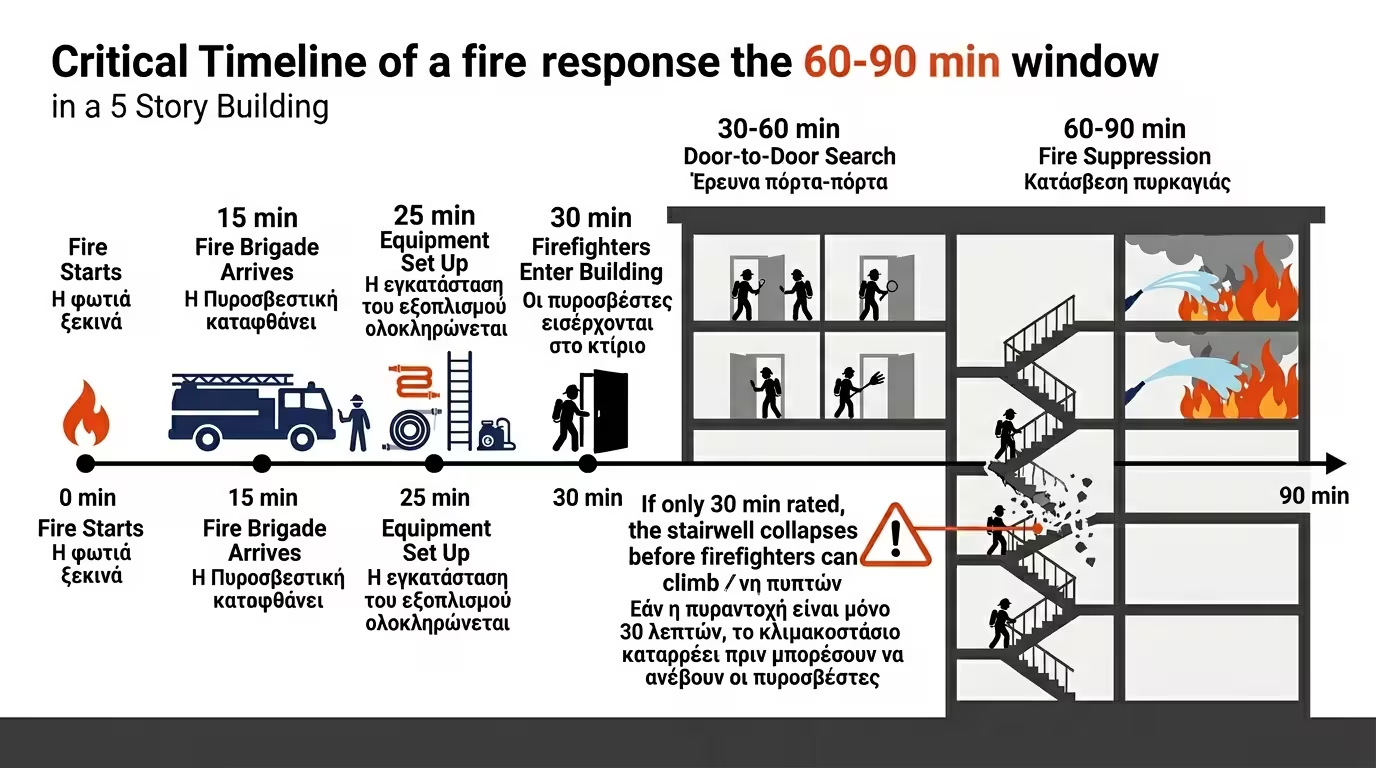
The 60-90 minutes give the Fire Brigade the time needed to arrive on scene (e.g. 15 min), set up equipment (10 min), enter the burning building, search for trapped occupants door-to-door and begin fighting the fire with water.
If the stairwell or columns only withstood 30 minutes, the Fire Brigade wouldn't even manage to climb before collapse begins!
Ratings of 120, 180 or 240 minutes are reserved for extreme, "heavy-duty" situations. Where are they mandatory?
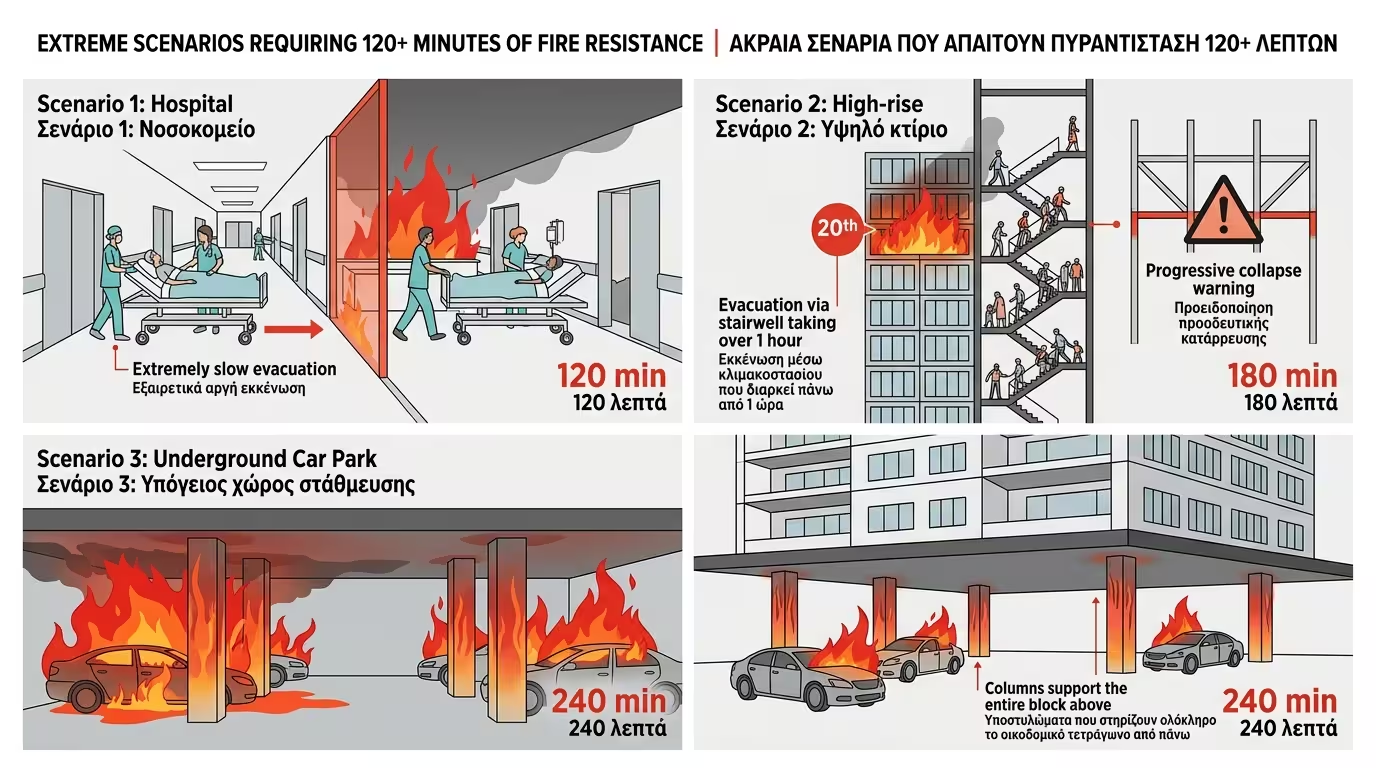
You can't tell patients to "run outside". Evacuation is horizontal (transferring beds to adjacent wings) and is extremely slow. The building must endure for a very long time.
If fire breaks out on the 20th floor, evacuation can take over an hour. The building must remain absolutely stable to prevent a Twin Towers-type disaster (progressive collapse).
There, temperatures from burning cars soar rapidly and become trapped. The columns (supporting the entire block above) must withstand the "furnace" for at least 120 minutes.
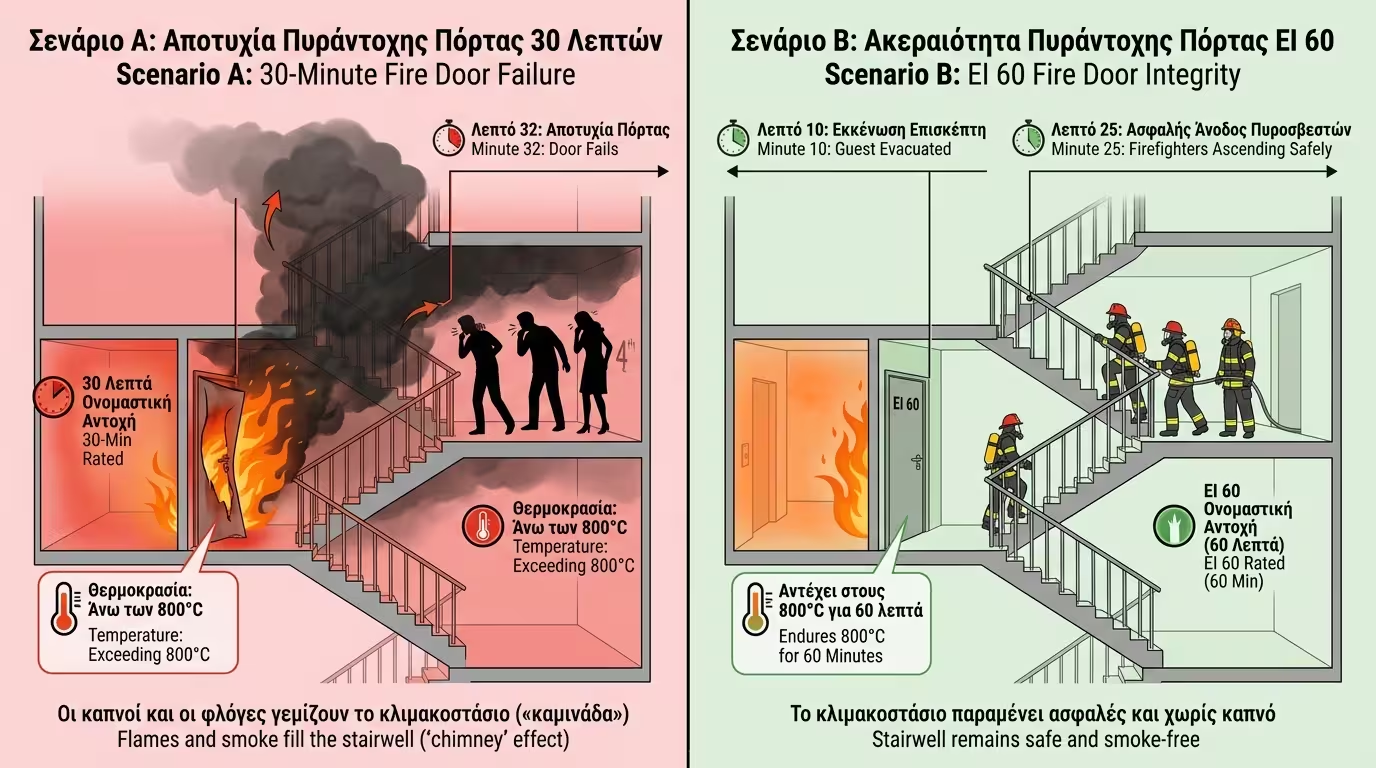
You're on the 4th floor of a hotel. On the 2nd floor, in a room next to the staircase, a fire breaks out from a short circuit. The Fire Brigade needs 15 minutes to arrive and 10 to climb.
The room has a simple 30-minute fire-rated door. At the 32nd minute, the door fails. Flames and dense smoke pour into the stairwell. The Fire Brigade has just reached the 1st floor, but the staircase has become a "chimney". You are trapped on the 4th floor and can't get down.
The regulations required an EI 60 door. The door takes a hammering from 800 °C, but holds! At the 25th minute, firefighters have climbed undisturbed up the (smoke-free) staircase, reach the room, open the door in a controlled manner and extinguish the fire. You walked down safely at the 10th minute. A 30-minute difference at the factory just saved dozens of lives.
The Bottom Line: The fire-resistance number is not a theoretical "quality score". It is the exact time you have available to react, escape or be rescued by emergency teams. We never discount the "minutes" of our lives!
Return to category.
Go to categoryReturn to the central guide.
Go to guide