
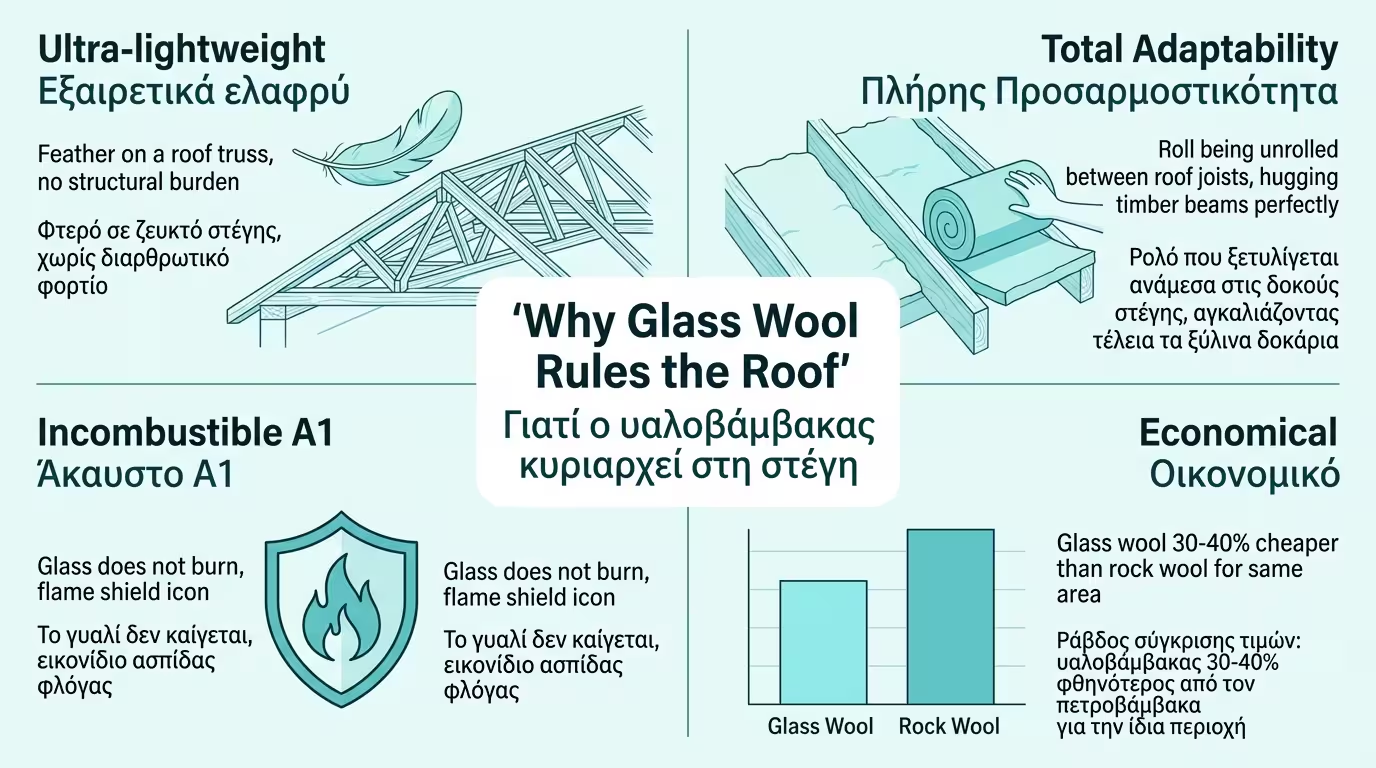
🪶 Ultra-Lightweight
Unlike heavy rock wool, glass wool weighs very little. It does not structurally burden the timber or metal roof frame.
If rock wool is the sturdy champion that goes into walls to withstand everything, glass wool is the "acrobat" of construction. It is made to go up high: in attics, beneath tiled roofs and inside plasterboard ceilings.
Homeowners often confuse these two fibrous materials. Although they look similar (both resemble "wool"), they have different composition and are designed for different missions. Let us see why glass wool dominates high up in the building and how it is applied.
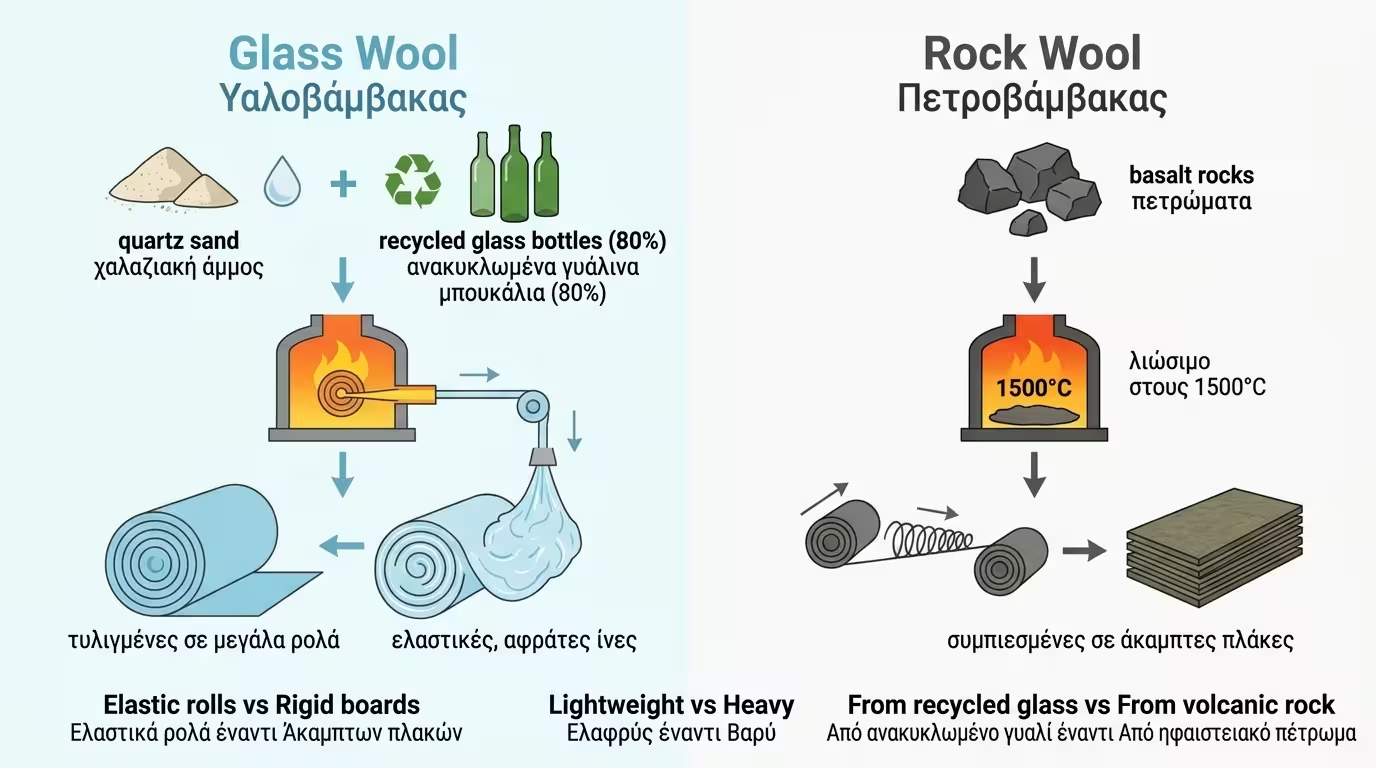
The name reveals its origin. Glass wool is produced primarily from quartz sand and recycled glass (up to 80%). These materials are melted at enormous temperatures and, through centrifugal spinning, converted into extremely fine, long fibres.
Unlike rock wool which is mainly produced as rigid boards, glass wool is far more elastic and is usually compressed and wrapped into large rolls. This form gives it a tremendous advantage in application.
When you want to insulate a timber roof or ceiling, the requirements change. You do not want to burden the structure with unnecessary weight, and you typically face uneven surfaces, beams and cables.
Unlike heavy rock wool, glass wool weighs very little. It does not structurally burden the timber or metal roof frame.
In roll form and very "fluffy," simply unroll it. It hugs timber beams perfectly, fills all gaps without leaving cracks, and compresses easily to fit behind pipes or cables.
Just like rock wool, glass wool belongs to the top Class A1 (Euroclasses). Glass does not burn. If your roof catches fire, the glass wool will act as a protective shield, delaying the spread of flames and buying precious evacuation time.
Noticeably more affordable than rock wool - the ideal value-for-money solution for covering large areas (attics, ceilings).
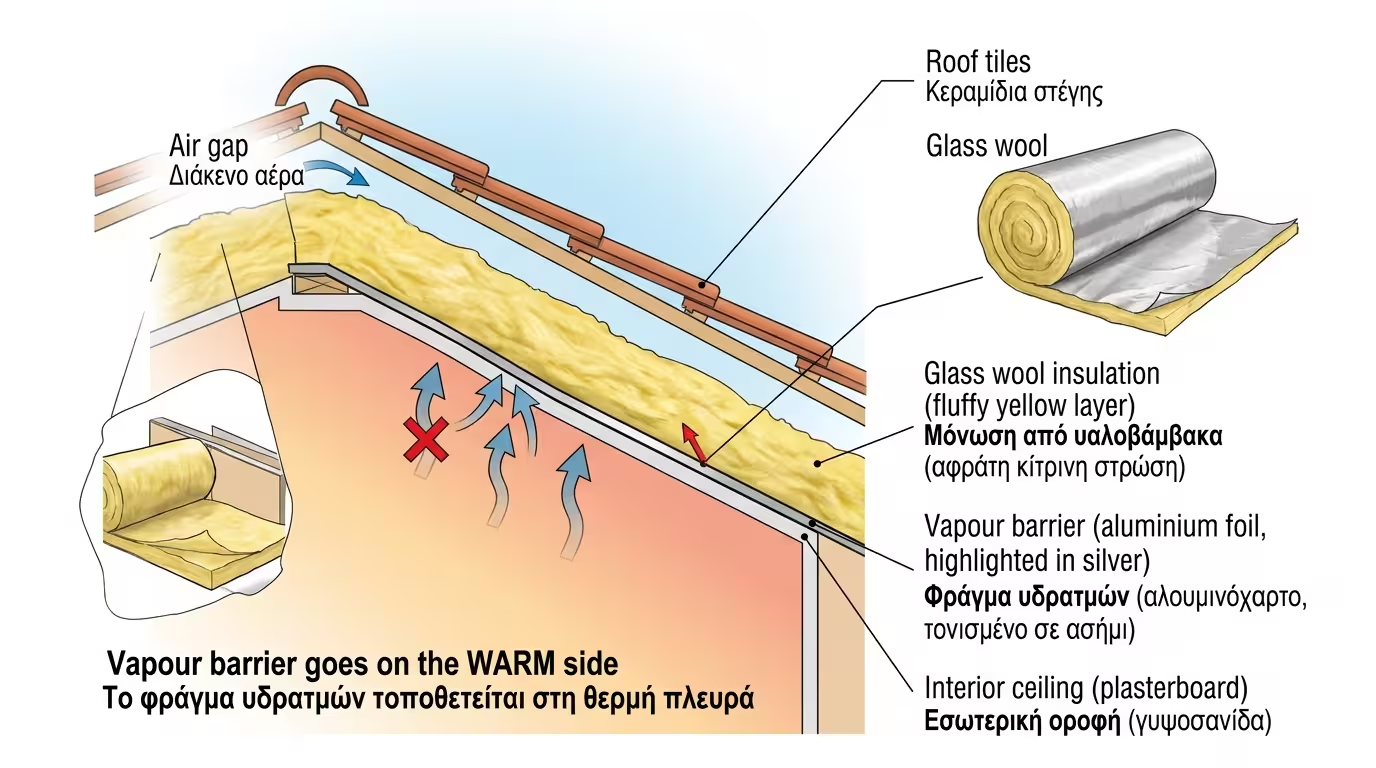
If you plan to install it yourself (DIY) in your attic, remember: Glass wool is air-permeable. To prevent internal moisture passing through and condensing on cold tiles (causing timber rot), a vapour barrier is always required (polythene or aluminium foil) on the "warm" side of the insulation (facing the room).
On the market, you will find glass wool rolls with an aluminium sheet already bonded to one side, making the job effortless!
We climb into the uninhabited, uninsulated attic of our digital house. It is mid-December. Heat from the radiators rises naturally and "escapes" into the cold attic. The boiler runs non-stop.
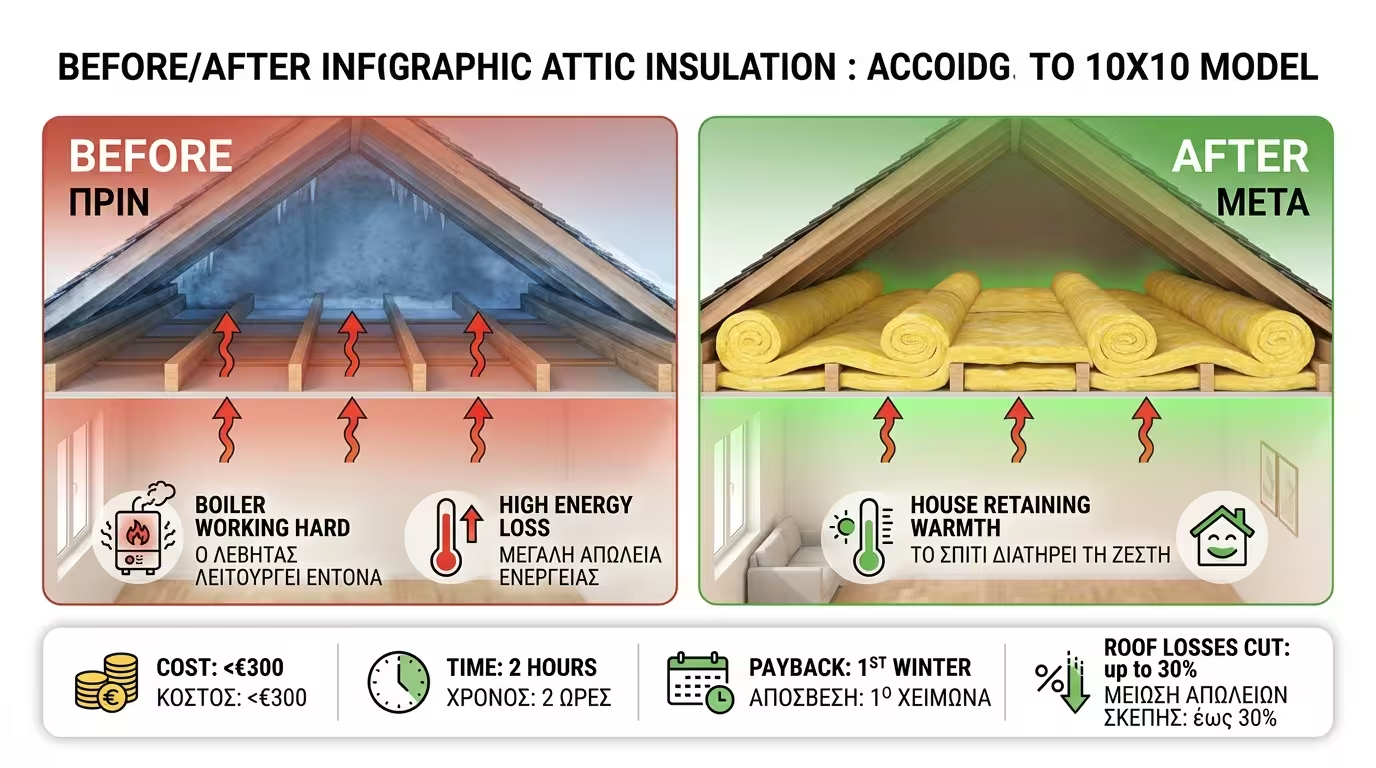
We buy several glass wool rolls (10 cm thick) and simply unroll them on the attic floor (above the slab), one next to the other, just like laying carpets. Material cost? Under €300. Installation time? Just 2 hours.
We created a "blanket" above the house. Heat losses through the ceiling (which account for up to 30% of a building's total heat losses) were cut instantly, like a knife. The house heats up much faster and retains its temperature for far longer. Payback on this investment comes in literally the first winter!
💡 Conclusion: Do not leave your ceiling or roof "bare." Glass wool rolls are the fastest, easiest and most economical intervention with the greatest energy result you can make in your home. They are a genuine DIY project that pays for itself almost immediately.
Return to category.
Go to categoryReturn to the central guide.
Go to guide