Waterproof Concrete Admixtures: Can We Make the Concrete Itself
Watertight as It Is Poured?
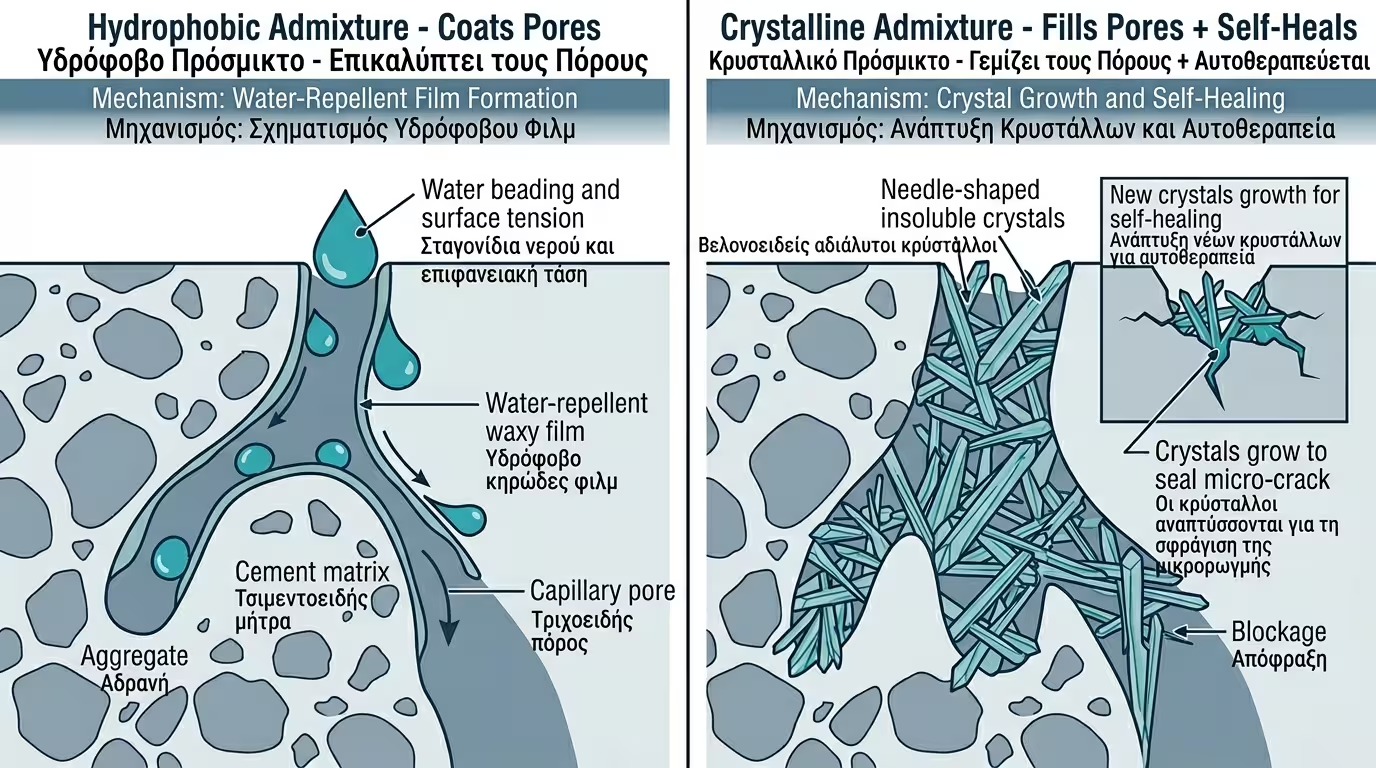
Ordinary concrete looks like solid rock, but under a microscope it looks
like Swiss cheese. As it cures, evaporating water leaves behind millions
of microscopic tubes (capillary pores). Through these pores, groundwater
finds its way into our basement.
Instead of fighting to seal those pores after the fact with coatings,
engineers use Integral Waterproofing. They add special
chemicals (Waterproof Admixtures) straight into the concrete mixer ("the
barrel") before the concrete is poured into the formwork.
1. The 2 Types of Admixtures (How They Work)
When the contractor orders the concrete from the batching plant, they
request one of the following additives:
💧 Hydrophobic Admixtures
These are usually liquid admixtures. Once mixed into the concrete,
they "coat" the pore walls with a water-repellent film (as if you
waxed them). Water, due to surface tension, slides off and cannot
penetrate deep. This is the oldest and most classic method.
💎 Crystalline Admixtures (The Super Weapon)
Remember the crystalline coating from the previous article? Here
we're talking about the same technology, but in powder form mixed
into the batch. As the concrete cures, the active chemicals react
with moisture and create insoluble crystals throughout the entire wall volume! The concrete seals 100% from inside out and, most importantly,
gains self-healing ability. If a micro-crack forms in
the future, the concrete itself will grow new crystals and close it!
2. The Huge Advantages & The Big Trap
Why is integral waterproofing so ground-breaking?
⏱️ Time & Money
No need to wait a month for the concrete to dry and then bring a
team to apply bituminous or polyurethane coatings. You save the
labour cost of the coating crew entirely.
🛡️ Scratch-proof
When the bulldozer dumps the backfill, you don't care if rocks
scrape the wall. The waterproofing isn't a "skin" on the outside -
it's the entire wall thickness (e.g. 25 cm of watertight rock).
🔩 Rebar Protection
Because water cannot even enter the concrete, the reinforcing steel
bars will never corrode.
⚠️ The Big Trap
Many contractors say: "I put waterproofer in the barrel, so I don't need anything
else." This is the most dangerous lie! The admixture makes the concrete itself watertight. It does NOT seal the joints (the construction
joints) where the floor meets the wall. It also can't bridge large cracks
(over 0.4 mm) from settlement. That's why integral waterproofing must
always be combined with hydrophilic waterstops at the
joints!
3. The Experiment: The 10×10 Concrete Pour
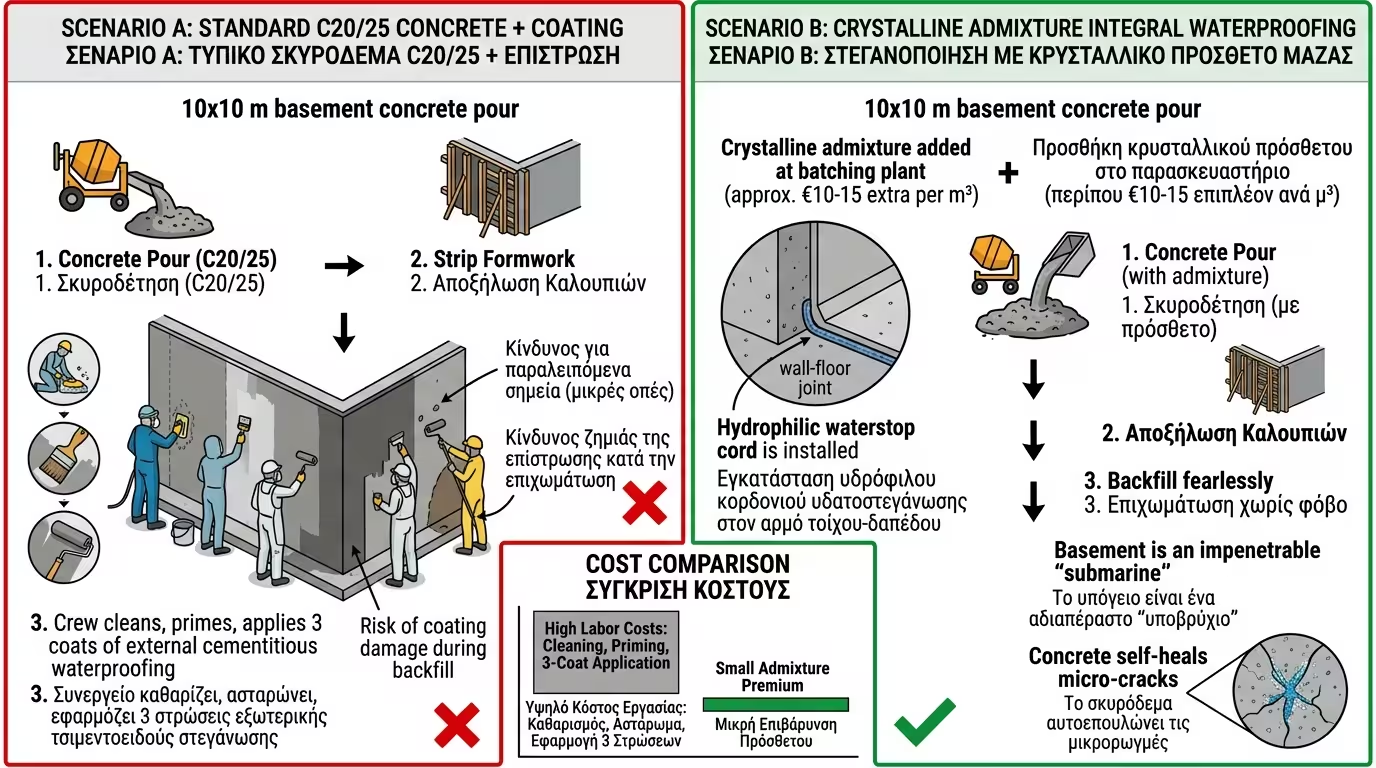
We're pouring the basement concrete for our 10×10 building.
🔴 Scenario A (Standard Concrete)
We order standard C20/25 concrete. After stripping the formwork, we
must hire a team to clean, prime and apply 3 coats of cementitious
waterproofing on the outside. If the worker misses a spot or if
rocks scrape the coating during backfilling, our basement will leak.
🟢 Scenario B (The "Smart" Concrete)
We ask the batching plant to add crystalline integral admixture to
the mix (approx. €10-15 extra per m³). We also install the
hydrophilic waterstop cord at the joint. We pour. We strip the
formwork and… we're done! We apply absolutely nothing. We backfill
fearlessly. Our basement is an impenetrable "submarine" that seals
its own micro-cracks.
Bottom Line: Waterproof admixtures (especially crystalline)
are the epitome of preventive construction. They make the very nature of the
concrete hydrophobic, reducing labour costs and ensuring your building ages
without ever feeling the dampness of the ground.