Modern Diagnostic Tools: How Pin Moisture Meters and Microwave Scanners Save Your Walls from Pointless Demolition

Damp is sneaky. When you see a stain on your living-room wall, the source (e.g. a cracked pipe) is most likely not directly behind it. Water can travel silently through brick and concrete for metres, following the path of least resistance, until it finds a weak spot in the plaster to surface.

If your plumber arrives with a hammer and starts breaking the wall exactly at the stain, stop them! Diagnosis is now done digitally and non-destructively, with two key tools.

1. The Pin Moisture Meter

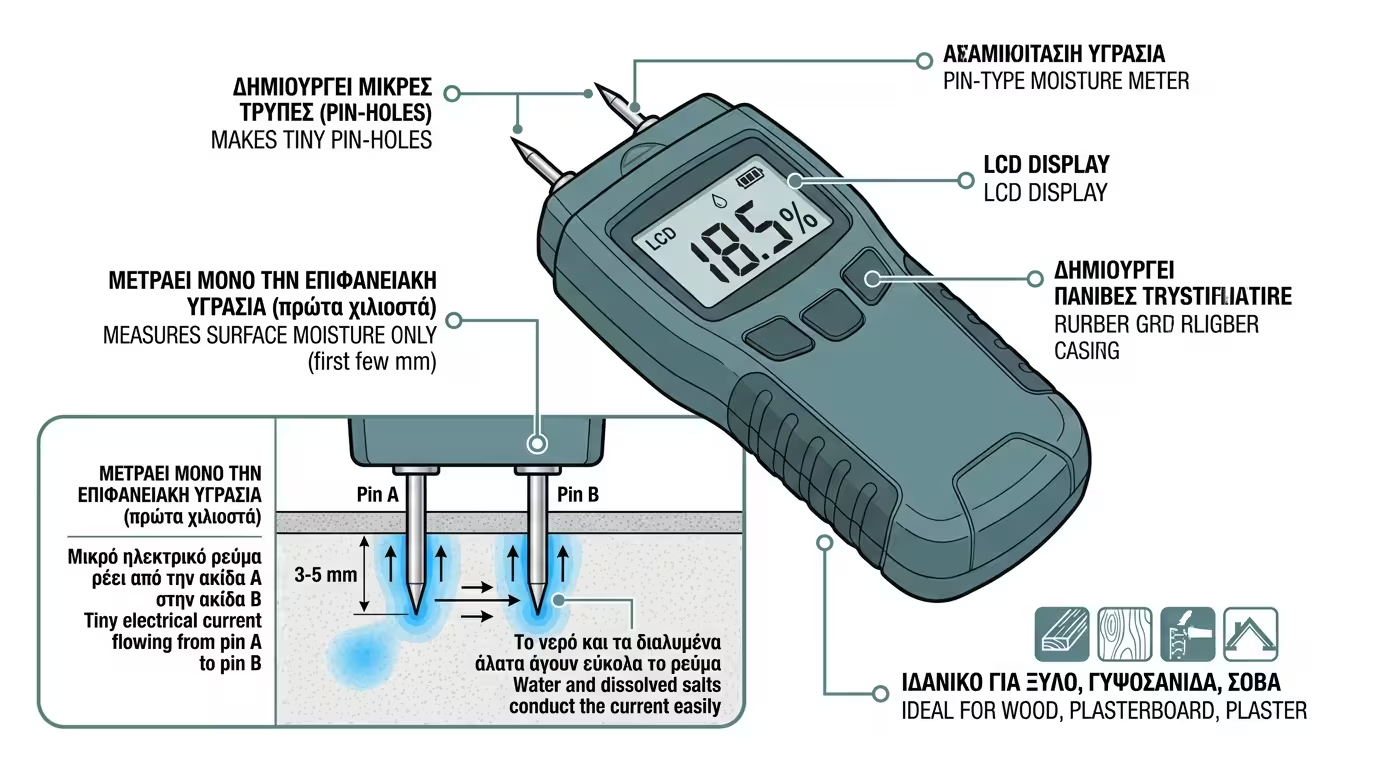
This is the simplest and most widespread device. It looks like a small remote control with two sharp, metallic probes (pins) at the top.

Pin moisture meter - two probes inserted in plaster

⚡ How It Works

The user lightly pushes the two probes into plaster, plasterboard or wood. The device sends a tiny electrical current from one pin to the other. Since water (and dissolved salts) is an excellent conductor, the easier the current flows, the more water is present in the material!
✅ Use & Limitations

Perfect for checking whether a wall is surface-wet or whether a wooden floor (parquet) has absorbed moisture before it swells. The downside: it makes (tiny) pin-holes and only reads moisture in the first few millimetres of the surface. It cannot "see" deep into the wall.

2. Microwave Detectors / Dielectric Moisture Meters (Pinless Scanners)

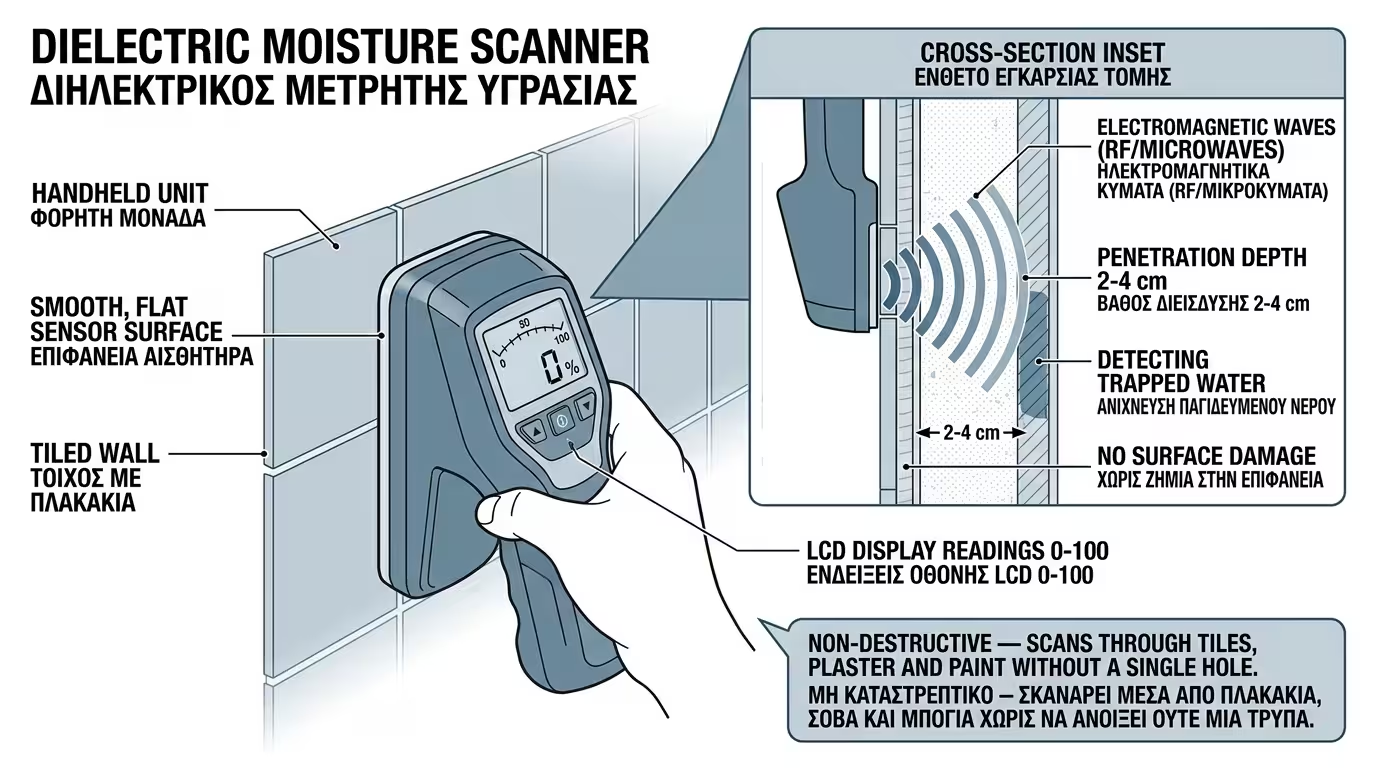
Here we move to the "heavy artillery" of diagnostics. These devices have no probes at all - just a smooth, flat sensor surface on the back.

Pinless scanner - flat sensor pressed against wall

📡 How It Works

You press the device flat against the wall (or against expensive bathroom tiles). It emits low-power electromagnetic waves (radio frequencies or microwaves) that penetrate the wall to a depth of 2-4 cm! The device measures changes in the electromagnetic field. Because water has a huge "dielectric constant" compared to dry concrete, the scanner instantly detects its presence.

🗺️ The Mapping Miracle

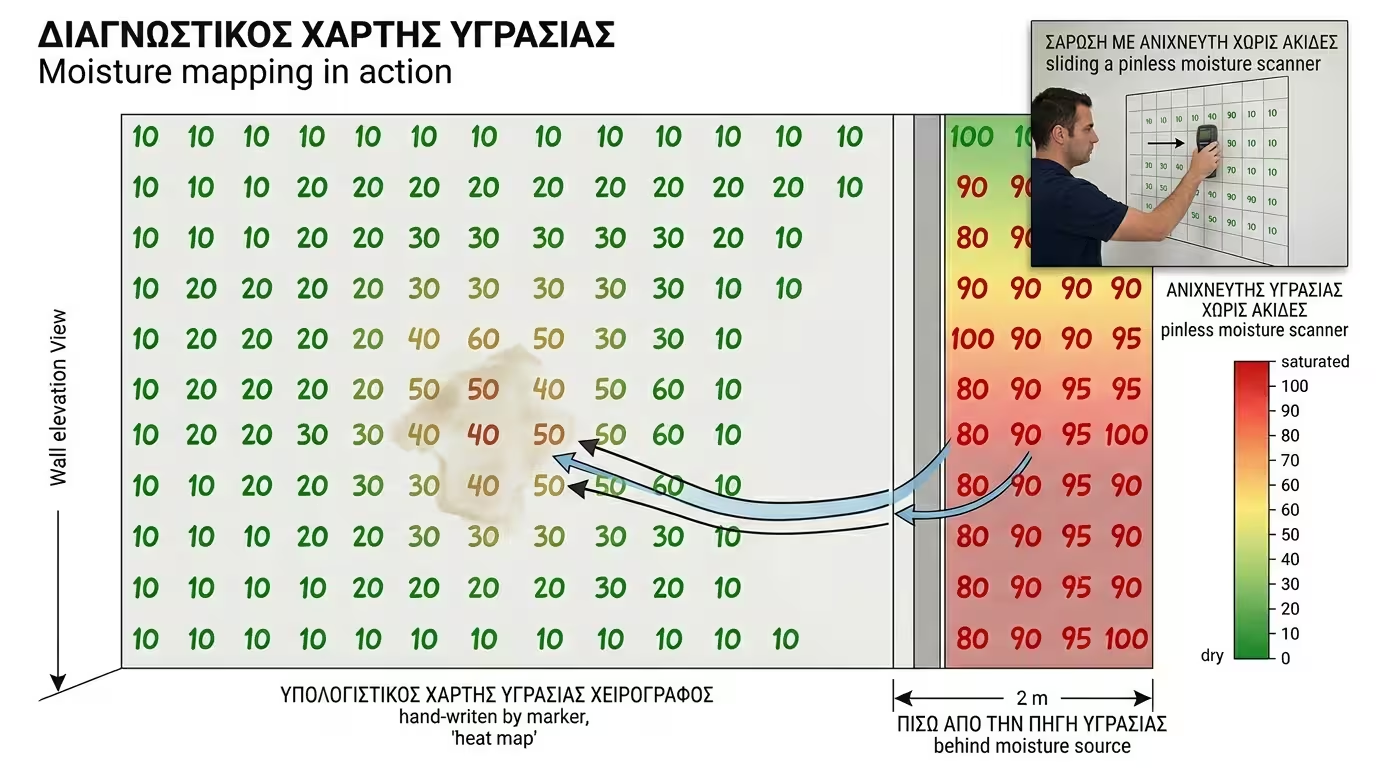
The device displays numbers on its screen (e.g. 0 to 100). The engineer slides it along the wall. At the visible stain: 40. As they move right, the wall looks completely dry, but the reading climbs: 60… 80… 100! The engineer has just "tracked" the invisible river inside the wall and found the real source of the leak, 2 metres away!

3. Mapping in Action

The great power of these tools is that you can "draw" the secret path of water on the wall without touching a hammer. The technician scans in a grid pattern, marking numbers with a marker. Within 20 minutes, the wall is covered in numbers - a kind of "heat map" of moisture. By following the rising numbers, you find the source.

Moisture mapping - digital moisture map on a wall

4. The Experiment: The Hallway Leak

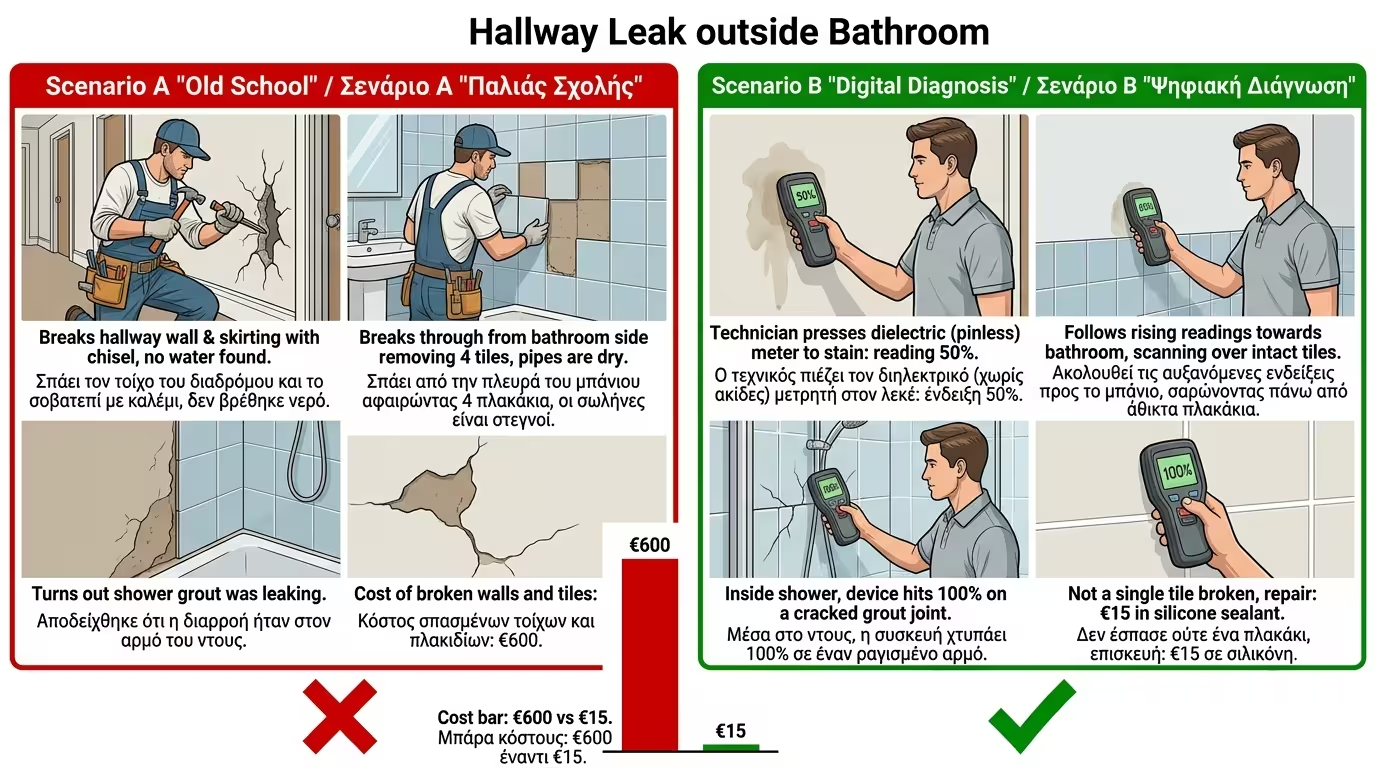
Experiment - demolition vs digital scan

A swollen stain appears low on the hallway wall, right outside the bathroom.

🔴 Scenario A (The Old School)

We call a traditional worker. He says "a pipe must have burst." He grabs the chisel, breaks the hallway wall and skirting. No water. He breaks through from the bathroom side, removing 4 tiles. Pipes are dry. It turns out the shower grout was to blame! Water leaked through joints during showering, travelled under the tiles and emerged in the hallway. Cost of broken walls and tiles: €600.

🟢 Scenario B (The Digital Diagnosis)

We call a technician with a dielectric (pinless) meter. He presses the sensor to the stain: reading 50%. He follows the rising readings towards the bathroom, "scanning" over the intact tiles. Inside the shower, the device hits "red" (100%) right on a cracked grout joint! Not a single tile broken. Repair cost: €15 in silicone sealant.

Bottom Line: Moisture meters are the "stethoscope" of modern construction. Never allow anyone to start smashing and digging in your home without first mapping the invisible path of water with electronic instruments. The technology costs a few euros more per visit but saves you thousands in pointless destruction.

Related Articles

Waterproofing: The Ultimate Shield Against Moisture

Return to category.

Go to category

Preview