🚀 From 0cm to 5cm
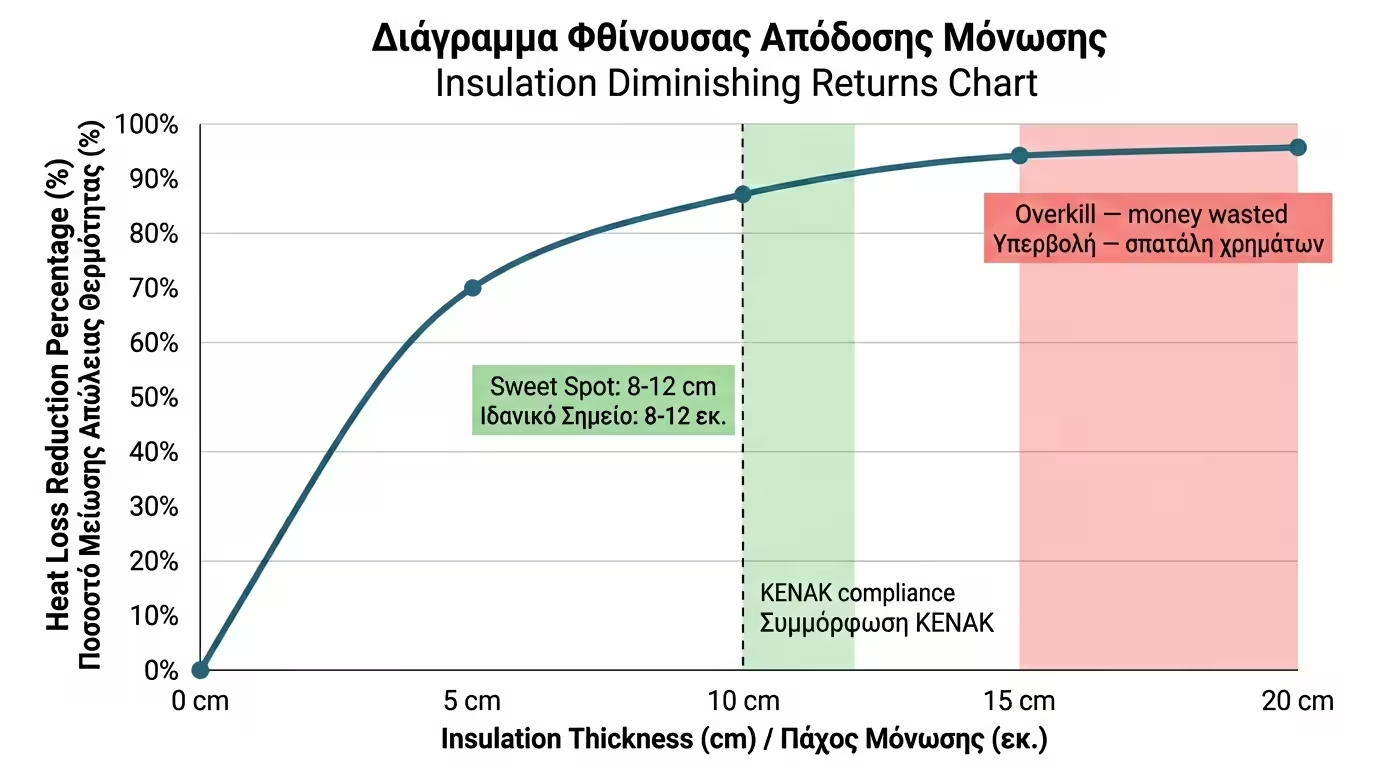
A huge leap. You cut roughly 70% of heat loss!
In physics there is an unbreakable rule: Heat always rises. In winter, all the thermal energy your radiator produces rises to the ceiling. If it finds no barrier, it escapes straight to the sky. In summer, the flat roof receives the sun vertically all day long.
That is why roof insulation must always be thicker than wall insulation. If we used 7cm on the walls, the roof needs more. But how much?
Many owners believe that doubling the polystyrene thickness (from 10cm to 20cm) will double the electricity savings. This is a huge myth! Thermal insulation follows the law of diminishing returns.
A huge leap. You cut roughly 70% of heat loss!
Insulation becomes excellent. You cut another 15-20% of loss. Here you meet KENAK requirements.
You gain only an extra 4-5%.
The gain is below 2%.
So paying double to go from 10 to 20cm will never pay back on electricity bills (unless you're building a strict Passive House). The "Sweet Spot" for Greek climatic conditions, using EPS or XPS, is 8 to 12 centimetres.
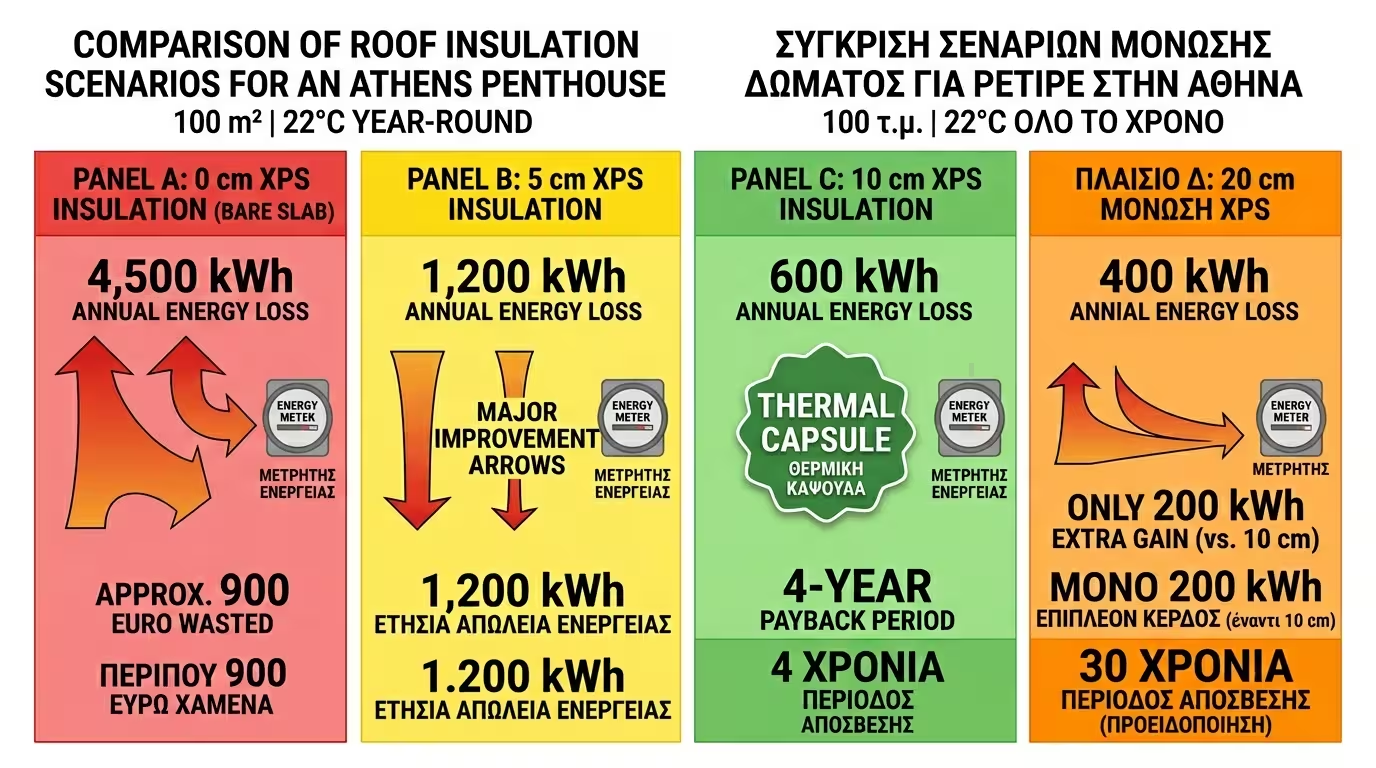
Our digital house is a 100m² penthouse in Athens. We run the air-conditioner to maintain 22°C year-round. We run the energy simulator for the ceiling:
The roof is uninsulated. The penthouse "leaks" cold and "bakes" in summer. We lose 4,500 kWh per year from the ceiling alone! (About €900 wasted).
We add 5cm. The house transforms. Losses fall dramatically to 1,200 kWh per year. We already saved huge amounts, but on very cold days the ceiling is still slightly cool.
We increase to 10cm. Losses drop to 600 kWh per year. The house is an absolute thermal capsule. The electricity bill is minimal. The insulation pays for itself in about 4 years.
We double to 20cm. Losses drop to 400 kWh. We saved only 200 kWh more (about €40/year), but paid double for materials. Payback on the difference takes 30 years!
The Final Conclusion: Don't leave your roof with 3 or 5 centimetres of insulation, "just enough to say we did something". Invest in 8, 10 or 12 centimetres (depending on your climate zone - northern or southern Greece). It is the ideal investment that gives you maximum return, without throwing a single euro on unnecessary materials!
Return to category.
Go to categoryReturn to the central guide.
Go to guide