Exterior Render Waterproofing: The Secret of Siloxane Resins

You look at the facade of your house after a heavy rain and notice that the render, the decorative bricks or the stone have darkened.

This means one thing: the wall has "drank" water. As we have analysed in previous articles, water trapped in the pores is the beginning of the end, as it causes frost cracks, mould growth and the appearance of salts.

But what do you do when you don't want to paint the wall because you like it exactly as it is? How do you protect it without altering its colour and texture? Modern construction chemistry has the solution, and it's called waterproofing with siloxane resins (hydrophobation).

1. What Are Siloxane Resins? (The Lotus Effect)

Unlike varnishes or plastic paints that create a "crust" (a film) on the surface of the wall, siloxane liquids work completely differently.

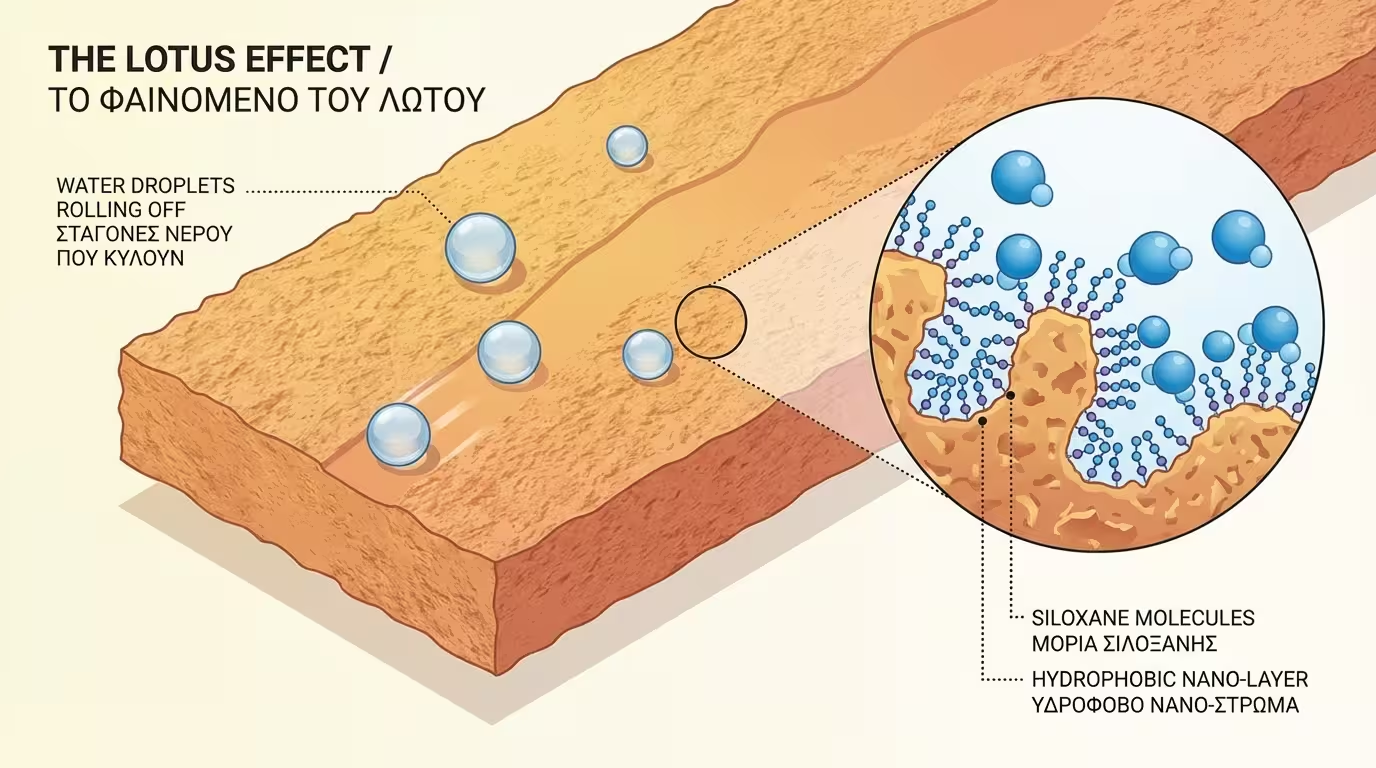
They are transparent liquids (silicone-based) which have an extremely small molecule. When you apply them, they penetrate deep into the pores of the render (often 1 to 2 centimetres into the material). There, they line the walls of the pores, making them hydrophobic.

Siloxane resins: Pore penetration and the Lotus Effect

💧 The Result

When a raindrop hits the wall, instead of being absorbed, it forms small beads (pearls) that roll downwards, even taking the dust with them. This is the famous "lotus effect", inspired by the leaves of the namesake plant that never get wet.

The most important part? The wall remains completely dry, while visually absolutely nothing has changed!
2. The Huge Advantage: Absolute Breathability

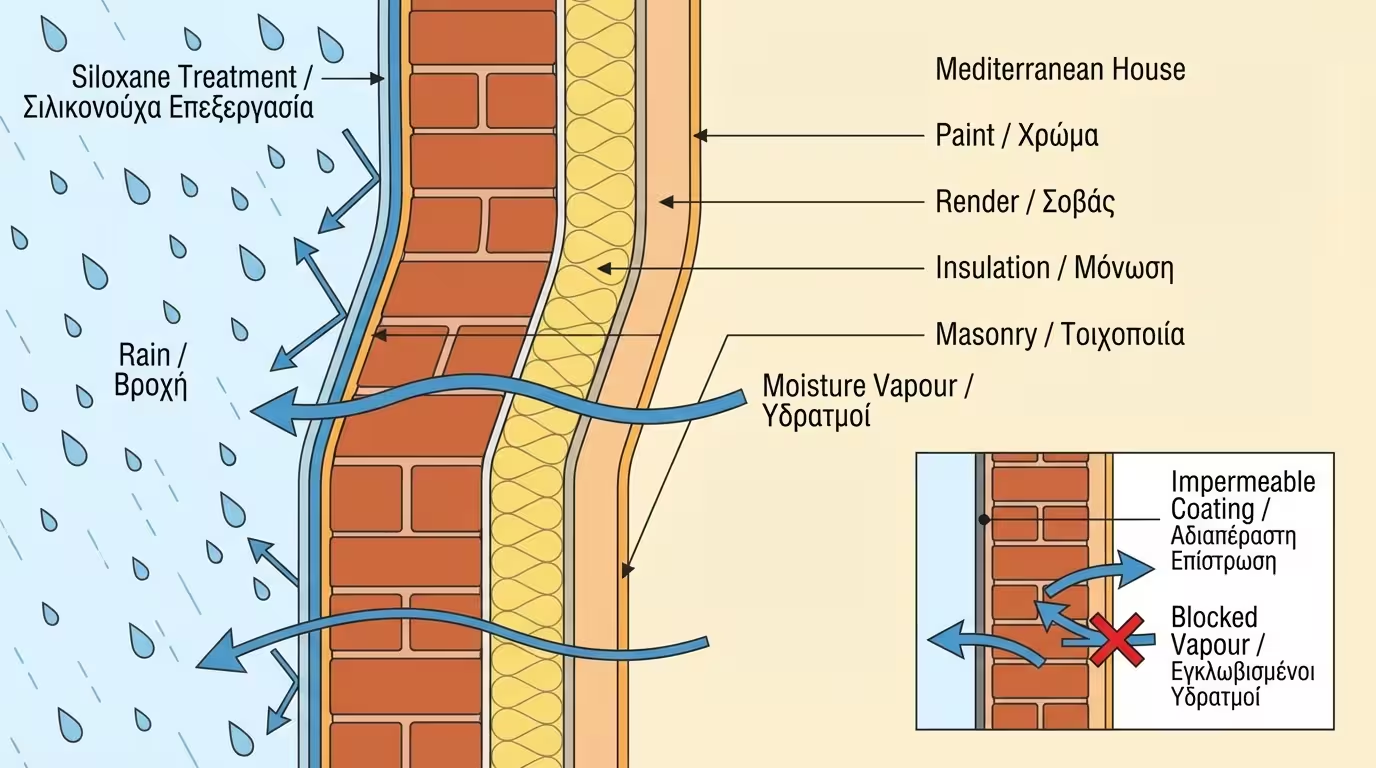
The biggest mistake many amateurs make is trying to waterproof exterior stone walls or render with transparent stone varnishes (skins). The varnish seals the wall. Water doesn't get in, but it can't get out either (water vapour entrapment). A few months later, the varnish peels and turns white.

Wall breathability vs Sealing with varnishes: Vapour passes, water is repelled
💡 The Magic of Siloxanes: Siloxane resins do not close the pores. They barely reduce their diameter. Because a drop of water (liquid form) is thousands of times larger than a water vapour molecule (gaseous form), the rain cannot get in, but the house's water vapour escapes undisturbed. The wall continues to breathe 100%.

3. Ideal Surfaces for Application

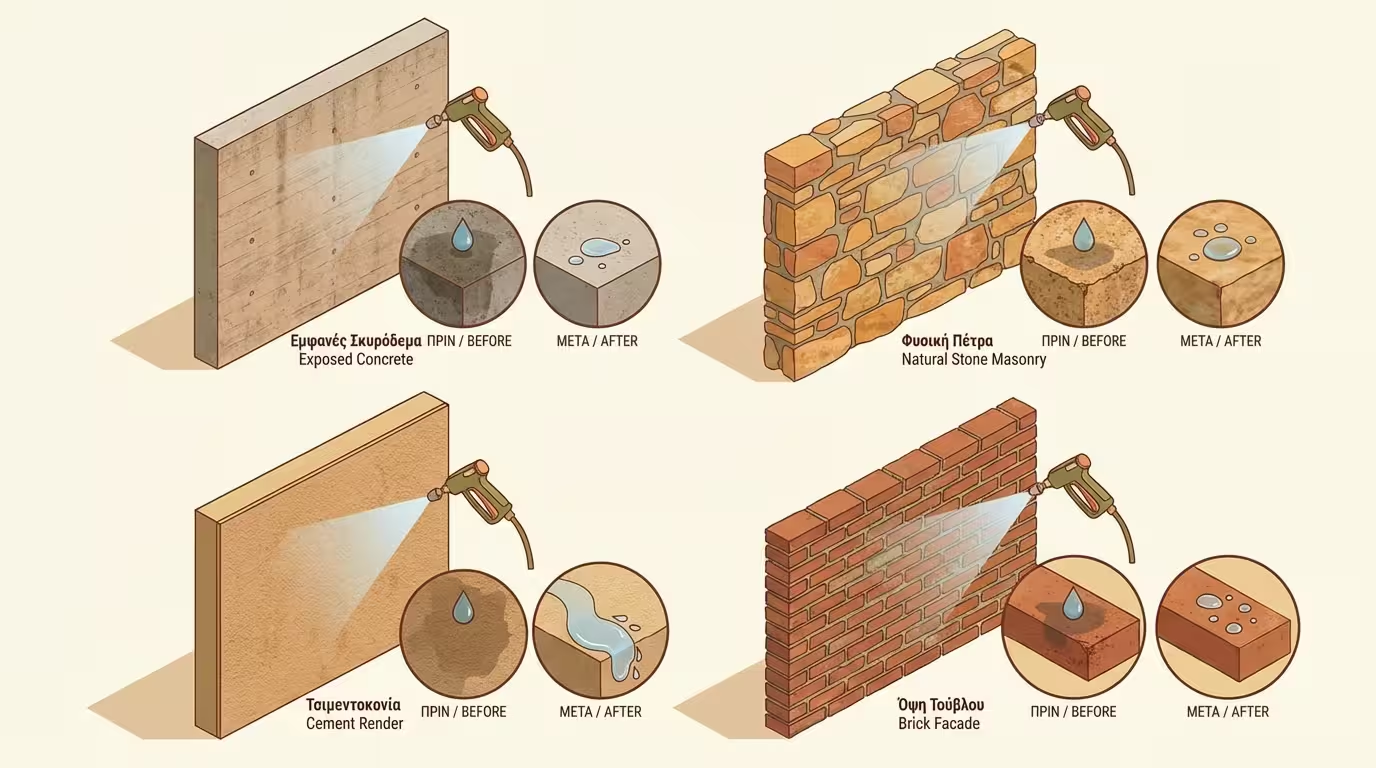
Hydrophobic liquids (siloxanes or silanes) are the ultimate maintenance choice for the following surfaces:

Ideal surfaces: unpainted render, exposed concrete, natural stone, aged coloured renders

Where Is Their Application Ideal?

  • 1. Unpainted (Rustic) Render: If you like the natural, grey or white shade of traditional cement render and never want to mess with paints.
  • 2. Exposed Concrete: Architectural concrete is in fashion. If you leave it unprotected, the inner rebar will rust. Siloxane protects it invisibly.
  • 3. Natural Stone & Bricks: Ideal for stone-built houses, decorative facing bricks and porous marbles that we want to keep their matte look.
  • 4. Coloured Renders that have "Aged": If your coloured (pasty) render has lost its water repellency but its colour is still good, a pass with siloxane will make it impermeable again.

4. The Correct Application Procedure (DIY-Friendly)

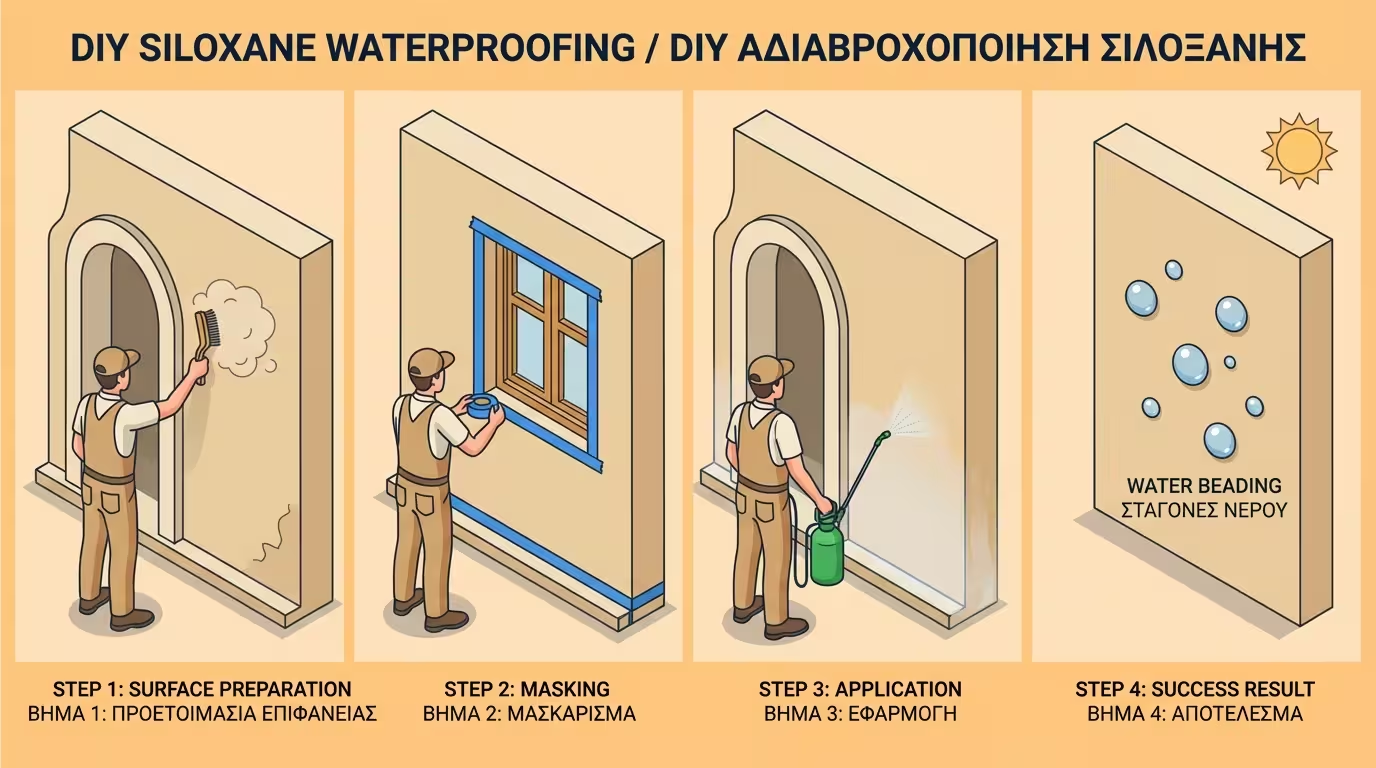
Siloxane application steps: Cleaning, Drying, Pressure Sprayer

The application is extremely simple and can be done even by beginners, as long as the rules are followed:

Step Action & Precaution
1. Cleaning The wall must be completely clean of dust, mould and oils. Wash it thoroughly.
2. Absolute Drying The material will not penetrate if the pores are full of water. Choose a period with 3-4 dry days before application.
3. Tool Selection The roller and brush are tiring and inefficient. The perfect tool is a pressure sprayer (the one we use for garden spraying).
4. The "Wet-on-Wet" Technique Spray from bottom to top, pouring plenty of material until you see the wall "run". Before the first coat dries, immediately apply the second. This ensures maximum penetration.
5. Protecting Frames Cover windows and aluminiums well. If siloxane gets on the glass and dries, it is extremely difficult to remove.

Related Articles

Preview