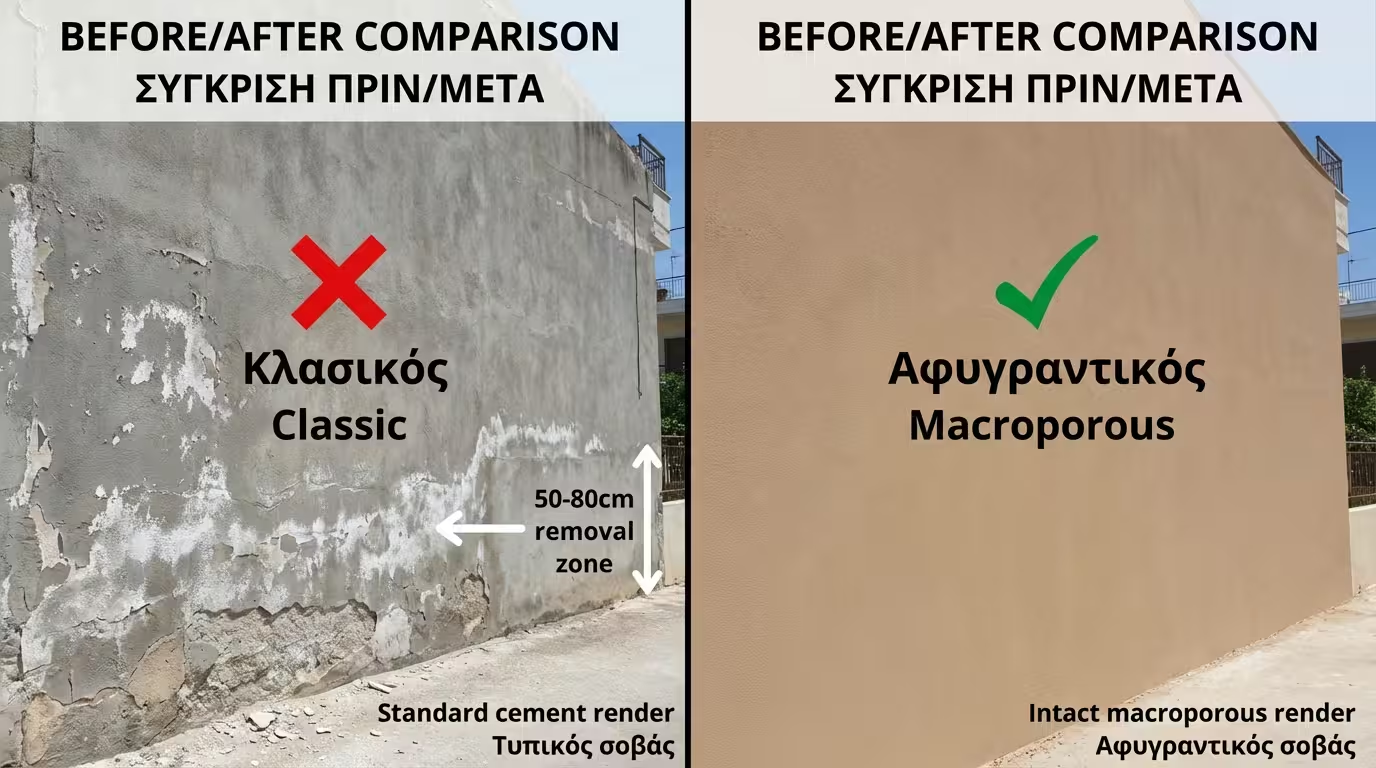
1. Breathability (Evaporation)
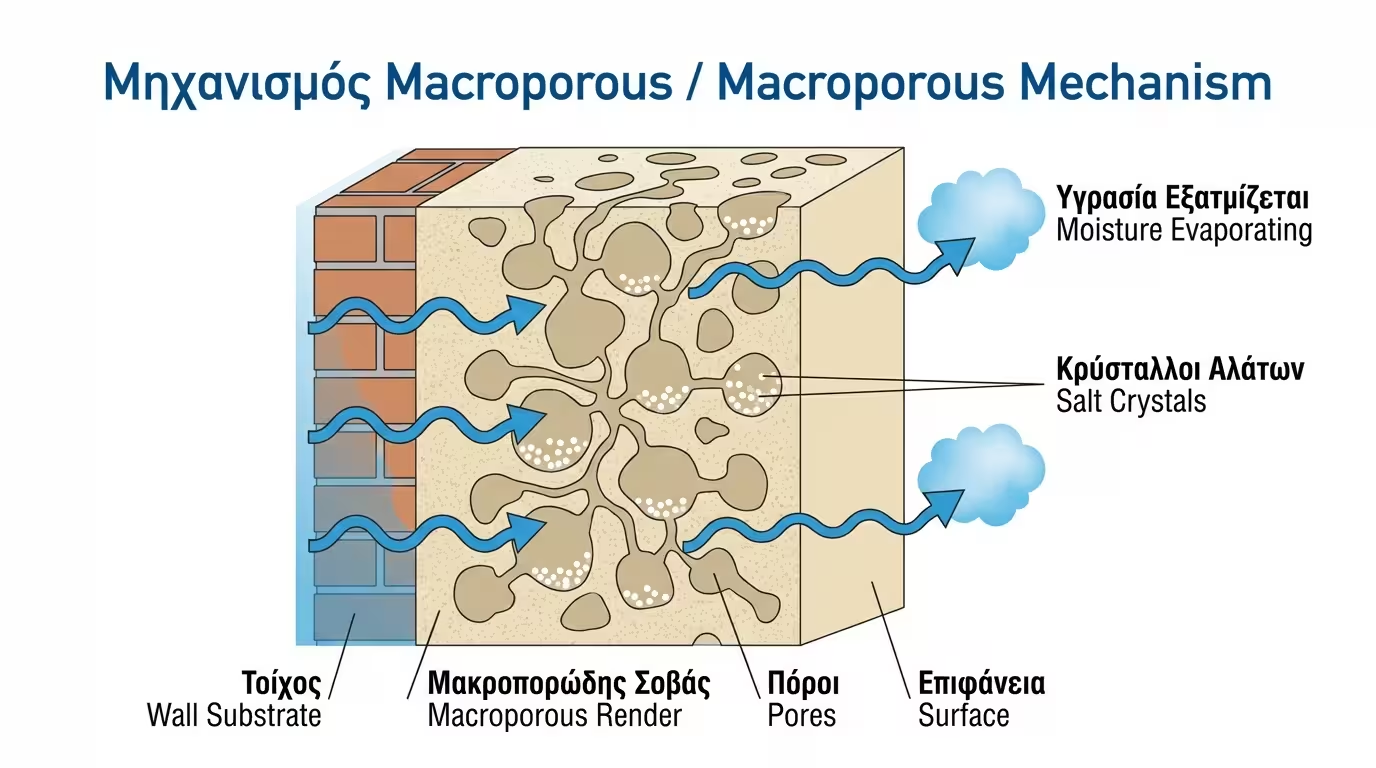
They allow the wall's moisture to evaporate extremely fast into the environment in the form of invisible water vapor. The wall "dries" continuously.
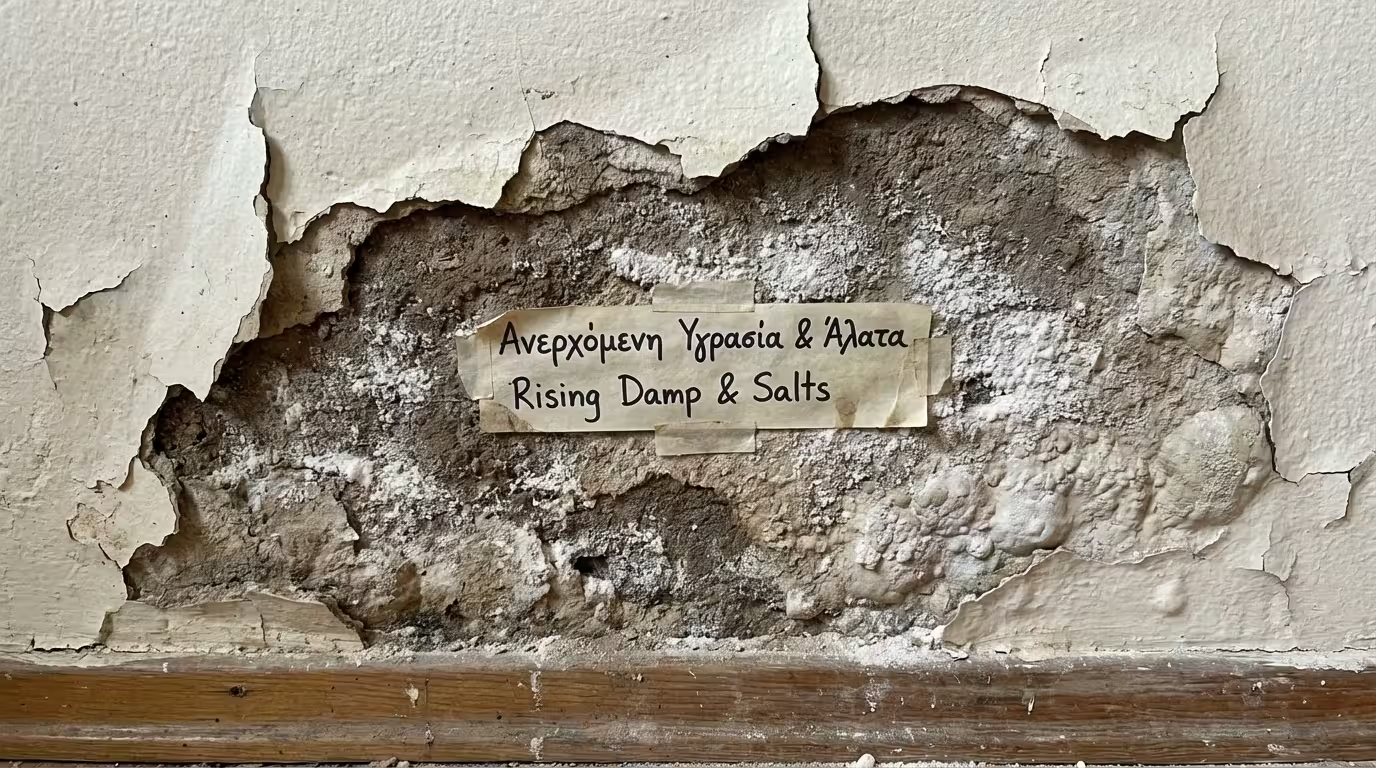
If you have seen your walls, mainly at the low points near the skirting board, swelling, the paint flaking and a white powder appearing on the surface, then you are facing the number one enemy of masonry: rising damp.
The most common mistake made by both DIYers and some craftsmen is to locally scrape the wall and coat it with strong, waterproofing cements. The result? The moisture simply finds another path and "bursts" a little higher. The real, technically correct solution is not to "imprison" the water, but to let it evaporate in a controlled manner. This is exactly where dehumidifying (macroporous) renders intervene.
To understand the solution, we must know what causes the damage. The water that rises from the foundations of the house (through the capillaries of the brick or concrete) contains dissolved salts from the ground.
When the water reaches the surface of the classic render, it evaporates. However, the salts are left behind. As they dry, they crystallize (expand). This expansion exerts tremendous mechanical pressure, which literally "blows" the render and paint off the wall (the so-called efflorescence).
Dehumidifying renders have a special, honeycomb structure. As their name betrays (macroporous), they contain large pores (air voids) in their mass.
They act like a smart "sponge" in two basic ways:
They allow the wall's moisture to evaporate extremely fast into the environment in the form of invisible water vapor. The wall "dries" continuously.
Their most important feature! When salts crystallize, instead of breaking the surface of the render, they have ample space to develop (to relieve pressure) inside the large pores of the material. Thus, the render remains intact and the paint never flakes.
Why does simple cement screed fail where dehumidifying render triumphs?
| Characteristic | Standard Cement Render | Dehumidifying Render (Macroporous) |
|---|---|---|
| Salt Handling | Salts break the surface | Salts are stored in pores |
| Breathability | Low (imprisons water) | Very High (rapid evaporation) |
| Lifespan in Damp | Short (flakes quickly) | Long-term protection (years) |
| Suitable for Basements/Ground Floors | No (as a final surface) | Yes, it is the recommended solution |
The Golden Rule of Removal: When repairing a wall with a moisture problem, it is not enough to tear down the rotten render only where the damage is visible. You must demolish it (dig it) at least 50 to 80 centimeters HIGHER than the last visible trace of moisture, because the water has already traveled internally.
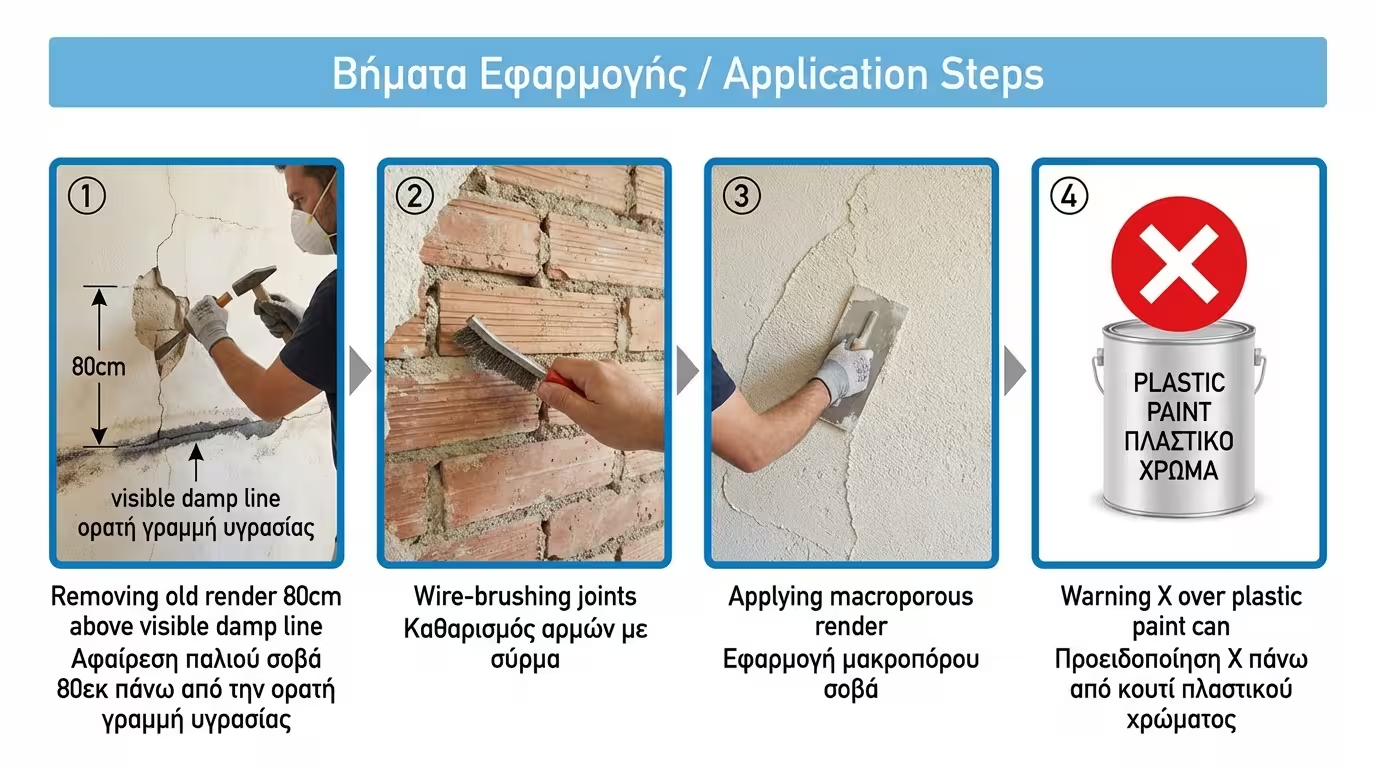
After tearing down the old render, clean the joints of the bricks or stone well with a wire brush. Wash the wall with water (not under pressure) to remove the superficial salts before pouring the new dehumidifying render.
This is the most common mistake that ruins your entire investment. If you apply your expensive dehumidifying render and then paint it with common plastic or acrylic paint, you close its pores! Dehumidifying render must be painted EXCLUSIVELY with highly breathable paints (such as silicone or silicate paints).
As with repair mortars, never add common cement, sand, or resins to the dehumidifying render, because you will destroy the porosity of the system.
Return to category.
Go to categoryReturn to the central guide.
Go to guide