The sound of a large piece of render crashing to the floor is perhaps
the worst nightmare in a house. Unlike fine cracks which are a cosmetic
problem, delamination (loss of adhesion) is a complete structural
failure. It means that the "bond" (adhesion) between the render and the wall
has been completely destroyed.
To stand upright (or, even more difficult, upside down on the ceiling),
render relies on mechanical adhesion. It needs a clean,
rough, and stable substrate to be able to "hook" into its pores. When
this hooking fails, gravity takes over.
The 4 Main Causes of Delamination
But why does the render "refuse" to stick? Let's look at the 4 most
common (and often criminal) mistakes on construction sites.
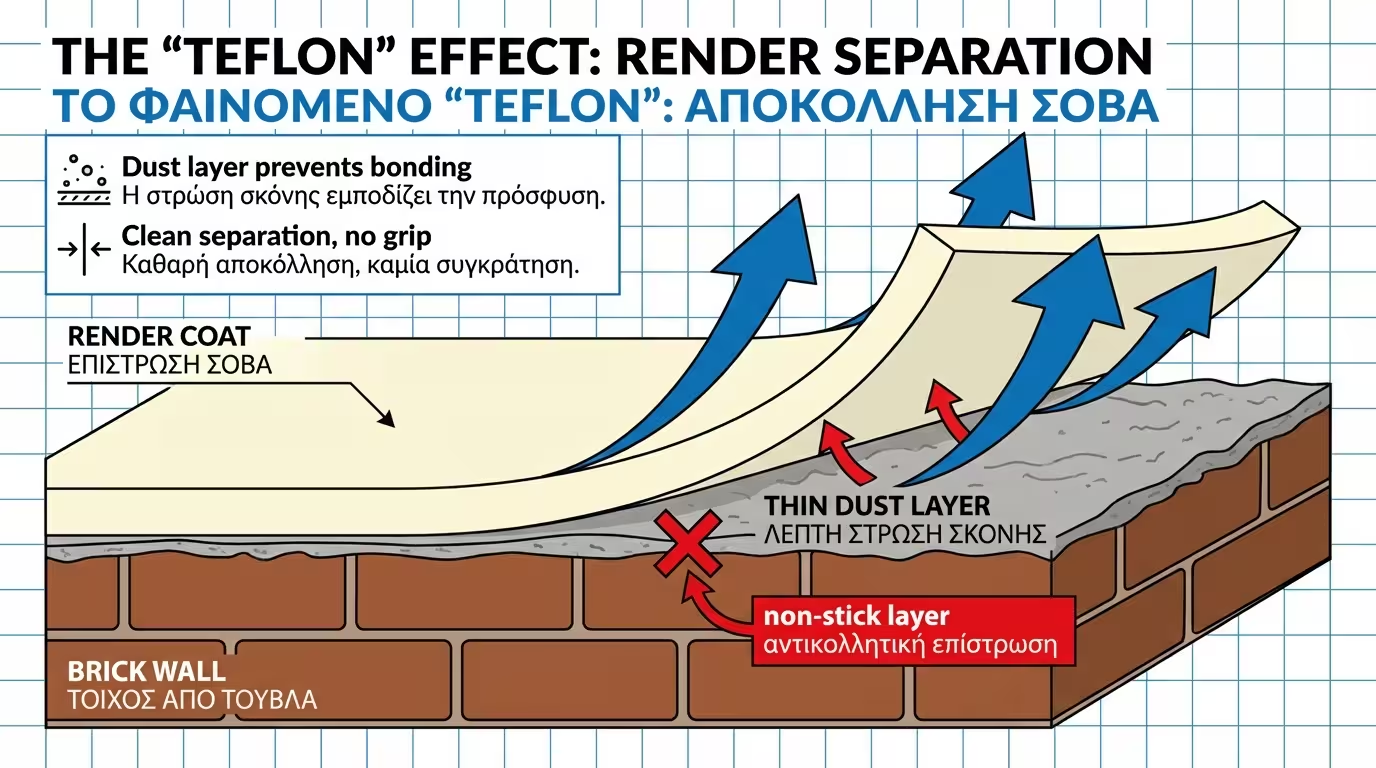
1. Dust and Debris (The "Teflon" Effect)
This is the number one cause in small repairs and renovations. If the
brick or concrete wall is covered in dust, cobwebs, or loose remnants
of old render, the new mix never actually comes into contact with the
wall itself.
What happens: The render sticks to the dust. When it
dries and gets heavier, the dust acts as a non-stick layer (like Teflon)
and the render peels off as a single crust.
The Solution: Meticulous brushing, washing the wall with
water, and applying a deep-penetrating acrylic primer before rendering.
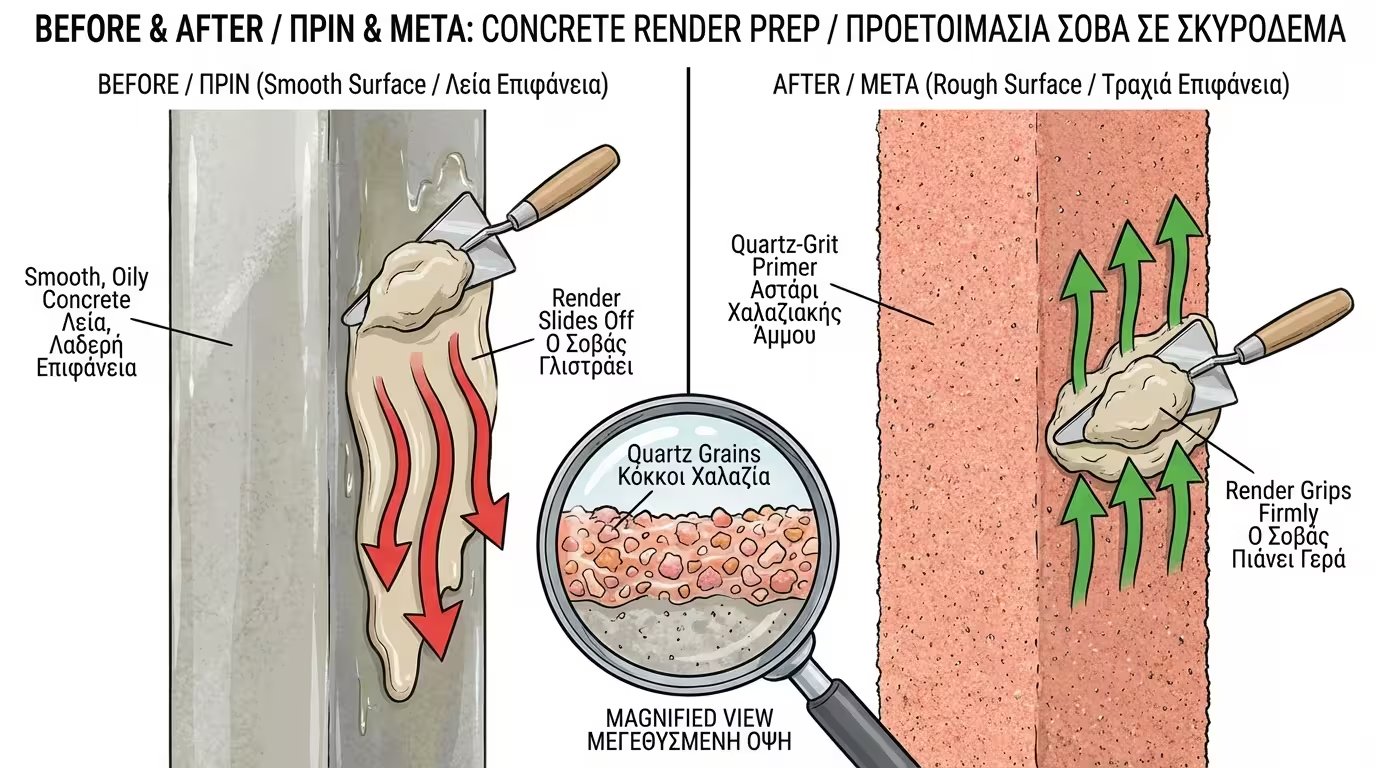
2. Smooth Surface & Oils (The Exposed Concrete Problem)
As we analysed in a previous chapter, columns and ceilings emerging
from formwork are often as smooth as glass. Additionally, they are
covered in mould-release oils (special liquids applied
so the timber doesn't stick to the concrete).
What happens: The mix has nowhere to "grip" and the oil
chemically repels it.
The Solution: Washing with a degreaser (if oils are present)
and the mandatory use of a quartz bonding primer (primer
with sand) which will make the surface rough like sandpaper.
3. Suction Burn & 4. Material Mismatch
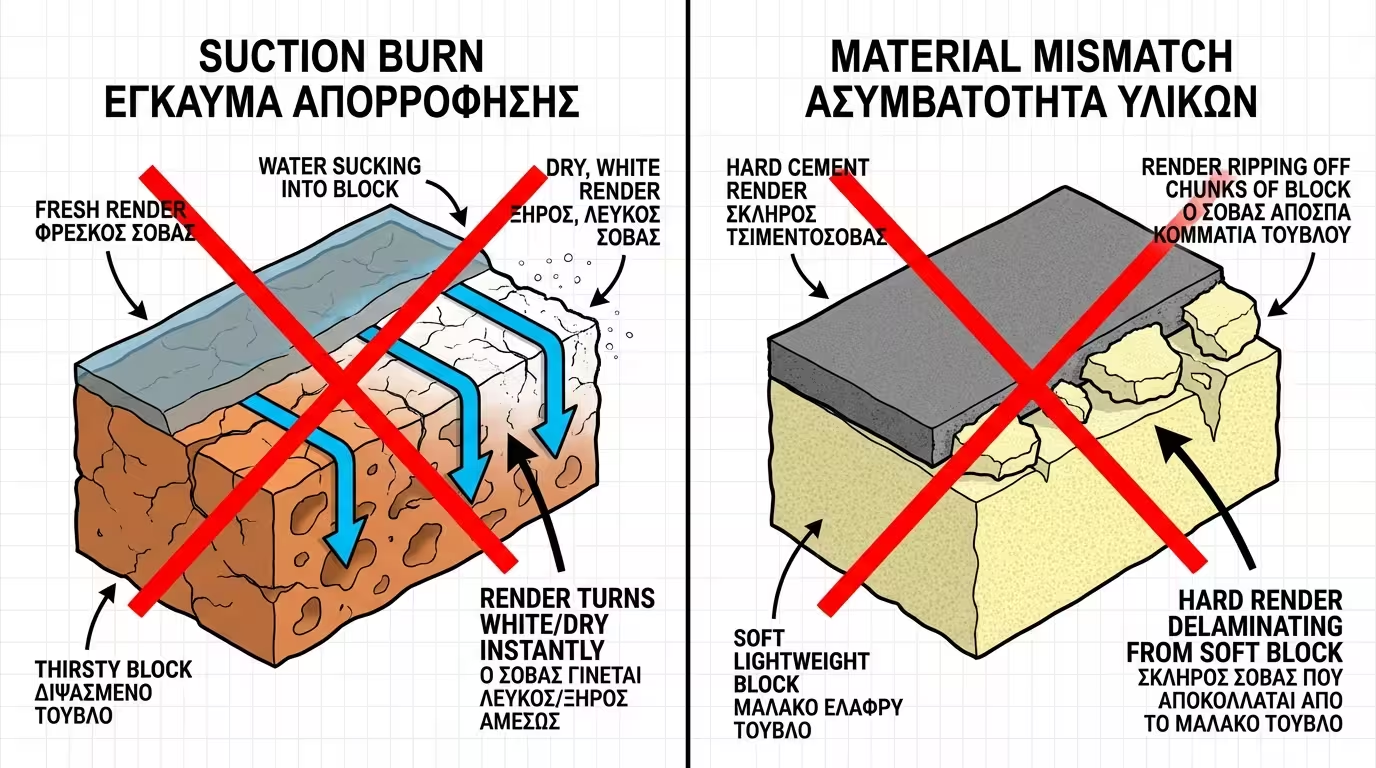
🔥 3. "Suction Burn" (Rapid Moisture Loss)
Cement needs water to set (hydrate). If the substrate is an
extremely "thirsty" and hot brick (e.g., aerated concrete in
summer), it instantly sucks all the water from the fresh render.
What happens: The render dries violently at the point
of contact with the wall, the chemical bonding reaction stops and
the material dies. It may seem to have bonded, but after a few months
it will start crumbling internally and delaminate.
The Solution: Thorough wetting (dousing) of the wall
before the first coat (spatter dash/scratch coat).
⚖️ 4. Material Mismatch (Hard Render on Soft Wall)
There is a golden rule in construction: Every outer layer must be softer and more flexible than the
inner one.
What happens: If you have an old, deteriorated wall
(or soft aerated concrete) and apply a tremendously strong, hard cement
mortar (very rich in cement), when the render dries and shrinks, its
massive force will "tear" the surface of the soft brick, pulling it
away.
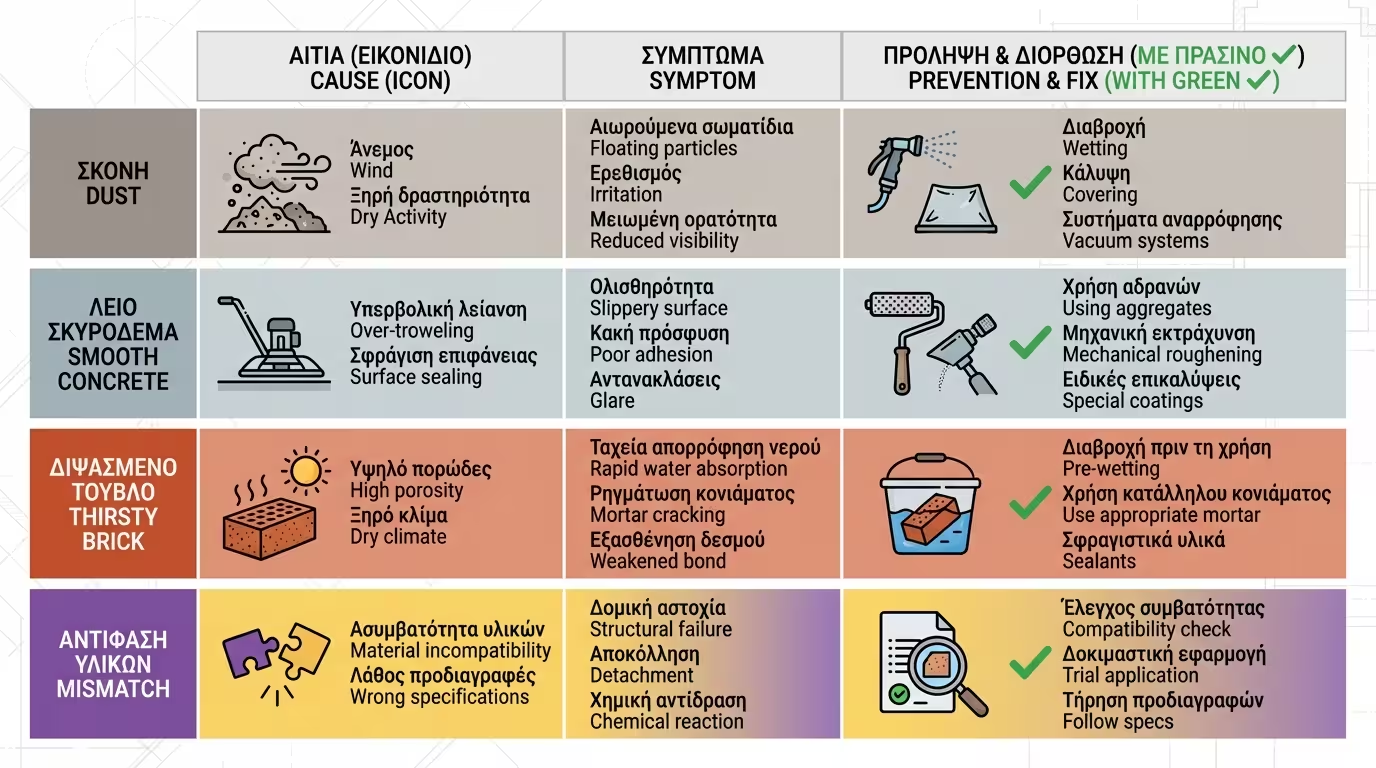
Summary: Problem & Prevention
Cause of Delamination
Symptom During Application / Drying
Prevention by the Applicator
Dust on Substrate
Render falls off with the slightest tap (clean back).
Brushing & Priming.
Oils / Smooth Concrete
The mix "slides off" as soon as it hits the wall.
Quartz bonding primer (Betokontakt).
Dry, Thirsty Brick
Render dries/turns white in a few minutes.
Good wetting of the wall before rendering.
Incompatible Hardness
Delamination along with pieces (flakes) of the brick itself.
Use of special lightweight renders.
What to Do if You Suspect a Problem
💡 The "Hollow Sound Test": You don't have to wait for the
render to fall to realise it has delaminated. Take the handle of a screwdriver
(or a small hammer) and lightly tap the wall or ceiling in areas that look
suspicious or have cracks. If the sound is sharp and solid, the render is sound. If the sound is dull ("hollow", like tapping an empty box), the render has already detached internally and is only held by its
edges (or by the mesh).
If you discover extensive "hollow" render, especially on the ceiling:
Move away from underneath it.
Do not try to "stick" it back from the outside with fillers or resin
injections (on ceilings they rarely work).
The only safe solution is the controlled removal (hacking
off) of the friable section with a hammer, until you reach solid areas,
and re-rendering from scratch with proper preparation.