✅ Top Mechanical Strength
Offers the highest possible resistance to impact and compression.
One of the most frequent questions that arises in a new construction or a radical renovation is the choice of the basic mortar for the walls. The addition or not of lime to the mix is not just a craftsman's detail, but a decision that determines the strength, flexibility and lifespan of your render.
Let's look in detail at the battle between cement render and lime-cement render, so you know exactly which material suits your project, whether you assign it to professionals or pick up the trowel yourself.
Plain cement render is a mix consisting exclusively of cement, sand and water. The absence of lime gives it specific, very strict characteristics, making it ideal for harsh conditions but less friendly for everyday masonry.
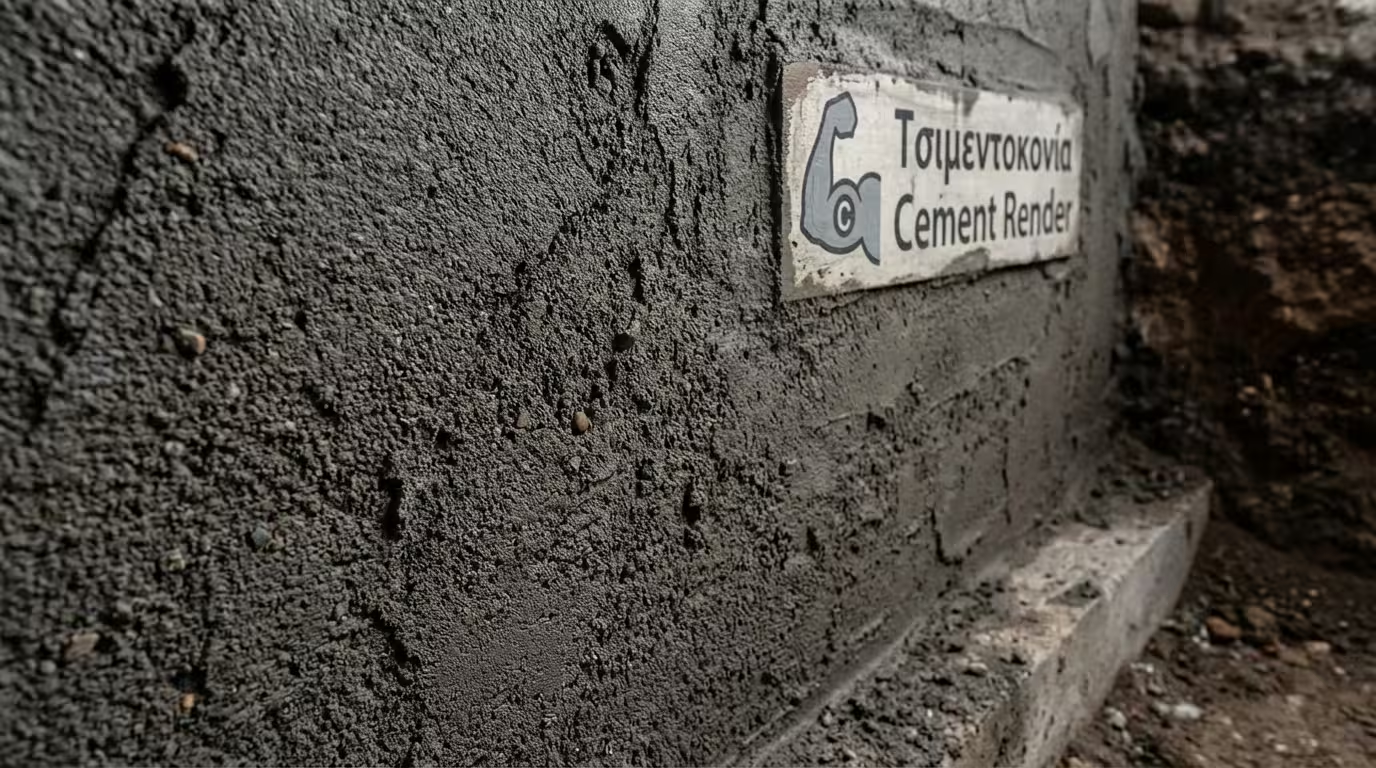
Offers the highest possible resistance to impact and compression.
Absorbs minimal water, making it ideal for areas with intense moisture.
Bonds excellently onto concrete surfaces.
It is extremely rigid. If the building presents the slightest micro-movement (e.g. thermal expansion-contraction or a light earthquake), the cement render will crack easily.
It sets ("pulls") very quickly, making its application tiring, especially for DIYers.
It acts as a "seal" and does not allow the wall to breathe, increasing the risk of trapped water vapour.
Ideal Applications: Basements, foundations, retaining walls, floors, exterior boundary walls and areas that come into direct contact with soil or rainwater.
Lime-cement render is created when we add lime to the basic mix (cement, sand, water). Lime acts as a plasticiser and radically changes the material's behaviour, offering the ideal balance for standard construction.
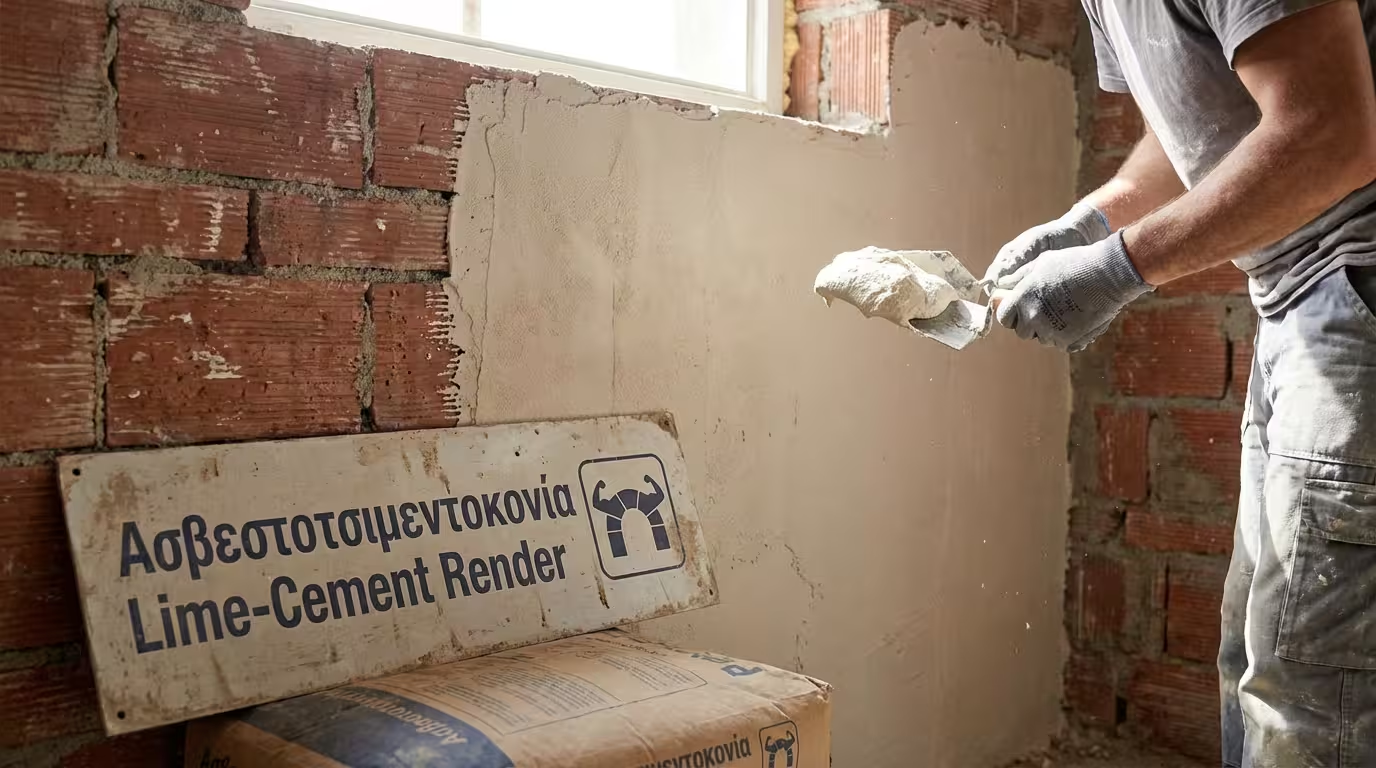
Lime makes the render "bendable". It can follow the building's micro-movements without cracking, dramatically reducing cracks.
The mix becomes velvety, "spreads" easily and gives the craftsman or DIYer the necessary time to work it before it sets.
It allows the house's water vapour to escape outwards, regulating interior humidity and preventing mould formation.
Lime has natural alkaline properties that inhibit fungal growth.
It is "softer" compared to pure cement render (although absolutely adequate for standard masonry).
Not recommended for areas with standing water or for basement walls without additional waterproofing.
Ideal Applications: Interior and exterior masonry (bricks, Ytong), renovation of old buildings, brown coat (second layer of render) and decorative finishes.
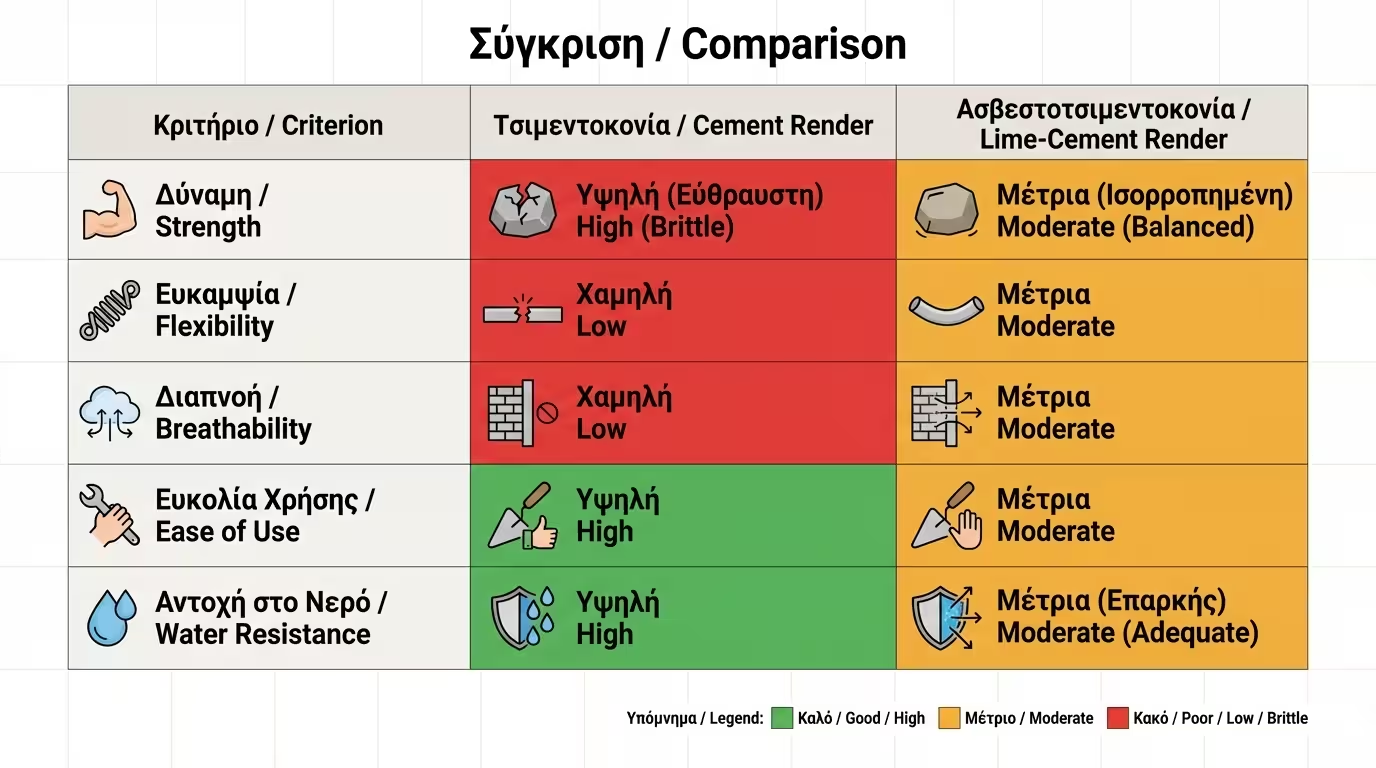
To make the right choice at a glance, see the summary comparison of the two materials:
| Characteristic | Cement Render | Lime-Cement Render |
|---|---|---|
| Mechanical Strength | Very High | Medium to High |
| Flexibility (Cracks) | Low (cracks easily) | Very High |
| Wall Breathability | Poor | Excellent |
| Ease of Application (DIY) | Difficult (sets fast) | Easy (spreads smoothly) |
| Water Resistance | Excellent | Moderate (needs sealing) |
The choice between the two mortars isn't a matter of preference - it depends entirely on the use and position of the wall.
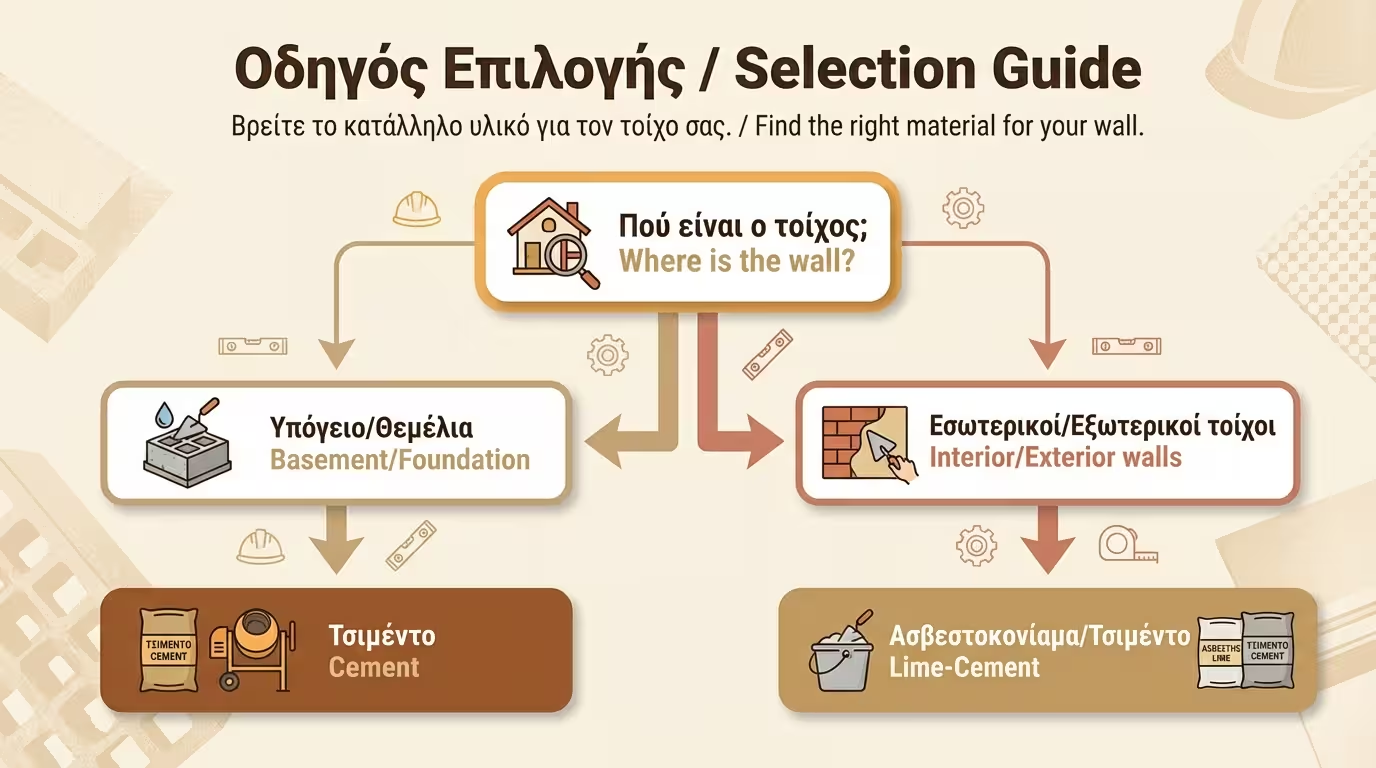
If you plan to plaster a small wall or patch a large hole, lime-cement render is a one-way street. It will forgive your mistakes in speed and allow you to level the wall without the material "cutting" (setting) in your hands.
Ask your contractor for lime-cement render for the interior walls of the rooms. Your home will breathe better and you will have far fewer shrinkage cracks.
Use pure cement render strategically. It is the ideal material for the "scratch coat" (the first layer that hooks onto the wall) and for the bases of exterior walls (the first few centimetres from the ground) for protection against rising damp.
Return to category.
Go to categoryReturn to the central guide.
Go to guide