✅ Sd < 0.14m
High breathability (Excellent - e.g. Siloxane, Mineral renders).
When choosing a final render for an external thermal insulation system (ETICS), color charts and textures are the easy part. The real challenge hides in the fine print of technical datasheets. There you will encounter two critical indices: the Sd index and the W index.
These two letters determine whether your house will "breathe" properly or turn into a sealed greenhouse, trapping moisture and creating mold. Whether you are an engineer signing off on specifications, or an owner who wants to check the contractor's materials, let's decode these indices in simple terms.
The Sd index (Equivalent Air Layer Thickness) shows us how "difficult" it is for the water vapor of your house (from cooking, bathing, breathing) to penetrate the render and exit into the environment.
It is measured in meters (m) and essentially compares the resistance of the render with the resistance that a layer of still air of the same thickness would offer.
The Golden Rule: The LOWER the Sd number, the HIGHER the breathability of the material (the wall breathes better).
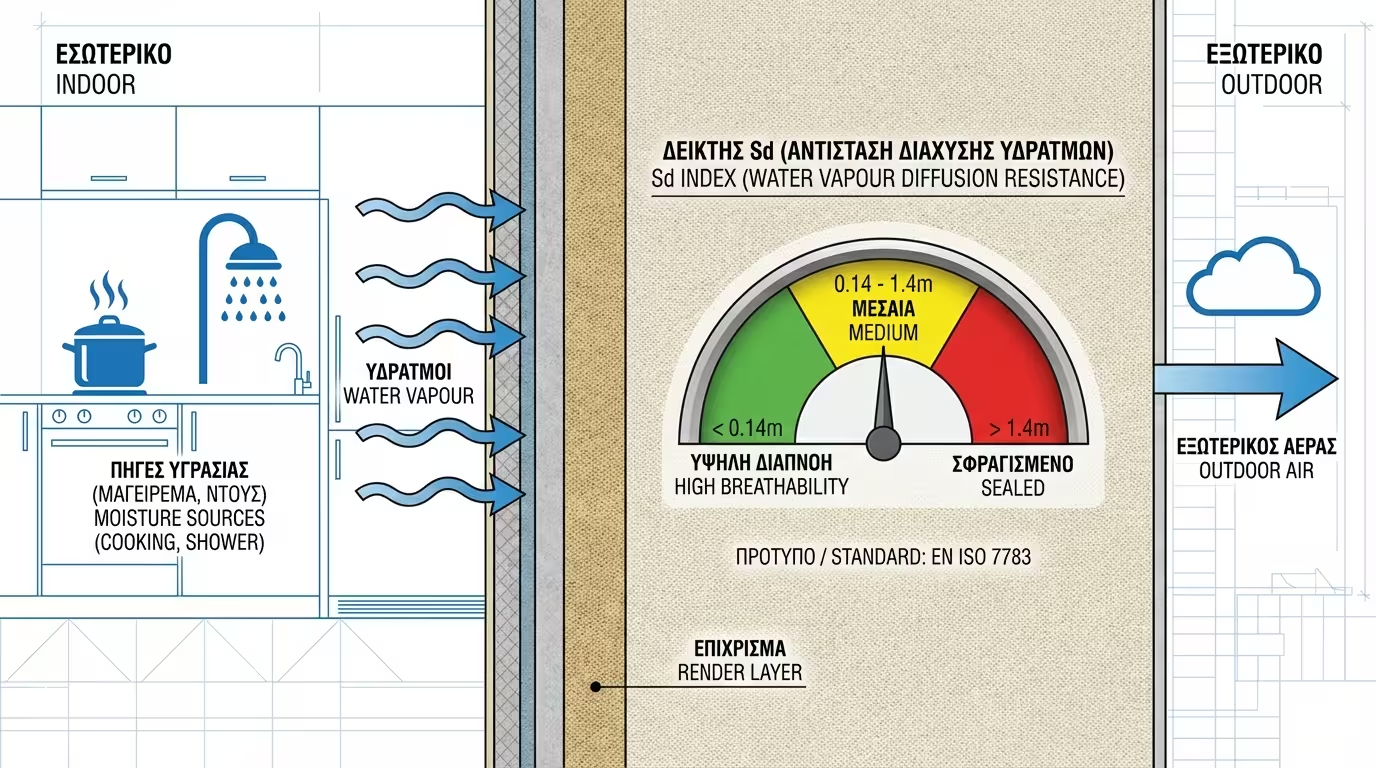
High breathability (Excellent - e.g. Siloxane, Mineral renders).
Moderate breathability (Acceptable - e.g. Silicone, some Acrylics).
Low breathability (Sealed - Not recommended for ETICS).
If the Sd index concerns the water going from the inside out (as vapor), the W index concerns the water trying to get from the outside in (as liquid, e.g. rain).
It is measured in kilograms per square meter over a specific time. It shows how much water your render will "soak up" during a storm.
The Golden Rule: The LOWER the W number, the BETTER the waterproofing of the material (water is repelled).
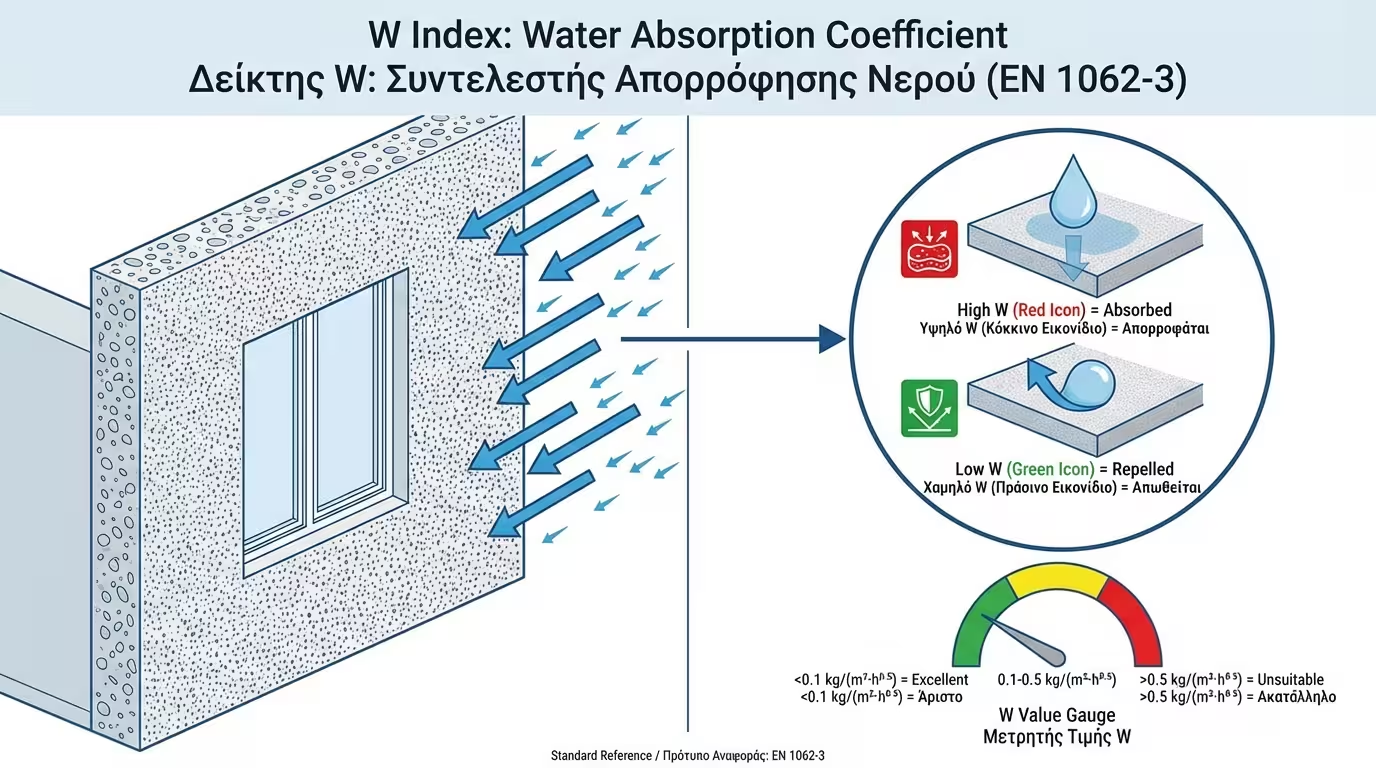
Low water absorption (Excellent waterproofing).
Moderate water absorption.
High water absorption (Unsuitable for exterior facades without additional protection).
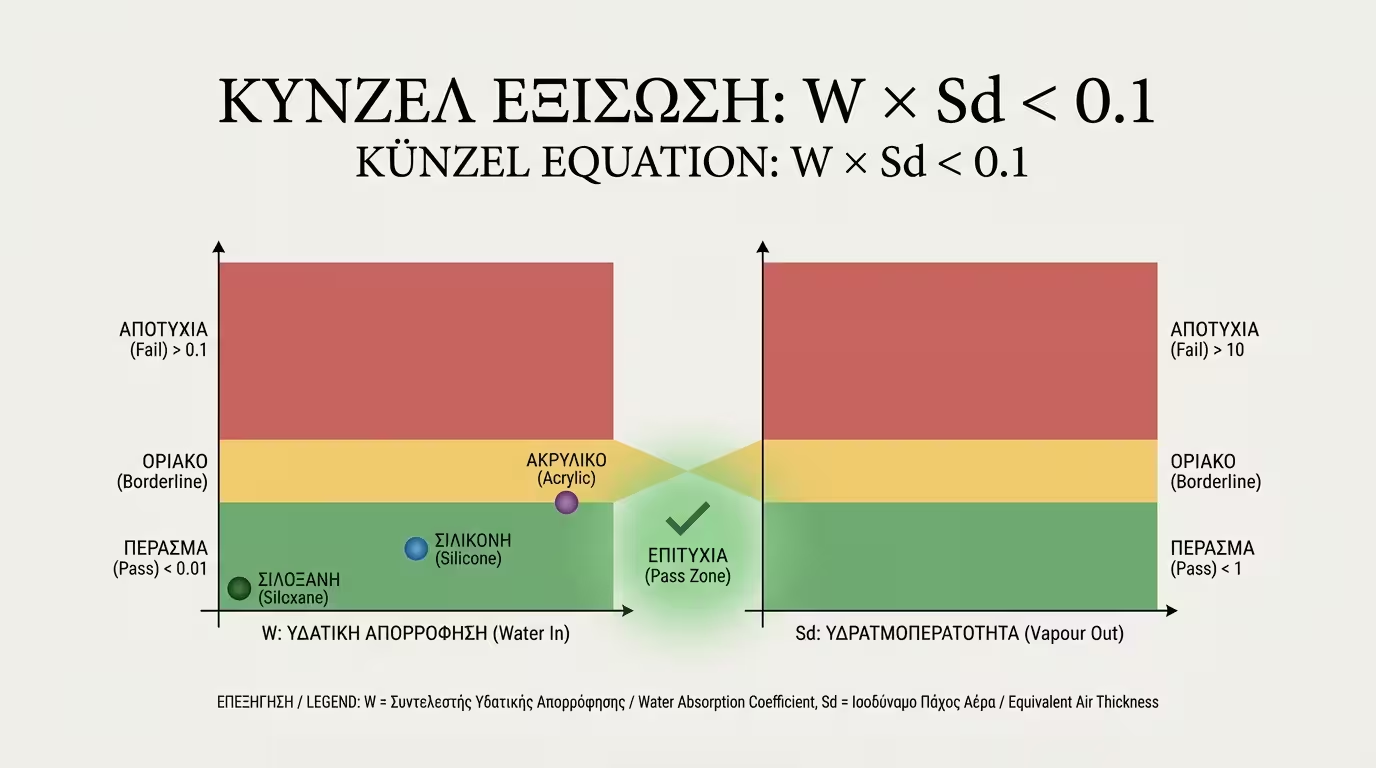
For a thermal facade coating to be truly successful over time, it is not enough to look at the indices individually. They must be combined. In building physics, there is a classic rule (by Künzel) which states that the product of water absorption times the water vapor resistance must be less than 0.1:
W · Sd < 0.1 kg/(m · h0.5)
In simple words: The ideal render must completely prevent rain from entering (very low W), but at the same time allow every trace of moisture to exit (very low Sd).
How do these numbers translate to the shelves in stores?
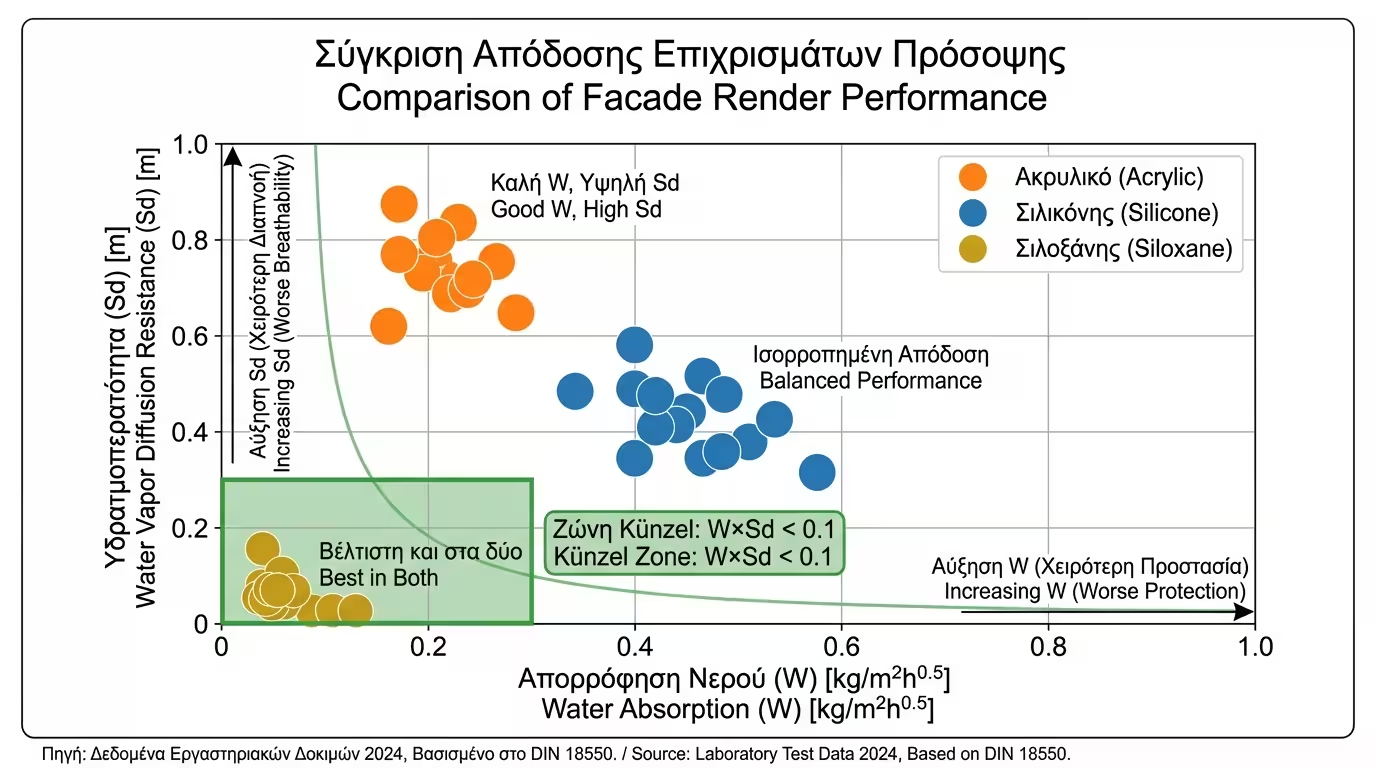
| Render Type | Sd Index (Breathability) | W Index (Waterproofing) | Behavior |
|---|---|---|---|
| Acrylic | High (~0.3m - 0.6m) | Very Low (< 0.1) | Excellent sealing, but traps water vapor. |
| Silicone | Low (~0.15m) | Very Low (< 0.05) | Balanced solution (breathes & repels). |
| Siloxane | Very Low (< 0.1m) | Zero (~0.01) | The ultimate combination (Künzel). |
Watch Your Insulation Material: The biggest technical error is the use of the wrong render over Stone Wool. Stone wool is a material with tremendous breathability (Sd almost zero). If you "seal" it from the outside with a cheap acrylic render (high Sd), the moisture will get trapped inside the stone wool, it will soak it, it will lose its insulating ability, and the system will collapse. Stone wool STRICTLY requires silicone, siloxane, or mineral render.
Because classic white or graphite styrofoam already has low breathability anyway, the use of an acrylic render (which also has low breathability) is a technically acceptable and safe choice.
Just like with the render, the primer you use must have corresponding indices. A wrong, "closed" primer can cancel the breathability of a very expensive siloxane render.
The Sd and W indices aren't just numbers for engineers - they're the «DNA» of your render. Learn to read them to avoid mould, moisture and failures.
Return to category.
Go to categoryReturn to the central guide.
Go to guide