
Width
They are not "hairline". They are usually thicker than 2-3 mm (enough to fit the tip of a pen or a coin).
Beyond its aesthetic and protective role, render has another, silent function: it acts as the building's "alarm." When the structural frame (concrete) or masonry (bricks) are subjected to severe stress, render is the first material to "betray" the problem by cracking.
While surface cracks (spider-web pattern) are usually caused by the rapid drying of the material itself, structural cracks are an entirely different story. Here, the problem isn't the render, but what lies beneath it. Let's look at how you can recognize these "signs" and when you should immediately call a civil engineer.
Structural cracks do not appear randomly and have specific characteristics that give them away:
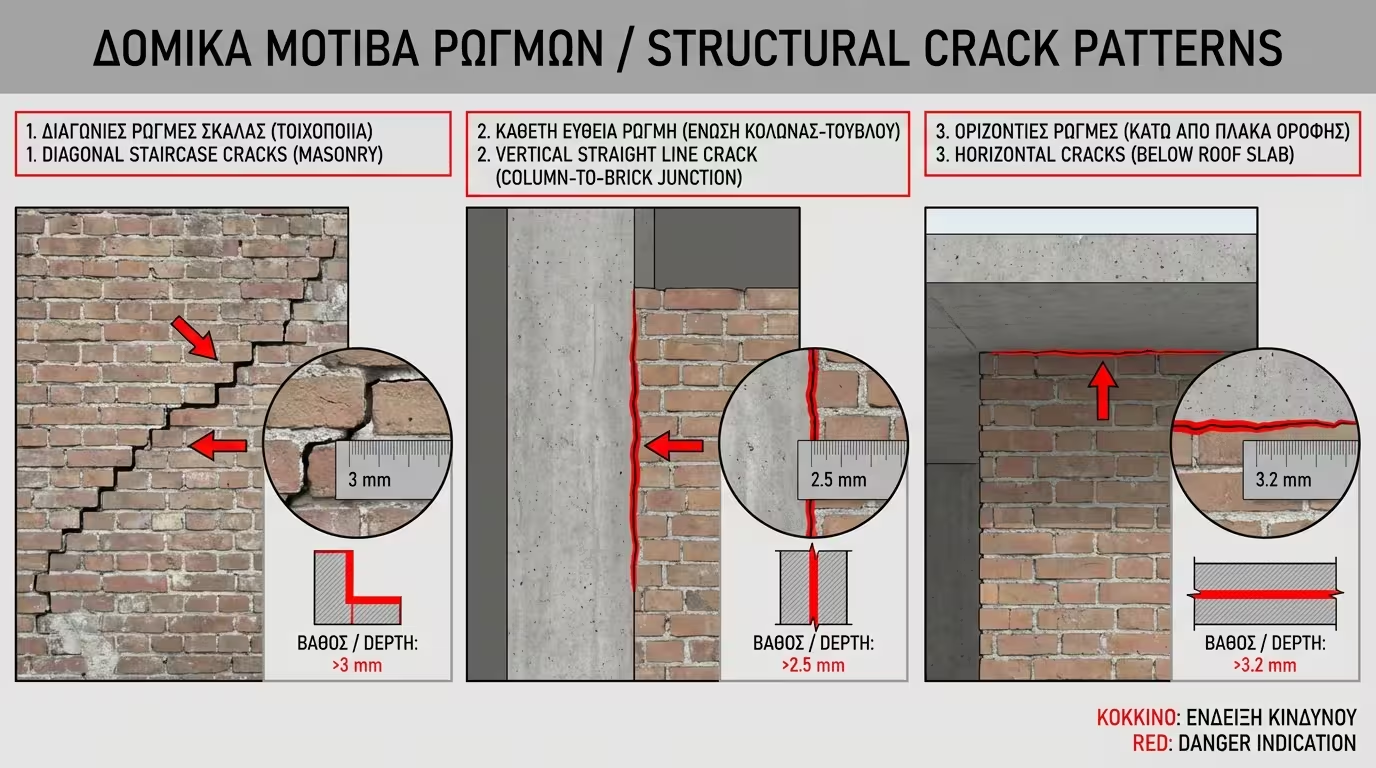
They are not "hairline". They are usually thicker than 2-3 mm (enough to fit the tip of a pen or a coin).
If you lightly scrape the render at the crack, you will find that the break continues into the brick or concrete. It's not just surface flaking.
They rarely look like a spider web. They usually appear as: Diagonal ("stepped"): They follow the mortar joints between the bricks, forming steps. Vertical (straight lines): They often appear at the junctions of concrete with bricks. Horizontal: Along beams or low at the foundations.
What makes a building crack so deeply?
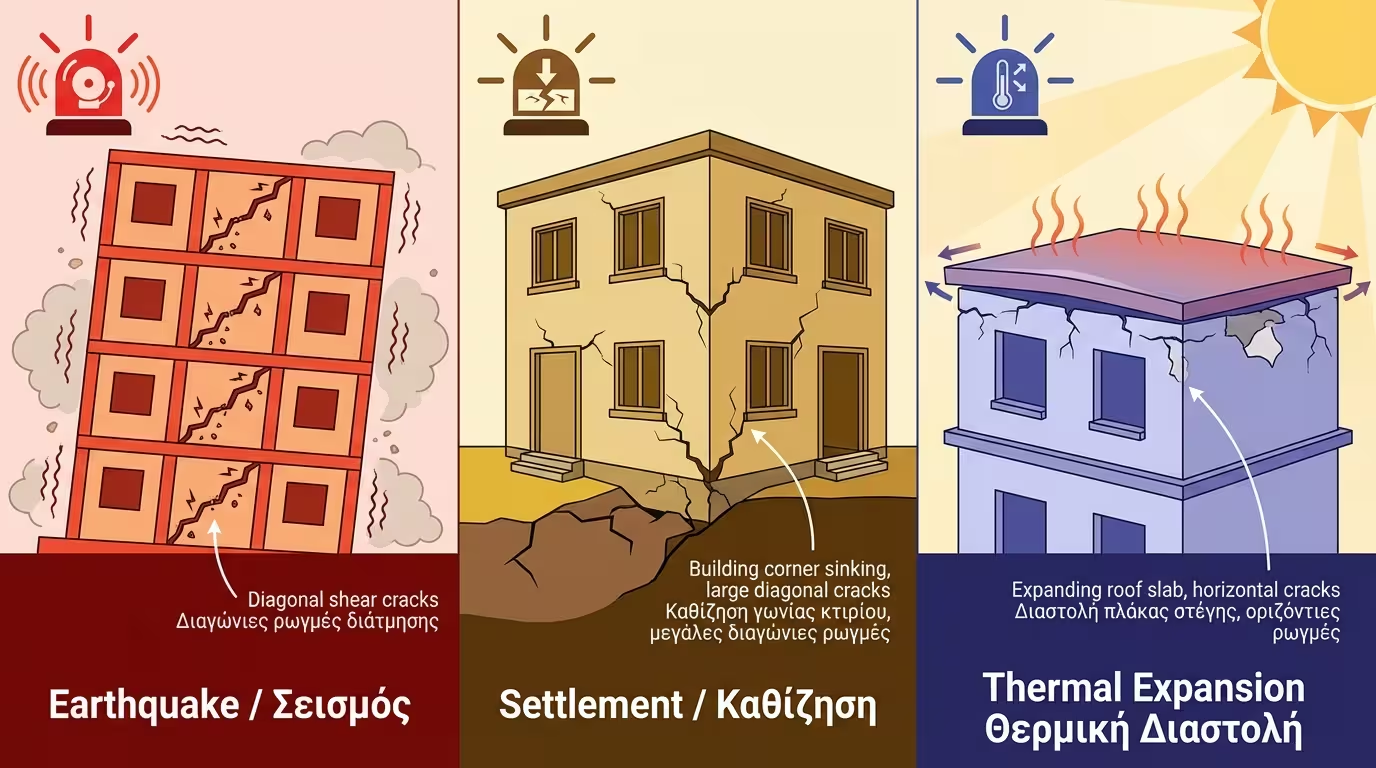
In Greece, this is the most common cause. During an earthquake, the building oscillates. The rigid bricks cannot follow the elasticity of the concrete frame (especially if tie columns have not been built properly), causing them to "cut" diagonally. Is it dangerous? Diagonal cracks in infill walls (bricks) after an earthquake are expected and usually do not pose a risk of collapse. However, "X" shaped cracks on columns or beams (load-bearing structure) are extremely dangerous!
The ground beneath the foundations is not always stable. It can give way due to underground water, leaks in large water networks, or normal soil compaction over the years (especially in new buildings). When a corner of the house "settles" even a few millimetres, huge diagonal cracks are created that often start from the corners of windows or doors and head towards the floor or ceiling. In extreme cases, doors and windows jam and do not close properly.
Materials grow when heated and shrink when cooled. If expansion joints were not provided during construction (especially in large, elongated buildings), the roof slab expands and contracts with enormous force, "pulling" the top-floor walls with it and creating large horizontal cracks high up on the wall.
Not all cracks are treated the same way. The table below will help you decide whether you should worry or just repair.
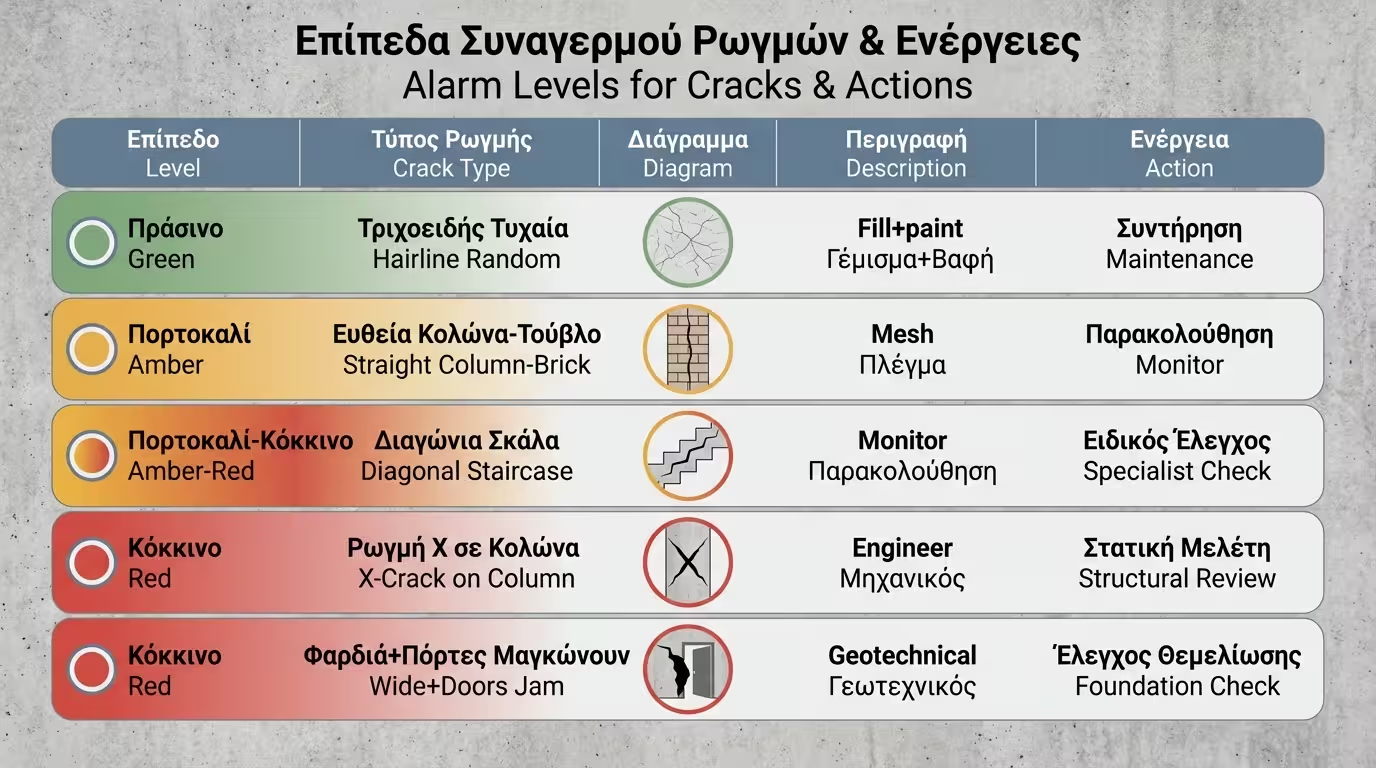
| Crack Feature | Alarm Level | Likely Cause | Action |
|---|---|---|---|
| Hairline (like a hair), irregular, shallow | 🟢 **Low** (Aesthetic) | Render drying / Bad mix | Simple filling and painting. |
| Straight line (vertical), between column and brick | 🟡 **Medium** | Absence of fiberglass mesh | Local opening, mesh placement, re-rendering. |
| Diagonal "steps" in the bricks (1-2mm thick) | 🟡 **Medium to High** | Minor settlement or an old earthquake | Monitoring (if it grows) / Repair with resins. |
| "X" shaped crack on a column or beam (concrete) | 🔴 **Critical** (Structural Problem) | Strong Earthquake / Material failure | **Call a Civil Engineer IMMEDIATELY.** Simple filling is prohibited. |
| Wide diagonal crack + doors that "jam" | 🔴 **Critical** | Ongoing foundation subsidence | **Call a Civil Engineer.** Geotechnical control is required. |
Don't rush to cover what you see.
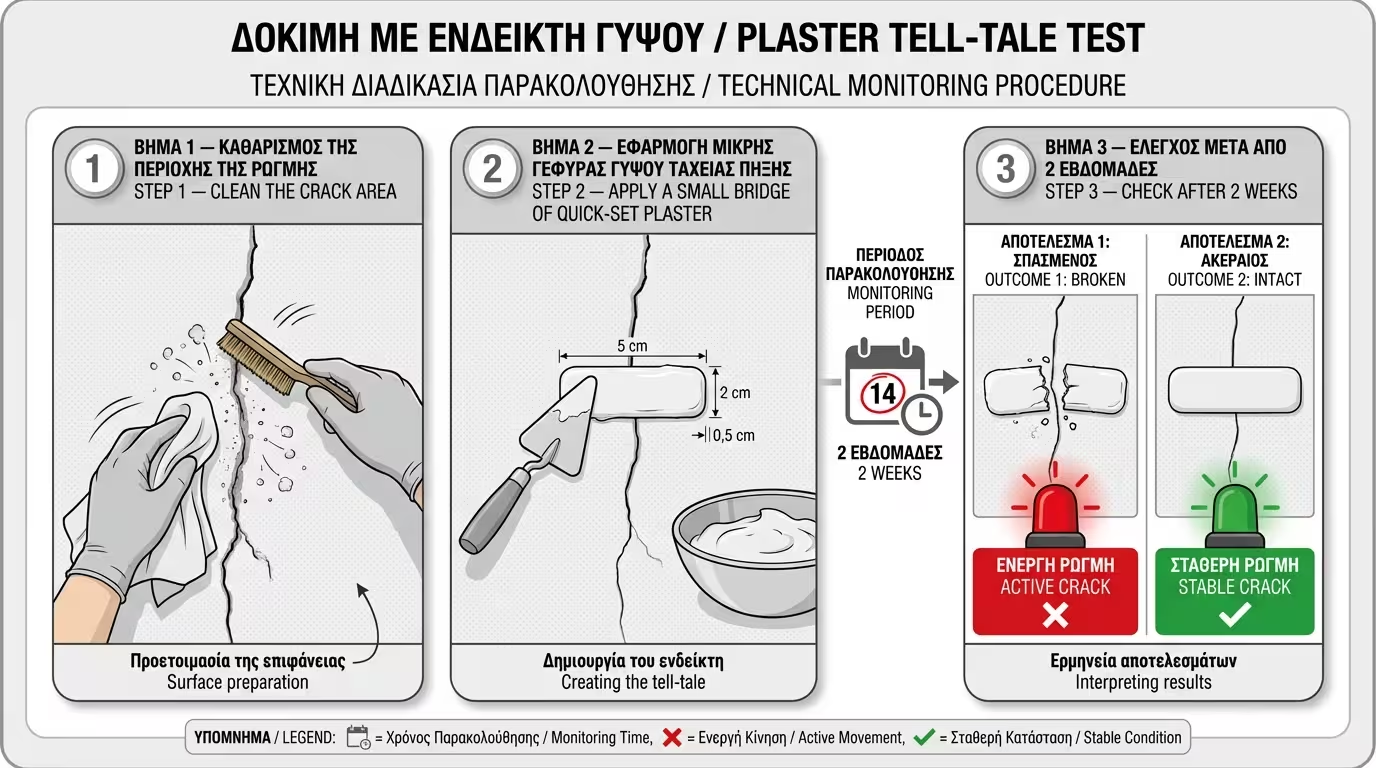
The Plaster Test (Tell-Tales): If you see a large diagonal crack and you don't know if the house continues to "settle" (active crack) or has stopped (inactive), engineers use a simple trick. They clean the crack at one point and place a little quick-setting plaster, creating a small "bridge". If the plaster breaks after a few days or weeks, it means the building is still moving.
The most dangerous mistake is to call a painter to close a thick, diagonal crack with acrylic filler or elastomeric paint, "so it doesn't show". The filler will hide it temporarily, but the structural problem will continue to damage the building invisibly.
If the engineer judges that the crack (in the bricks) has stabilized, the repair IS NOT done with simple rendering. It requires digging ("opening" the crack), cleaning, "stitching" the masonry (e.g. with helical stainless steel reinforcements) and filling with specialized resinous repair mortars of high strength, before the render is applied again.
Return to category.
Go to categoryReturn to the central guide.
Go to guide