Lightweight & Fibre-Reinforced Renders: Reduced Weight and Crack Prevention

Traditional sand and cement have proven their worth over time, but they have two main disadvantages: they are extremely heavy and crack easily under mechanical stress. As the demands of modern construction (such as building with aerated concrete blocks) and old renovations increase, the building materials industry responded with two leading solutions: lightweight and fibre-reinforced renders.

Whether you are an engineer calculating the static loads of an old building, or a homeowner who wants to get rid of micro-cracks on their walls, these materials deserve your attention.

What Are Lightweight Renders?

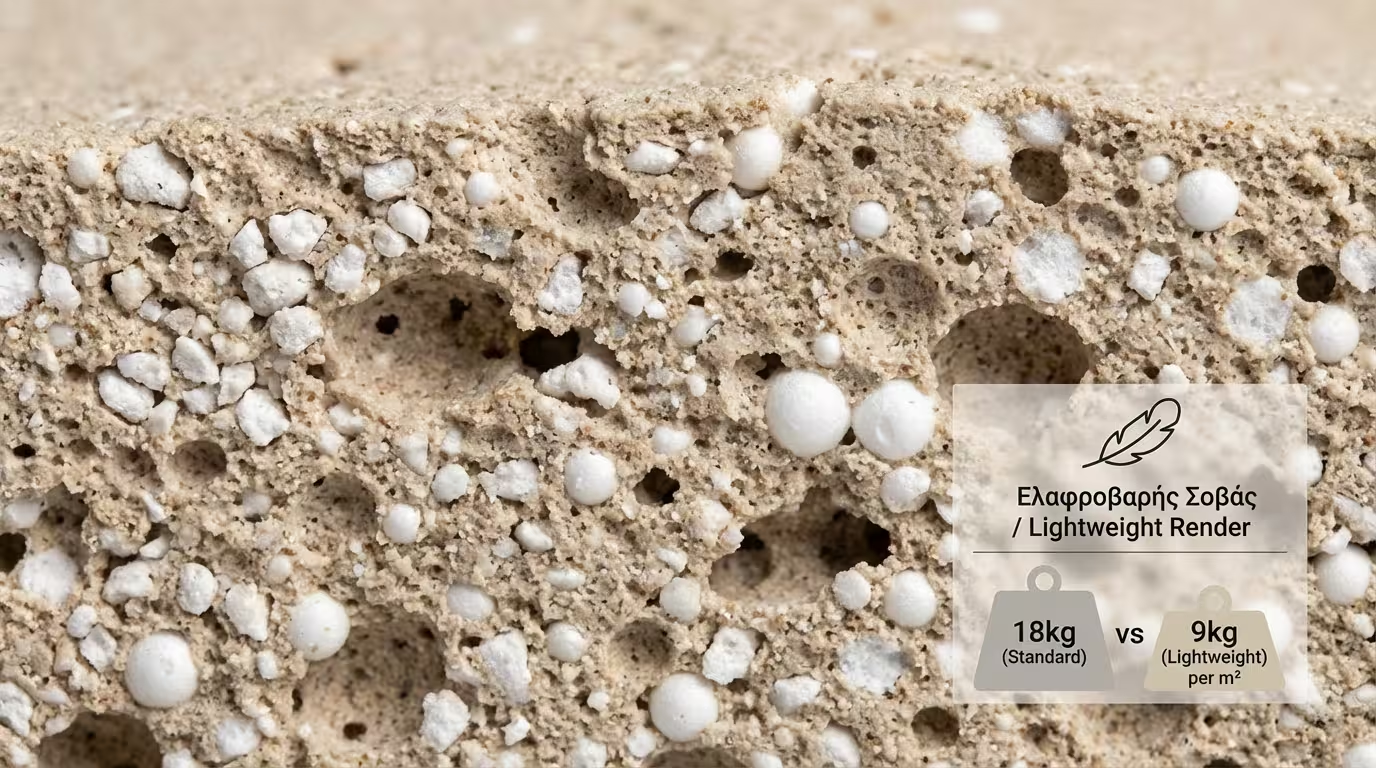
In lightweight renders, conventional, heavy sand is partly or entirely replaced by lightweight aggregates, such as perlite, pumice or expanded polystyrene (EPS) beads.

Lightweight render with perlite - cross-section showing porous aggregates

🪶 Drastic Weight Reduction

A conventional render weighs about 18-20 kg per square meter (for 1.5 cm thickness). A lightweight render can weigh up to 50% less. This makes it ideal for old houses and renovations where we don't want to load the structure.
🌡️ Thermal Insulation Properties

Due to the porous aggregates (like perlite), these renders trap air, offering additional thermal resistance to the masonry.

🏗️ Ease of Application

For crews and DIYers, the material is "pulled" with the screed much more effortlessly, making the work faster.

🧱 Ideal for Aerated Concrete (Ytong)

They are the perfectly compatible coatings for lightweight masonry elements, as they follow the same mechanical behaviour.

What Are Fibre-Reinforced Renders?

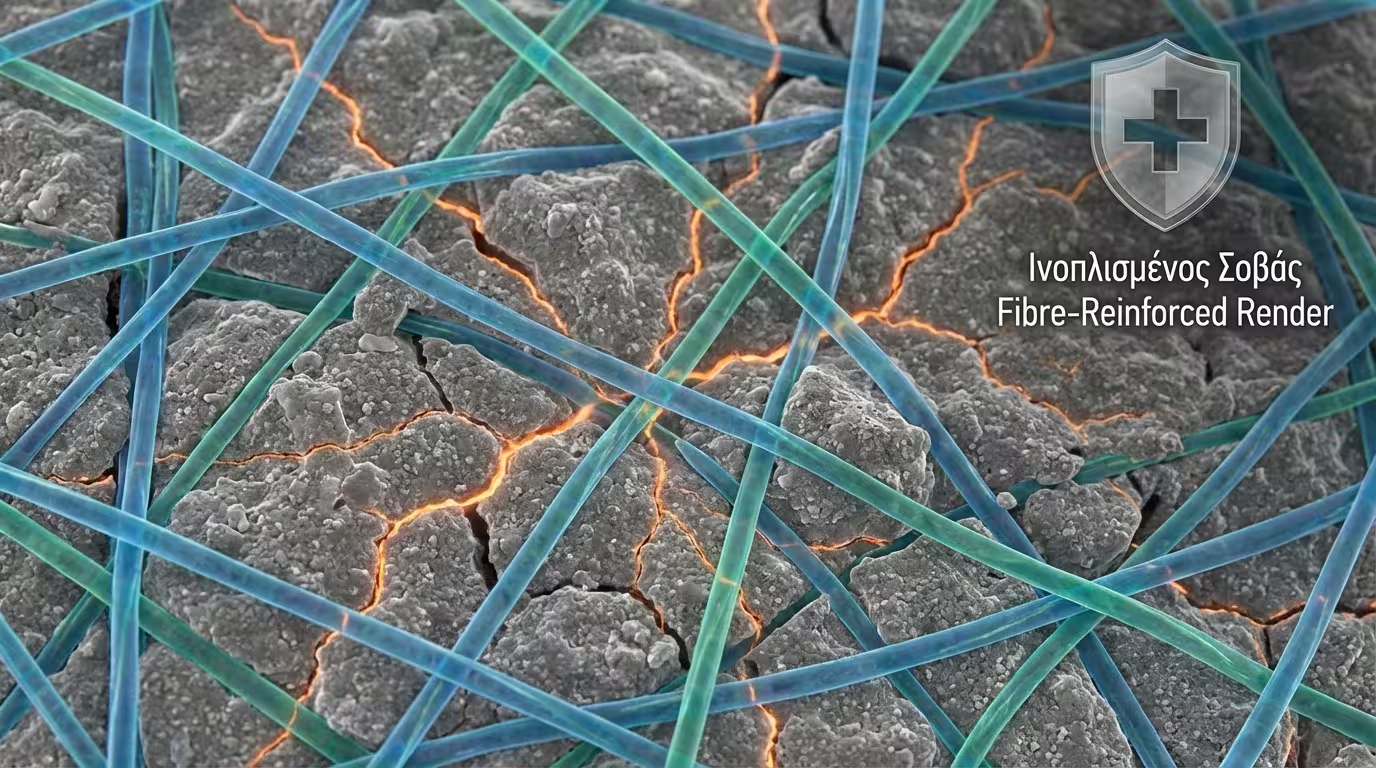
Fibre-reinforced renders are mortars to which microscopic fibres (usually polypropylene or glass fibres) have been added during their production. Think of these fibres as an invisible, three-dimensional mesh (net) that spreads throughout the entire mass of the material. When the plaster starts to dry (and therefore shrink) or when the building receives vibrations, these fibres take over to keep the material bound together.

Microscopic polypropylene fibres inside render - 3D mesh

🛡️ Anti-Crack Protection

They effectively prevent hairline cracks caused by rapid water evaporation (shrinkage cracking).

🔄 High Flexibility

They absorb expansion-contraction stresses much better than plain render.

💪 Impact Resistance

They create a "tougher" skin that withstands impacts without peeling.

Comparison with Conventional Renders

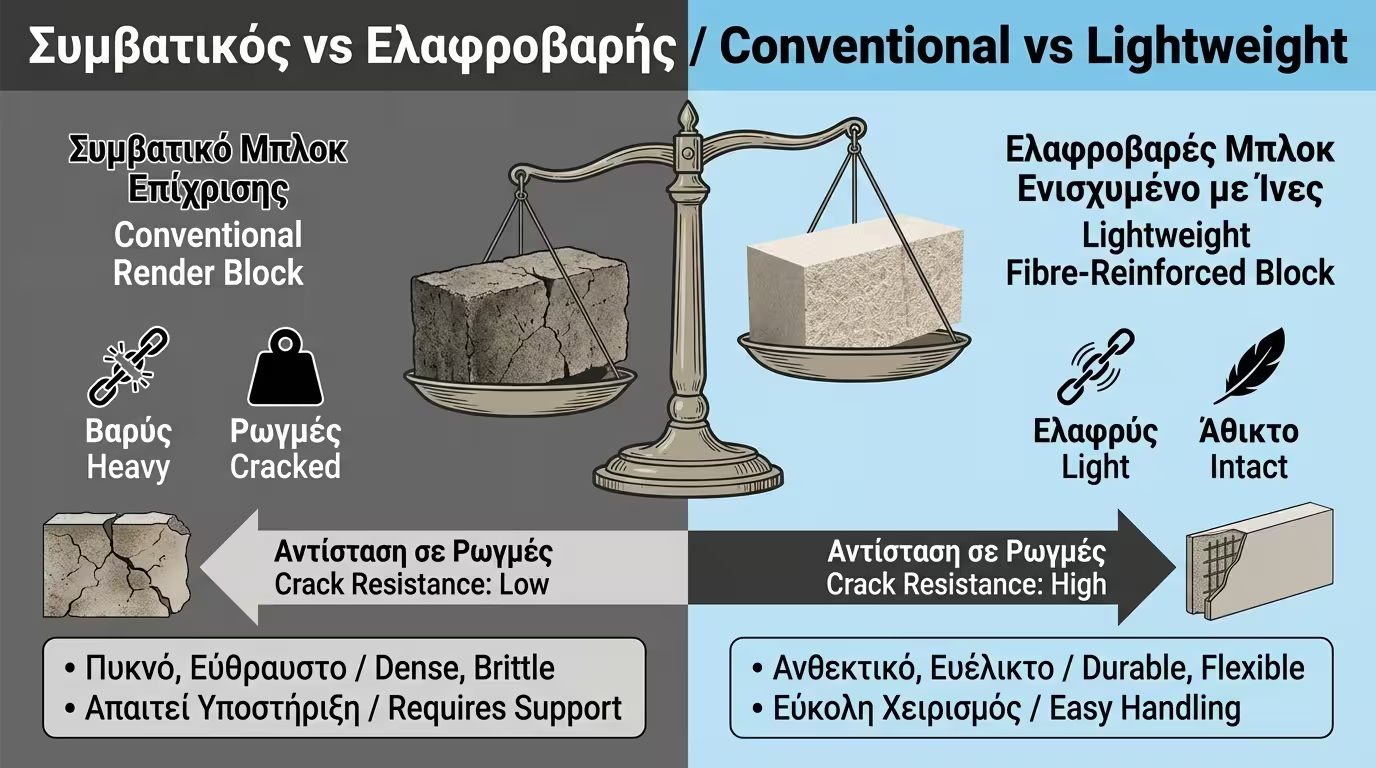
Comparison table: conventional vs lightweight/fibre-reinforced render

To make the practical difference clear, see the comparison table below:

CharacteristicConventional RenderLightweight / Fibre-Reinforced
Density~1,500-1,800 kg/m³~900-1,200 kg/m³
Crack ResistanceLowVery High (fibres)
Thermal PerformanceNo insulationContributes to insulation
Material CostLowHigher
Transport CostHighReduced

Practical Application Tips (DIY & Crews)

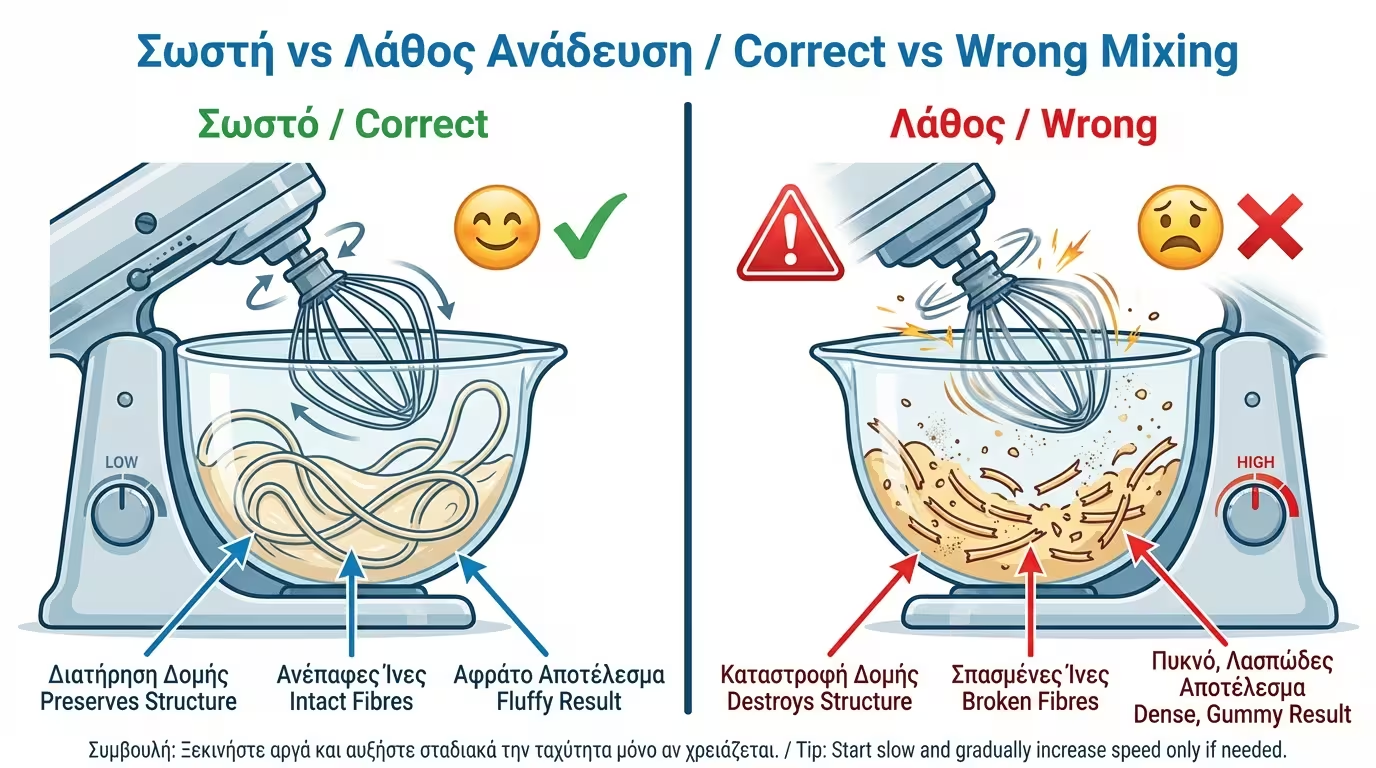
Attention to Mixing: The most common mistake when applying fibre-reinforced renders is excessive beating with the mixer at high speeds. If you "beat" the material too violently, the microscopic polypropylene fibres will be destroyed (cut) and the material will lose its anti-crack properties.
Correct mixing of fibre-reinforced render at low speed

Do not overdo it with water

Because lightweight renders have a different specific weight, they often look "dry" at first. Strictly follow the water ratio written on the bag and give it 1-2 minutes to homogenize. If you pour too much water, the fibres will separate.

Maximum Application Thickness

Lightweight renders allow for "filling" greater thicknesses (up to 3-4 centimeters) in a single coat, without sagging, saving time from the scratch coat.

The ultimate combination

Many modern building materials industries now combine these two technologies. That is, they offer renders that are simultaneously lightweight (with perlite) and fibre-reinforced (with fibres), providing the ultimate "all-in-one" material for demanding renovations.

Conclusion

If your building faces weight concerns or persistent cracks, lightweight and fibre-reinforced renders aren't a luxury - they're the technical solution. Their combination reduces load, improves insulation and eliminates hairline cracks.

Related Articles

Preview