
Render Grain Size & Texture: How 1.0mm, 1.5mm and 2.0mm Behave

When we reach the final stage of an external thermal insulation (ETICS) or a facade renovation, most owners spend hours leafing through color charts. There is, however, a technical detail on the container's label that is much more important than the color: the granulometry (the grain size).

The numbers 1.0mm, 1.5mm, or 2.0mm that you see on the packaging of pasty renders are not just about aesthetics (whether the result will be smooth or rough). They determine the thickness of the protective layer, how much material you will pay for, and whether the construction imperfections of the wall will be visible. Let's see which size suits your project.

The Basic Rule: Grain Determines Thickness

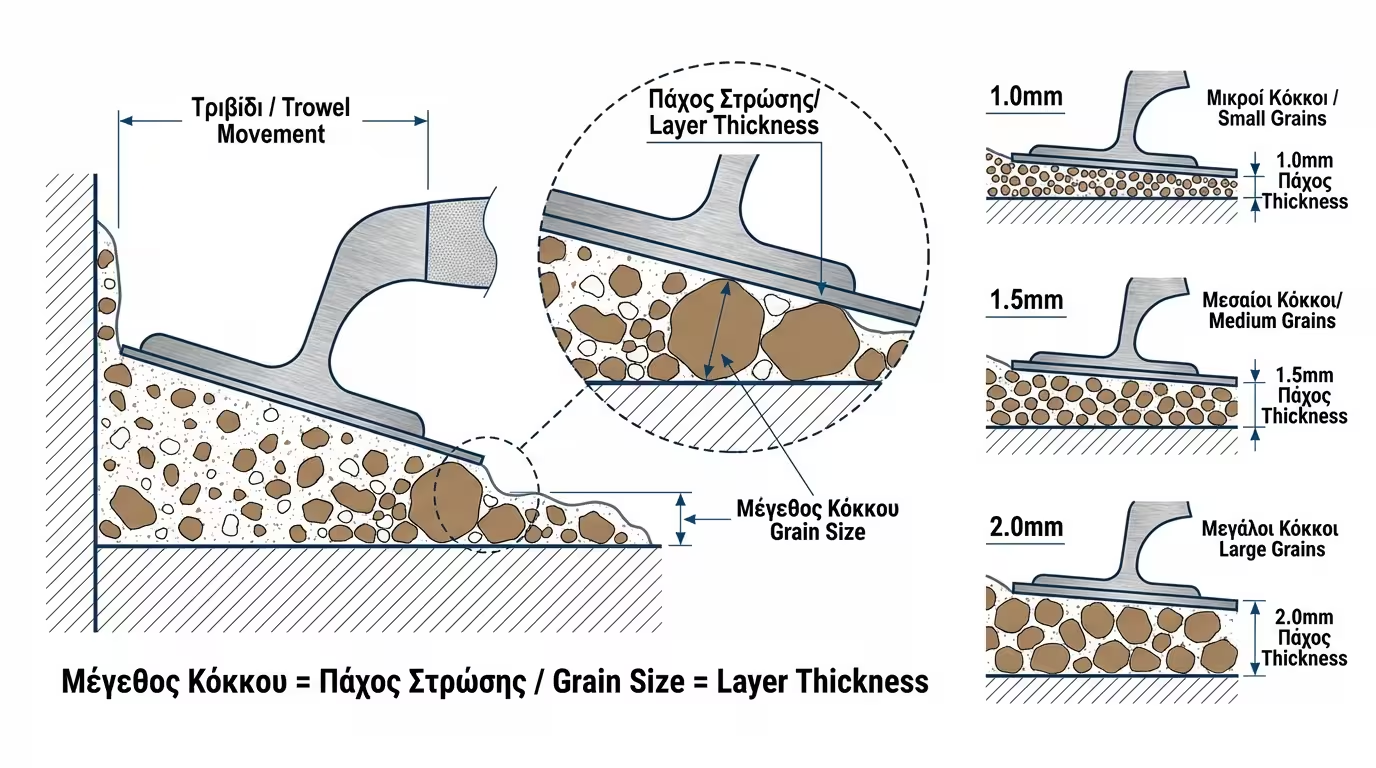
To understand how ready-mixed pasty render works, consider this: When the craftsman spreads the material on the wall and "pulls" it with the metal trowel, his tool rests and rolls on the largest marble or quartz grains contained in the mixture.

Therefore, the size of the maximum grain is identical to the final thickness of the render. A 1.5mm render will create a final skin exactly 1.5 millimeters thick.

Diagram showing how grain size determines render layer thickness

Size Analysis: Which to Choose?

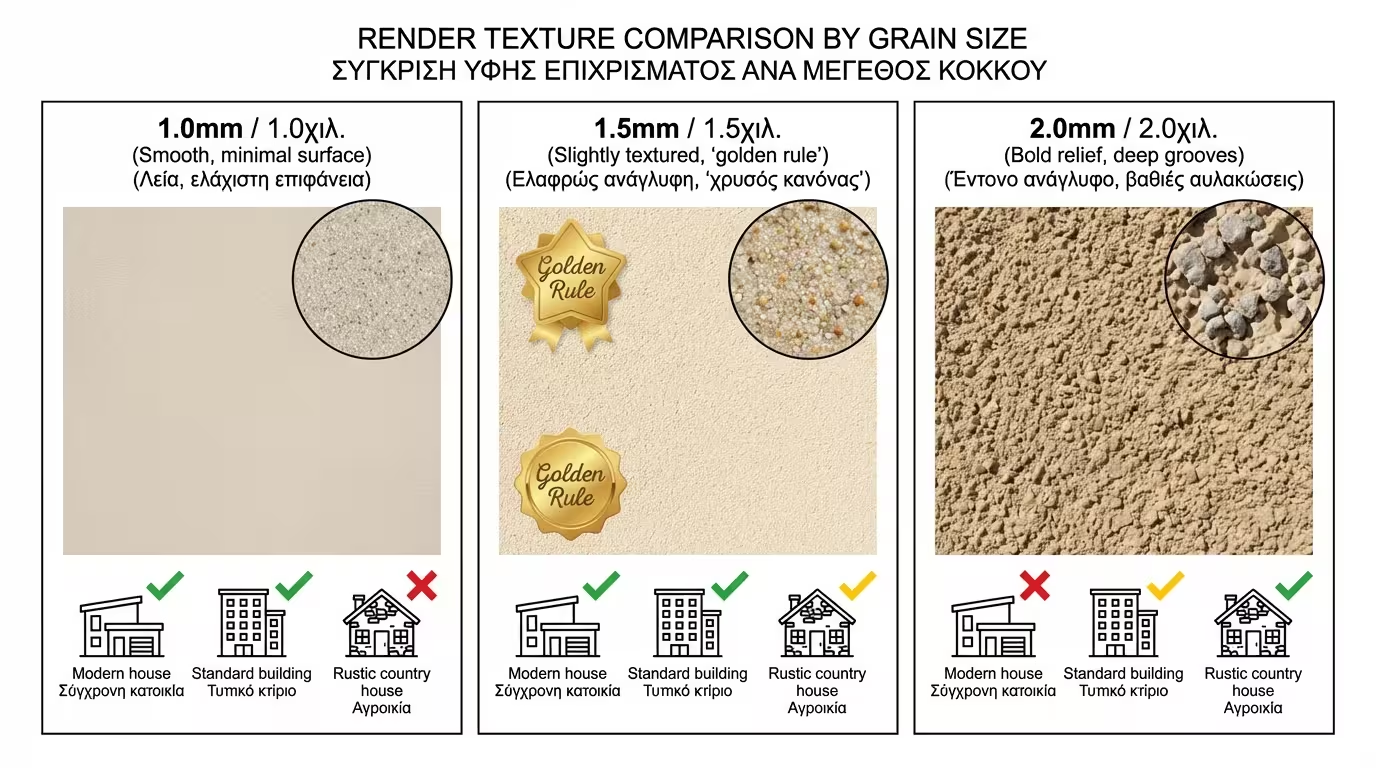
Comparison of 1.0mm, 1.5mm and 2.0mm render textures on wall

1.0mm Grain (The "Minimal" Choice)

This is the finest granulometry commonly used on exterior facades.

  • Aesthetics: Offers a very smooth, almost "velvety" result, ideal for modern, minimal homes.
  • The Major Downside: Because its thickness is only 1 millimeter, it forgives no mistakes. If the adhesive and mesh underneath are not perfectly leveled (if there are small "bellies" or trowel marks), the 1.0mm render will highlight them all, especially when the sun hits it from the side.
  • Ideal for: Very carefully crafted constructions, small surfaces, balconies, and areas not subjected to mechanical stress.
1.5mm Grain (The "Golden Rule")

It is, by far, the most popular and commercial choice in Greece (over 70% of applications).

  • Aesthetics: Offers a balanced, slightly textured surface that is pleasing to the eye without looking "heavy".
  • The Major Advantage: It is the perfect golden mean. It has enough thickness (1.5 millimeters) to "hide" the micro-imperfections of the substrate and the "teeth" that the mesh may have left, while maintaining its modern look. Furthermore, it offers excellent workability for craftsmen.

2.0mm or 2.5mm Grain (The "Durable / Traditional")

Here we are talking about a "coarse" grain, which is usually chosen for rustic or scratch-finished styles.

  • Aesthetics: Very strong relief, deep grooves (if rubbed appropriately) and a "rough" look. Ideal for country houses and stone buildings.
  • The Major Advantage: Acts as "makeup" for bad walls. It exceptionally hides poor workmanship, unevenness, and crooked substrates. Moreover, it creates a thicker "armor" that withstands impacts better.
  • The Downside: The deep grooves tend to collect dust and dirt more easily over the years, while it requires much more material per square meter.

Cost Comparison: Grain and Material Consumption

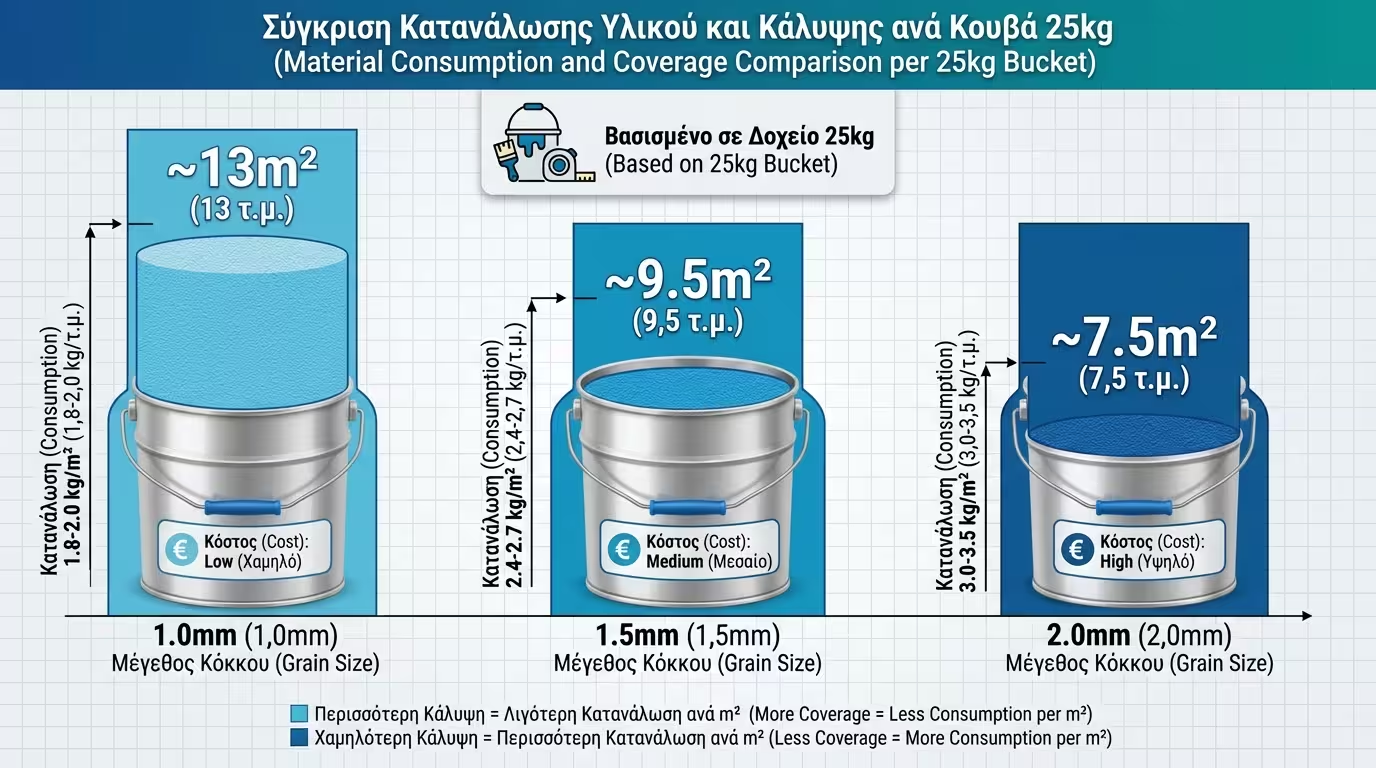
This is the point that directly affects your wallet. The larger the grain, the thicker the render layer, so the more material you will need.

To correctly calculate the buckets (based on an average consumption of pasty render):

Material consumption chart by grain size
Grain Size Average Consumption / m² Aesthetic Texture Imperfection Hiding Ability
1.0 mm ~ 1.8 - 2.0 kg / m² Very smooth (Minimal) Very low (Requires perfect wall)
1.5 mm ~ 2.4 - 2.7 kg / m² Slightly textured Good (The ideal balance)
2.0 mm ~ 3.0 - 3.5 kg / m² Bold relief Excellent (Hides mistakes)
(Note: A typical bucket of pasty render weighs 25 kg. With a 1.0mm grain, one bucket covers about 13m², while with a 2.0mm grain it covers only 7.5m²!)

Useful Tips for Owners and Contractors

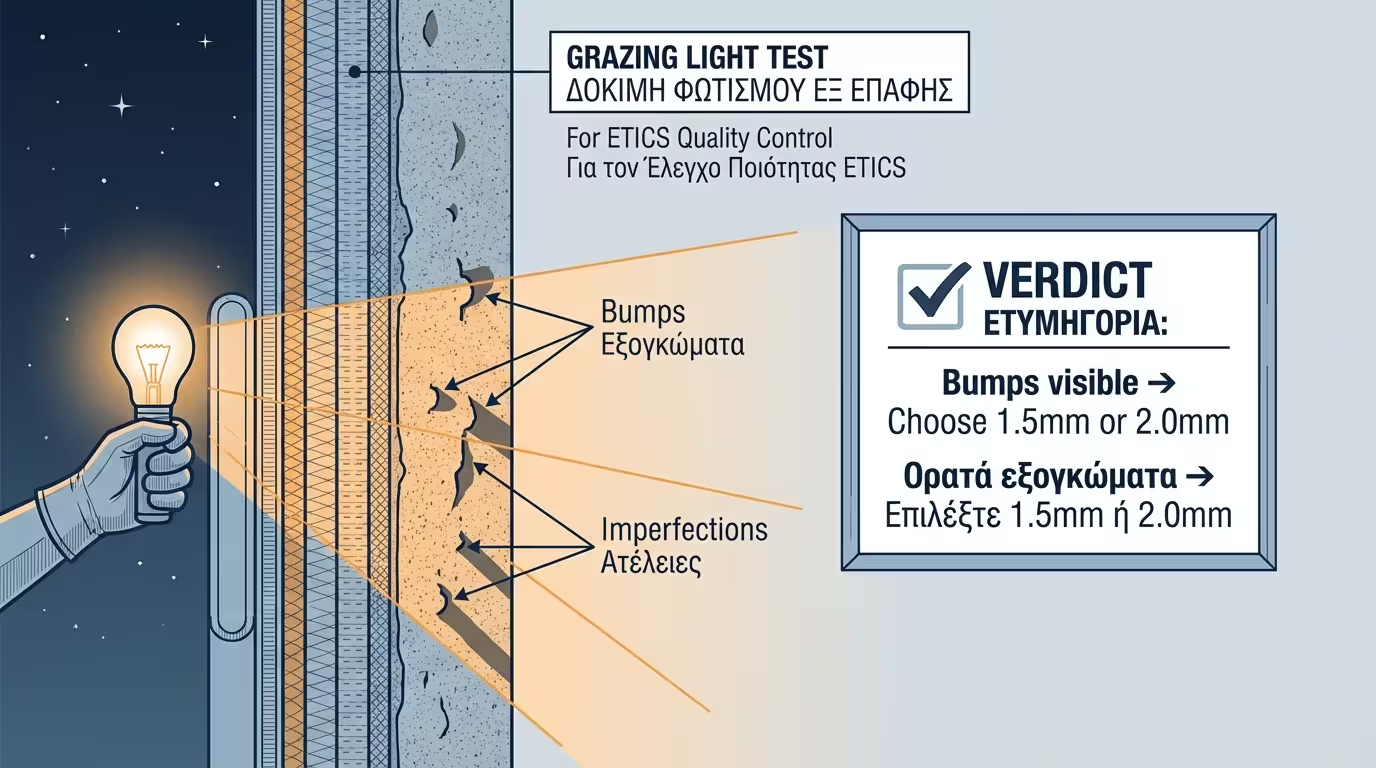
The Grazing Light Test: Before you pressure your contractor to use a fine grain (1.0mm) to achieve a smooth result, do a test. At night, place a powerful floodlight parallel (grazing) to the wall. This "grazing light" simulates the setting sun. If you see strong shadows and irregularities in the substrate's adhesive, avoid 1.0mm and ask for 1.5mm or 2.0mm so you won't be disappointed by the final result.
Grazing light test on ETICS wall surface

Single Batch Order:

Make sure to order all the material for the project with the same granulometry and the same production batch (Batch Number). Even if the color is exactly the same, the difference between a wall with 1.0mm and one with 1.5mm is visibly apparent from afar due to the way light "breaks" on them.

The Primer provides the solution:

If you choose a coarse grain (e.g. 2.0mm rustic), ensure the primer underneath has exactly the same shade as the render. Because coarse grain leaves minimal gaps when rubbed with the trowel, the colored primer will completely camouflage the white or gray substrate.

Conclusion

Choosing the grain size isn't just aesthetics - it determines thickness, cost, durability, and imperfection hiding ability. For most projects, the 1.5mm grain remains the permanent, safest, and most balanced choice.

Related Articles

Preview