
💰 The Cost
The scaffolding is charged by the square metre of coverage (facade) and by the month. To this price is added the day rate of the specialized technicians (scaffolders) for the setup and takedown.
You are holding the contractor's quote in your hands. It clearly says: "Internal and external plastering, with materials and labour, €18 per square metre". You multiply it by the square metres of your house and feel relieved that you are within budget. But were you too hasty?
In construction and renovations, the price per square metre usually strictly refers to the material that sticks to the wall and the hand that throws it. However, there are 5 collateral, "hidden" expenses which are absolutely necessary for the job to be done, and most of the time (if not clarified in writing) they burden the owner exclusively. Let's see what they are, so you don't go over budget.
If your project involves external facades (e.g. external thermal insulation or balcony repair), the workers cannot work floating in the air. The installation of metal scaffolding is required.
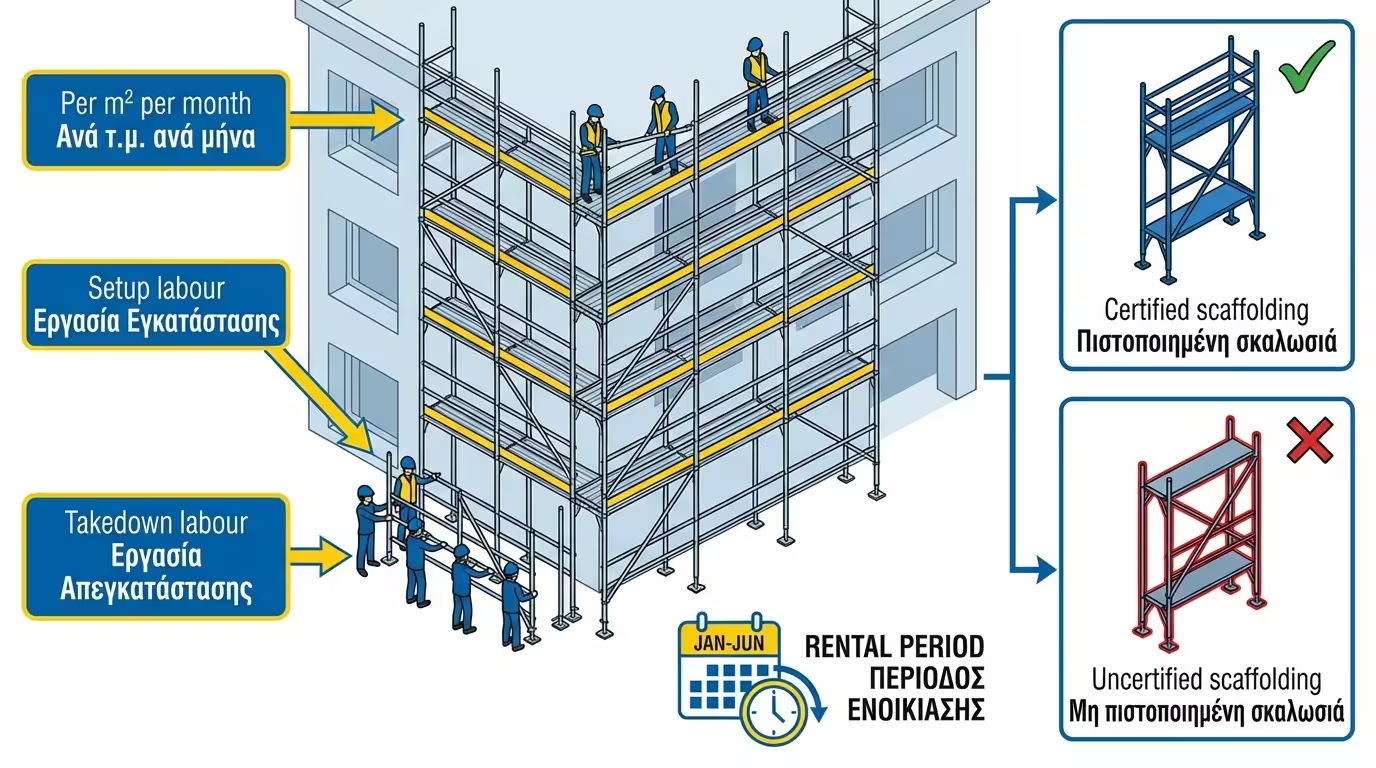
The scaffolding is charged by the square metre of coverage (facade) and by the month. To this price is added the day rate of the specialized technicians (scaffolders) for the setup and takedown.
Many crews do not have their own certified scaffolding and rent from third parties. You must ask clearly: "Does the price you gave me include the rent and the setup of the scaffolding for the whole month?"
Plastering produces a huge volume of waste. Especially if we are talking about a renovation that is preceded by the demolition (stripping) of the old crumbly plaster, you will fill mountains of rubble. But even in a new construction, the empty bags, the scraps of polythene and the mud that falls down, must be thrown away.
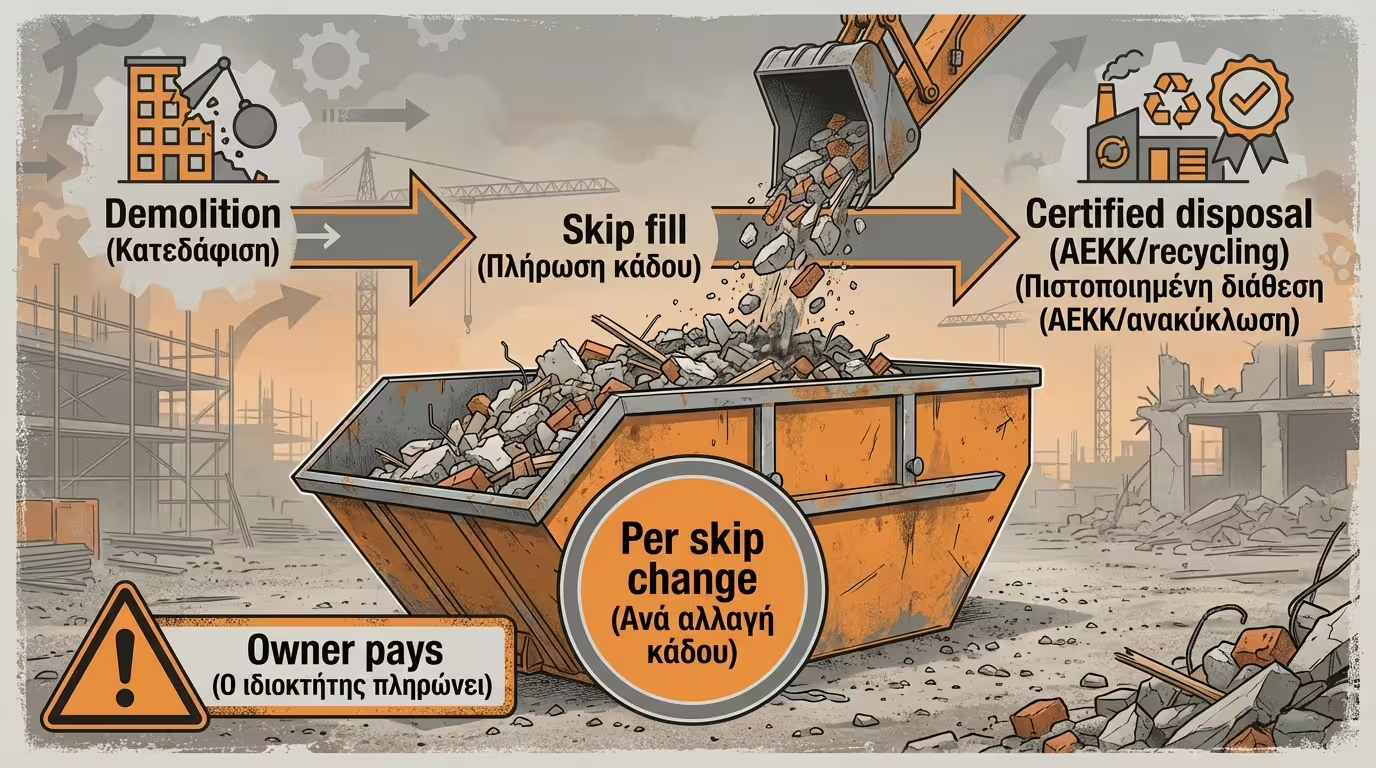
The rental of a rubble skip (usually 4 to 8 cubic metres) is charged per piece/change. Depending on the size of the renovation, you may need from 1 up to 5 skips.
The rental of the skip and the disposal fees at the special recycling centres almost always burden the owner.
Plaster is an extremely heavy material. If you need 3 tonnes of ready-mixed plaster, adhesives and primers for an apartment on the 4th floor, how will these materials go up? The lift of the building is forbidden (and cannot withstand) to be used for transporting rubble and building materials.
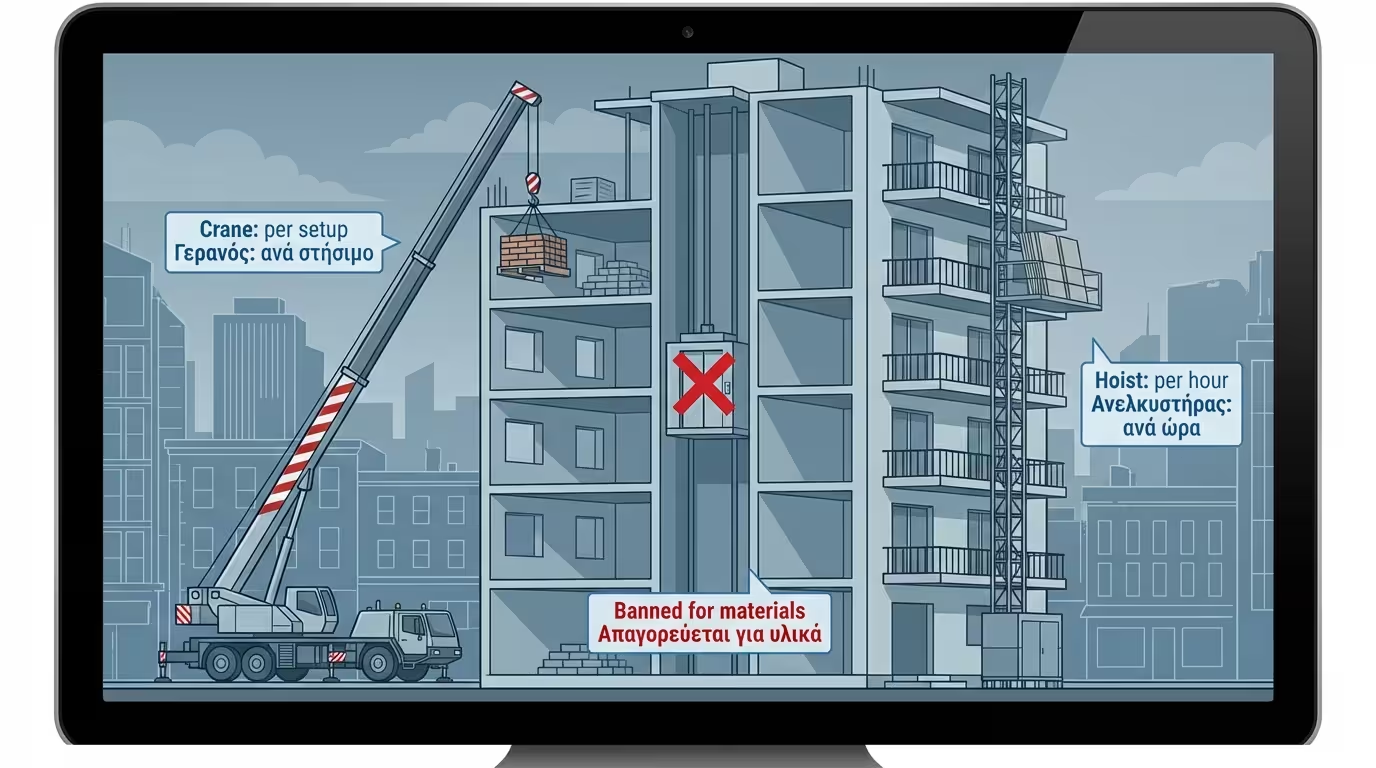
You will need a boom crane or an external balcony hoist. These machines are charged by the "setup" or by the hour.
If you have agreed to a "labour only" price, the operative expects to find the bags ready next to the wall he will plaster. Their transport from the pavement to the 4th floor is your expense.
As we saw in the previous article, plastering with a press (machine) is very fast. However, professional plastering machines have very specific "appetites":
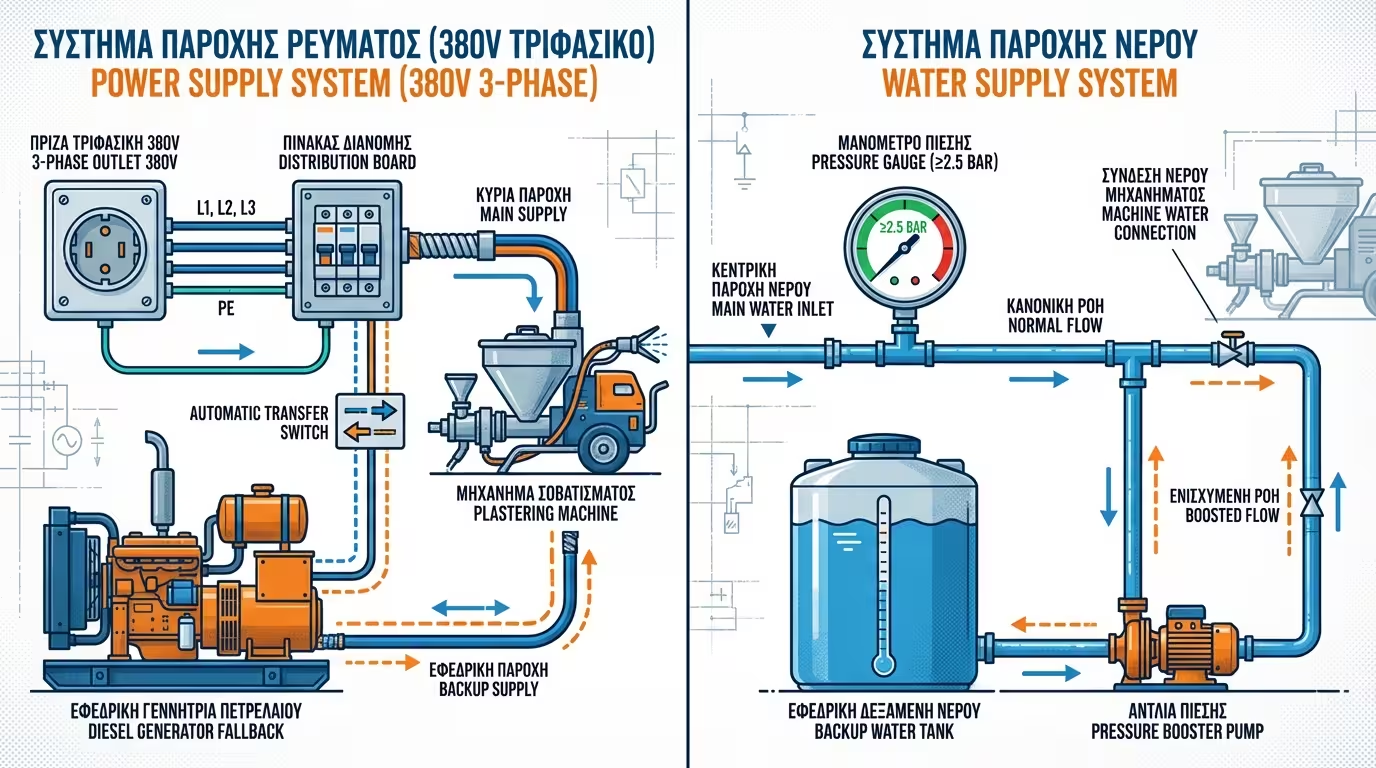
Most large machines work strictly with three-phase power (380V). If your building only has single-phase site power, you will need to rent a huge diesel generator (extra rental cost + fuel).
The machine needs a stable, uninterrupted water pressure (at least 2.5 - 3 bar). If your network pressure is low, the contractor will have to bring an external water tank with a pressure system.
The corrugated cardboard for the floors, the blue UV tapes for the aluminiums and the thick polythene cost money.
In an average renovation, just the purchase cost of the covering materials (so that the existing floors and frames are not destroyed) can exceed 100€ - 150€.
Furthermore, the plastering crew cleans up the heavy stuff (collects their tools and tapes). The final, meticulous washing of the floors (with special cement-dissolving chemicals) should be assigned to a specialized cleaning crew.
💡 To sleep peacefully, ask your contractor or engineer for a "Turn-key" quote. Demand that the following phrase is explicitly stated in the contract: «The final price includes materials, labour, installation/rental of scaffolding, rubble skips, lifting machines and site protection. No other hidden charge will arise for the owner.» Only then can you compare "apples to apples" when examining quotes from different crews.
Return to category.
Go to categoryReturn to the central guide.
Go to guide