Mould on Internal Render: The Role of Thermal Bridges and Ventilation

Every winter the same scenario repeats: Black spots begin to appear in the upper corners of rooms, behind heavy wardrobes or around windows. Soon, the spots merge, creating repulsive black or green stains on the render, accompanied by a strong musty smell.

Many homeowners spend fortunes on "miracle" paints, scrub the walls with bleach and repaint, only to see the mould return the following year. The hard truth is: mould is a living fungus. To live and grow, it needs "food" (the paint and dust of the wall) and plenty of water (moisture). If you cut off its moisture, it dies. Let's see how you can achieve this.

1. Culprit #1: Thermal Bridges

Mould doesn't appear randomly on just any wall. It prefers specific spots, which engineers call thermal bridges.

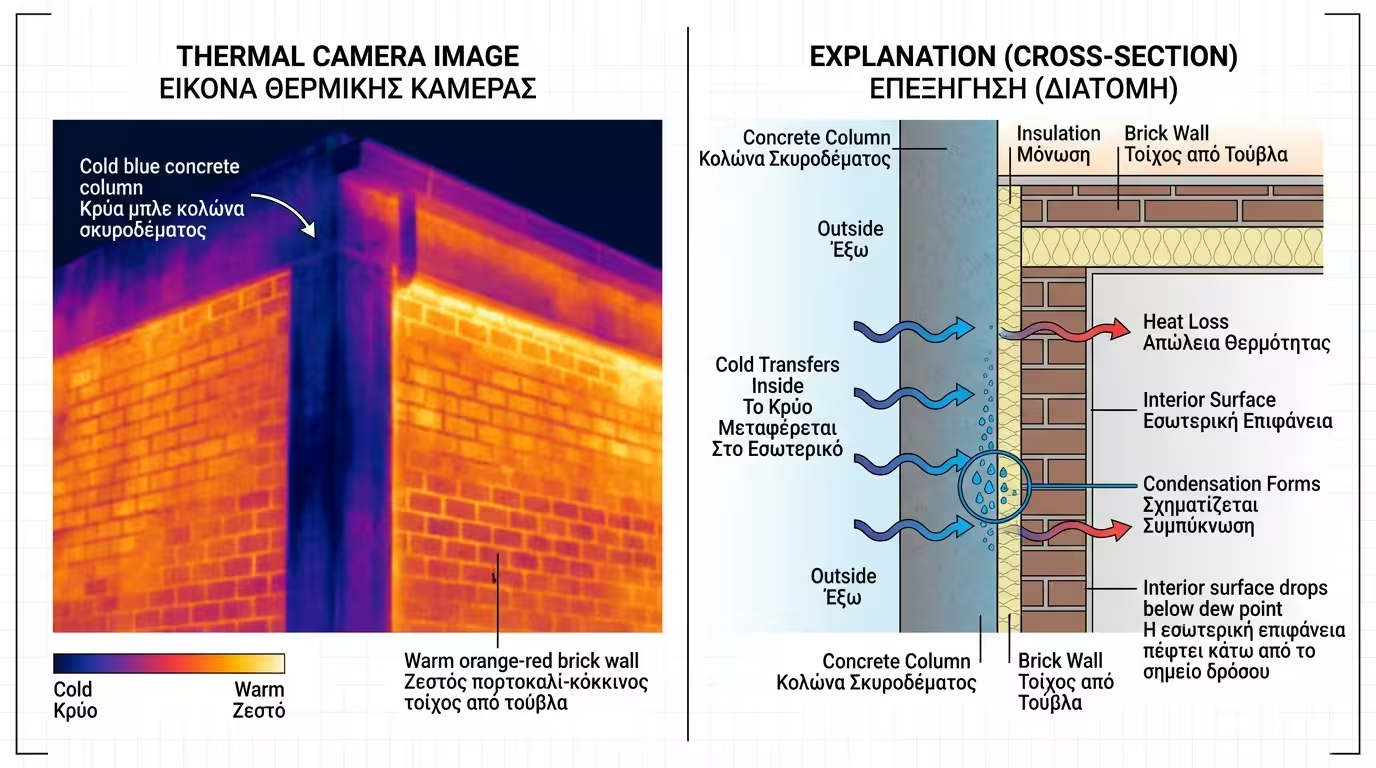
  • What is a thermal bridge? It is the point of the building where thermal insulation is interrupted or completely absent. Usually, this involves concrete elements (columns and beams) or the junctions of the wall with the ceiling and the window frames.
  • How it works: In winter, the cold external air "freezes" the external concrete of the column. Because concrete is an excellent conductor of temperature (and lacks insulation), it transfers this cold straight to the inside of the house. Thus, the internal render on the column becomes ice-cold, unlike the neighbouring brick wall.
  • The result (Condensation): When the warm, humid air of your living room touches this ice-cold render of the column, the water vapour condenses. The render sweats, becomes a permanently wet sponge and creates the perfect environment for mould to grow.
Thermal camera - concrete column (cold) vs brick (warm)

2. Culprit #2: Lack of Ventilation

Old houses with timber windows "let in" air from everywhere. They may have been cold, but they didn't have mould, because they ventilated naturally. Today, we install energy-efficient aluminium windows with double glazing and double seals, sealing the house like a submarine.

Every day, a four-person family produces 10 to 15 litres of water vapour (from breathing, bathing, cooking, drying clothes indoors). If this trapped water vapour doesn't find a way out through an open window, it will inevitably end up on the freezing thermal bridges.

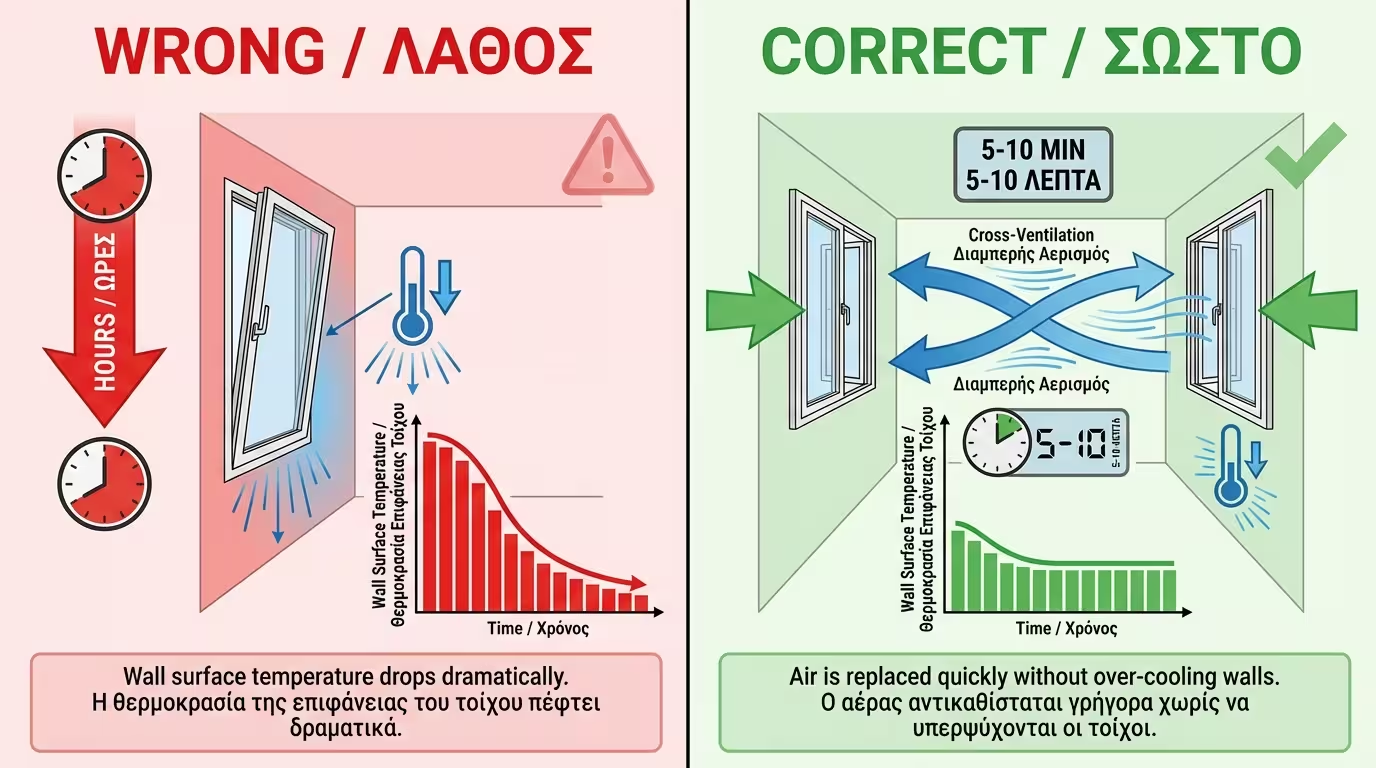
Cross-ventilation (air current) vs tilt opening

3. Daily Habits: Right vs Wrong

Changing some simple habits can reduce indoor humidity by 50%:

HabitThe Mistake (Causes Mould)The Right Way (Prevents)
House Ventilation Windows on tilt for hours (walls get too cold). Opening 2 opposite windows wide for 5-10 minutes (Draft/Cross-ventilation).
Cooking Pots boiling without an extractor hood. Use extractor hood with external extraction & keep kitchen door closed.
Bathing (Shower) Bathroom door open (steam goes to bedrooms). Door closed during shower & open window/extractor immediately after.
Drying Clothes Drying rack in the living room on the radiator. Drying on the balcony or use a tumble dryer with a dehumidifier.
Furniture Placement Wardrobes placed flush against the external wall (zero ventilation). Leave a 5-10 cm gap between the furniture and the external wall.

4. How to Eliminate Mould for Good

If your render is already blackened, follow these steps:

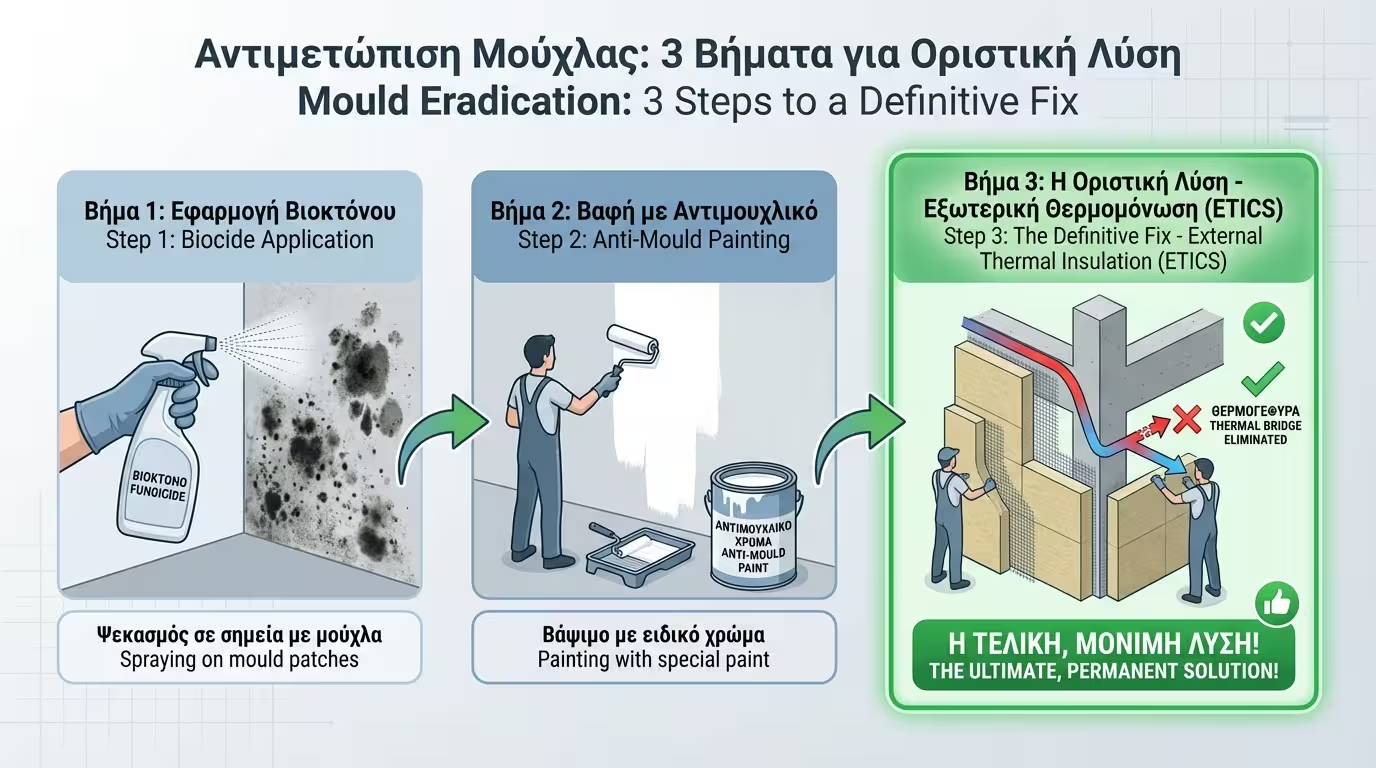
Fungicide spray + external ETICS insulation

1️⃣ Kill (Fungicide)

Spray the area with a specialist fungicide / anti-mould liquid (biocide) sold in paint shops. These liquids penetrate the render and kill the fungus at its root. Leave it to act according to the instructions and then wipe with a dry cloth.

2️⃣ Shield (Anti-Mould Paint)

If you don't plan to do a major renovation, paint the wall with specialist anti-mould emulsion paints, which contain strong fungicidal additives that prevent the reappearance of the spores.

3️⃣ The Permanent Fix (External Insulation)

If you want to be done with it once and for all, the only solution is to "dress" the building from the outside. External Wall Insulation (ETICS) wraps the columns and beams with insulating material. The thermal bridges disappear, the internal render stays warm and the condensation phenomenon (and therefore the mould) is eliminated 100%.

⚠️ The Bleach Trap: The classic method with the sponge and bleach "cleans" the wall visually, as it bleaches the fungi, but it doesn't kill their roots that are located deep inside the porous render. Moreover, the bleach water adds extra moisture to the wall.

Related Articles

Preview