How to Choose the Right Plastering Crew: Questions and Checking Quotes
Plastering is the work that "dresses" your house. No matter how much
money you spend on expensive paints or perfect lighting, if the wall
underneath is crooked or full of "bellies", the final result will look
cheap.
Choosing the right crew (the plasterers) is the most critical decision
of the renovation. Unfortunately, most owners choose with the sole
criterion being the lowest price per square meter, often ending up
paying double in patches and lawyers. Let's see how you can properly
evaluate professionals and how you can compare their quotes like an
experienced engineer.
The First Meeting (On Site)
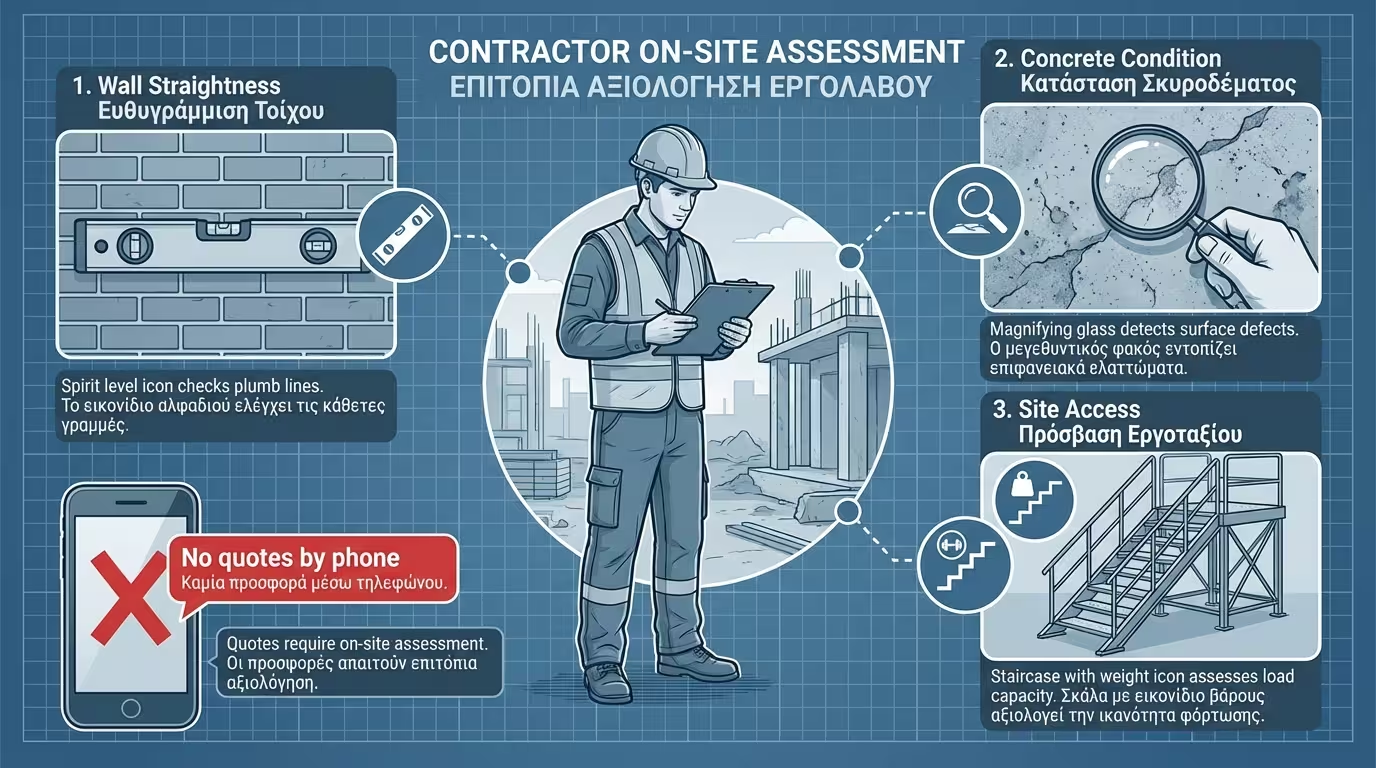
The golden rule of construction is one: No serious quote is given over the phone. If you call a contractor, tell them "I have 200 square meters" and they
give you a final price straight away, cross them off your list.
A proper professional will demand to see the space up close to check:
How crooked the walls are (to calculate the thickness of the
material).
The condition of the concrete (if special quartz primers are
needed).
The access (how the materials will be brought up and where the
scaffolding or the pump will be set up).
The 5 Critical Questions You Must Ask
When the contractor comes to your space, do not just let them measure
and leave. Ask them the following questions to test their
professionalism:
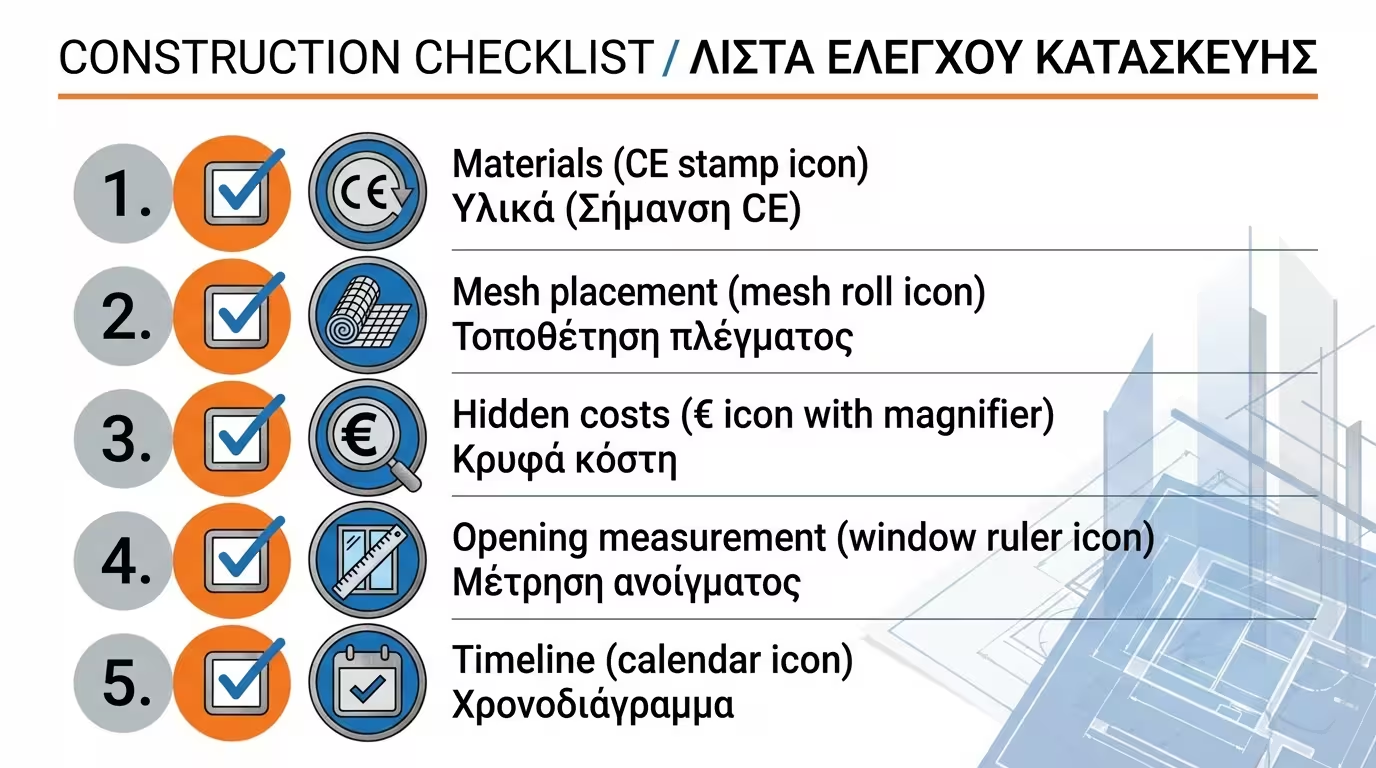
1. "What materials does the quote include?"
If you agree that they will also provide the materials, ask them to
tell you the brands and types. Will they use
ready-mixed industrial render with CE marking, or will they bring
loose sand with the truck? Will they use stainless steel corner
beads or cheap galvanized ones that will rust in the first rain?
2. "Where and how do you place fiberglass mesh?"
This is a trick question. If they answer "mesh is not needed, my mix is strong", reject them. They must tell you that they place mesh at the
concrete-brick joints, over the electrical chases and diagonally
("swallows") at the windows.
3. "Does the price include scaffolding, skips and transport?"
As we saw in a previous article, hidden costs are huge. Ask for the
final price to be "turn-key".
4. "How do you measure the openings (windows/doors)?"
Clarify from the start whether the square meters of the windows will
be deducted from the final bill or if they "close" to cover the
turns on the reveals.
5. "What is the delivery schedule?"
When can they start and how many days will they need? In case the
agreement is "on day rate", a slow craftsman will cost you much more
than a more expensive, but fast one.
Comparing Quotes: How to Read the "Small Print"
Never compare only the final number at the bottom of the page. To
compare "apples with apples", quotes must be written and analytical.
See an example:
What the "Vague" Quote Says (Danger)
What the Professional Quote MUST Say
Plastering house internally and externally.
Application of traditional 3-coat render (dash, body,
marble) on walls 250m².
Our materials.
Included ready-mixed renders (Brand/Type CE), quartz primer
for columns and stainless corner beads.
Price: 12€/m²
Price 14€/m². The price includes scaffolding rental (1
month), 2 debris skips and floor protection with corrugated
cardboard.
The vague quote looks cheaper (12€/m²), but in the end the contractor
will ask you for extra money for the scaffolding, the skips and the
primer, skyrocketing the real cost to over 16€/m².
3 Red Flags (Danger Signs) before You Sign
The Private Agreement is Essential: Your greatest security
is paper. Demand the signing of a simple private agreement that will state
the final price, the materials, the measuring method and the delay penalty
clause (what happens if they do not deliver on time). A proper professional
has no problem signing.
1. The Deposit is huge
It is logical for the contractor to ask for a deposit (e.g. 20-30%)
to order the materials and "book" the date. But if they ask you for
60% or 70% upfront, there is a serious risk that they will take the
money and never appear. Payments should be made in installments,
depending on the progress of the project.
2. They "bury" previous crews
If the craftsman comes into the house and starts swearing at the
bricklayers, electricians or engineers, saying that everyone made a
mistake except themselves, beware. Usually, they are looking for
excuses in advance for their own future bad workmanship ("the wall
didn't come out straight because the brick was crooked").
3. They have no projects to show you
If they hesitate to give you photos of their previous work or to
refer you to an old client for recommendations, they probably don't
have a good track record. A proud craftsman always wants to show off
their work!