

Repair, Restoration & Maintenance
Return to category.
Go to categoryThe word "demolition" (or simply "stripping" in builders' slang) is perhaps the least favourite word for any homeowner starting a renovation. It means jackhammers, deafening noise, clouds of dust, skips full of rubble, and extra labour days.
It's perfectly natural to want to avoid this process and ask the crew to "save whatever can be saved." However, there are cases where the render has passed the point of no return. Leaving it on the wall is not just a poor financial choice, but a direct safety hazard for the occupants. Let's look at the 3 non-negotiable technical criteria that dictate you must tear it all down.
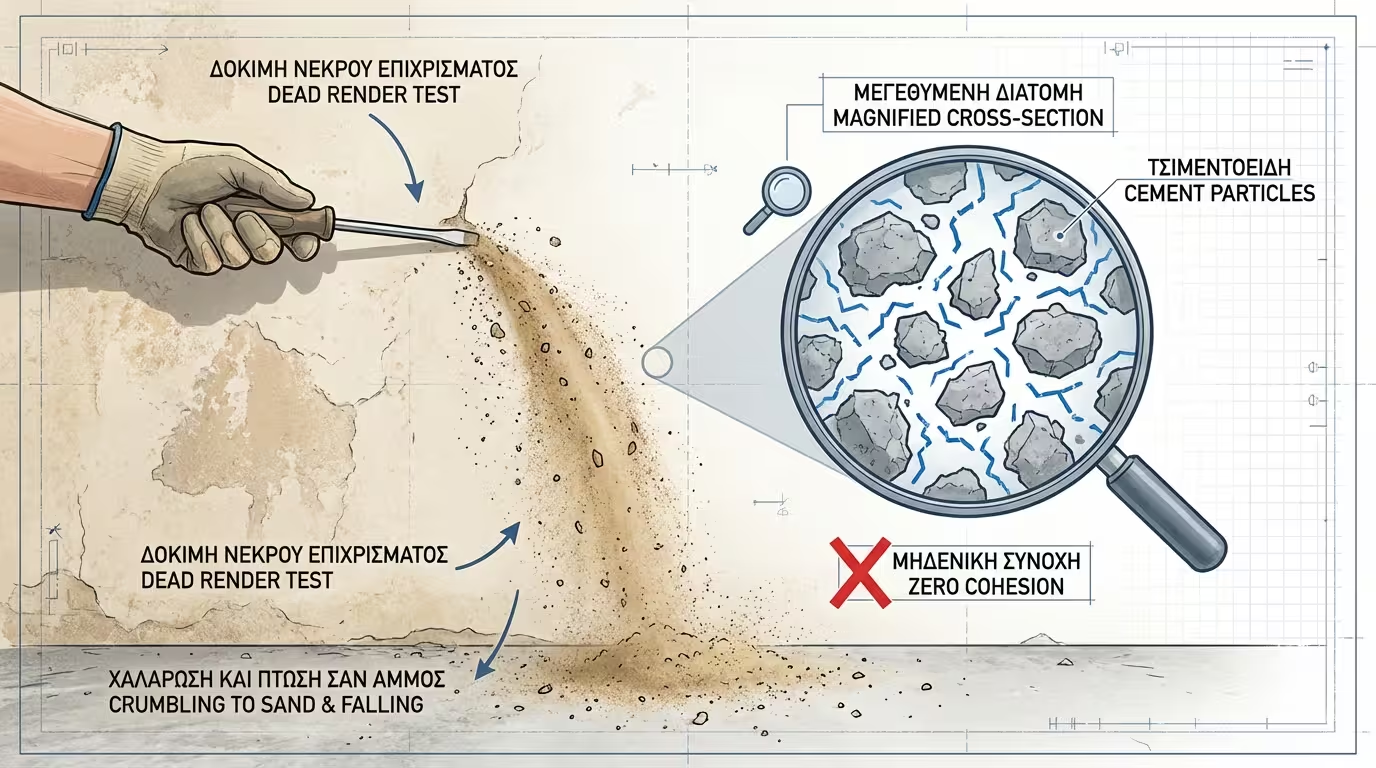
Render is not just dirt - it's a structural material that bonds chemically thanks to cement and lime. After 40 or 50 years, or if the original mix was poor (too lean in cement), that chemical cohesion is lost.
We saw in the previous chapter how to do the hollow-sound test. But what happens when the problem isn't localised?
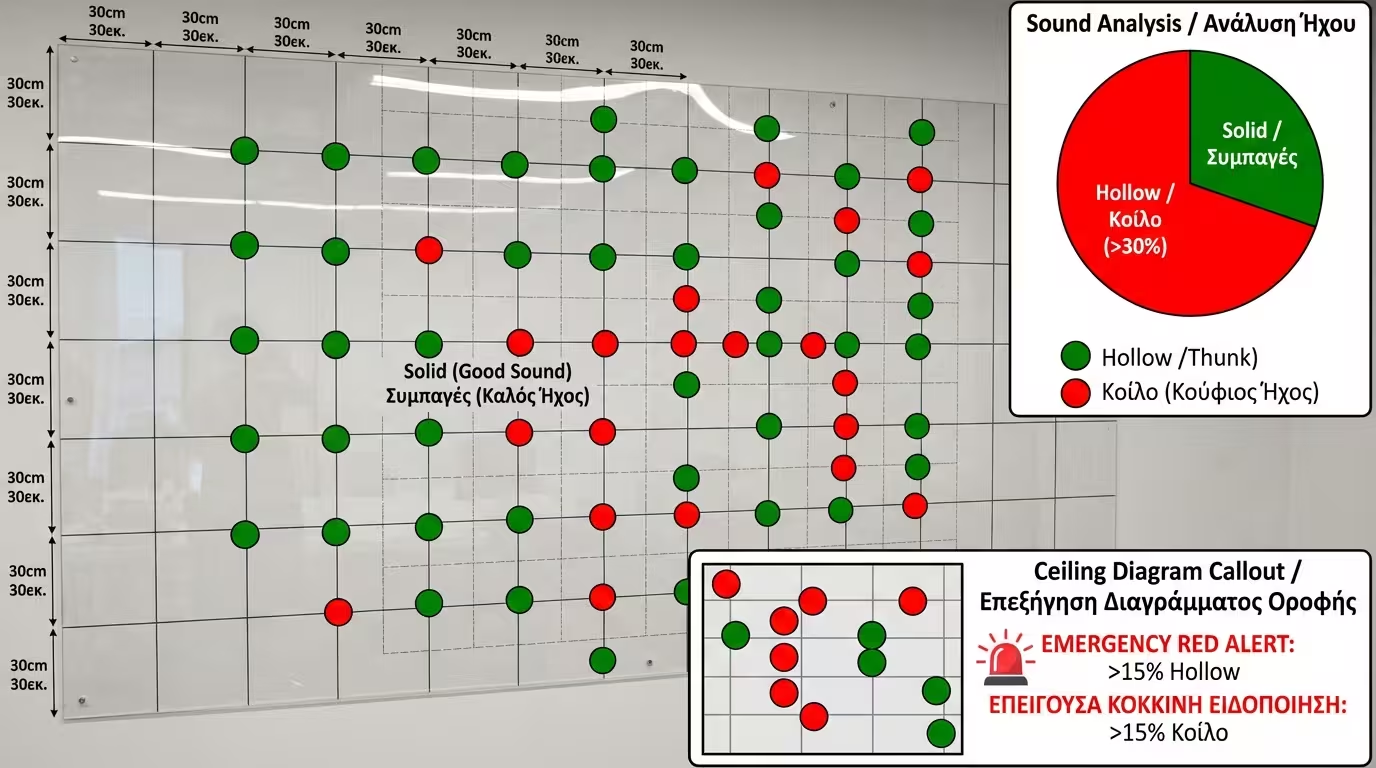
Red Alert for Ceilings: Ceilings get NO "discounts." If the ceiling sounds hollow across more than 15–20%, it must be stripped entirely and immediately. The risk of serious head injury from falling render is enormous.
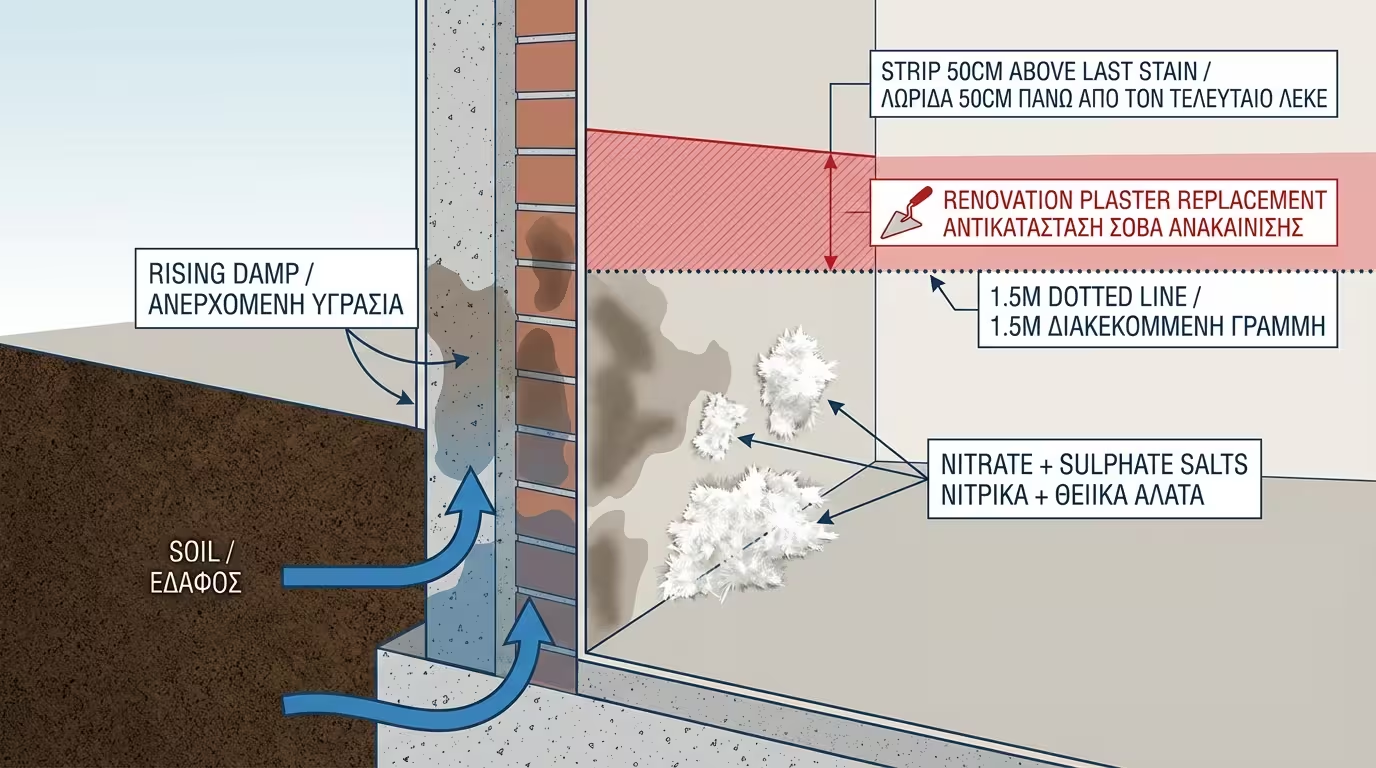
Old render in basements, ground floors, or traditional stone buildings (without foundation waterproofing) has acted for decades as a filter that absorbs groundwater.
To make the final decision, use this simple checklist. If you answer "Yes" to even TWO of the questions below, the chipper is the only solution:
| Inspection Question | YES / NO |
|---|---|
| 1. When you scrape the wall with a key, does sand fall off without resistance? | ☐ |
| 2. Does more than 30% of the surface sound "hollow" with a hammer? | ☐ |
| 3. Are there large, visible cracks that run the full height of the wall? | ☐ |
| 4. Does the wall have a history of rising damp and permanently shows salts? | ☐ |
| 5. Are you planning to bond heavy materials on top (e.g. stone, ETICS, marble)? | ☐ |
As much as the initial expense hurts, full removal of friable render has a huge, hidden advantage: It reveals the truth about the building. Only when the render comes off will you see whether your columns have cracks from past earthquakes, whether the reinforcing bars have corroded (carbonation), and whether bricks are broken. You are given the unique opportunity to repair the load-bearing structure of your home (its "bones") before dressing it again with new, clean, and extremely durable materials.
Return to category.
Go to categoryReturn to the central guide.
Go to guide