
Fireproof & Acoustic Renders: Passive Safety and Sound Comfort

When planning a renovation or a new construction, our attention usually falls on the colors, floors and layout. But there are two invisible factors that determine the true value of a building: safety in case of fire and acoustic comfort (the absence of annoying echo).

Modern building materials technology has created special renders that solve these problems directly on the masonry and ceilings, without the need for bulky panels or plasterboards. Let's get to know fireproof and acoustic renders.

1. Fireproof Renders: The Building's Shield (Passive Fire Protection)

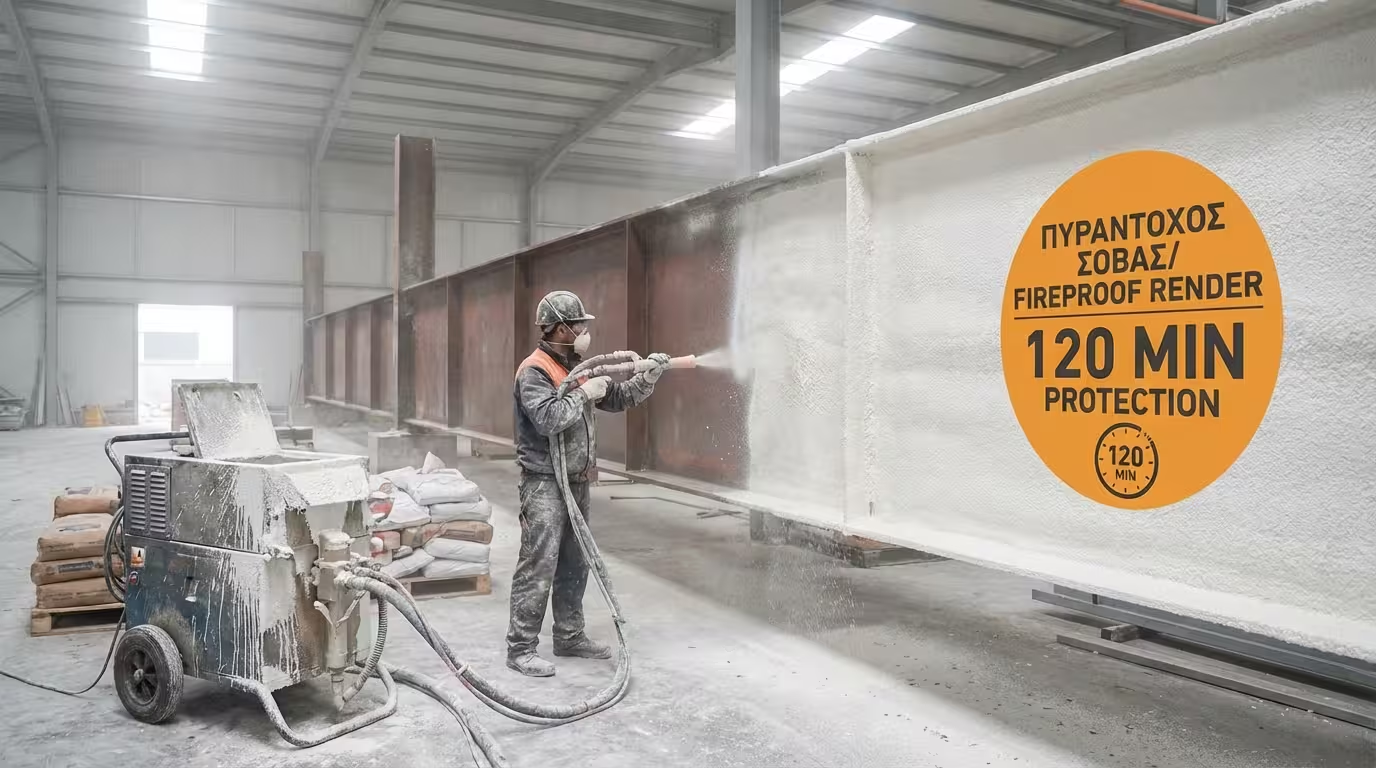
Passive fire protection does not put out the fire (like ceiling sprinklers), but ensures something much more critical: time. This time (e.g. 60, 90 or 120 minutes) is vital to safely evacuate the building and prevent the load-bearing structure (concrete or steel columns) from collapsing from the extreme temperatures.

Fireproof render on steel beam - passive fire protection

How do they work?

Fireproof renders do not contain flammable materials. They are usually based on gypsum, vermiculite or perlite.

  • When the room temperature rises dramatically, the crystalline water trapped inside the gypsum or aggregates begins to evaporate.
  • This process absorbs enormous amounts of thermal energy, keeping the surface of the structural element (e.g. the steel beam) at safe temperature levels, preventing its deformation and collapse.
Where are they applied?

  • In steel buildings (warehouses, factories, shopping malls) to protect the steel frame.
  • In boiler rooms, pump stations and parking areas.
  • On ceilings and walls that form fire compartments (boundaries between different properties).

2. Acoustic Renders: End the Echo

Have you ever entered a modern, minimalist house or a restaurant where the noise of chatting and cutlery is unbearable? This happens because smooth surfaces (glass, tiles, smooth render) reflect sound waves, creating the phenomenon of reverberation.

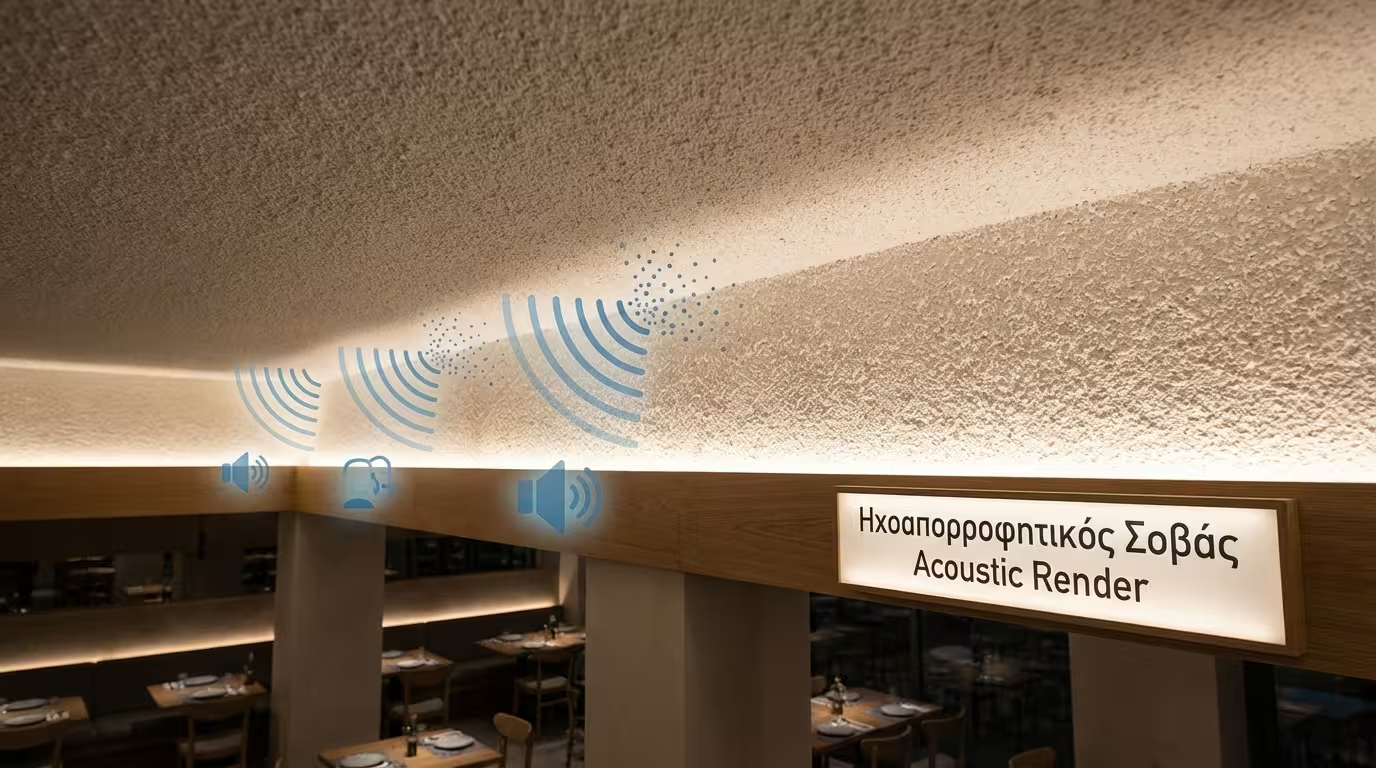
Acoustic render on restaurant ceiling - porous structure

How do they work?

Acoustic (or sound-absorbing) renders have a completely different, highly porous structure. They are filled with microscopic air cells. When the sound wave hits the wall or ceiling, it does not bounce back into the room. Instead, it enters the pores of the render, where the sound energy is converted into minimal thermal energy and "damped".

Where are they applied?

  • Restaurants, cafés, hotels and open-plan offices.
  • Lounges of modern homes with high ceilings, lacking carpets and heavy curtains.
  • Home cinemas, recording studios and classrooms.

Comparison and Basic Characteristics

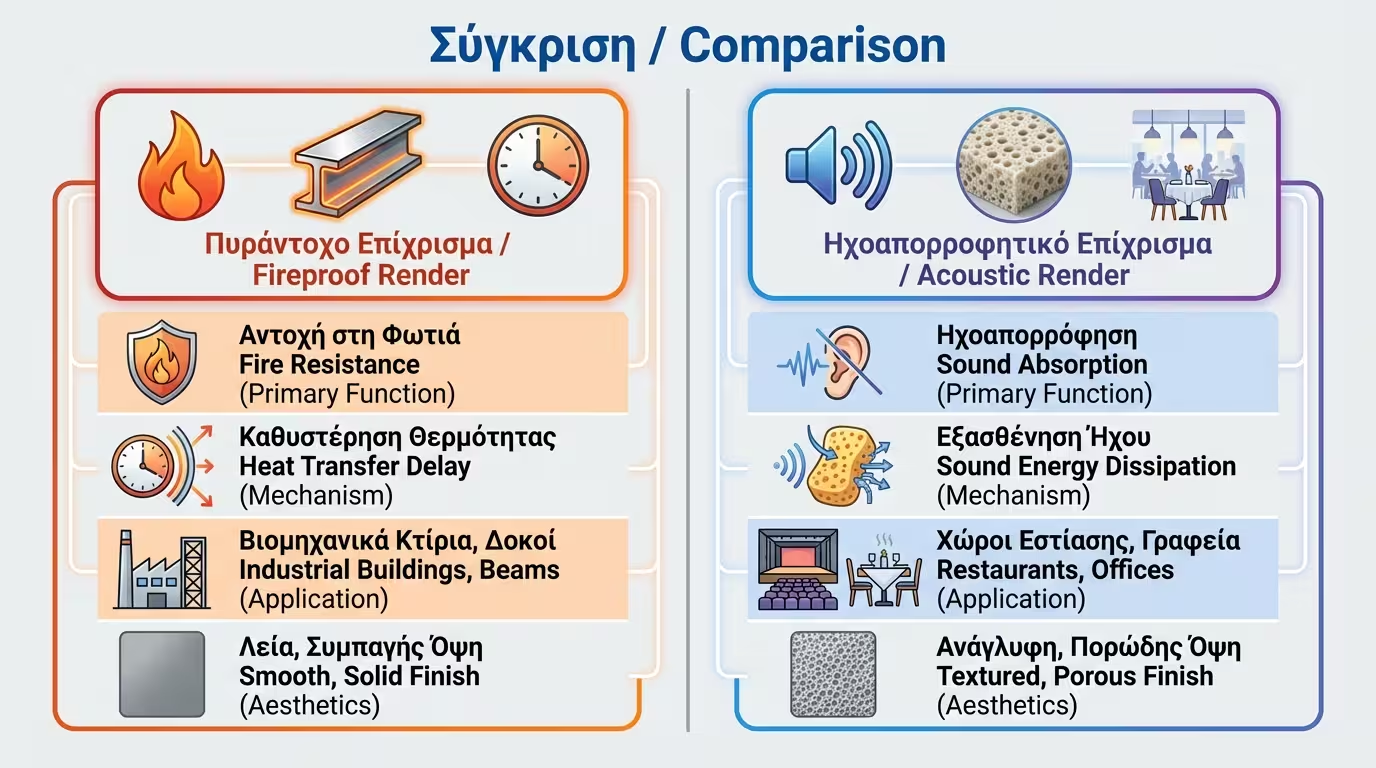
Comparison table: fireproof vs acoustic renders
Characteristic Fireproof Renders Acoustic Renders
Main Purpose Delay collapse in fire Reduce reverberation (echo) and noise
Basic Materials Vermiculite, Perlite, Gypsum Special porous aggregates, recycled glass/cellulose
Thickness Requirement High (depending on the required protection minutes, e.g. R120) Medium to high (to absorb low frequencies)
Certification Strict (according to EN 13381 etc.) NRC (Noise Reduction Coefficient) index certification

Useful Tips for Owners and Engineers

Beware with Painting Acoustic Renders: The biggest and most costly mistake made with acoustic renders is coating them with regular plastic or acrylic paints. The paint acts like a "film" that seals the pores of the material. If this happens, the render immediately loses 100% of its acoustic capability. They must be painted exclusively with special open-pore (acoustically transparent) paints recommended by the manufacturer.

Specialized Crews

The application of these materials (especially fireproof renders) is not a job for DIYers. Certified crews with suitable spray machines are required, as the exact application thickness determines the final safety certification of the building by the Fire Department.

Mechanical Strength

Acoustic renders are normally "softer" and more susceptible to impact due to their spongy structure. Therefore, the ideal location for their application is mostly on ceilings and high on the walls, where there is no risk of friction or impact.

Related Articles

Preview