Siloxane Renders: The Ultimate Material for Extreme Weather Conditions and Breathability

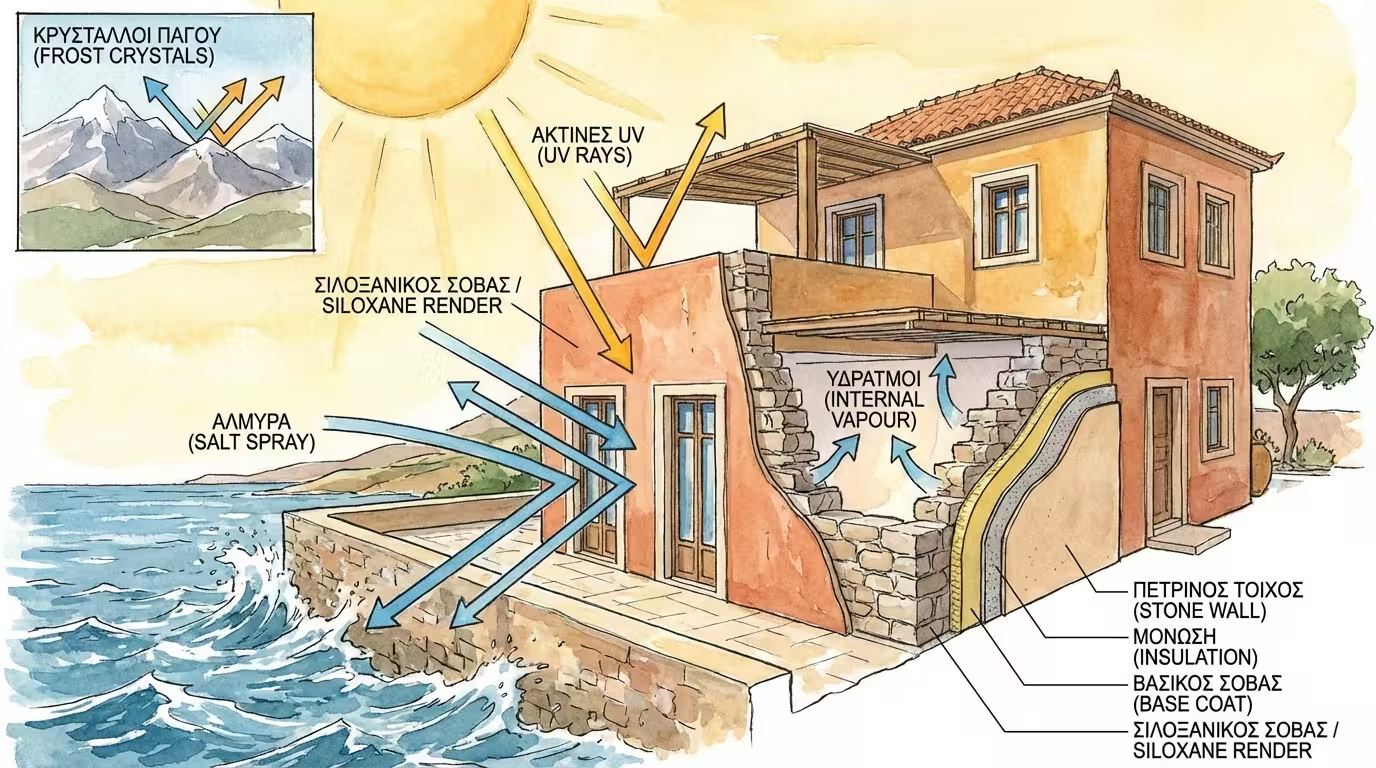
When your building is located just a few meters from the sea and is "battered" daily by the salt spray, or when it is located in a mountainous area facing frost and torrential rain, conventional coatings are simply not enough. In such extreme conditions, the choice of the final render is not a matter of aesthetics, but of the masonry's survival.

Meet siloxane renders. They constitute the technological pinnacle in External Thermal Insulation Composite Systems (ETICS) and the restoration of historical buildings. Let's see why engineers consider them the "Ferrari" of coatings and when it's worth investing in them.

What Are Siloxane Renders?

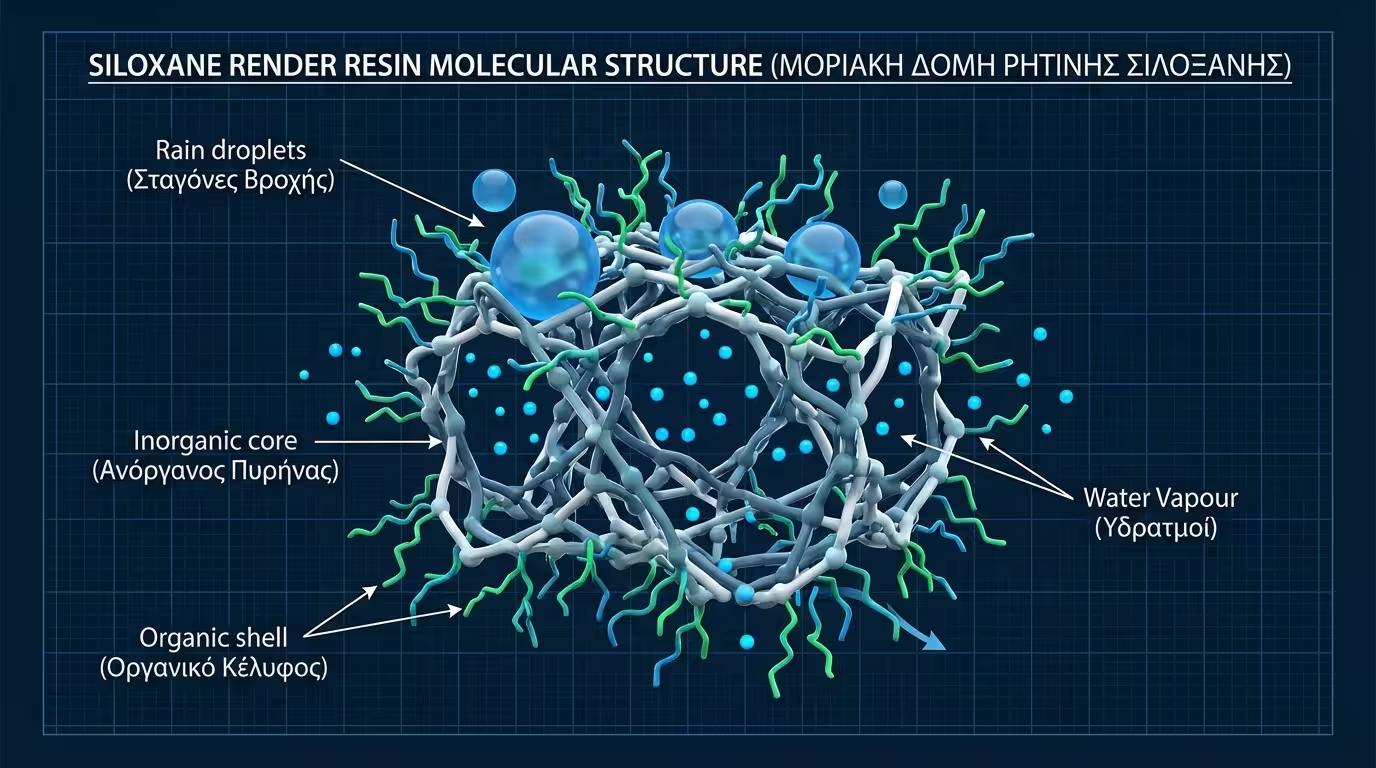
To understand their superiority, we must see how they are made. Siloxane renders are essentially a "hybrid". They combine the best characteristics of inorganic materials (such as traditional mortars that breathe perfectly) and organic materials (such as resins that offer flexibility and waterproofing).

Molecular structure of siloxane resin - 3D pore network

How Do They Work?

Their secret lies in siloxane resins. These create a microscopic, invisible mesh (three-dimensional network) on the wall's surface, which has a magical property: its pores are large enough to let water vapors out, but too small to allow raindrops to enter!
Why Are They Considered the Top Choice? (The 4 Ultimate Advantages)

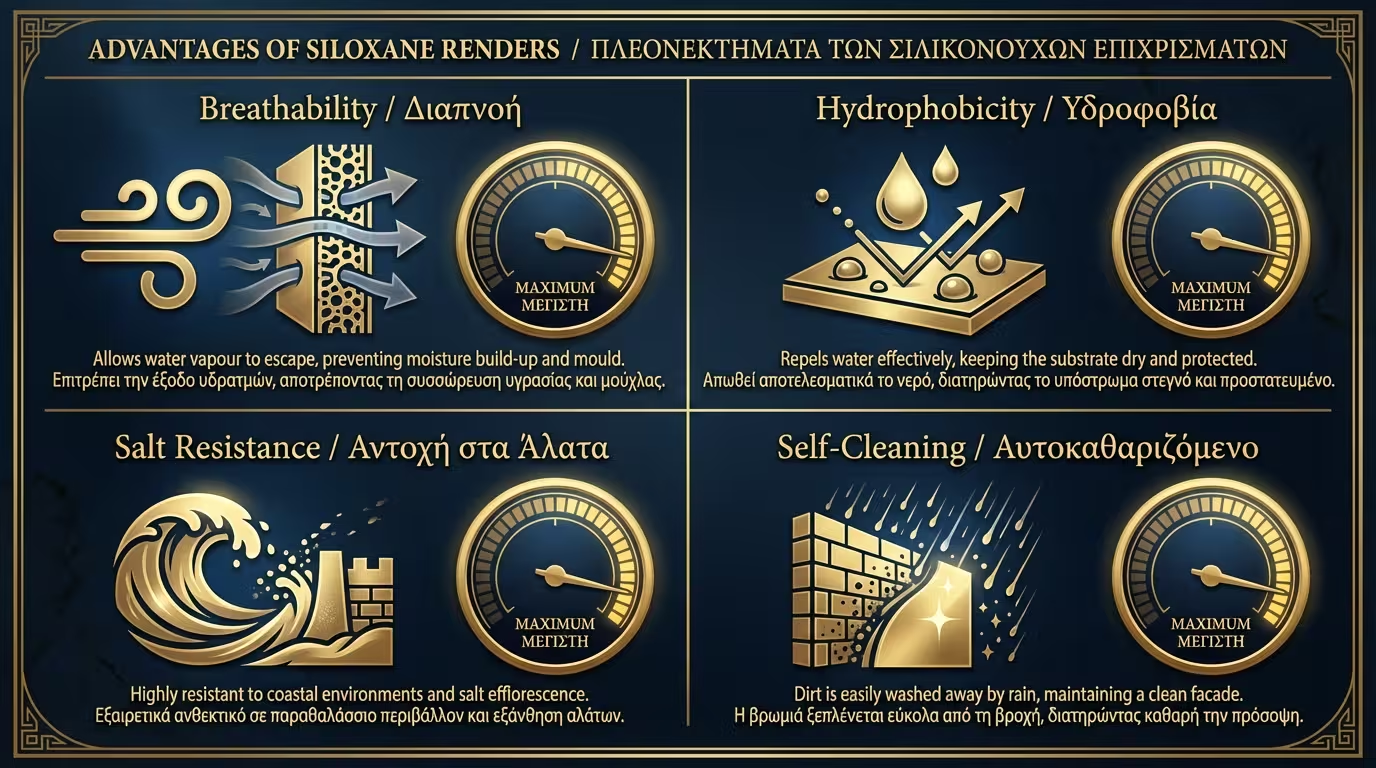
Why do engineers consider siloxane renders the top choice for extreme conditions? Let's take a detailed look:

Water droplets beading on siloxane surface - lotus effect

1. Unmatched Breathability (Like an Open Window)

Unlike acrylic renders that seal the wall, siloxane renders offer the maximum possible breathability. If your house has a problem with internal moisture or if you have used mineral wool for thermal insulation, this material guarantees that water vapors will be discharged immediately, preventing mold.

2. Absolute Hydrophobicity (Water Bounces Off)

Their surface repels water to an extreme degree. Rain is not absorbed even a millimeter. Instead, it forms small pearls that roll downwards (the famous lotus effect), keeping the masonry 100% dry.

3. Extreme Resistance to Salt and Alkalis

If you are building in a coastal area, sea salt corrodes colors and ordinary renders. Siloxane resins are completely chemically inert, which means they are not affected by salts, alkalis, and UV radiation. They do not fade and they do not peel.

4. Self-Cleaning Facade

Because they do not retain any moisture and are not thermoplastic (they do not soften with heat), dust and exhaust fumes do not stick to them. With the first heavy rain, the wall is washed and looks as if it was rendered yesterday.

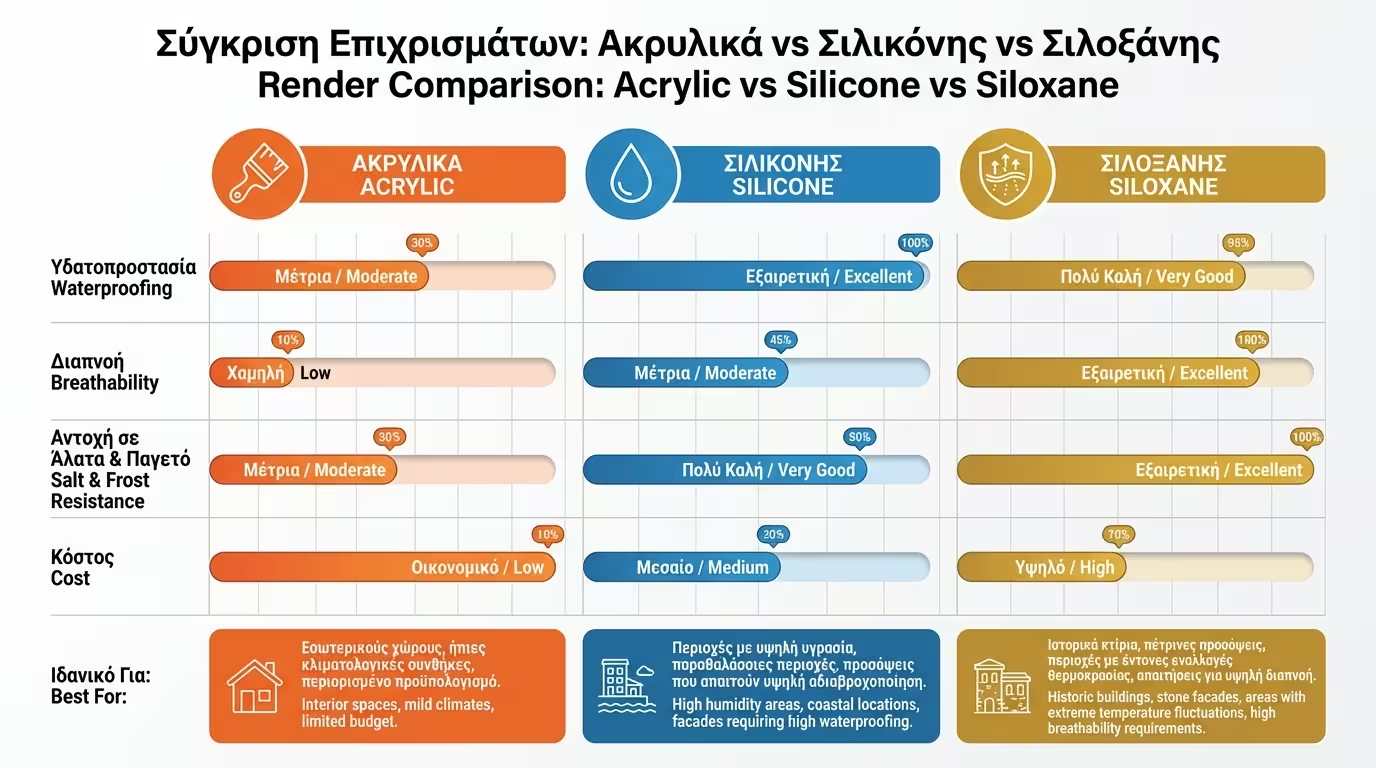
Market Comparison: Acrylic vs Silicone vs Siloxane

Comparison table of three ETICS render types

Where exactly does siloxane render stand in relation to the other ready-mixed ETICS renders?

Characteristic Acrylic Render Silicone Render Siloxane Render
Waterproofing Good Very Good The Ultimate (Excellent)
Wall Breathability Low High Maximum possible
Salt/Frost Resistance Moderate Good Top
Purchase Cost Low High The Highest (Premium)

Where is Their Use Mandatory? (Ideal Applications)

Given their higher cost, siloxane renders are not for every project. Their use is a "one-way street" in the following cases:

Siloxane render on coastal villa - salt resistance

Coastal Homes & Hotels:

Where the wind constantly carries sea droplets.

Mountain Chalets & High-Altitude Buildings:

Where freeze/thaw cycles (frost in winter) destroy conventional materials.

Restoration of Old / Stone Buildings:

When thermal insulation is not installed, but we want a final colored coating that will protect the stone while allowing it to breathe at the same time.

Useful Tips for Owners and Contractors

The Primer Mistake: The investment in a very expensive siloxane render is completely nullified if the craftsman uses a simple acrylic primer underneath (to save money). The acrylic primer will seal the wall, destroying the system's breathability. A special siloxane primer is strictly required.

Substrate Check:

Because siloxane renders are applied in very thin layers (e.g. 1.0mm or 1.5mm), the substrate (the adhesive with the mesh in the ETICS) must be perfectly leveled and smooth, without any "belly" or imperfection whatsoever.

Shades:

Although there used to be a limitation in the past, modern siloxane renders are now colored (in their mass) in thousands of shades. However, prefer earthy and light shades (with a high reflection index) for maximum durability over time.

Related Articles

Preview