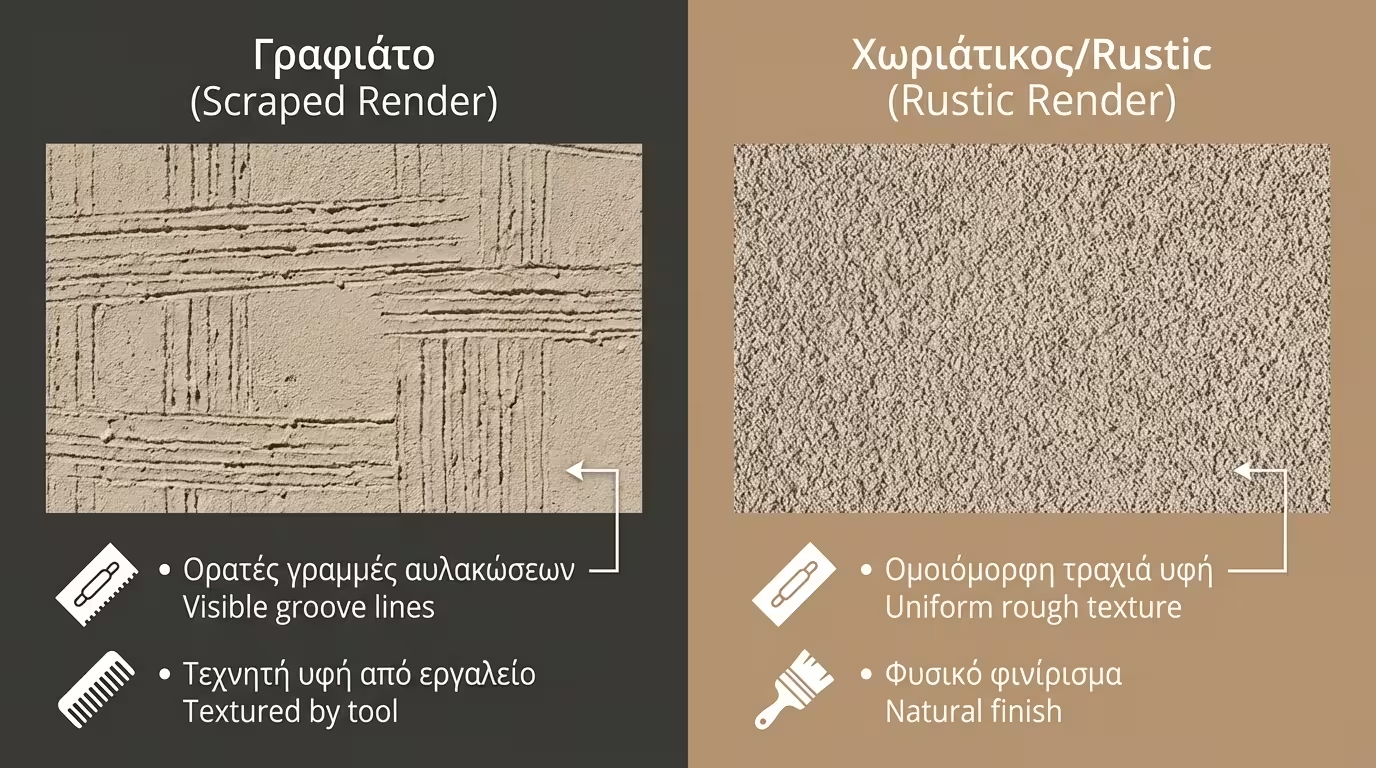
Vertical / Horizontal Scraped
The trowel moves strictly up and down or left and right. It gives a more strict, geometric and modern result.
The exterior facade of a building is its "face". While smooth renders offer a clean, minimalist appearance, they often highlight the slightest construction imperfection. This is exactly where textured decorative renders come into play – with Scraped (Grafiato) and Rustic being dominant.
These techniques are not chosen only for their special aesthetics, but also for their amazing ability to "hide" wall mistakes, while offering top resistance to weather conditions. Whether you are designing a modern external thermal insulation composite system (ETICS) or renovating a country house, let's see which style suits you.
Scraped (or striped) render is perhaps the most recognizable textured finish of recent decades. Its characteristic feature is the distinctive "grooves" or lines running across its surface.
How is its texture created?
The secret is hidden in the material itself. Scraped render contains within
its mass specific, oversized grains (usually of quartz or hard marble) with
a size from 1.5mm to 3.0mm. When the craftsman
"pulls" the material with the plastic trowel (float), these coarse
grains roll on the wall, scraping the rest of the softer material and
creating the characteristic lines.
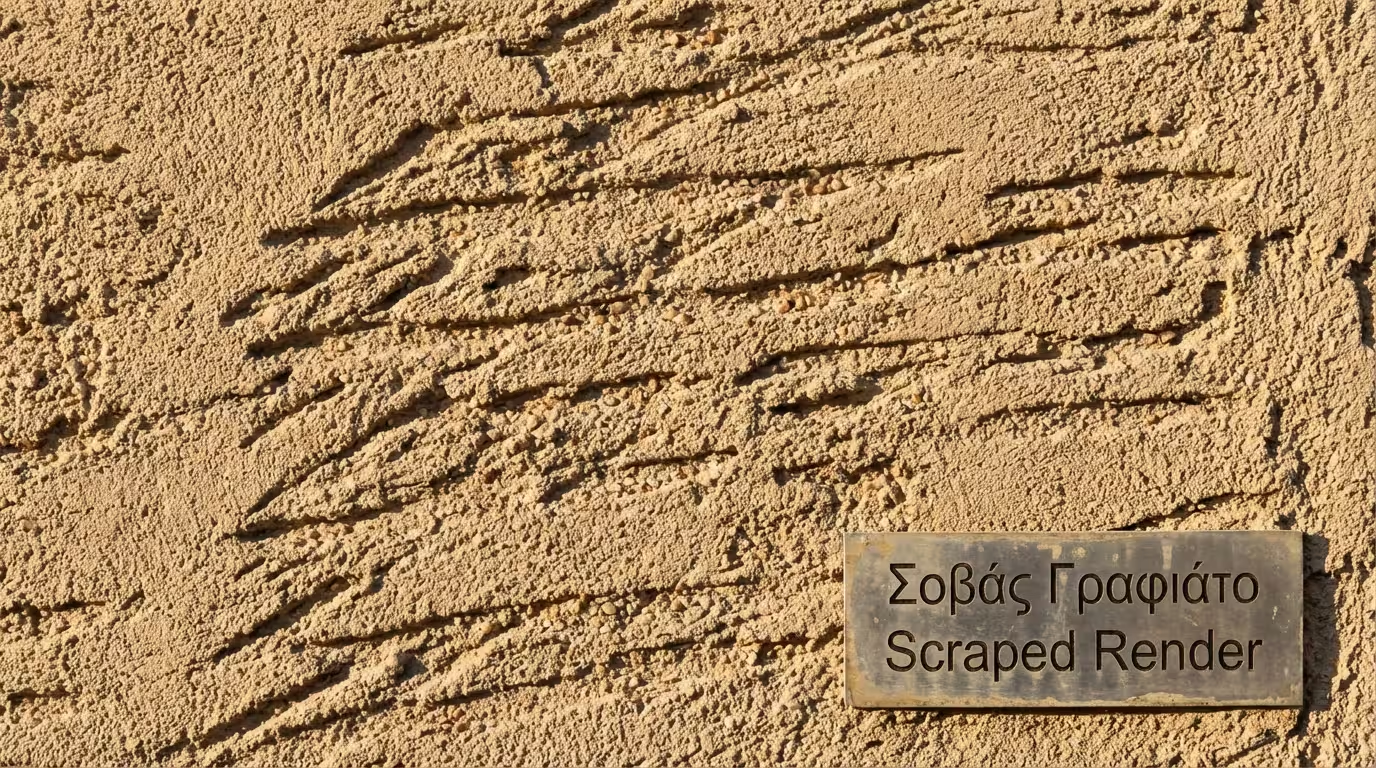
The final appearance depends exclusively on the movement of the craftsman's hand:
The trowel moves strictly up and down or left and right. It gives a more strict, geometric and modern result.
The trowel moves in a circular motion, creating an irregular, "swirling" pattern reminiscent of tree bark.
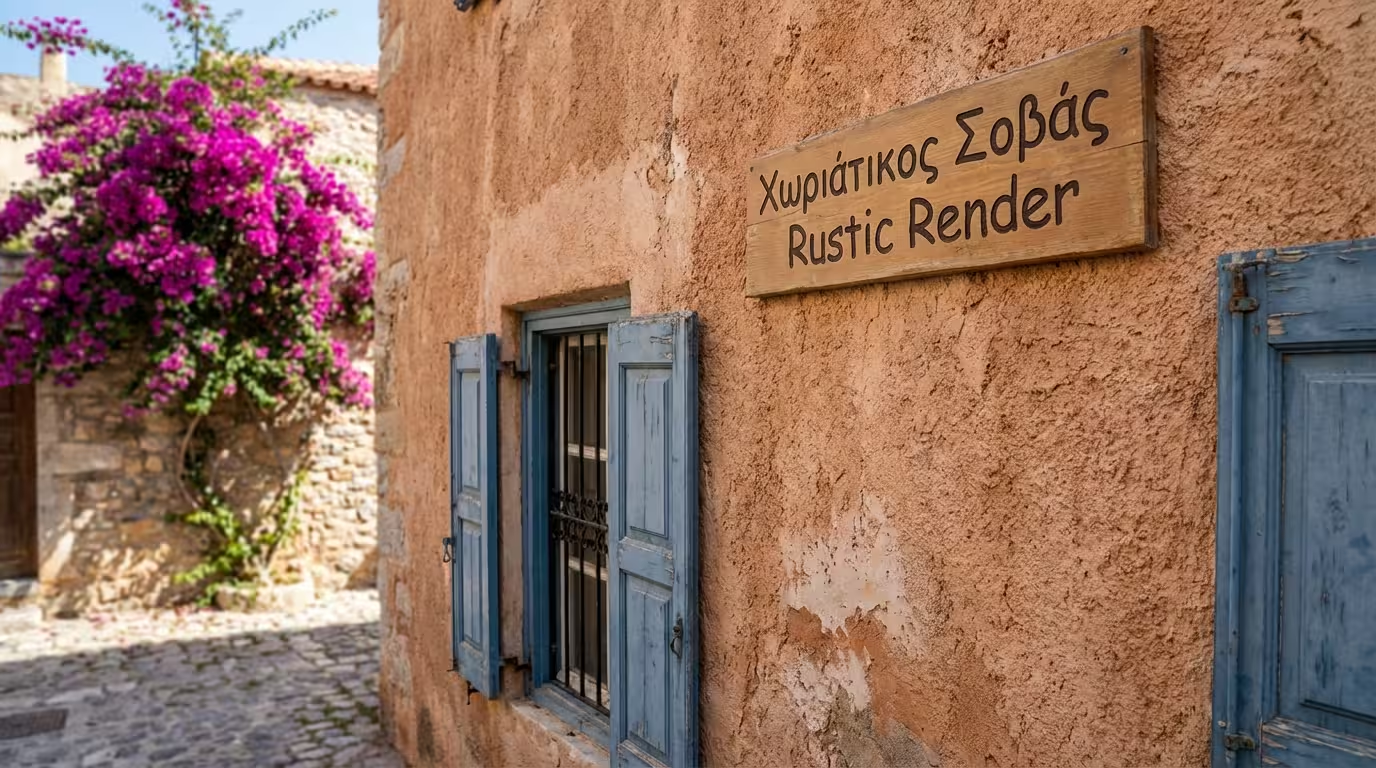
Rustic render offers a "wilder", more traditional and warm feel, inspired by classic Mediterranean architecture and island houses. Instead of having lines, its surface is uniformly rough (like very fine spatter dash or drops), with no specific direction.
How is its texture created?
Here the material has a uniform grain size (usually 1.0mm to 2.0mm), without oversized grains standing out. The craftsman applies the
material and then rubs it in a circular motion with a plastic trowel,
or uses special rollers (foam or porous) to lift the material and give
it the textured appearance.
Beyond beauty, these renders solve problems for owners and builders:
Because the surface has shadows and protrusions, the eye does not "catch" the "bellies", crooked alignments or small bumps of the wall. It is the ultimate solution for walls of old buildings.
In their modern version (as acrylic or silicone renders in ETICS systems), they are already colored from the factory. They do not need painting, and if scratched, the color remains the same internally.
They have a greater application thickness and higher flexibility than smooth gypsum renders or marble coats.
| Characteristic | Scraped Render | Rustic Render |
|---|---|---|
| Aesthetic | Strong lines / Grooves | Uniformly rough / "Wild" |
| Architectural Style | Classic, Modern (with vertical lines) | Traditional, Island, Country |
| Hiding Imperfections | Very Good | Excellent |
| Grain Size (Thickness) | 1.5mm - 3.0mm (Non-uniform) | 1.0mm - 2.0mm (Uniform) |
| Maintenance Requirement | Collects slightly more dust in the grooves | Less dirt retention |
The Rule of Continuity: If you decide to apply scraped render, the movement of the hand (e.g., vertical) must be absolutely steady across the entire wall. Also, a wall must be started and finished on the same day (or "cut" cleverly at edges and downspouts), otherwise the joining point (seam) of the dry with the fresh material will be visible forever.
Although they hide imperfections, textured renders are not "filling" materials. The substrate (the brown coat or the base coat of ETICS) must already be straight and well primed with the special quartz primer, painted in the same shade as the final render.
Because these materials dry on the surface, do not apply them under direct, hot sun or with strong wind. If the material "pulls" (sets) quickly, you will not have time to rub it to bring out the desired texture (the grain will not "roll").
Return to category.
Go to categoryReturn to the central guide.
Go to guide