How it is applied:
The special fiber-reinforced adhesive is applied either around the perimeter of the board with 3-4 "dabs" in the center, or over its entire surface with a notched trowel (if the wall is perfectly flat).
When you decide to install External Thermal Insulation (ETICS - External Thermal Insulation Composite System) on your building, you don't just buy "polystyrene and paint". You buy a certified, multi-layer system, where each material is designed to work seamlessly with the next.
If even one layer of this material "sandwich" fails or is applied incorrectly, the entire facade is in danger of cracking or peeling off. Let's take an "X-ray" of the wall to see step-by-step the stratigraphy of a proper ETICS, from the brick to the final finish.
Every certified external thermal insulation system strictly follows the sequence below:
The first step is bonding the insulation material onto the existing wall (brick, old plaster, concrete).
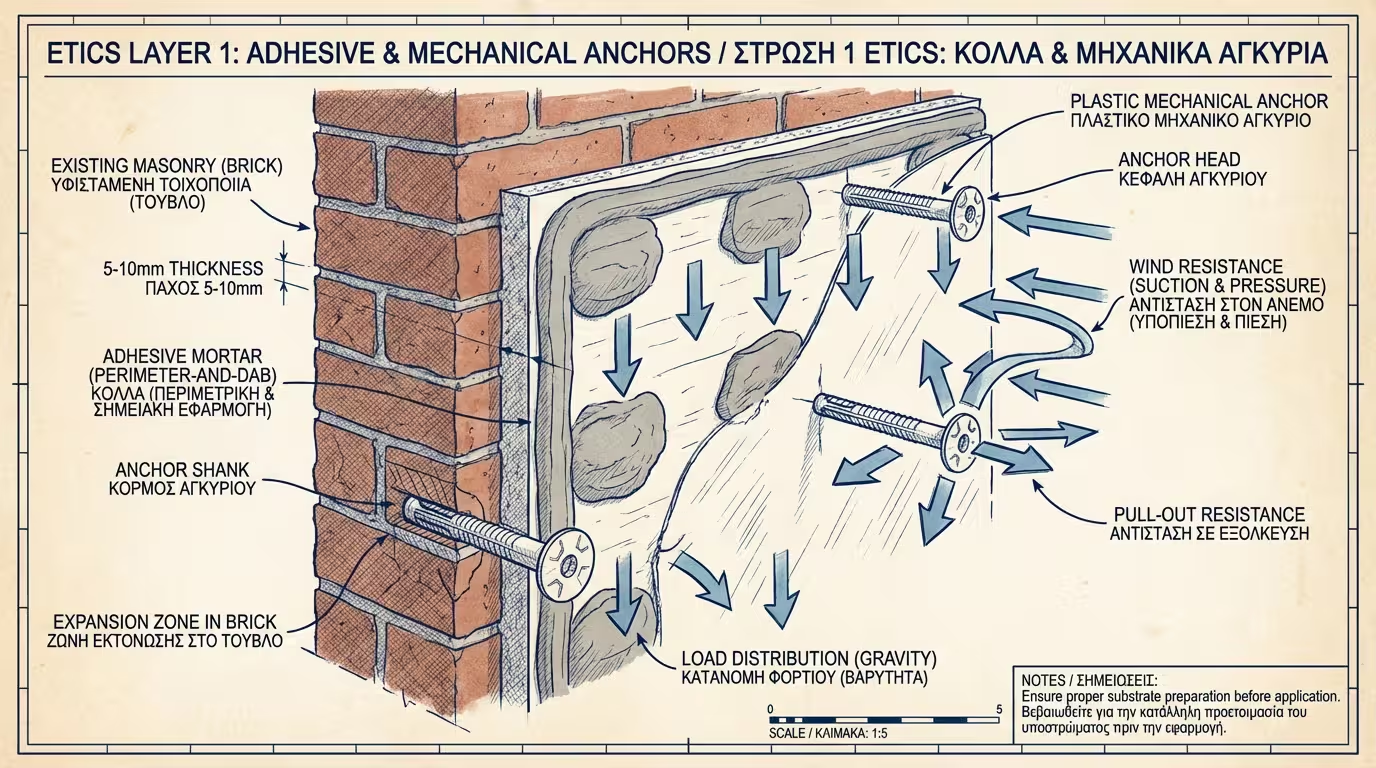
The special fiber-reinforced adhesive is applied either around the perimeter of the board with 3-4 "dabs" in the center, or over its entire surface with a notched trowel (if the wall is perfectly flat).
It must ensure that the weight of the system will not "sag". Combined with the plastic anchors (mechanical fastening), it keeps the system steady even in strong winds or earthquakes.
The insulation material, which is responsible for the energy upgrade of the house, is glued onto the adhesive. There are several options here:
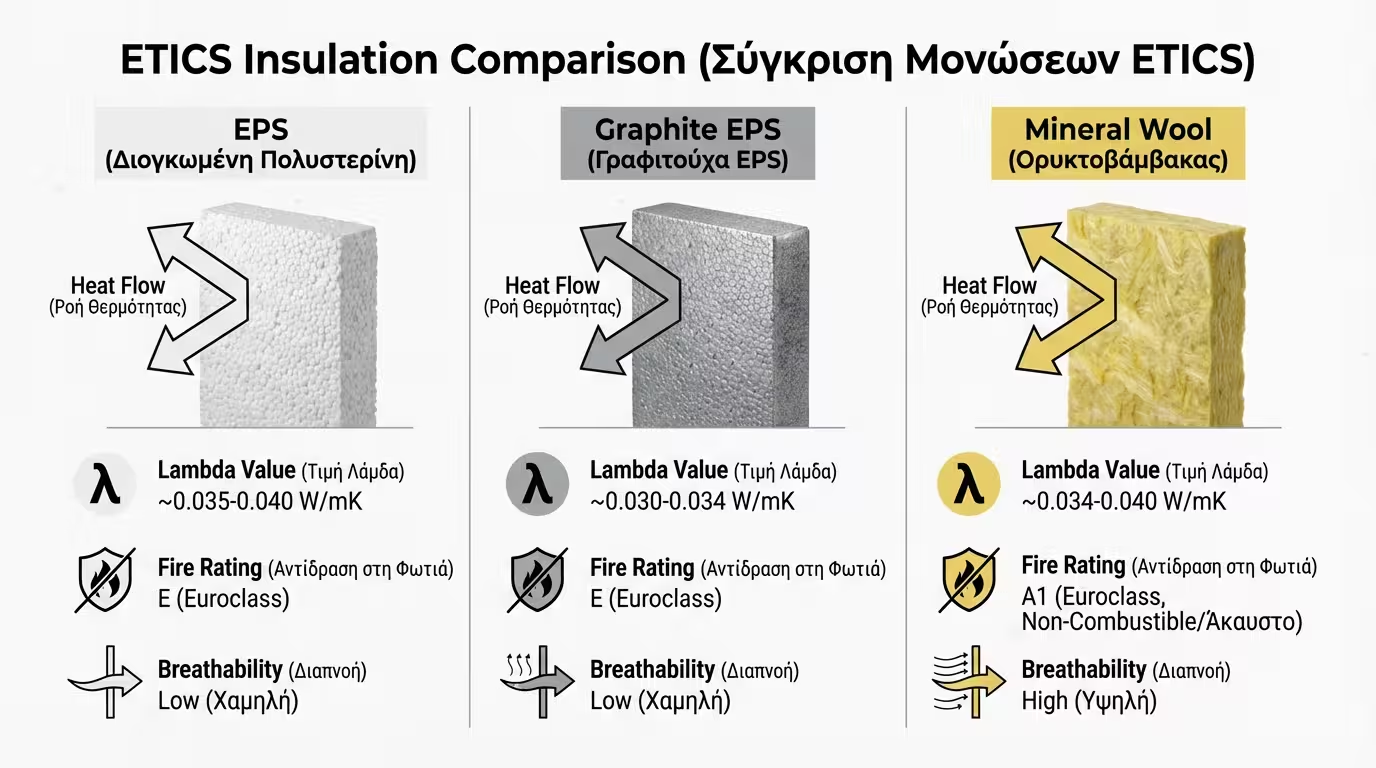
The familiar white or graphite polystyrene. It is the most widespread and economical solution.
It has resistance to moisture, but is usually placed only low down in the high-humidity zone (at the base of the wall).
Chosen for top fire protection and maximum breathability of the wall.
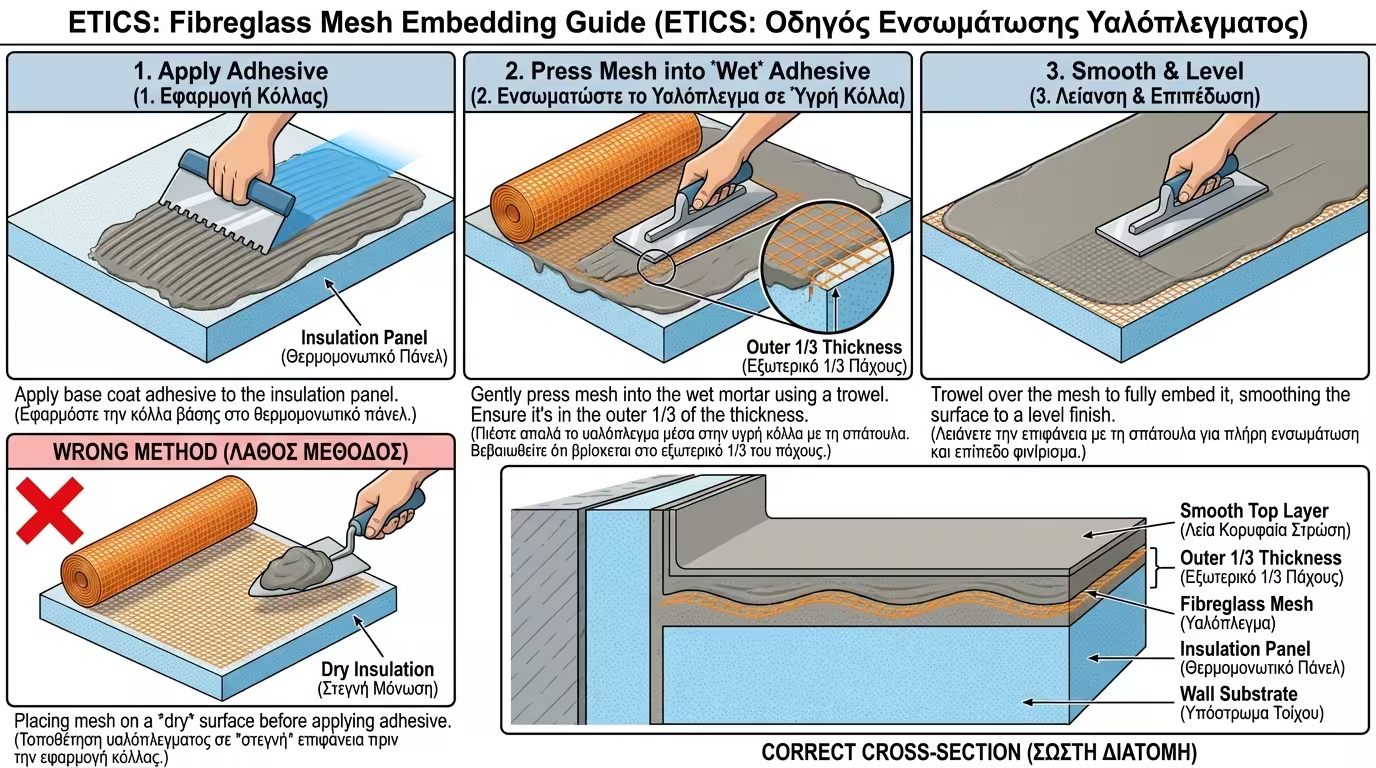
This is the most critical construction stage. On top of the insulation material, a layer of fiber-reinforced adhesive (base coat) is applied and an alkali-resistant fibreglass mesh is embedded inside it.
The insulation material is soft. If this layer didn't exist, any impact would puncture the wall. The mesh absorbs all mechanical stresses and prevents cracks.
Attention: The mesh must be embedded within the adhesive (in the middle or in the outer 1/3 of its thickness), not simply laid on top of the polystyrene!
After the base coat dries, the surface is coated with a special, tinted primer.
Its role: It regulates the wall's absorbency so that the finish render dries evenly. At the same time, because it is tinted in the same shade as the final render, it ensures that "grey" shadows won't show from underneath if the finish render is slightly scratched.
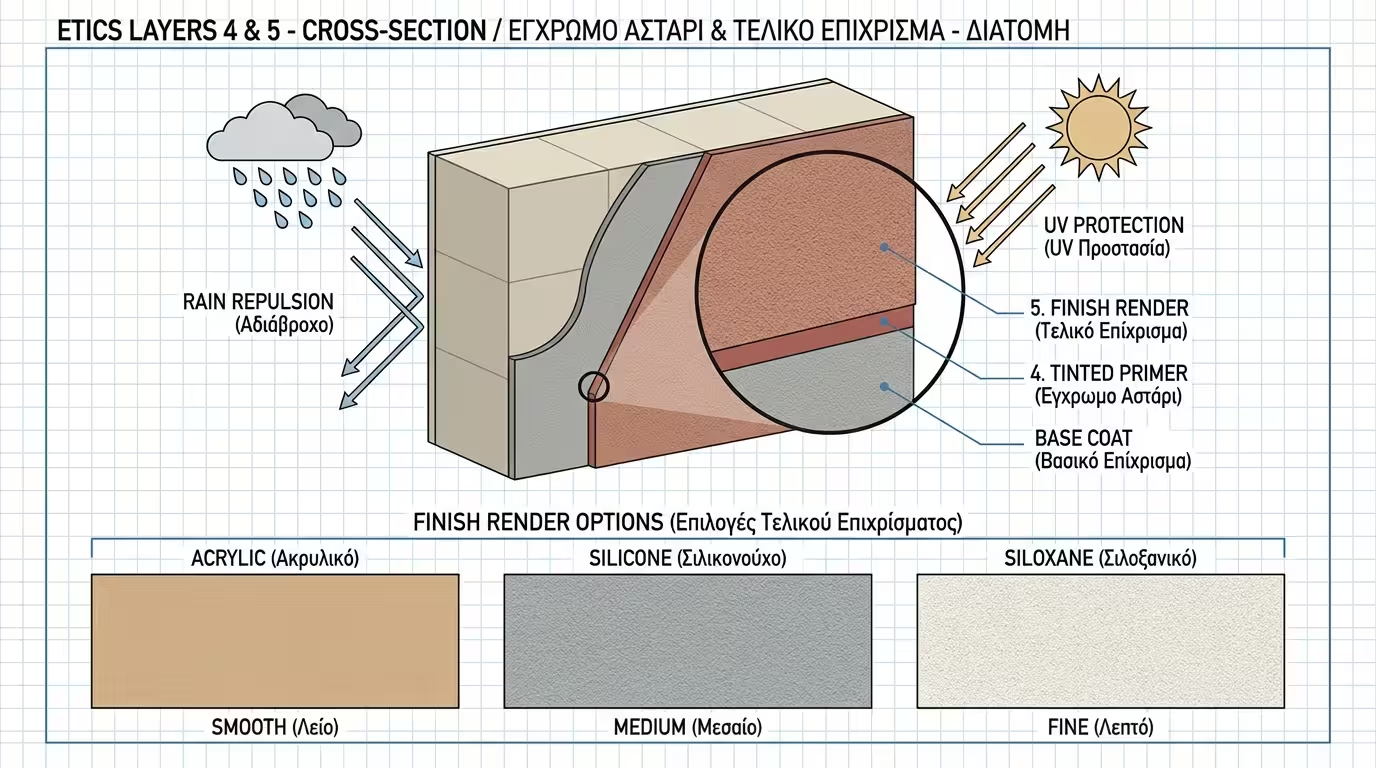
The outer skin of the building. It is usually pasty (ready-mixed in buckets) and colored in its mass.
It protects the whole system from rain (hydrophobicity), UV radiation, and pollutants, while simultaneously giving the final architectural texture (e.g. scratch or rustic finish).
| Application Order | Material / Layer | Average Layer Thickness | Basic Function |
|---|---|---|---|
| 1st | Adhesive & Anchors | 5 - 10 mm | Fixing to the existing wall |
| 2nd | Thermal Insulation Material | 50 - 100+ mm | Energy insulation (EPS, Mineral Wool) |
| 3rd | Base Coat & Mesh | 3 - 5 mm | Anti-crack protection & Hardness |
| 4th | Tinted Primer | < 1 mm | Adhesion bridge & Uniformity |
| 5th | Finish Render | 1.0 - 2.5 mm | Waterproofing & Aesthetics |
The Chain Rule (Mix & Match): The biggest mistake in the market is "marrying" materials from different companies to reduce costs (e.g. one brand for adhesive, another for render). ETICS systems are strictly certified as a whole (CE / ETAG 004). If you mix materials and the system cracks, no company will give you a guarantee.
Huge stresses develop at the corners of windows and doors. Extra small, diagonal pieces of mesh ("swallows") must be placed there, otherwise in a few months you will see cracks starting from the corners of the frame.
As mentioned, the mesh is not nailed onto the polystyrene to be smeared with adhesive later. The correct method is: we apply adhesive -> we submerge the mesh inside it -> we smooth it out.
The application of the finish render must never be done under the hot, midday sun. The render will "pull" (dry) abruptly, there won't be enough time to work it properly with the float, and it will show intense shadows and seams (joints).
ETICS isn't «polystyrene and paint» - it's a 5-layer certified system. Correct execution of every layer guarantees longevity and energy performance.
Return to category.
Go to categoryReturn to the central guide.
Go to guide