Material Compatibility in Listed Buildings: Why Cement Must Be Avoided
Renovating a neoclassical mansion, a listed building in a historic
centre, or an old stone house is a project fraught with challenges. The
biggest and most irreparable mistake is using the wrong materials -
applied by crews who only know modern construction methods.
The rule of restoration architects is unforgiving: Modern Portland cement is strictly forbidden in historic buildings. Using it is not merely an "aesthetic" intervention - it is a chemical and
mechanical death sentence for the old wall. Let's look at the 3 reasons cement
destroys traditional buildings, and what the correct alternatives are.
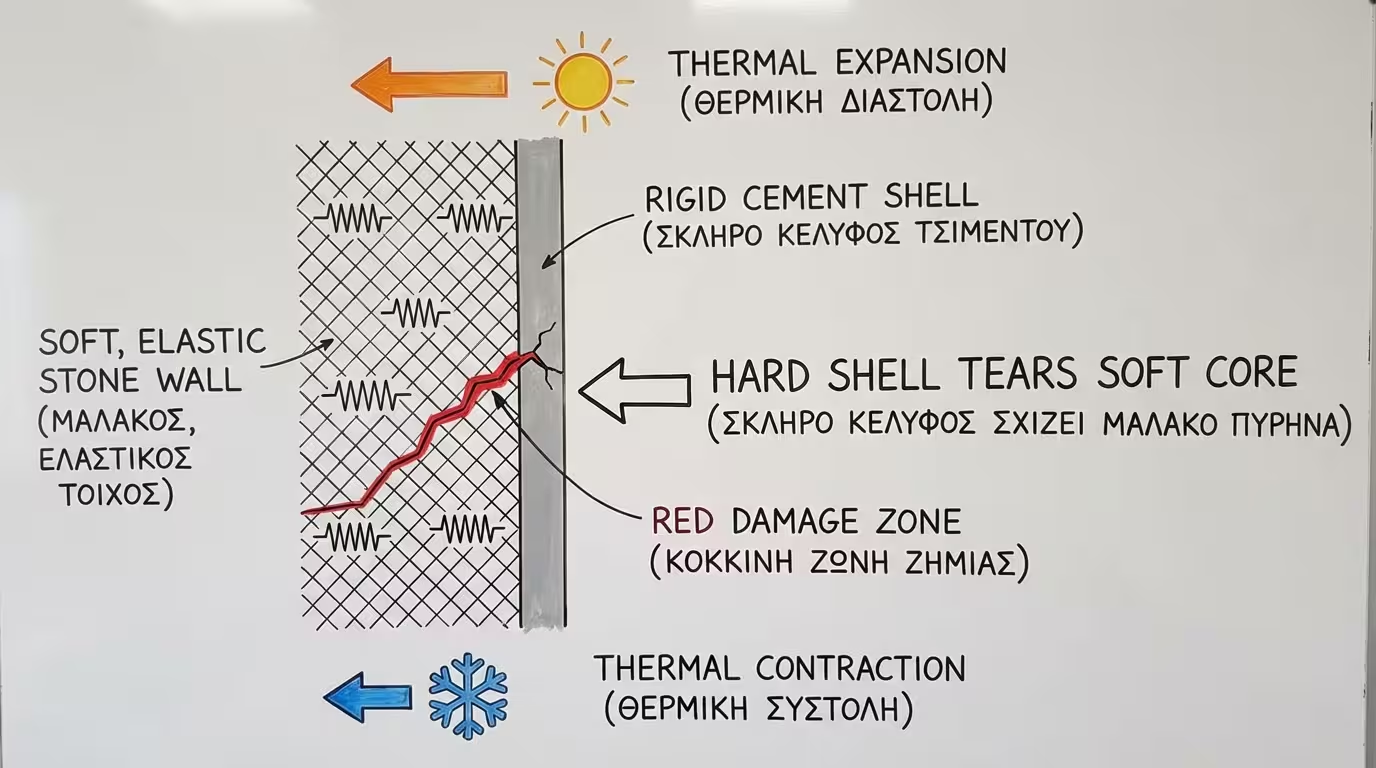
1. Mechanical Incompatibility (Hard "Tears" Soft)
There is a fundamental law in construction: the final render (the
coating) must function as a "sacrificial layer." It must always be
softer and more elastic than the wall it protects, so that if an
earthquake or stress occurs, the render cracks - not the structural
fabric.
The problem with cement: Modern cement, once cured, becomes
excessively hard and rigid. Old buildings, made from stone, clay, brick
and lime, are "soft" and highly elastic (they move constantly).
The result: When you "dress" a flexible, soft wall with
a rigid cement shell, thermal expansions and contractions clash. The cement,
in its refusal to yield, "tears" the surface of the old stone or brick,
destroying the wall's fabric from inside out.
2. Breathability Suffocation (The "Drowning" of the Building)
As we discussed in the previous article, historic buildings were
constructed without plastic damp-proof membranes in the foundations.
They managed ground moisture by breathing through their porous joints.
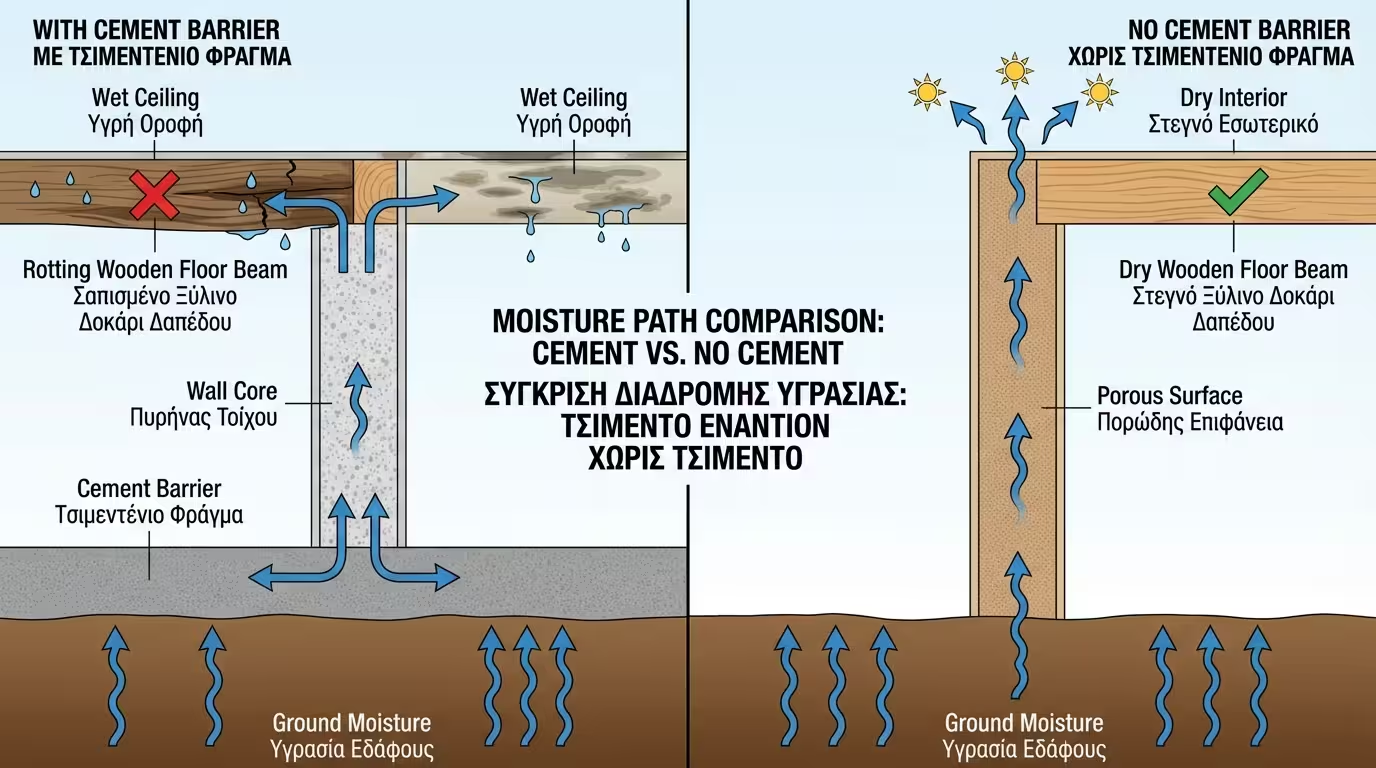
The problem with cement: Strong cement renders are practically
waterproof and have near-zero breathability (they trap water vapour).
The result: The moisture rising from the ground becomes
trapped behind the cement render. Unable to evaporate at the lower level,
it begins to "climb" ever higher inside the wall, seeking an exit - rotting
timber floors and beams and dissolving the old bedding mortars in the
masonry core.
3. Chemical Contamination (The Salt Bomb)
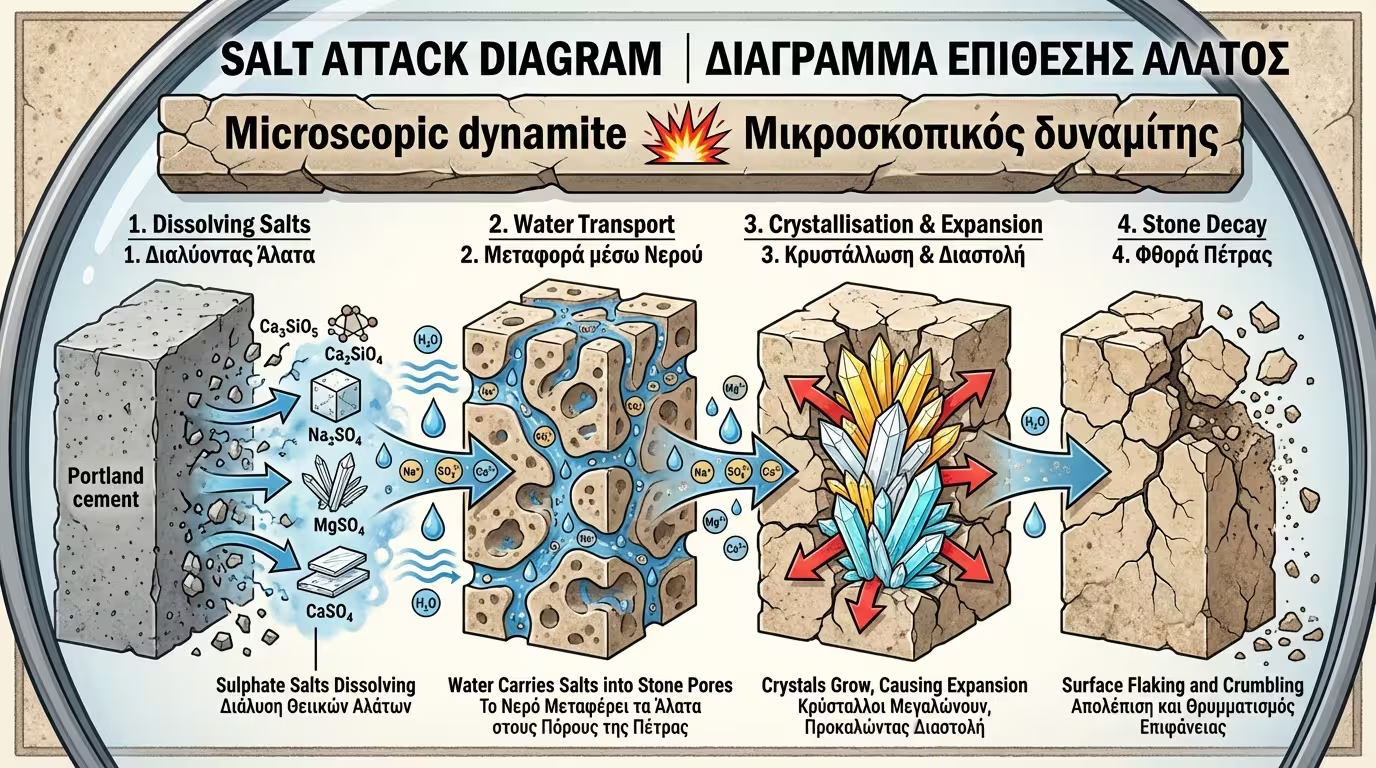
This is the most invisible and insidious enemy. Modern Portland cement
inherently contains large quantities of soluble salts (such
as sulphates).
When rainwater or moisture penetrates even slightly through the
cement render, it dissolves these salts and transports them into the
historic wall.
When the wall dries, these sulphate salts crystallise (expand)
inside the pores of the ancient stone or clay. This expansion acts
like microscopic dynamite, causing spalling and the gradual
pulverisation of the historic material.
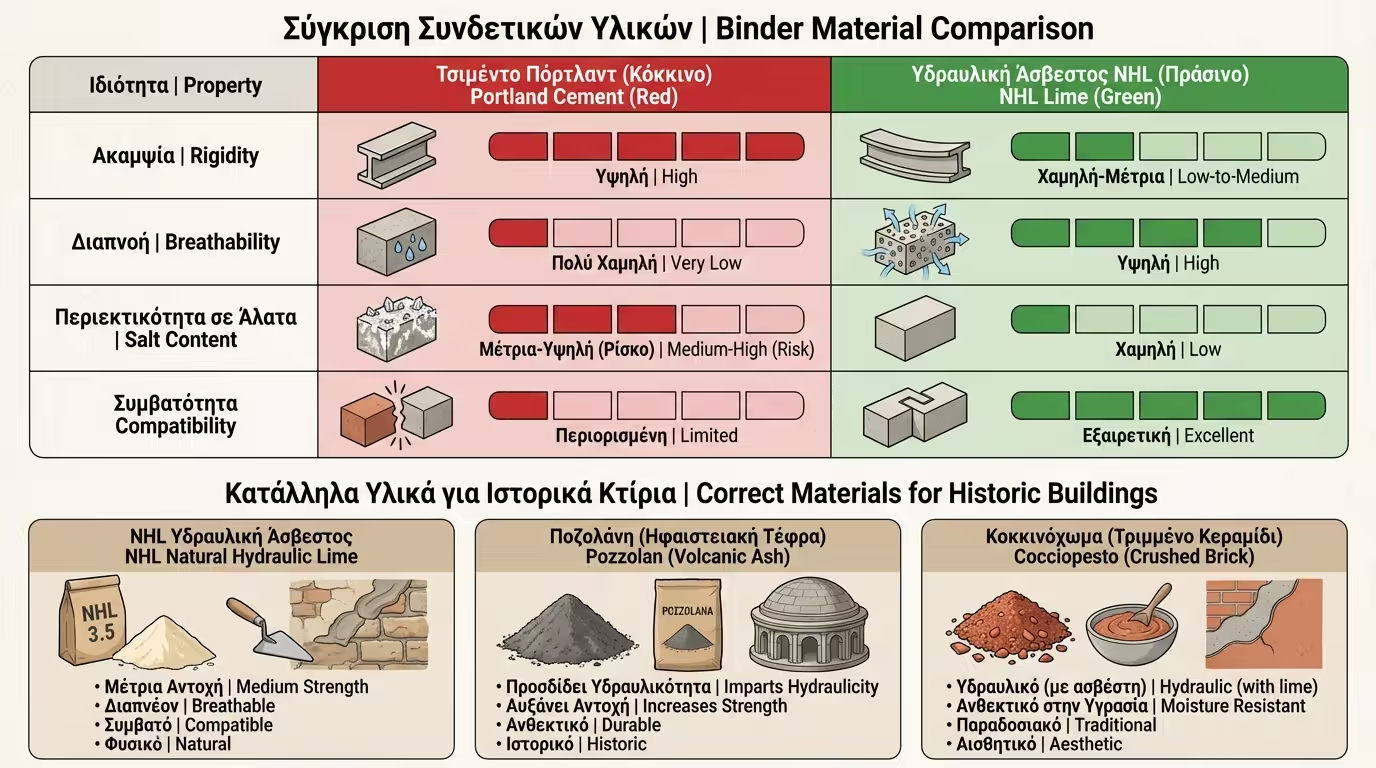
Comparison: Cement vs Traditional Materials
For a listed building to survive, the restoration materials must be
compatible with the originals. See the dramatic difference:
Property / Behaviour
Modern Cement (Portland)
Natural Hydraulic Lime (NHL)
Mechanical Strength
Extremely high (Rigid)
Medium (Elastic, follows the wall)
Breathability (Vapour Transfer)
Minimal (Traps moisture)
Excellent (Acts as a filter)
Salt Content
High (Causes damage)
Near Zero
Compatibility with Stone/Brick
Destructive
Perfectly Compatible
What Are the Correct Restoration Materials?
Heritage authorities and conservation engineers now require the
exclusive use of compatible restoration mortars. These
are based on technologies that are centuries old:
🏛️ Natural Hydraulic Lime (NHL)
The ultimate cement substitute. It "petrifies" with the help of
water (like cement), but remains highly breathable and elastic. It
comes in several classes (NHL 2, 3.5, 5) depending on the hardness
required by the project.
🌋 Pozzolan (Santorini Earth)
Volcanic ash, which is mixed with lime. It was the "cement" of the
ancient Greeks and Romans, responsible for buildings that have stood
for 2,000 years (such as the Pantheon in Rome).
🧱 Cocciopesto (Crushed Brick)
A mix of ground, fired brick (tile) and lime. It offers remarkable
moisture resistance, breathability and a unique earthy colour that
often requires no painting at all.
Maintaining a historic building is not merely a technical project. It is
an act of respect towards the materials that have kept it standing for
generations.