
Thermal Cracks (Expansion-Contraction): How They Affect Exposed Façades

Have you ever noticed cracks on your home's external walls that look large in winter and almost vanish in summer? It's not an optical illusion, but the laws of physics in action.

The external render of a building lives in an extreme environment. At midday in summer it "bakes" under the sun, while on winter nights it freezes. These extreme temperature swings force materials to grow (expansion) and shrink (contraction). When the render cannot follow this "breathing" of the building, it "bursts", creating what are known as thermal cracks.

Why Render Can't Withstand Thermal Stress

Building materials (concrete, brick, render) move constantly. The problem arises when different materials heat up and expand at different rates. The 3 main reasons why render succumbs to these stresses are:

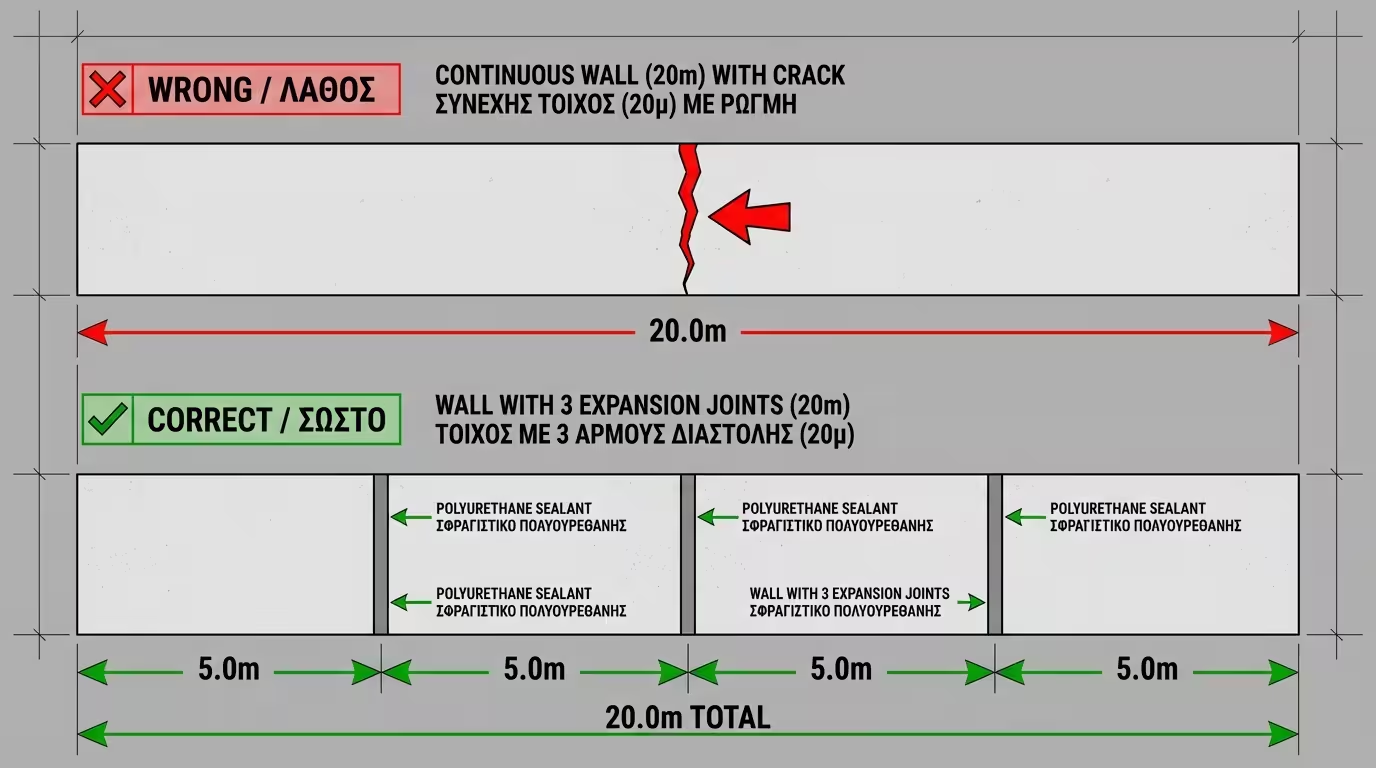
20m boundary wall without expansion joints cracks vs with sealed joints

The 3 Main Reasons

Thermal cracks do not appear randomly. They almost always follow the building's "weak points" - where the materials change or where technical preventive measures are missing.

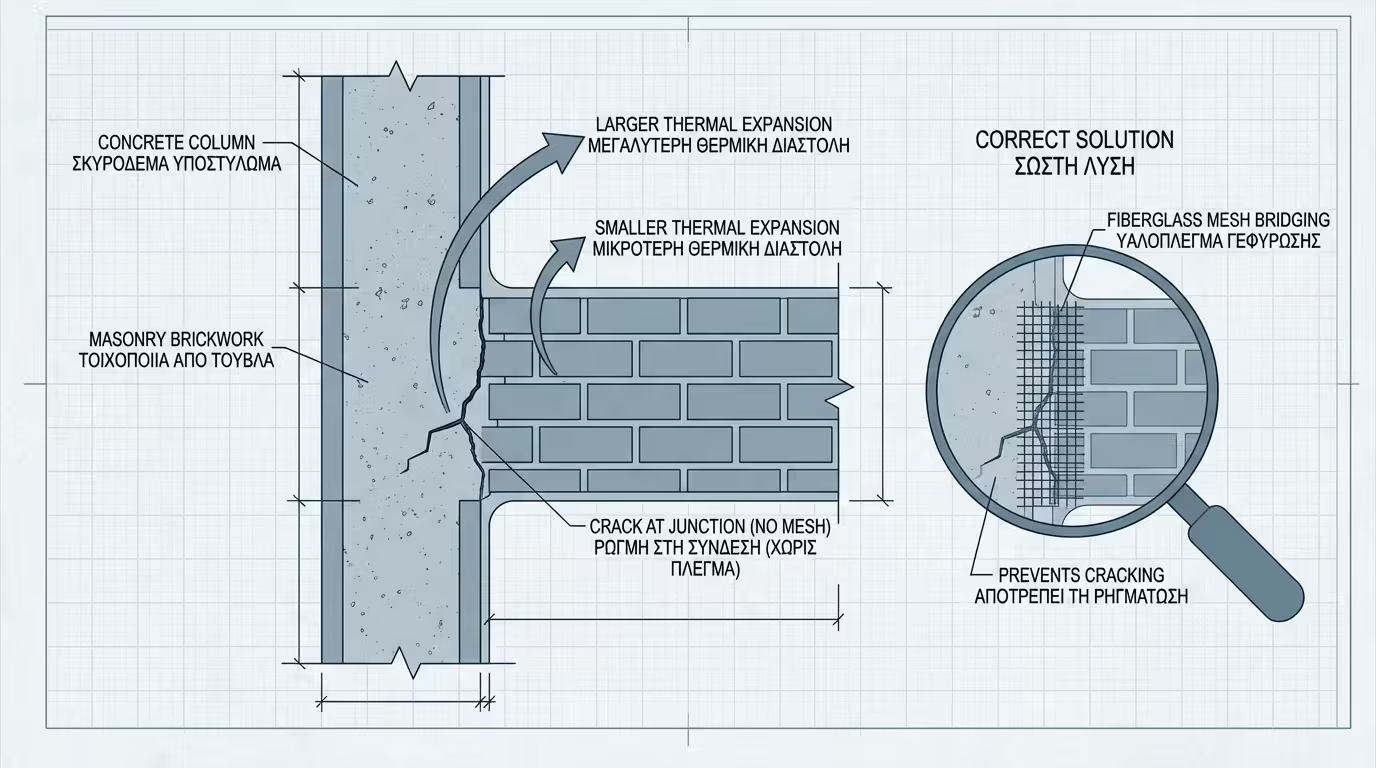
Wall cross-section: concrete column meets brick, different expansion coefficients, crack at junction

1. Missing Expansion Joints

When we have a huge, single external wall (e.g. a 20-metre boundary wall or the side façade of an apartment block) without any "cuts" whatsoever, the overall expansion of the material in summer is enormous. If the engineer or plasterer has not left artificial expansion joints (small, elastic gaps every few metres), the wall will create these joints on its own... by cracking the render vertically.
2. Dark Colours (The Biggest Enemy)

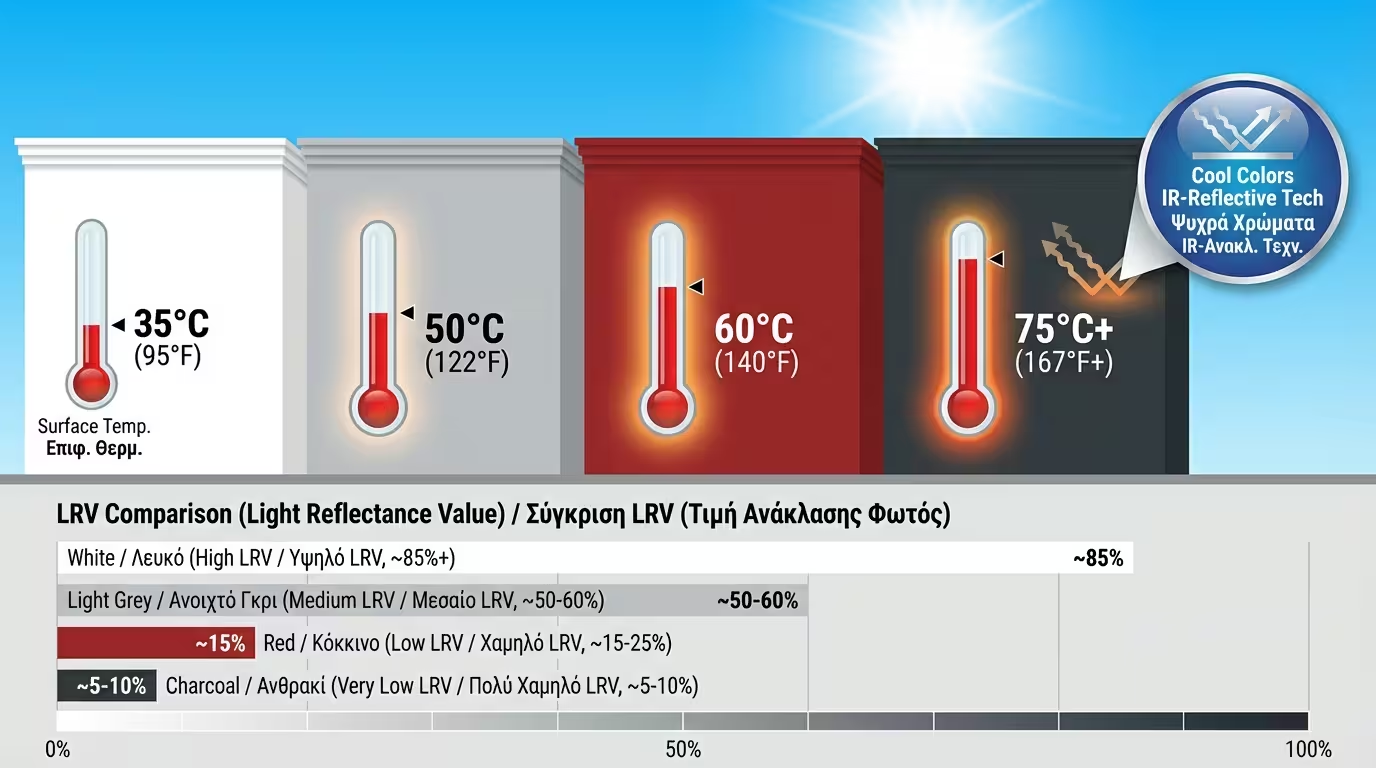
White and light-coloured houses reflect solar radiation. In contrast, houses painted in dark grey, brown or black act like solar water heaters. A white façade in summer might reach 35°C - 40°C. A dark anthracite façade on the same day can exceed 75°C! This extreme heat accumulation causes violent expansions and contractions, quickly destroying the traditional, rigid cement render.

3. Different Substrate Materials

Where the brick meets the concrete column, we have two materials with completely different coefficients of thermal expansion. When they heat up, one "pulls" the other. If the fibreglass mesh has not been properly placed at their junction during plastering, a thermal crack is inevitable.

Comparison: Light Reflectance and Surface Temperature

To understand the thermal burden placed on render by paint colour, look at the following table based on the Light Reflectance Value (LRV):

4 facades white to charcoal with thermometers, Cool Colors badge on the dark one
Façade Shade Light Reflectance Value (LRV) Heat Absorption Thermal Crack Risk
White / Off-White 70% - 90% Very Low Minimal
Light Grey / Beige 40% - 60% Medium Low
Vivid Red / Blue 20% - 30% High Significant
Dark Grey / Anthracite < 20% Extreme Very High (Requires special materials)

How to Prevent and Treat Thermal Cracks

Prevention is always more effective, but there is also correct remediation.

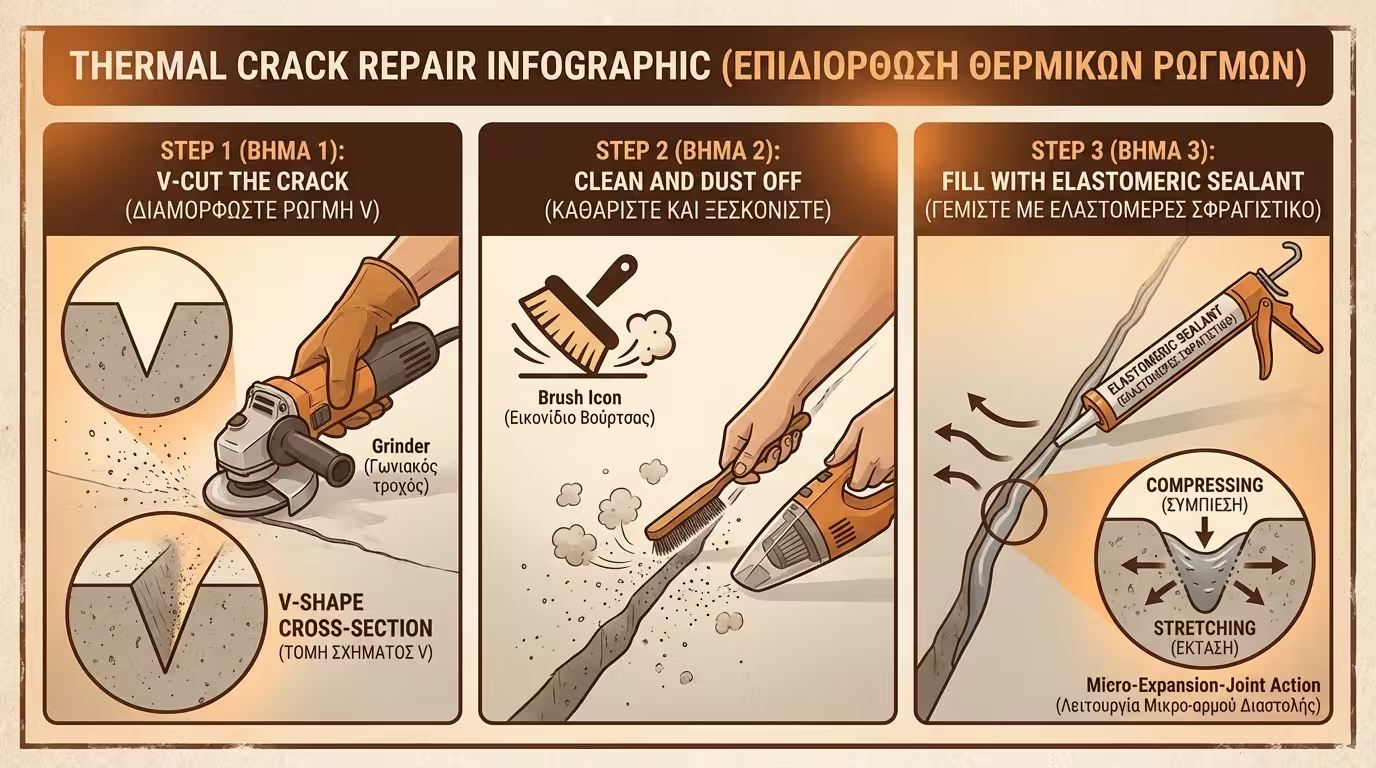
3-step thermal crack repair: V-cut with grinder, clean and dust, fill with elastomeric sealant
The Golden Rule of Colours (TSR / LRV): If you are applying an External Thermal Insulation Composite System (ETICS), manufacturers explicitly prohibit the use of finishing renders with an LRV of less than 25%. If the customer insists on a dark colour (e.g. anthracite), you must use special renders and paints that feature Cool Colors technology (high Total Solar Reflectance - TSR). These materials reflect infrared radiation even though they look dark to the eye.

1. Choose Elastic Renders

Traditional cement render is "stone" (rigid). For external façades, prefer ready-mixed, fibre-reinforced renders. Even better, thermal insulation systems with acrylic or silicone paste renders offer immense elasticity, allowing the building to expand without the surface "bursting".

2. Do Not Close the Joints

If the building has structural expansion joints (a gap between two slabs or buildings), it is forbidden to fill them with render. The joint must remain clean and be sealed with a special elastic polyurethane mastic that compresses and stretches.

3. Proper Repair

If the crack has already formed, simple filling is a waste of time (it will reopen the following season). The crack must be opened slightly into a "V" shape, cleaned and filled with an elastomeric material (e.g. acrylic mastic) that will henceforth function as a "micro" expansion joint.

Related Articles

Preview