Small Openings (up to 2.50 m² - 3.00 m²)
They are not deducted at all from the wall measurement. The wall is measured as if it were a "sheet" (without a hole). The air (the gap) you pay for covers the extra work for the reveals.
When the time for payment comes in a plastering project, the conversation usually starts with the same question from the owner's side: "Why am I being charged for the surface of the window, since no plaster went in there?"
The calculation of square meters in construction does not always follow the simple geometry we learned in school. The reason is that the workers' prices do not depend only on the quantity of material, but mainly on the time and difficulty of the task. Let's look at the basic measurement rules that apply in the Greek market, so you can budget without unpleasant surprises.
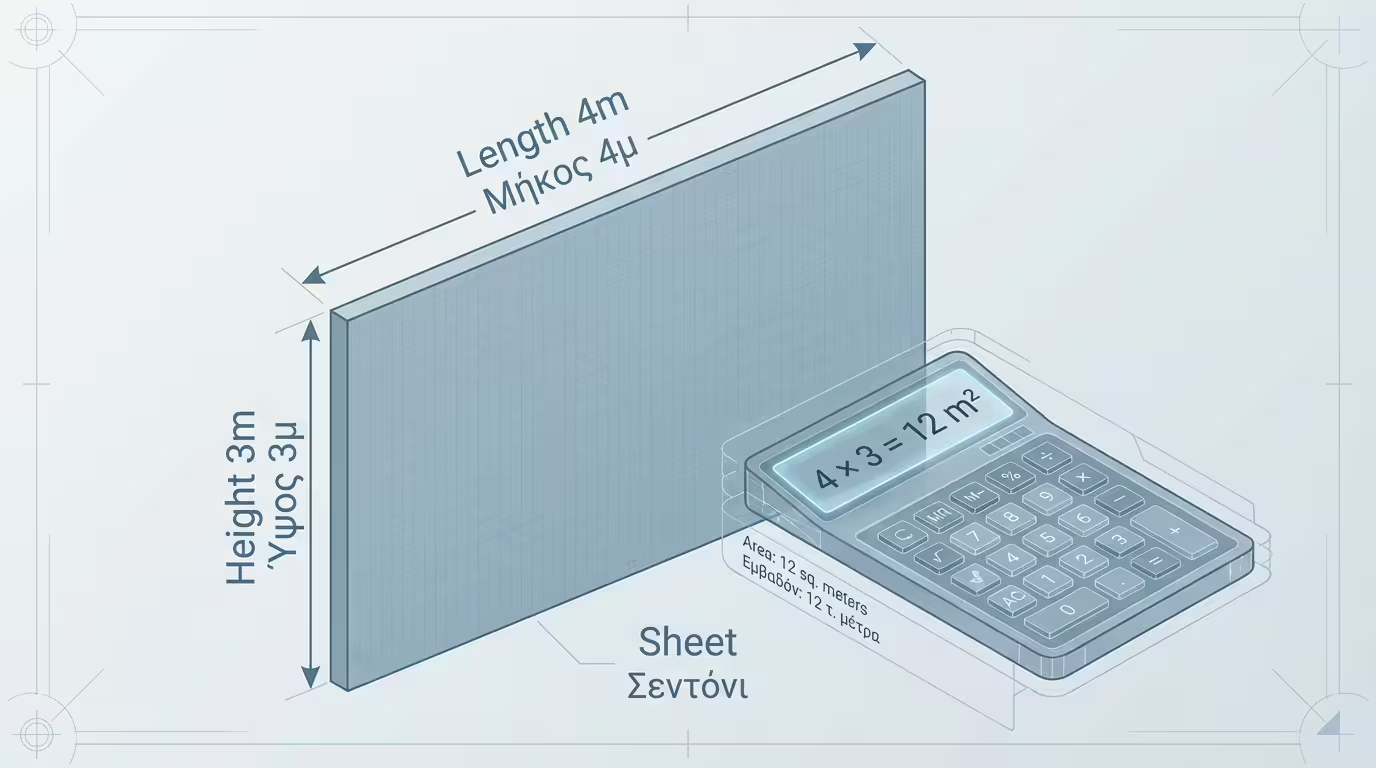
When a wall is continuous, with absolutely no windows, doors or recesses, things are very simple. In building slang, this blind wall is called a "sheet".
Here the complexity begins. What happens when there is a balcony door or a window on the wall? The gap is not plastered, so logically it should be deducted from the wall's square meters, right? Wrong.
Turning the plaster all the way around the window (the so-called reveals) requires the placement of corner beads, meticulous leveling and extreme attention. A craftsman spends more time "turning" a small window reveal than throwing mud on 5 square meters of straight wall.
To compensate for this difficulty, contractors apply the following rules (based on official technical specifications):
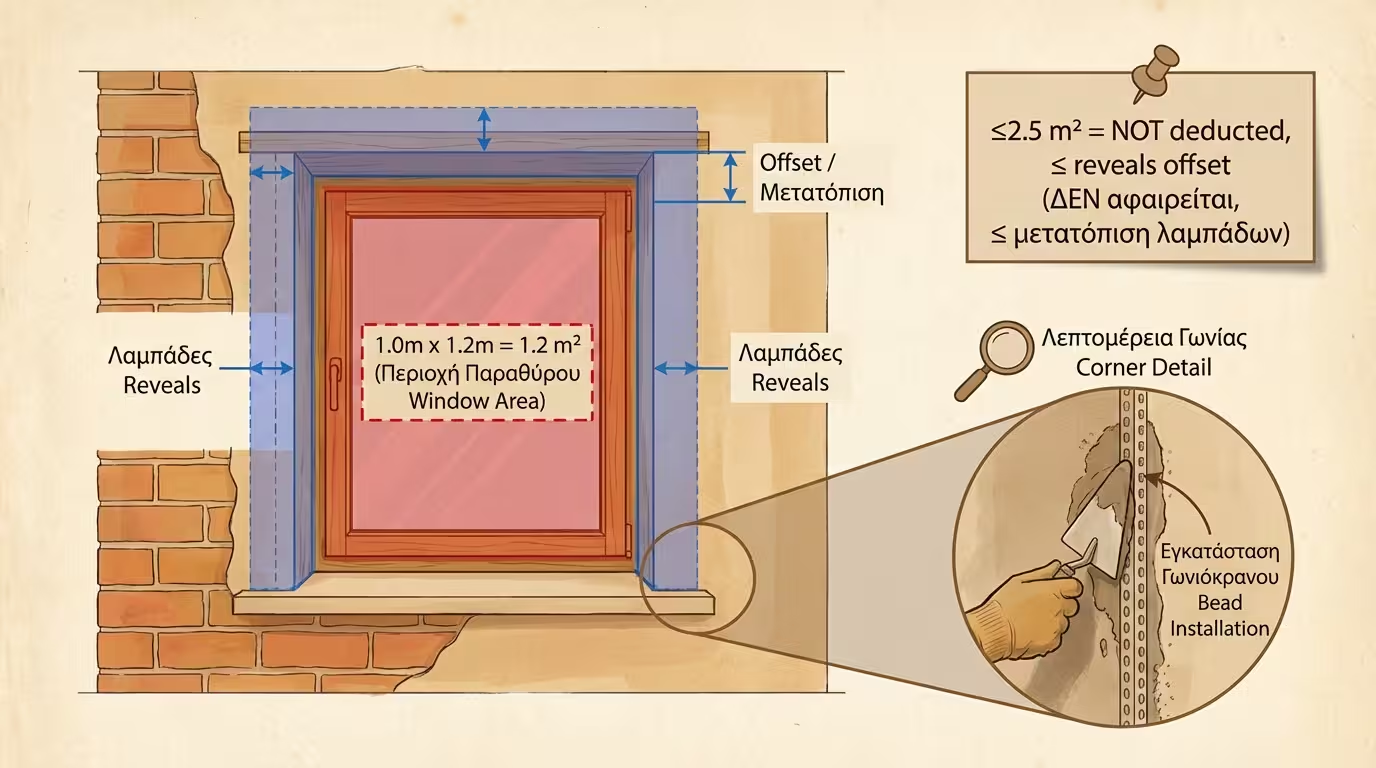
They are not deducted at all from the wall measurement. The wall is measured as if it were a "sheet" (without a hole). The air (the gap) you pay for covers the extra work for the reveals.
In large glass facades or garage doors, the gap is deducted (entirely or 50% of it, depending on the agreement). However, in this case, the reveals (the turning of the wall) are measured separately and are charged by the linear meter.
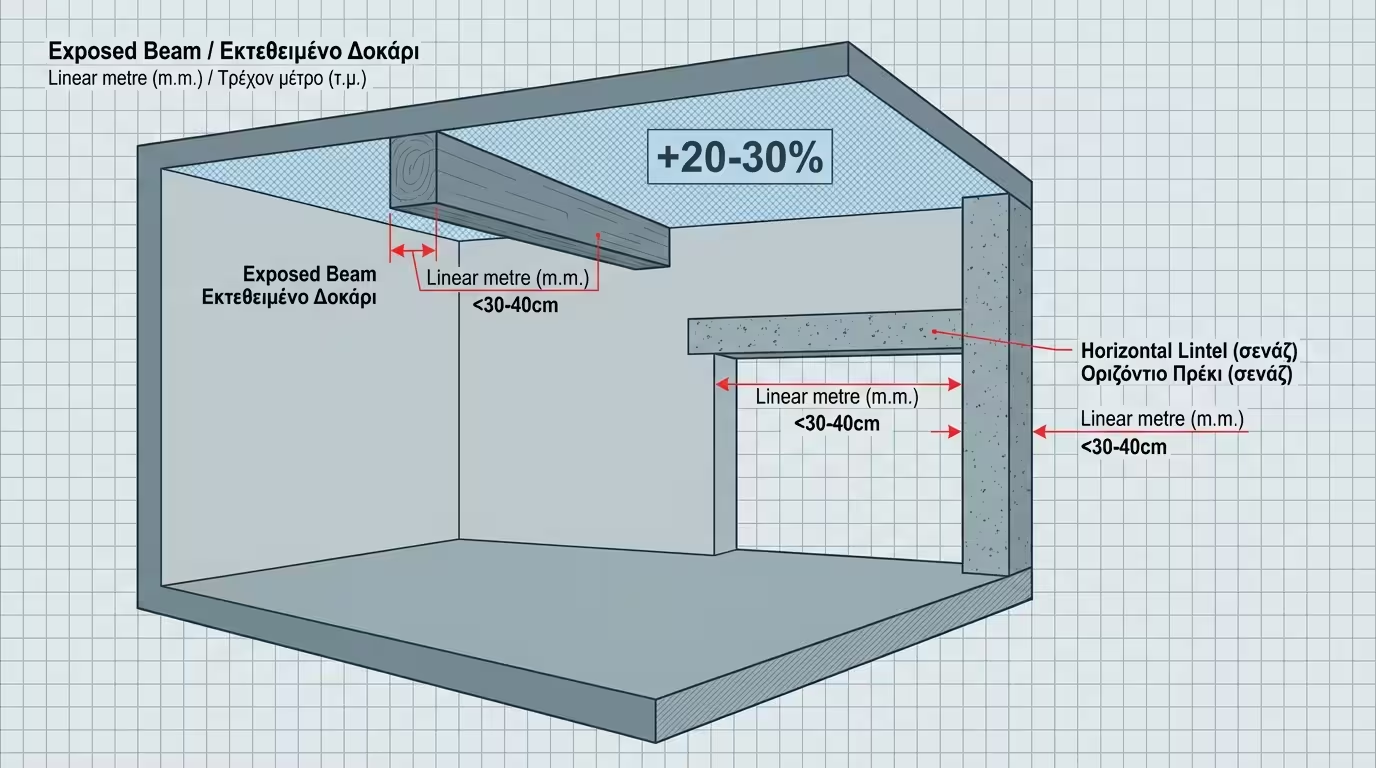
Often there are elements that protrude from the wall, such as exposed beams on the ceiling, independent columns or lintels (the horizontal concrete zones in the middle of the brick wall).
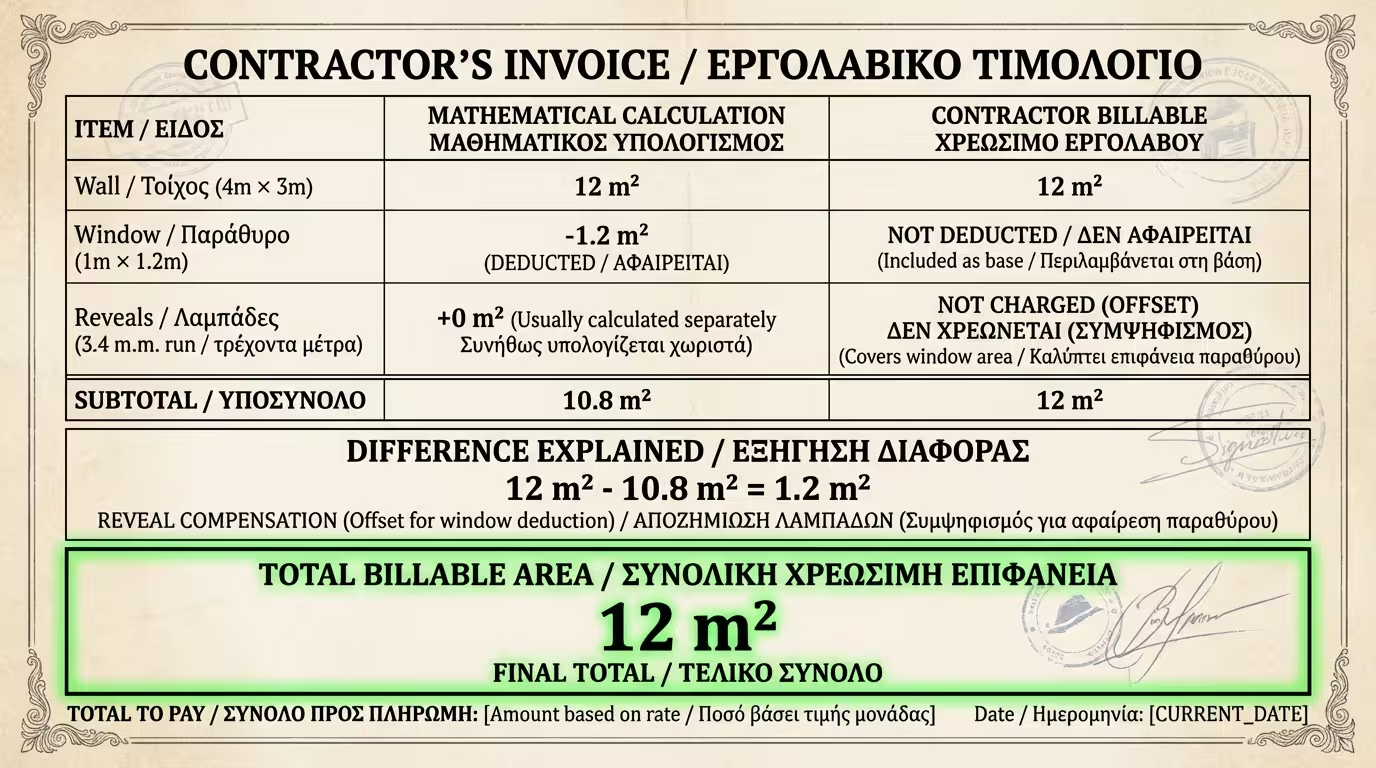
Let's look at a room wall with dimensions: Length 4.00m, Height 3.00m. In the middle it has a window 1.00m x 1.20m.
| Element | Mathematical Calculation | Contractor's Measurement | Justification |
|---|---|---|---|
| Total Wall | 4.00m x 3.00m = 12.00 m² | 12.00 m² | - |
| Window (Gap) | 1.00m x 1.20m = 1.20 m² | Not deducted | It is smaller than 2.50 m² |
| Reveals (Returns) | 1.00 + 1.20 + 1.20 = 3.40 linear meters | Not charged extra | Their cost was offset with the window gap |
| FINAL TOTAL | 10.80 m² (Net) | 12.00 m² (Billable) | The difference of 1.2m² covers the corners of the window |
The Golden Rule: The biggest rule in construction is that "agreements are made before the first trowel falls". Before you close the deal with the crew, ask them to explain to you in writing the way they measure the openings (up to how many square meters they "close" them and from how many they deduct them).
If you agree to pay "by the square meter" (as a contract), clarify whether the price concerns only the labor (the day rates) or if it also includes the materials (sand, cement, corner beads). If the materials are yours, you pay exactly for how much material is consumed, so the window gap actually saves you money from the bags.
In external projects, clarify whether the erection, rental and dismantling of the scaffolding is included in the price per square meter, or if it is a separate, flat-rate charge.
Return to category.
Go to categoryReturn to the central guide.
Go to guide