Commercial Kitchen Ventilation (Catering): Filters, Odour Control & Fire
Suppression
Ventilating a commercial kitchen (restaurant, hotel, canteen,
fast food) has nothing in common with a residential kitchen. The quantities
of grease, smoke, heat and odours are ten times greater -
and with them, the fire risks.
An average Greek evening taverna (80-100 covers) may cook 200+ dishes/hour on grill, in oil, fryer and pan. The amount of airborne grease multiplies
exponentially. Without a proper exhaust system, the kitchen becomes an explosive device.
In this guide you will learn the rules for commercial kitchen
ventilation, grease filters, fire suppression systems, proper odour control, and the critical role
of Makeup Air.
1. Hood Types & Regulations
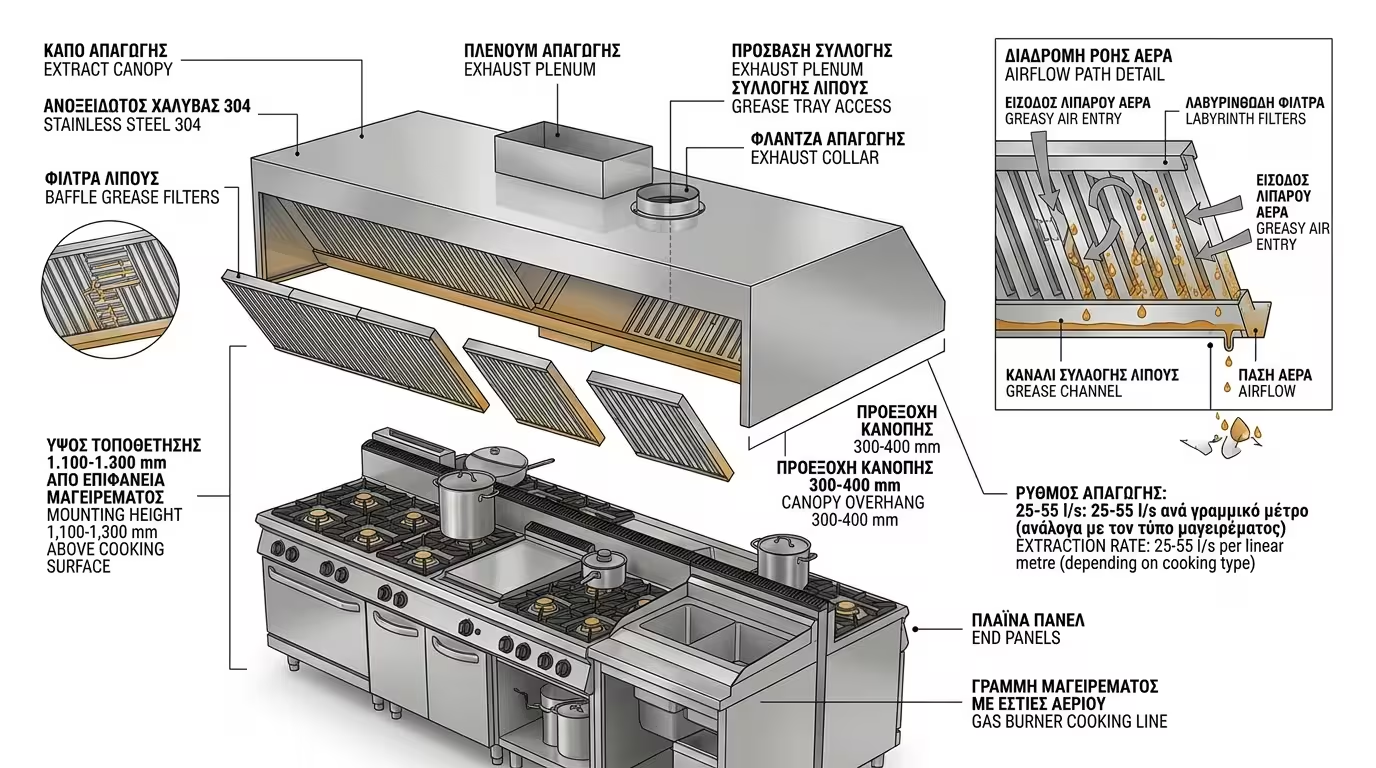
The "hood" (canopy) is not simply a cover above the cooktops. In a
commercial setting, the hood is an engineered system designed
to capture, filter and discharge enormous volumes of hot, greasy air.
📋 Wall-mounted
The most common layout: the canopy sits against the wall behind the
cooking line. It overhangs 30-40 cm beyond the cooking
line. Its performance benefits from the wall, which prevents smoke "escape".
Standard DIN 18869: minimum height 2,000 mm from the
floor.
🏝️ Island hood
The canopy hangs in the centre of the kitchen, with no
wall behind. This type needs 20-30% greater extraction rate compared to wall-mounted, due to air currents from every side. Cost:
significantly higher.
🔢 The airflow rule
Extraction rate is calculated based on canopy length × btu/h of appliances. A general rule: 25-30 l/s per linear metre of hood
for light cooking, 40-55 l/s/m for heavy (grill, wok,
fryer). For a typical 3-metre kitchen: ~120-165 l/s = 430-590 m³/h.
⚙️ Capture & containment
The hood must "capture" the thermal plume before smoke
escapes into the space. The design includes side panels (end panels), K-factor, edge suction and correct mounting height (1,100-1,300
mm above the cooking surface).
2. Grease Filters & Fire Suppression: The Lifeline
Grease filters are not just filters - they are the first line of defence against fire. Grease that passes the filters and reaches the exhaust duct
becomes fuel. A spark, a flame, a flash fire - and
the duct fills with fire in seconds.
🔲 Baffle filters (washable)
The most widespread filters for commercial kitchens: stainless-steel sheets with a labyrinthine path. The greasy air changes direction multiple
times, and the heavier grease droplets stick to the surfaces.
Washed in a dishwasher or in special "barrels".
🧹 Cleaning schedule
Baffle filters must be washed every 1-2 weeks (in high-load
kitchens, weekly). The exhaust duct must be cleaned every 6-12 months by a specialist contractor. A dirty hood extracts nothing - and represents
a fire waiting to happen.
🔥 Automatic fire suppression
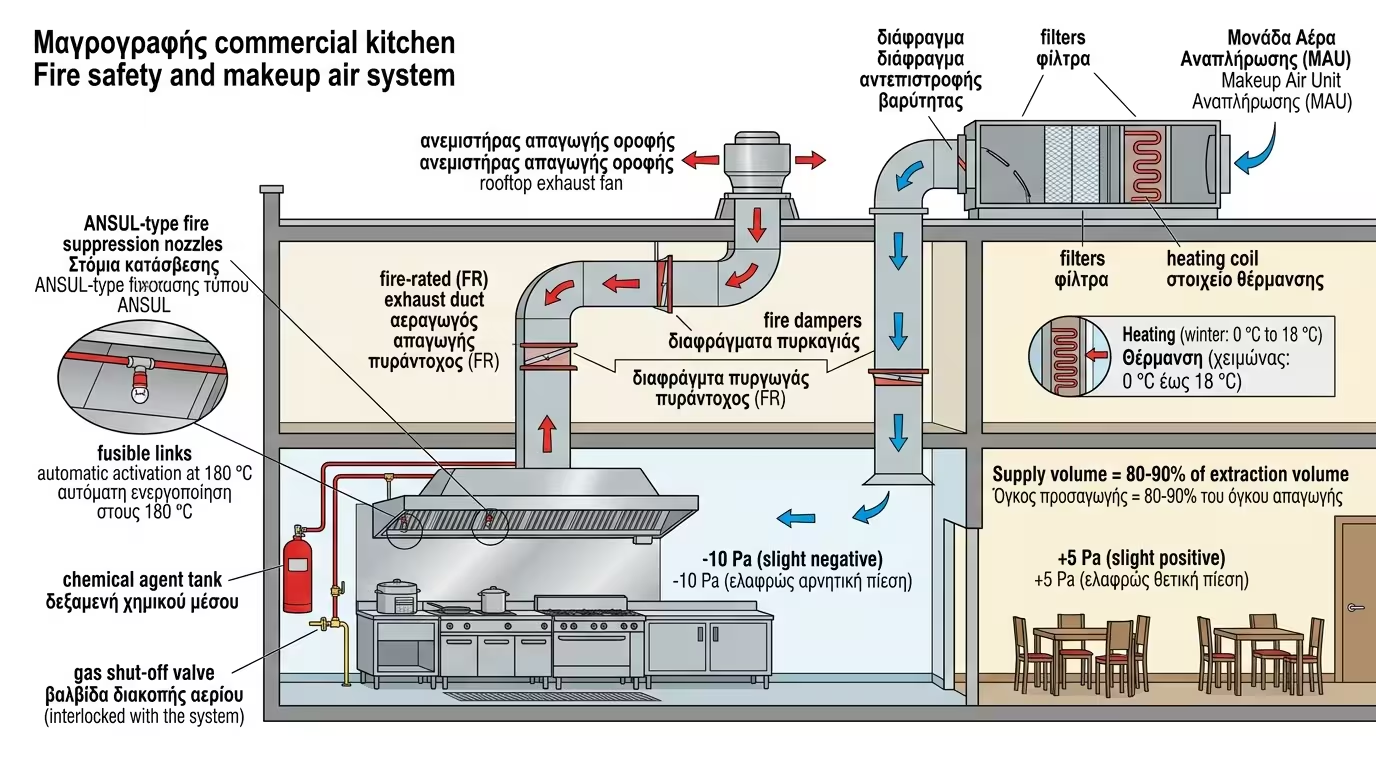
Every commercial hood (especially with grill or fryer) requires an automatic fire suppression system (ANSUL-type or equivalent). If the temperature in the duct exceeds
a threshold (~180°C), special nozzles spray a chemical agent that extinguishes the flame in seconds and simultaneously shuts off
gas to the appliances.
📋 Fire safety regulation
Fire safety regulations (P.D. 71/1988 + amendments) require exhaust
ducts with fire-rated enclosures (FR ducts), fire dampers
at every wall/floor penetration, and an automatic fire suppression system
in catering kitchens. Non-negotiable.
3. Makeup Air: The Kitchen's "Breathing"
A commercial hood extracts 3,000-8,000 m³/h of air. If
it is not replaced by fresh air, the kitchen becomes a vacuum: doors will
not open, gas burners extinguish, and dining-room odours get sucked in.
⚖️ Pressure balance
The rule: the kitchen must be under slight negative pressure relative to the dining room (so it does not "push" odours). Conversely,
the dining room must be under slight positive pressure. This is achieved with a Makeup Air Unit (MAU) supplying 80-90% of the extracted air as fresh air.
🌡️ Makeup Air Unit (MAU)
The MAU is a separate unit (like a small AHU) that draws
fresh air from outside, filters it, heats (or cools)
it and supplies it to the kitchen. Without an MAU, in winter freezing
air would rush in - chefs would work in arctic conditions.
📐 A worked example
Hood with extraction of 5,000 m³/h. MAU supplies 4,000 m³/h (80%). The kitchen is at slight negative pressure -10 Pa - enough so
odours never pass to the dining room, but not so
much as to snuff out the gas burner flames.
⚡ Heat recovery
In climates with cold winters (northern Greece), the MAU can be
equipped with a heat recovery exchanger. The warm
exhaust air pre-heats the incoming fresh air, saving 30-50% on heating energy. For a kitchen running 10-14 hours/day, the savings
are enormous.
4. Odour Control: Your Neighbours Must Not Cook With You
A restaurant in a densely populated urban area cannot simply "dump"
its greasy, smelly exhaust into the street. Neighbours, the municipality, the police and the Health Authority will be at
your door. The solution: odour-control systems in the exhaust
duct.
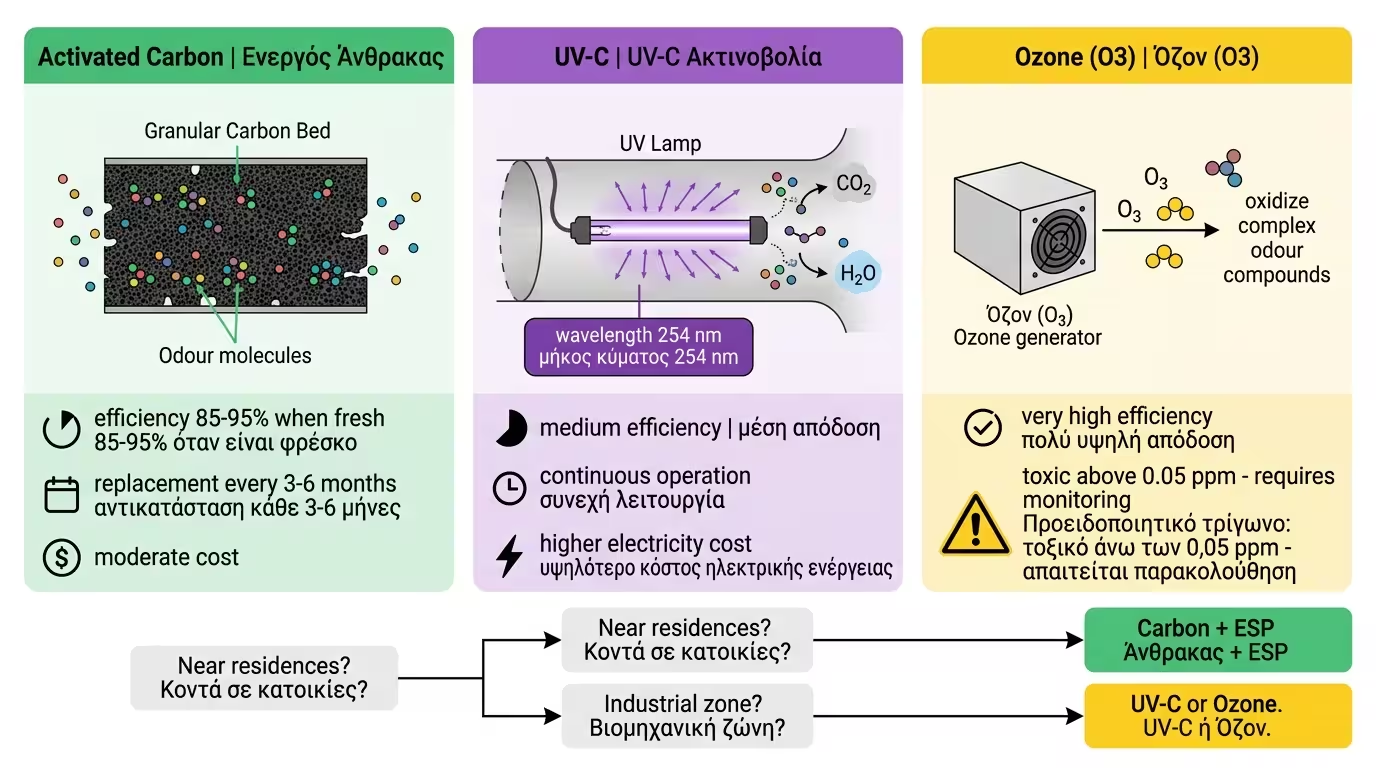
🌿 Activated carbon (carbon filters)
The most widespread technology: air passes through granules or panels of activated carbon. The carbon pores "absorb" odour molecules via adsorption.
Effectiveness: 85-95% when fresh, but drops as the carbon
saturates. Replacement every 3-6 months.
⚡ Electrostatic precipitators (ESP)
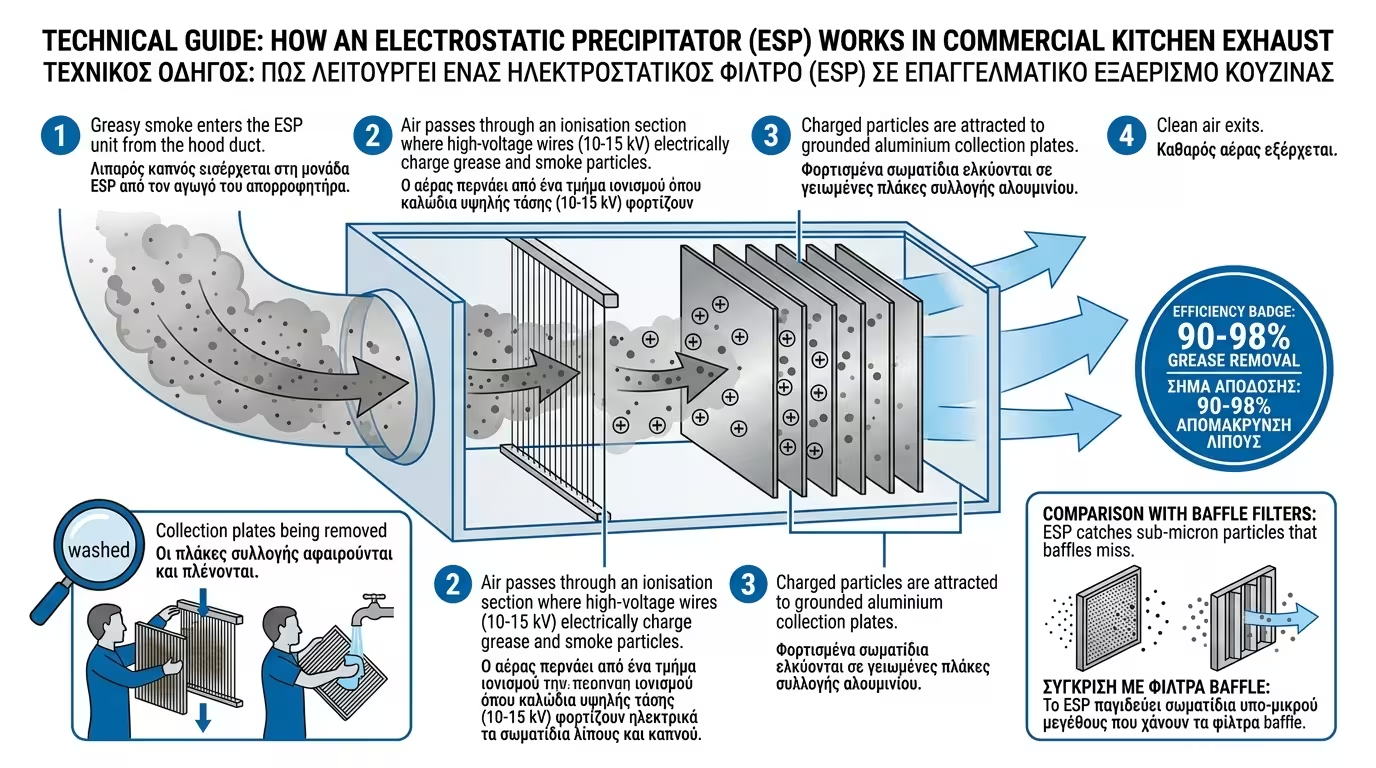
Electrostatic Precipitators (ESP) electrically charge
grease particles and "attract" them onto collection plates. Extremely
effective (90-98% grease removal), washable rather than
replaceable, but require high voltage (10-15 kV) and
regular maintenance.
🧬 UV-C & ozone
UV-C lamps inside the duct break odour molecules with
ultraviolet radiation. Some installations use ozone (O₃) for complete odour oxidation. Caution: Ozone is toxic
at high concentrations and requires strict monitoring within limits (<0.05
ppm in outdoor air).
📋 Legislation & penalties
Health legislation (Ministerial Decision Y1g/GP/oik. 96967/2012) and
the Building Code require: exhaust ducts above roof level, grease filters + odour control in commercial kitchens near residences, and minimum fresh-air supply.
Fines: €500-15,000 and closure of operations.
🍳 The commercial kitchen tolerates no shortcuts. Grease filters, fire
suppression, Makeup Air and odour control are not luxuries - they are a
legal obligation and a lifeline.