Antibacterial Ducts & Plenums: The Secret to Mould‑Free Ventilation

The fear is perfectly rational: "If I fill my ceiling with ducts, won't they breed mould and bacteria over the years?" With old-style aluminium accordion ducts, the answer would be yes. But modern VMC systems use something entirely different.

Flexible HDPE (High-Density Polyethylene) ducts with antistatic and antibacterial coatings (silver ions), combined with plenums (distribution boxes), deliver air cleaner than what you breathe on the street - for decades without cleaning.

1. HDPE Ducts and Their 3 "Magic" Properties

Modern VMC ductwork consists of cylindrical pipes made from High-Density Polyethylene (HDPE), typically 75 mm or 90 mm in diameter. Their corrugated exterior withstands enormous pressure - you can pour concrete over them. The secret lies on the inside.

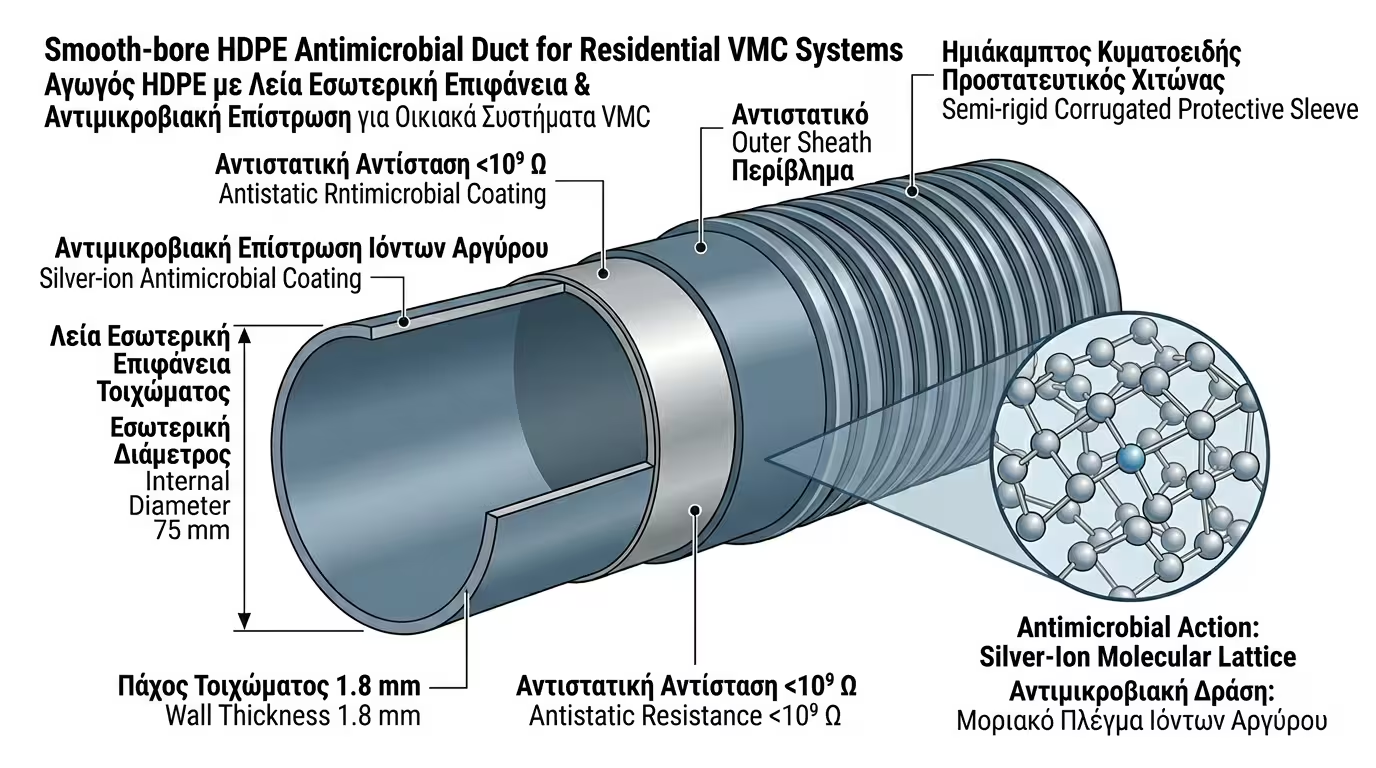
HDPE duct 75mm - smooth interior, antistatic, antibacterial with silver ions

🪞 Ultra-smooth interior

The interior is as smooth as Teflon coating on a premium pan. There are no folds or corrugations - air glides silently and dust has nowhere to accumulate. By contrast, old flexible aluminium ducts (accordion-style) had dozens of folds that trapped everything.
⚡ Antistatic coating

The plastic pipe receives a special treatment so it does not develop static electricity. Electrically charged dust particles are not attracted to the walls - instead of sticking, they continue until they are captured by the central F7 filters in the VMC unit.

🦠 Antibacterial protection

The interior wall is impregnated with silver ions (Ag⁺). Even if some moisture passes through, the surface is "toxic" to micro-organisms. Bacteria and mould cannot colonise and die before establishing a colony inside the duct.

🔨 Pressure resistance

The exterior corrugations provide ring stiffness class SN8. You can step on them, run them through false ceilings, or even embed them in screed floors without deformation. They are designed to last the lifetime of the building.

2. Plenums (Distribution Boxes): The "Octopus" of the System

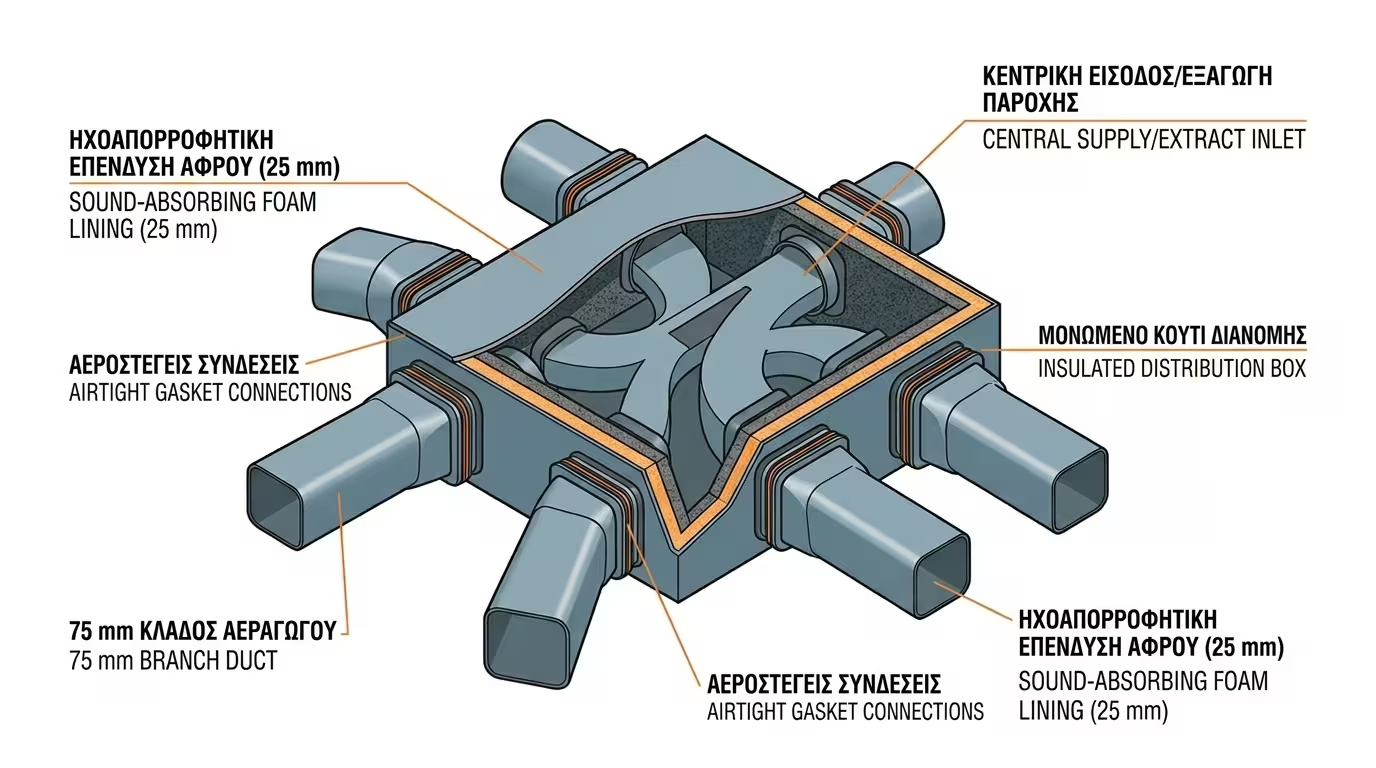
VMC plenum distribution box with sound dampening - star layout, independent ducts

A major problem with older ductwork was acoustic crosstalk: you could hear conversations from one room in another! Modern VMC systems solve this with a star topology using a central distribution box - the Plenum.

📦 How it works

The main trunk duct from the VMC unit terminates in a large, acoustically insulated box (Plenum). From it, separate, independent duct runs go to each room. Every bedroom, living room, or kitchen has its own dedicated line running directly to the Plenum.

🔇 Zero crosstalk

Because the individual ducts never branch into each other along their path, sound cannot "leak" from one room to the next. Additionally, the Plenum itself is lined with acoustic foam, absorbing any motor noise before it reaches the living spaces.

🌟 Star topology

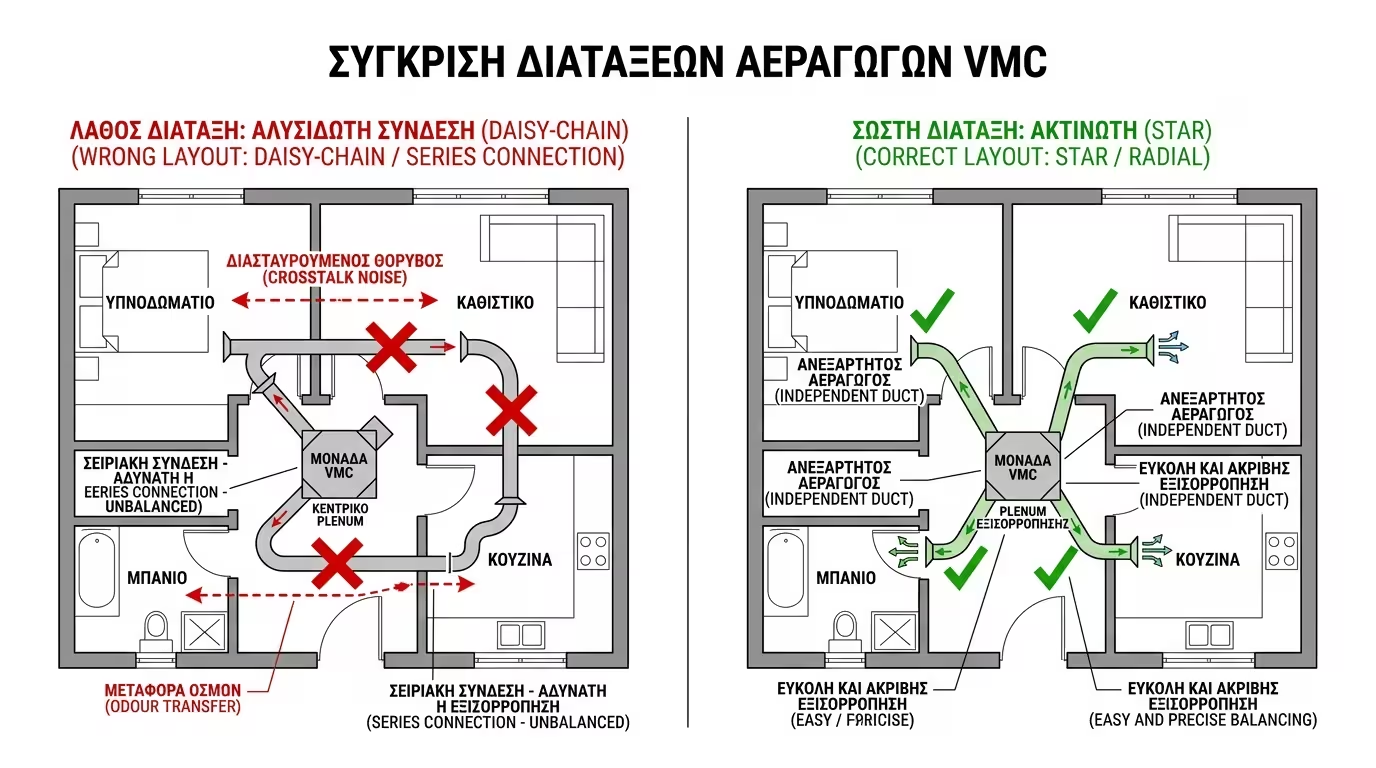
Instead of a "tree" layout (trunk → branches), the star topology means: each duct runs independently from the central Plenum to its designated room. The benefits: balanced airflow, easy adjustment, and zero noise transmission between served rooms.

🔀 Supply & extract plenums

A complete VMC installation uses two plenums: one for the supply side (fresh air → bedrooms, living room) and one for the extract side (stale air ← kitchen, bathroom). Each plenum has its own independent duct network.

3. Why "Star" and Not "Tree"?

In older HVAC installations, a central trunk duct distributed air via T-junctions. This created three serious issues: airflow imbalance (rooms closest to the fan received too much air), sound transfer between rooms, and difficult cleaning with many elbows and fittings.

Star layout diagram - separate line per room, zero crosstalk, balanced airflow

⚖️ Balanced air distribution

Each duct has the same diameter (75/90 mm), so all rooms receive an even volume of fresh air. Fine-tuning is done via dampers at each room grille or at the Plenum port - typically adjustable from 15 to 45 m³/h per duct.

🔕 Acoustic insulation

Thanks to the small bore (75 mm) of each branch and the foam-lined interior of the Plenum, noise in bedrooms drops below 25 dB - practically inaudible. Fan noise never reaches the occupied spaces.

📐 Easy installation

Flexible HDPE pipes bend to a 30 cm radius without any elbow fittings. They run through false ceilings as shallow as 10-15 cm or even within raised floors. This saves time, materials and overall installation cost.

🧩 Push-fit connections

Duct-to-Plenum connections use push-fit fittings with an elastomeric O-ring seal. No glue, no screws, no special tools required. A skilled installer can complete an entire duct network in half a day.

4. Do These Ducts Ever Need Cleaning?

The most common question! Thanks to their antistatic and antibacterial properties, and the F7 filters in the VMC unit, these ducts require no cleaning for 10-15 years of operation. Even after a decade, they show zero signs of dirt accumulation.

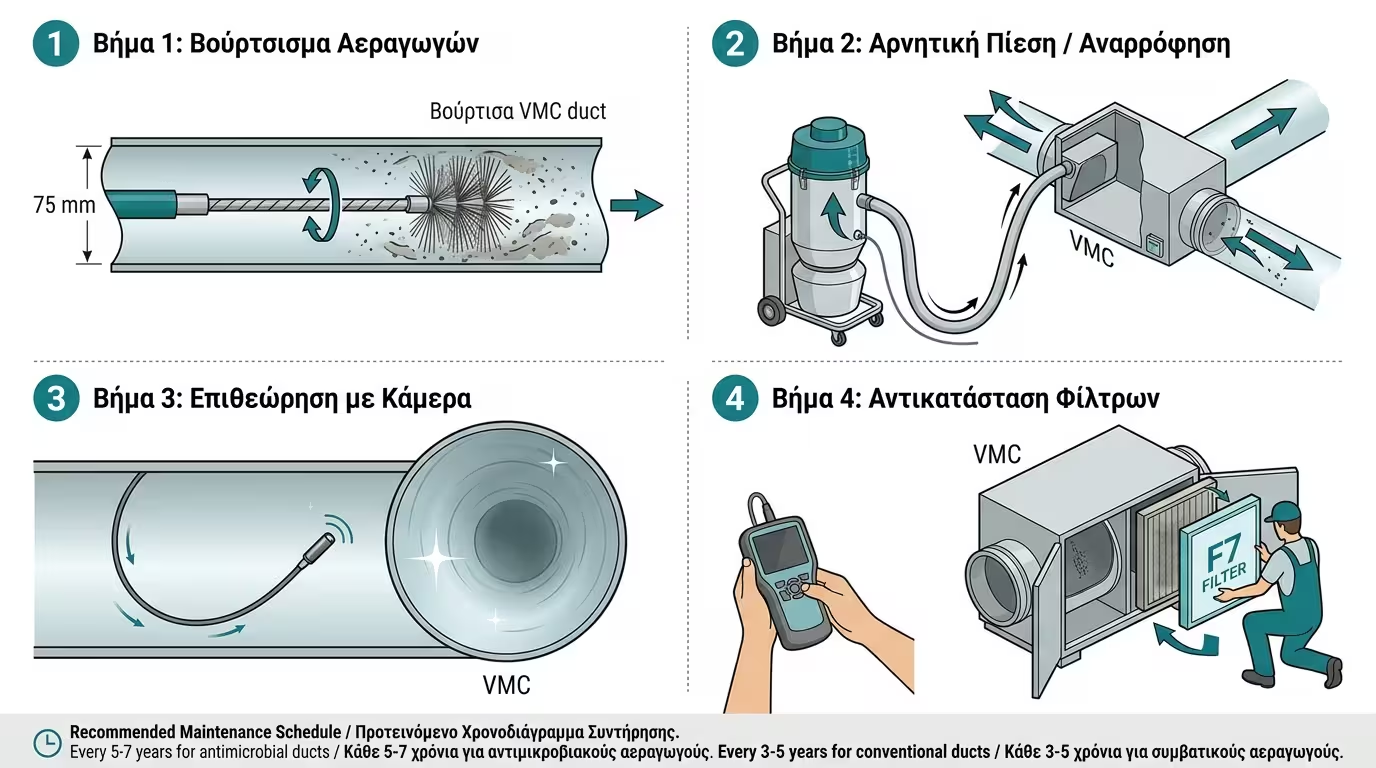
VMC duct cleaning - rotary brush, vacuum, ceiling grille access

🧹 The procedure (if ever needed)

The technician removes the ceiling grille and inserts a flexible rotary brush with soft bristles into the smooth bore. The brush sweeps the entire run from the room to the Plenum, connected to an industrial vacuum that captures everything.

🔄 Filters: the first line of defence

The reason ducts stay clean is the central unit filters: a G4 pre-filter (coarse dust) plus an F7 fine filter (PM2.5, pollen, exhaust soot). By replacing these every 6-12 months, the air entering the ducts is already crystal-clean.

⏱️ Service life

HDPE ducts have a 50+ year lifespan. They do not rust (plastic), do not degrade from moisture and never need replacement. The only serviceable component is the central filters - a cost of just € 20-40 per year.

⚠️ What to avoid

Do not use aluminium accordion ducts or generic PVC pipes in residential VMC systems. They lack antistatic/antibacterial treatment, their folds trap dust, and their acoustic isolation is non-existent.

🏠 Antistatic, antibacterial HDPE ducts in a star layout via Plenums form a sealed, hygienically superior circuit. They convey air silently and ensure the air reaching your lungs is cleaner than what you breathe outdoors.

Related Articles

Preview