Kitchen Range Hoods & Fireplaces: Calculating m³/h, Makeup Air and the
Negative Pressure Trap
A powerful kitchen range hood seems like the perfect solution: it extracts smoke, odours and grease before they spread through the house. But what happens if the hood is too powerful for your home? And what does it have to do with your fireplace?
In a modern, airtight home (with external wall insulation and
latest-generation aluminium windows), starting a large range hood
creates enormous negative pressure. The air the hood
extracts cannot be replaced. This is not just ineffective - it can
become dangerous.
In this guide you will learn how to correctly calculate m³/h, why you
need Makeup Air, and how your range hood can make your
fireplace blow smoke into the living room.
1. Calculating Hood Airflow (m³/h) - The ×10 Rule
The right range hood is not "the most powerful one". It is the one
that matches your space exactly. Many consumers buy
units rated at 700-900 m³/h for a 12 m² kitchen - result: jet-engine
noise, negative pressure and wasted kilowatts.
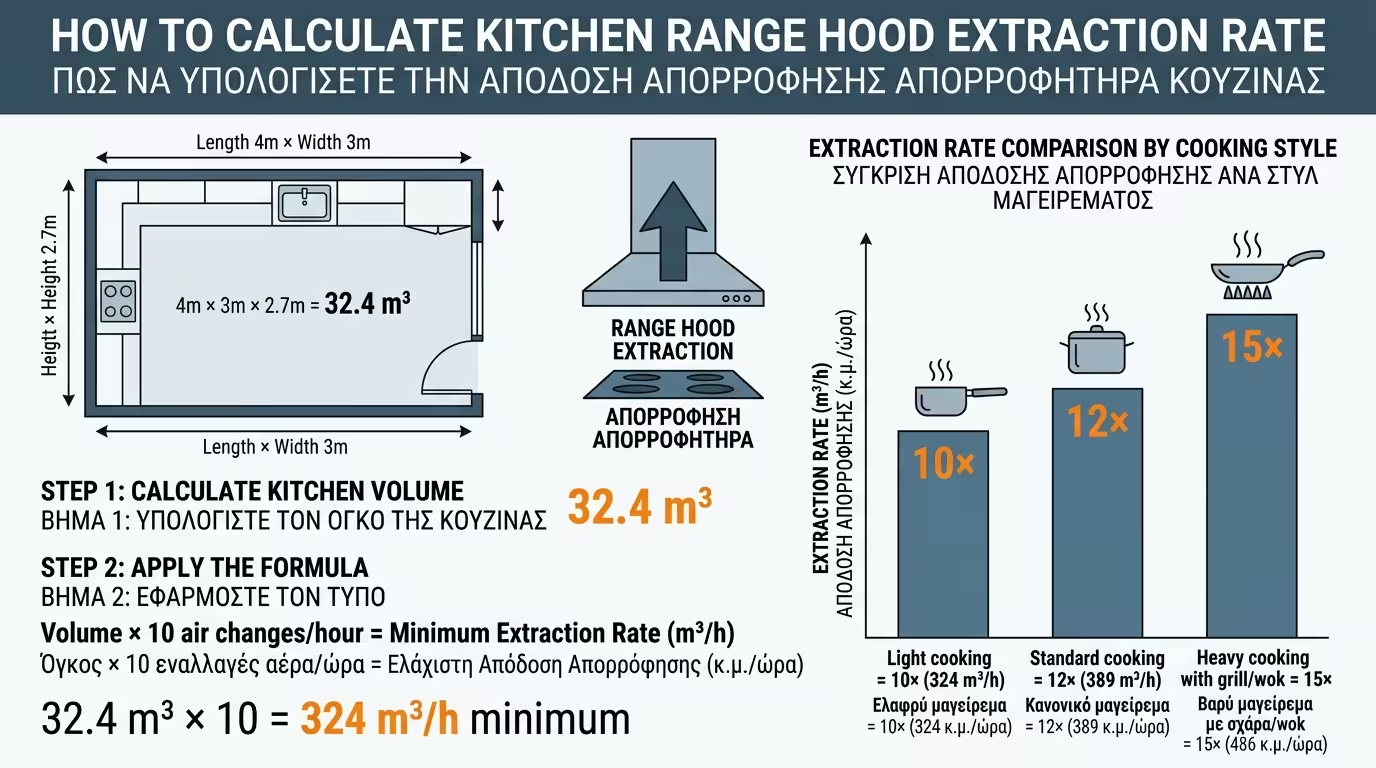
📐 The formula: L × W × H × 10
Take the kitchen dimensions in metres (Length × Width
× Height) to find the volume in cubic metres. Multiply by 10 air changes/hour (ASHRAE standard for residential kitchens). For a kitchen 3×4×2.7 m
= 32.4 m³ → 324 m³/h.
🍳 Cooking type matters
If you fry often or use an indoor grill/charcoal, increase the
multiplier to 12-15. If you mainly boil or use the
oven, 8-10 is enough. Oversizing creates noise and energy waste.
🔇 The noise-airflow relationship
A range hood at high speed can reach 65-75 dB (washing
machine noise). At medium speed, it drops to 50-55 dB. Tip: Buy a slightly larger unit and use the medium speed - less noise, same
effectiveness.
📏 Canopy size
The hood canopy must be equal to or larger than the cooking
hob. Ideally it overhangs by 5-10 cm on each side. If
the canopy is smaller, smoke "escapes" from the sides - whatever m³/h
you specify.
2. The Deadly Danger: Fireplace + Range Hood = Smoke in the Living
Room
This scene plays out every winter in thousands of Greek homes: you
light the fireplace, turn on the range hood, and suddenly smoke starts pouring into the room instead of going up the chimney.
⚠️ The physics of disaster
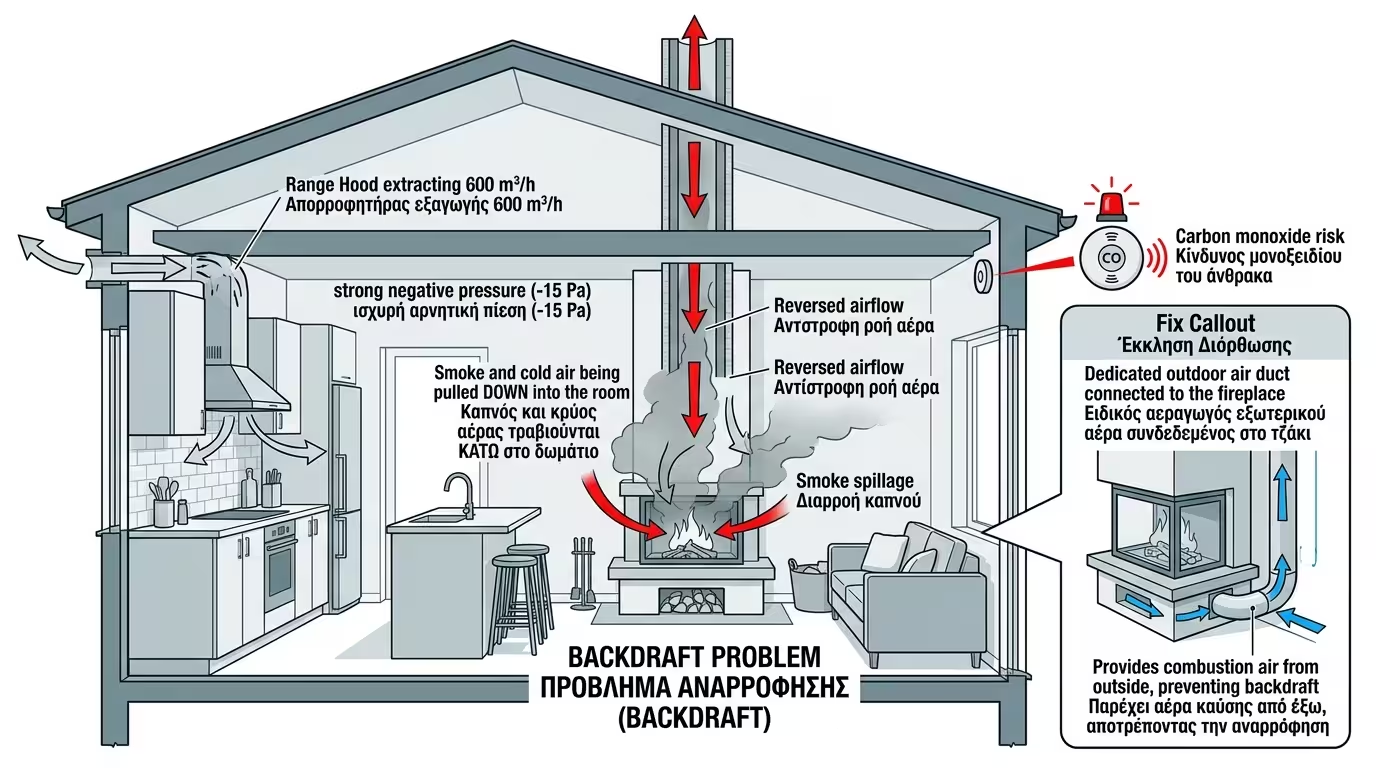
The range hood "sucks" air out of the house. In an airtight
home, there is not enough replacement air. Strong negative pressure builds up. The only open "hole" the air can find to re-enter is the
fireplace flue. Result: air flows backwards through
the chimney, bringing the smoke with it!
🔥 The CO danger
If you use a closed stove (cassette) or pellet stove indoors,
backdraft does not only bring smoke - it brings carbon monoxide (CO), an odourless, invisible and lethal gas. If you
are sleeping nearby, the risk is extremely serious.
🏠 How airtight is your home?
In an old house with timber windows and gaps everywhere
(n50 > 6), air enters freely. But in a renovated home with thermally insulated frames (n50 < 2-3), the range hood has to suck air from somewhere - and
the chimney becomes its only source.
🧪 An example
A 500 m³/h range hood in an open-plan kitchen: in 6 seconds
it sucks up the air volume of a typical 3×4 m room. Without a source of
fresh air, pressure drops below atmospheric, and the open-flame appliance (fireplace, gas stove) reverses immediately.
3. The Solution: Makeup Air - The Air That Goes Out Must Come Back In
The solution is not to buy a smaller hood. The solution is to ensure
an equal intake of fresh air (Makeup Air) for every cubic
metre of air that goes out.
🪟 The simplest solution: A window
Open a window near the range hood (or in the adjacent
room) while cooking. Practical but not automatic:
in winter cold air rushes in, and you will not always remember.
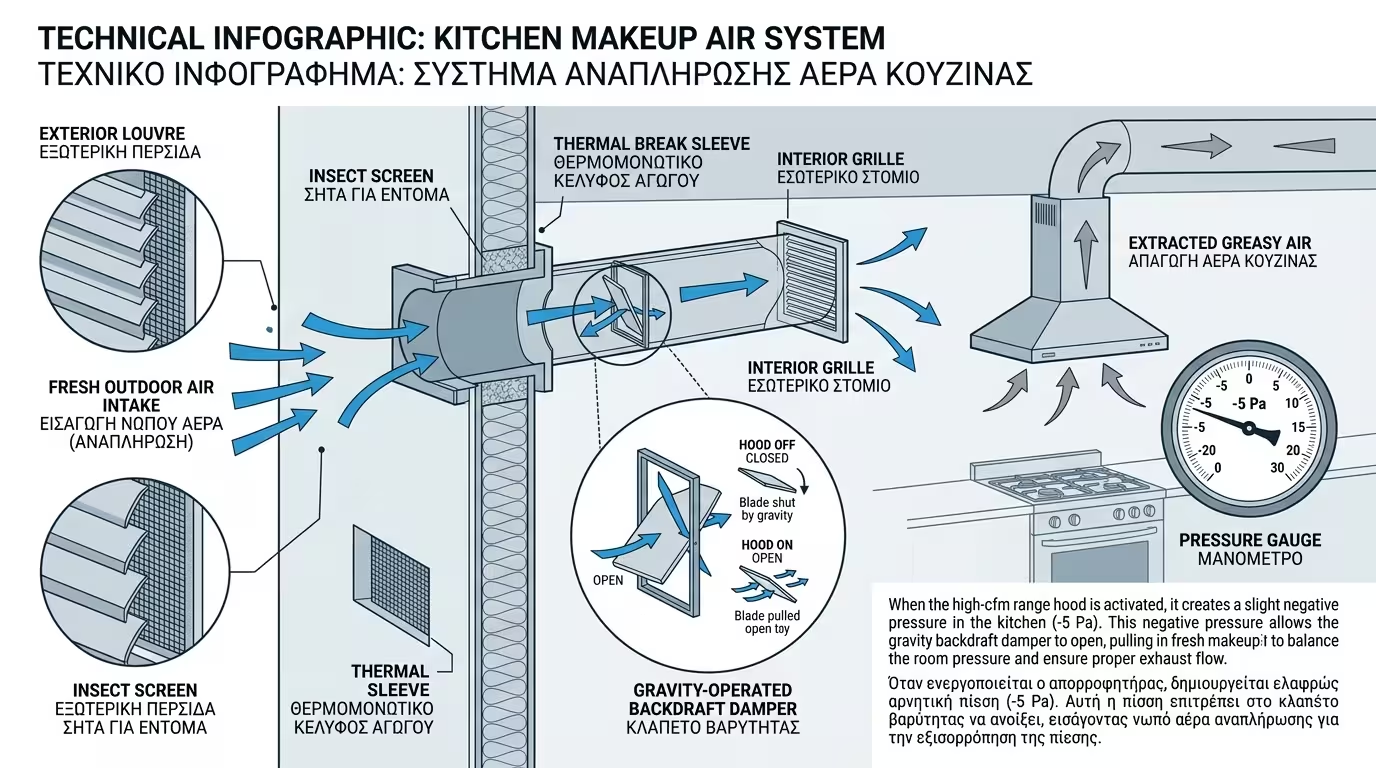
🔲 Permanent wall louvre (Fixed Grille)
A small opening in the external wall (Ø150-200 mm) with
a louvre or metal mesh. The airflow created by the hood automatically draws fresh air through this opening. Cost: €20-50.
Downside: permanently open hole (noise, cold, draught).
🚪 Gravity damper
The ideal solution: a damper on the wall opening
that opens only when the hood runs (due to negative pressure).
When it stops, it closes by itself. Optional extra: an electric servo
motor interlocked with the hood.
📋 Matching rule
The free area of the intake opening must be equal to
or greater than the exhaust outlet. For a 400 m³/h hood,
you need at least a Ø150 mm open outlet. If the intake free area is insufficient,
performance drops dramatically.
4. Open-Plan Kitchen-Living Room: The Large Space Trap
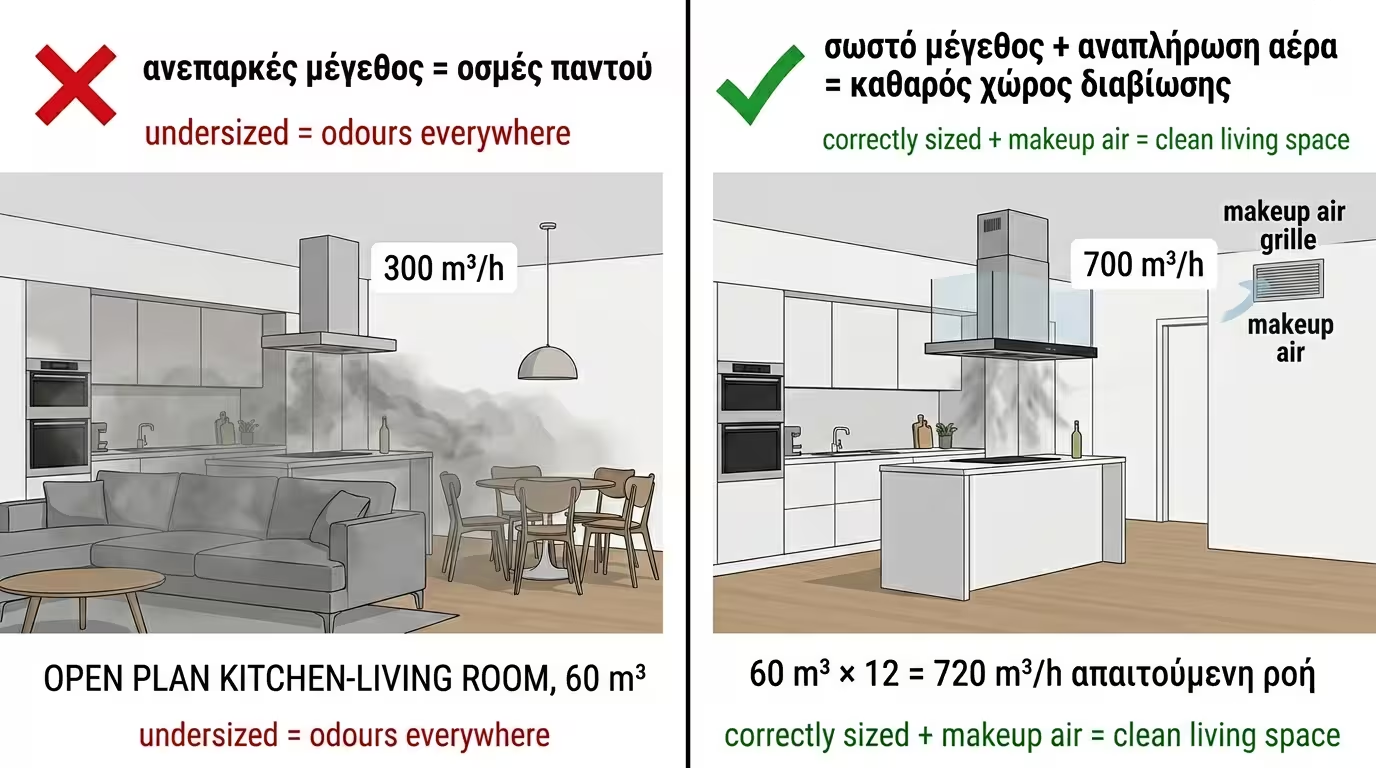
In a combined kitchen-living-dining room (open plan), many people
calculate m³/h based on the entire open space (kitchen
+ living room + dining = 100+ m³). This leads them to machines rated at
700-1000 m³/h - overpowered, noisy and energy-hungry.
📐 The correct calculation
In open plan, calculate only the cooking zone volume, i.e. the space directly above and around the hob. This volume
rarely exceeds 25-35 m³. Multiply by ×10-12 and you
get 250-420 m³/h - not 1000!
🏝️ Kitchen island
A kitchen island with no overhead cabinets is the most challenging type for extraction. Smoke can escape from every side. You need a canopy
20-30 cm larger than the hob, or alternatively downdraft extraction (which pulls smoke downward).
🔄 Recirculation vs extraction
If you cannot run an exhaust duct (e.g. high floor of
an apartment block without a light well), there are recirculation hoods:
the air is filtered (activated carbon) and returned
to the room. Effectiveness: only 50-60% compared to ducted
extraction.
⚡ Energy losses
Every cubic metre of air that exits in winter takes warmth with it. A 400 m³/h hood running for 1 hour "throws away" warm air worth 0.3-0.5 kWh. Correct sizing and makeup air reduce losses to a minimum.
🍳 A bigger range hood ≠ a better range hood. The right hood matches the
kitchen volume, ensures makeup air intake, and does not "choke" your
fireplace or stove.