Cross-Ventilation & The Stack Effect: The "Golden 5-Minute Rule" for Clean Air

You may have the warmest or coolest home, but if the air you breathe is full of moisture, carbon dioxide (CO₂) and odours, your quality of life plummets. Ventilation is not simply "opening a window a crack". It is science.

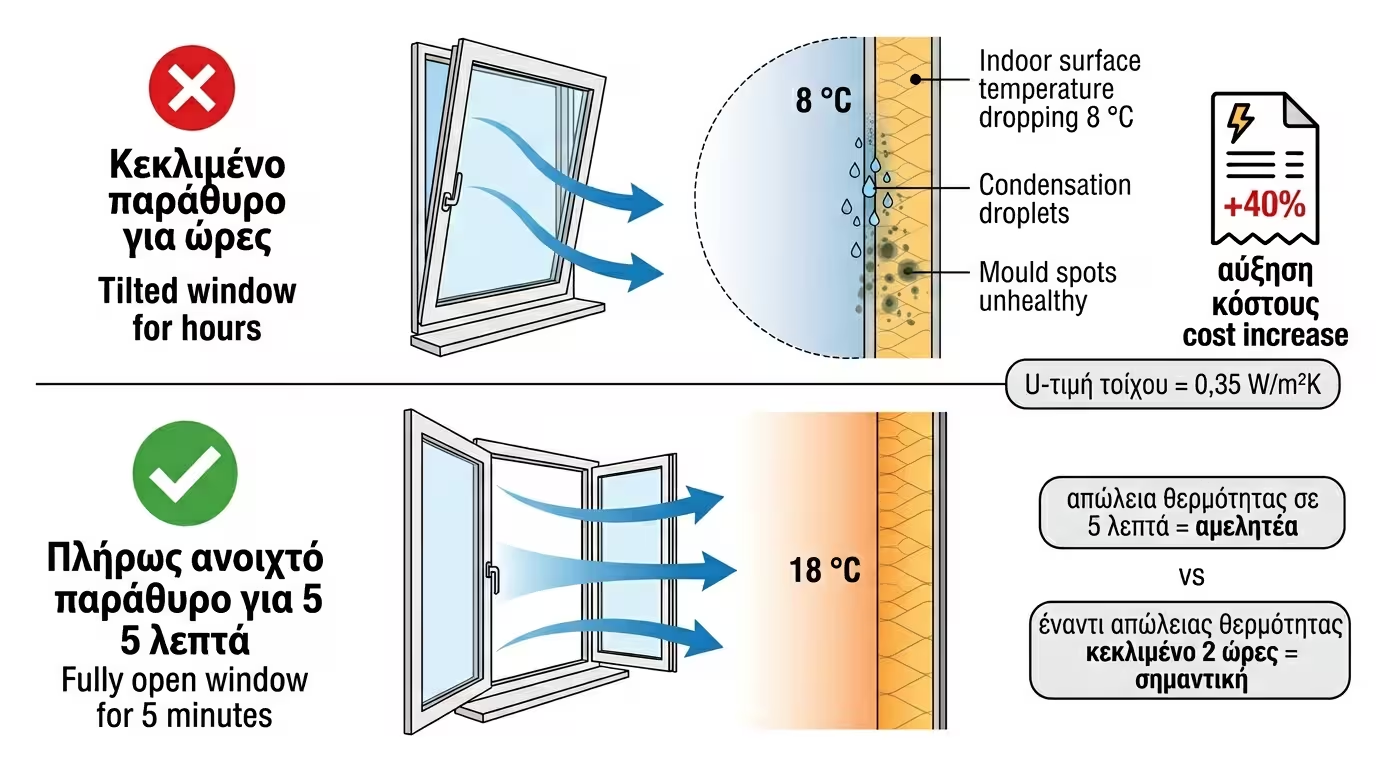
The biggest and most expensive mistake we make in winter is how we ventilate our homes. Many people leave a window in the tilt position for hours. This practice is disastrous: the air is renewed far too slowly, while the walls around the window freeze completely. When you finally close it, the radiator or Heat Pump will have to work for hours to re-heat the frozen masonry.

Proper natural ventilation must be forceful, brief and targeted. Let us look at the two natural phenomena that do all the work for us.

1. Cross-Ventilation (The Power of Wind)

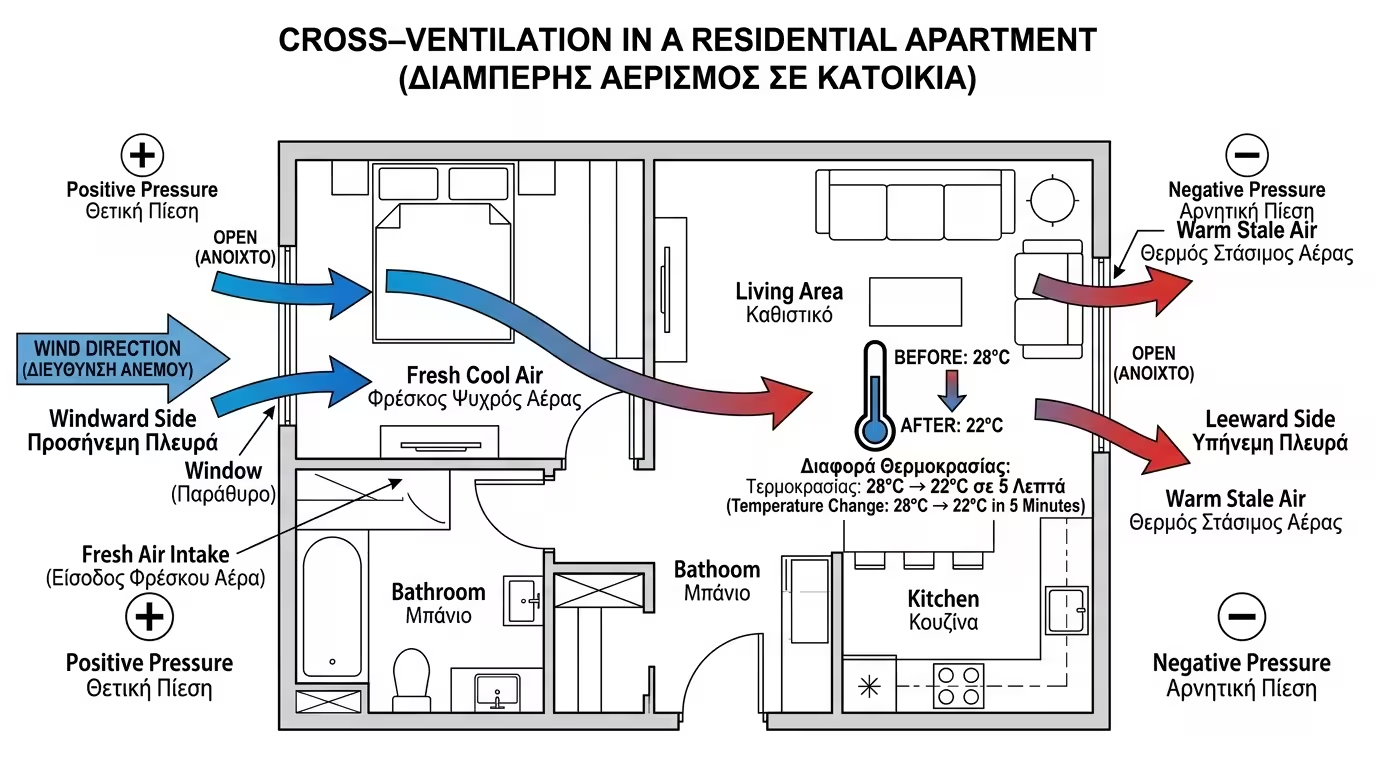
The simplest way to change the air in your home is to create a draft. Open two windows or balcony doors on opposite walls fully (not tilted) - ideally on the north and south sides of your home. Air always moves from high-pressure to low-pressure areas, creating a powerful, horizontal draft that sweeps the stale air away in seconds.

Cross-ventilation - airflow between opposite windows, pressure differences

🌬️ How it works

Even if there is no wind at all outside, the small pressure differences between the two sides of the building create a powerful horizontal current. Cold air enters from the shaded side and hot, stale air is expelled from the sunny side. This natural phenomenon costs absolutely nothing in electricity.
🏠 The ideal method

Open at least two openings on opposite sides fully wide (not tilted). Also open internal doors so the "wind tunnel" forms freely. In 3-5 minutes, 100% of the air in your home will have been completely replaced.

⚠️ What NOT to do

Do not leave a single window tilted for hours. Air renewal through a tilt opening is extremely slow (it takes 1-2 hours instead of 5 minutes), while the walls around the window cool deeply and the heating bill skyrockets. The rule is simple: big opening, short time.

🧱 In a single-aspect flat?

If your windows face only one direction, open a window fully and simultaneously open the front door (or a stairwell window). This creates a secondary airflow through the hallway, sufficient for rapid renewal within a few minutes.

2. The Stack Effect (The Chimney Phenomenon)

What happens if your flat is "blind" on one side or if you live in a maisonette and the air does not move horizontally? Here we exploit gravity and temperature! Warm air (laden with moisture and CO₂) is less dense, lighter, and tends to rise upward. Cool, fresh air is heavy and sits low.

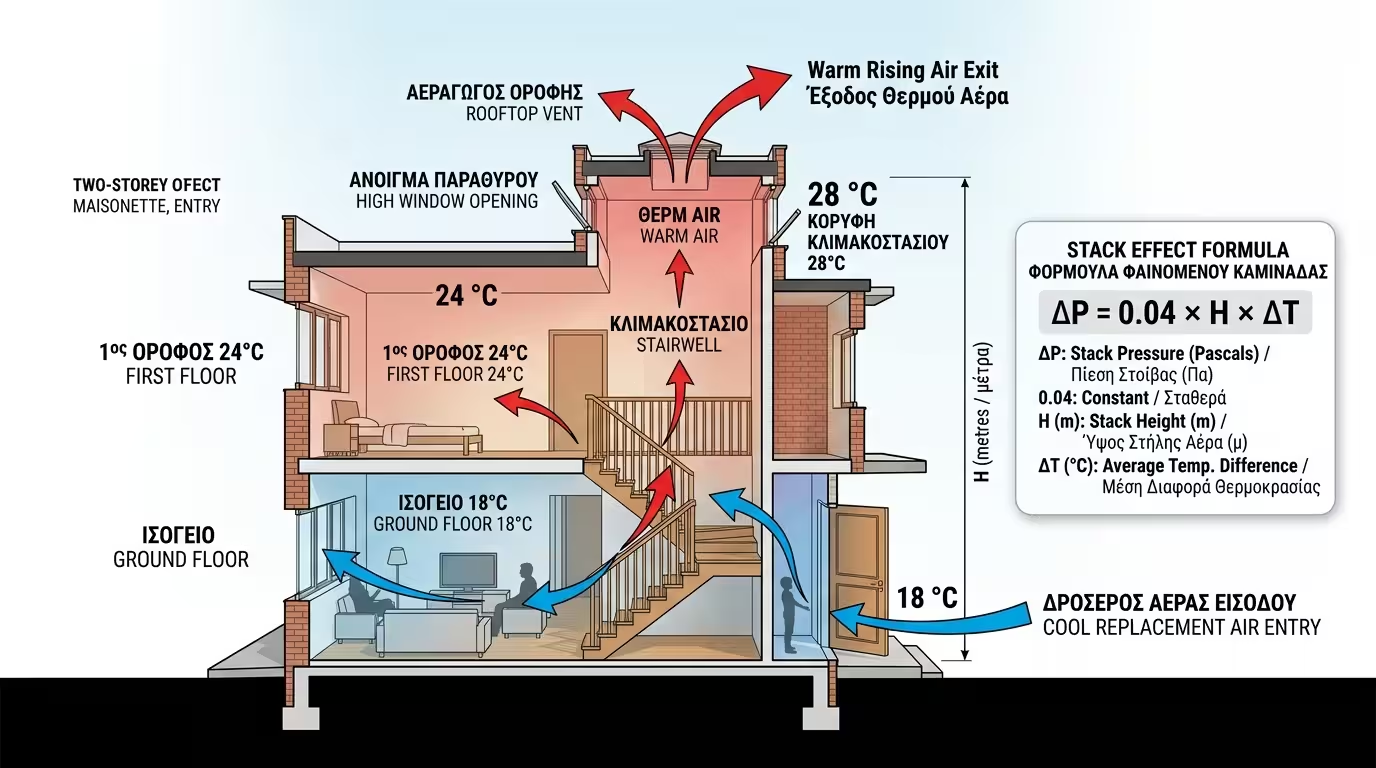
Stack effect in a maisonette - vertical airflow driven by temperature differences

🏗️ Exploiting the vertical flow

If you have a two-storey home (maisonette), open a window on the ground floor fully (ideally on the shaded, north side) and simultaneously open a window or skylight on the top floor or in the roof. The warm air "escapes" forcefully from the high opening - exactly like smoke in a chimney.

🌡️ The physics behind it

Warm air is less dense than cold air. This density difference creates a natural upward force (buoyancy) that pushes it upward. The greater the height difference between the low and high openings, the stronger the effect. This is why a maisonette ventilates more easily than a ground-floor studio.

🔄 Automatic replacement

As the warm air leaves from above, it creates negative pressure inside the home. This negative pressure automatically sucks in fresh, cool air through the ground-floor window. The home ventilates vertically without any fan - using only the power of thermodynamics!

🪟 The skylight technique

Houses with an internal stairwell and a roof skylight form the ideal "chimney flue". Opening just the skylight and a low window creates a forceful vertical draft even in zero-wind conditions. It is the most effective natural solution for multi-storey buildings.

3. The Golden 5-Minute Rule (And the Secret of Thermal Mass)

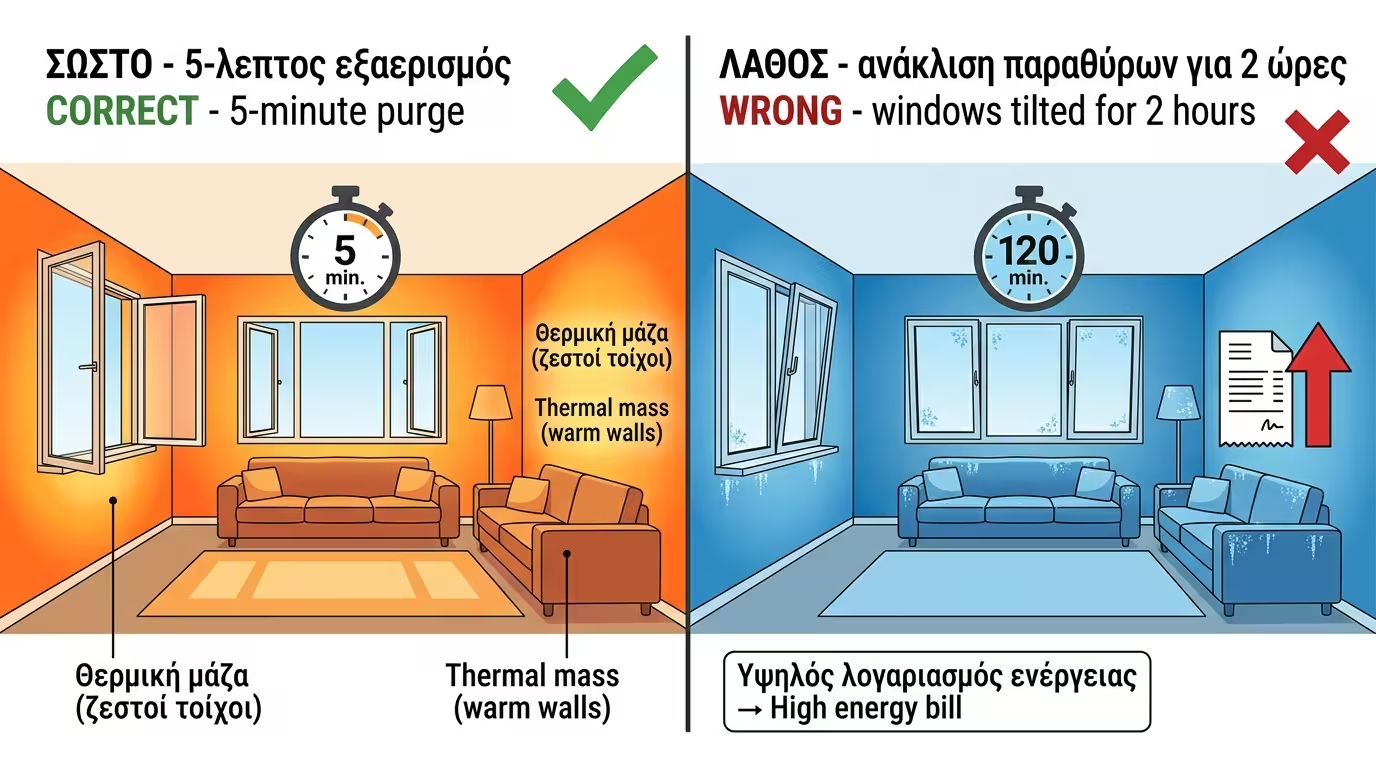
5-minute ventilation rule - thermal mass of walls and furniture, rapid air renewal

By applying Cross-Ventilation or the Stack Effect, 5 to 10 minutes are more than enough to replace 100% of the air in your home. And here lies the secret of economy: Thermal Mass.

🧱 The warmth "hides" in the walls

When your home is warm, the heat is not just in the air. It is "stored" in the walls, furniture, floors and sofas. These materials act as huge thermal energy reservoirs that take hours to cool - far longer than the 5 minutes of a ventilation burst.

⏱️ The 5 minutes that save everything

By opening the windows fully wide for just 5 minutes, you expel all the stale air (CO₂, moisture, germs). However, the furniture and walls do not have time to cool in such a short period! As soon as you close the windows, the new clean (but cold) air warms up almost instantly - within 2-3 minutes.

💶 The savings in numbers

The thermal energy lost in 5 minutes of fully-open windows is minimal - equivalent to just a few minutes of radiator operation. By contrast, a window tilted for 2 hours costs 10-20 times more energy, because the walls have time to freeze and the heating runs non-stop!

📋 The ventilation schedule

Ideal schedule: 2-3 times a day, 5 minutes each time, with fully open windows and doors. Morning (right after waking up), midday (after cooking) and evening (before sleep). This routine eliminates mould, keeps CO₂ low and protects your heated space.

4. Summary: The "Classic" Mistakes and the Right Practice

Forget the half-open windows left that way for hours. Create a forceful draft (horizontal or vertical) for 5 minutes, 2-3 times a day. It is the healthiest, most natural and most economical way to banish mould and viruses from your home while protecting your heating bill.

Wrong window tilt - frozen wall, wasted heating energy

❌ Wrong: Tilt for hours

Air renewal through a tilt opening is 30-40 times slower than cross-ventilation. The walls around the window cool deeply, the temperature drops noticeably and the heating works overtime for nothing. You are literally "heating the neighbourhood".

✅ Right: 5-minute draft

Open ALL windows fully on opposite sides, leave internal doors open. In 5 minutes the air is fully renewed. Close everything. Within 2-3 minutes the space will be warm again thanks to thermal mass.

🌡️ Mould "loves" stagnation

Mould grows in spaces with consistently high humidity (>65%) and minimal air movement. Proper ventilation 3 times/day "flushes" the moist air, drops relative humidity below 50-55% and deprives fungi of their growth conditions.

🦠 Viruses and air quality

A ventilated room consistently registers low CO₂ levels (<800 ppm). Airborne viruses (influenza, COVID-19) are dramatically diluted with every ventilation cycle. In an unventilated bedroom at night, CO₂ levels can exceed 2,500 ppm - well above "alarm" thresholds.

🌬️ Natural ventilation is the first line of defence against mould, viruses and fatigue. Just 5 minutes, 3 times a day - and your home will "breathe" like new.

Related Articles

Preview