🔬 How it works
The thin plastic/aluminium plates transfer heat but block water vapour. The outgoing warm air (e.g. 20 °C, 60% RH) cools inside the exchanger - moisture condenses into water that drips into a condensate tray and drains to the sewer.
When you decide to install Heat Recovery Ventilation (VMC), you face a critical dilemma: machines are divided into HRV (Sensible Heat Recovery) and ERV (Enthalpy Recovery). The difference lies in the exchanger material and how it handles humidity.
The right choice can save you from a dry throat in winter and suffocating humidity in summer. In climates like Greece's, the answer isn't obvious - but after this article you'll know exactly what you need.
The exchanger in an HRV is made of plastic or aluminium - absolutely sealed. It transfers only temperature (sensible heat) from the outgoing to the incoming air. Humidity does not pass - it is expelled 100%, condensing inside the machine and draining to the sewer via a siphon.
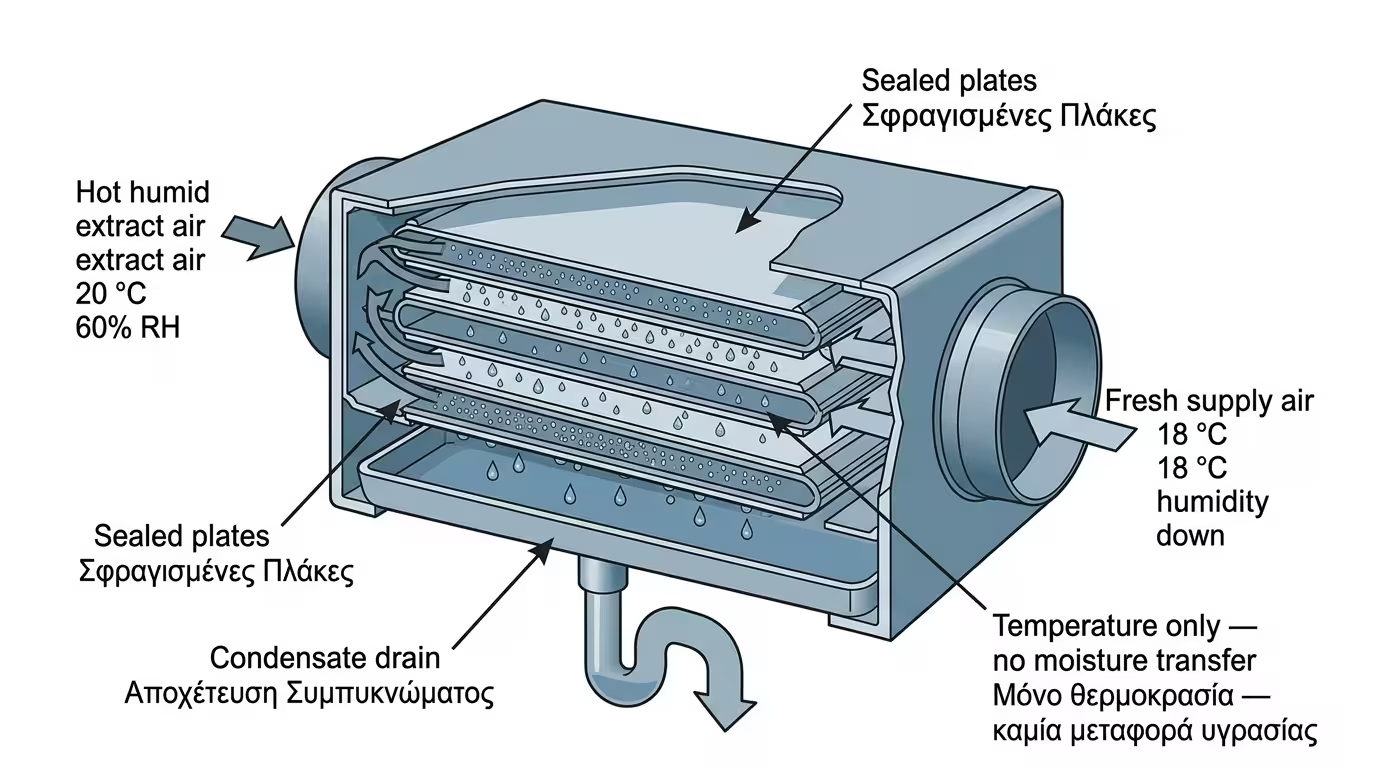
The thin plastic/aluminium plates transfer heat but block water vapour. The outgoing warm air (e.g. 20 °C, 60% RH) cools inside the exchanger - moisture condenses into water that drips into a condensate tray and drains to the sewer.
Aggressive drying: ideal for homes with permanent extreme humidity problems (mould, wet walls). Lower cost: the plastic exchanger costs 20-30% less than the porous ERV membrane. Durability: easily washable, doesn't degrade.
In climates without extreme humidity (like Greece), the HRV can over-dry the home in winter (humidity below 25-30% - dry throat, cracked wooden floors, discomfort). In summer, it allows outdoor humidity (70% RH) to enter unchecked, straining the air conditioning.
Northern Europe (Scandinavia, UK, Belgium) where winters are extremely humid and homes suffer from mould. Also in swimming pools, laundries, industrial kitchens - spaces with extreme moisture production that must be fully removed.
The ERV exchanger is not made of hard plastic but of a special, porous membrane (polymeric or cellulose-based). It transfers temperature as well as humidity (latent heat)! The membrane works like a "sponge" - it allows water vapour to pass but blocks odours and germs from mixing.
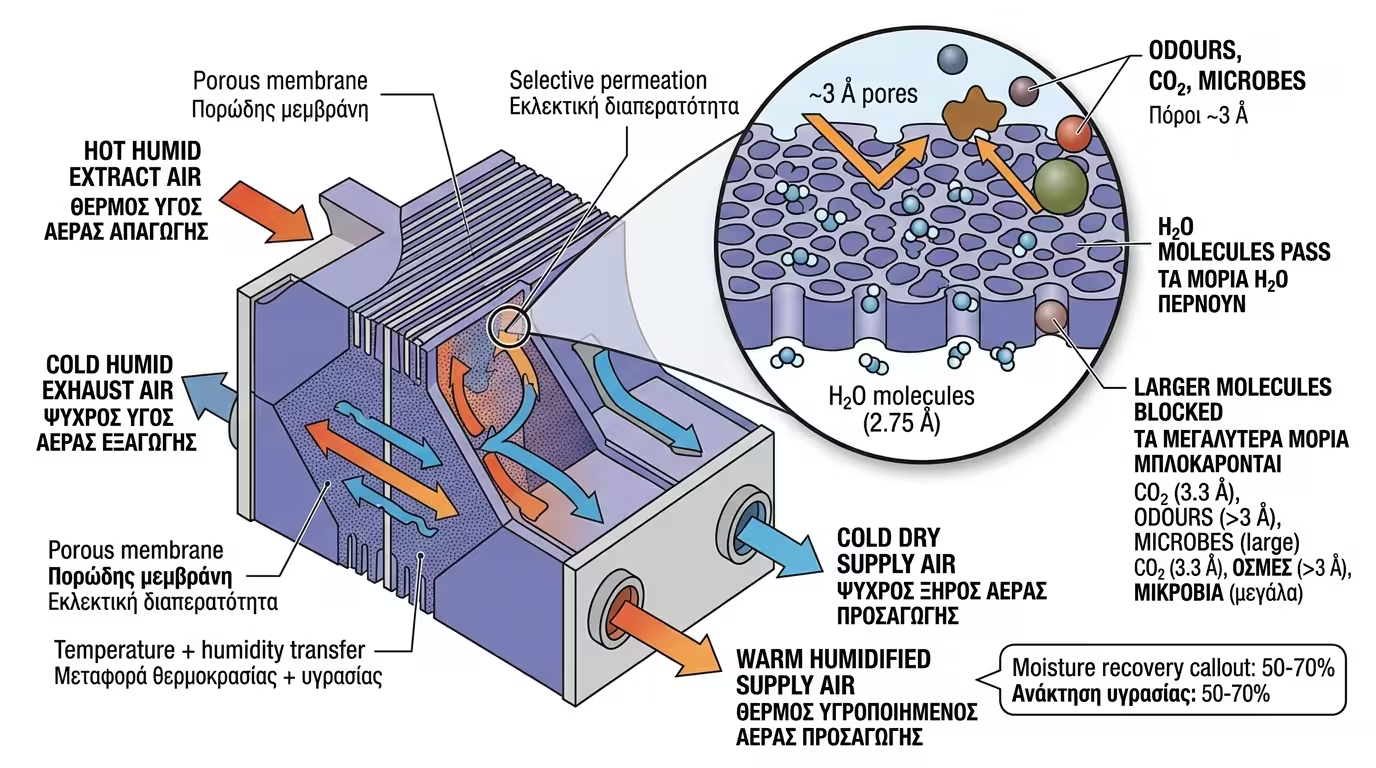
The microscopic pores (~3 Å) allow H₂O molecules (2.75 Å) to pass but block larger molecules (odours, CO₂, microbes). This technology is called selective permeation. Result: moisture recovery of 50-70% without "contaminating" the fresh air.
Humidity balance: maintains indoor humidity at healthy levels (40-55% RH) winter and summer. Greater total savings: recovers both sensible and latent heat - in warm/humid climates, savings exceed HRV by 20-40%.
Higher cost: the membrane costs 20-30% more. Sensitivity: cannot be washed with water (only dry wiping or replacement every 5-8 years). In extremely humid environments (pools, industrial laundries) it doesn't dry enough.
Sensible: the energy that changes temperature (°C). Latent: the energy "hidden" in water vapour - dehumidifying 1 kg of air moisture requires 2,450 kJ! That's why moisture recovery (ERV) saves dramatically more energy in humid climates like Greece's.
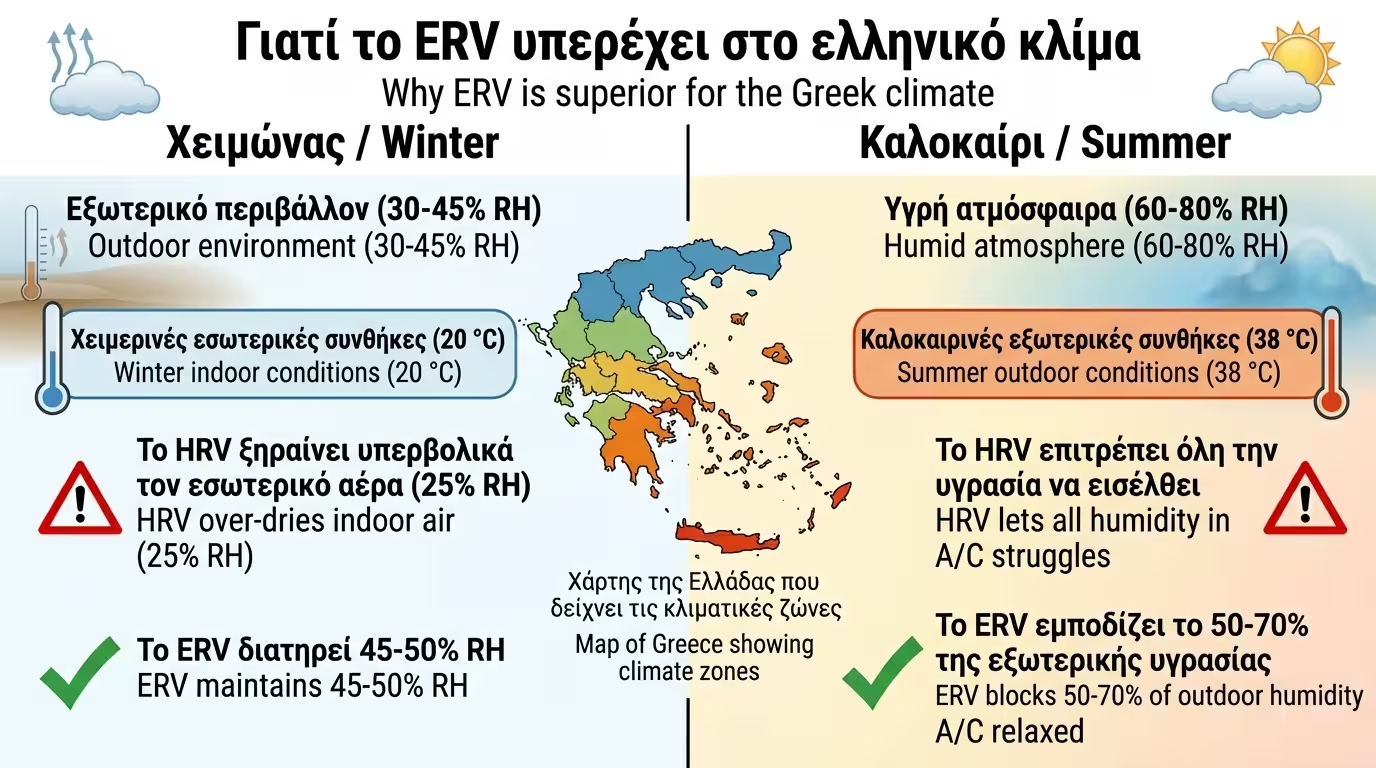
Greece has a mixed climate: relatively dry winters (30-45% RH outdoors) and warm, humid summers (60-80% RH). This means we need a system that retains moisture in winter and blocks it in summer - and that is exactly what the ERV does.
With an HRV in Greece, winters aren't humid enough - the machine throws all indoor moisture out. Living room humidity can drop to 25-30%: dry throat, cracked wooden floors, discomfort. With ERV, the machine "grabs" 60% of the indoor moisture and puts it back, maintaining a healthy 45-50% RH.
August, A/C set to 25 °C, outside 38 °C with 70% humidity. With HRV, cool air enters but so does the suffocating humidity - the A/C struggles terribly to dehumidify. With ERV, the membrane "blocks" the outdoor humidity, introducing cool, dry, fresh oxygen. The A/C relaxes.
On the islands, humidity is even more extreme (70-85% RH in summer). Here ERV is the only option - an HRV would flood the home with sea humidity, damaging wood, electronics and creating mould in wardrobes. The ERV membrane blocks 50-70% of this moisture.
In areas with very cold, humid winters (Florina, Kastoria, Metsovo) and permanent mould problems, an HRV may be justified - since aggressive drying helps. However, even there, an ERV won't cause problems as it still dries - just less aggressively.
HRV is slightly cheaper and ideal if your home has a permanent, serious extreme humidity problem. For most modern, well-insulated homes in Greece - where we need to keep summer humidity out and avoid over-drying in winter - ERV (Enthalpy Recovery) is the undisputed winner.
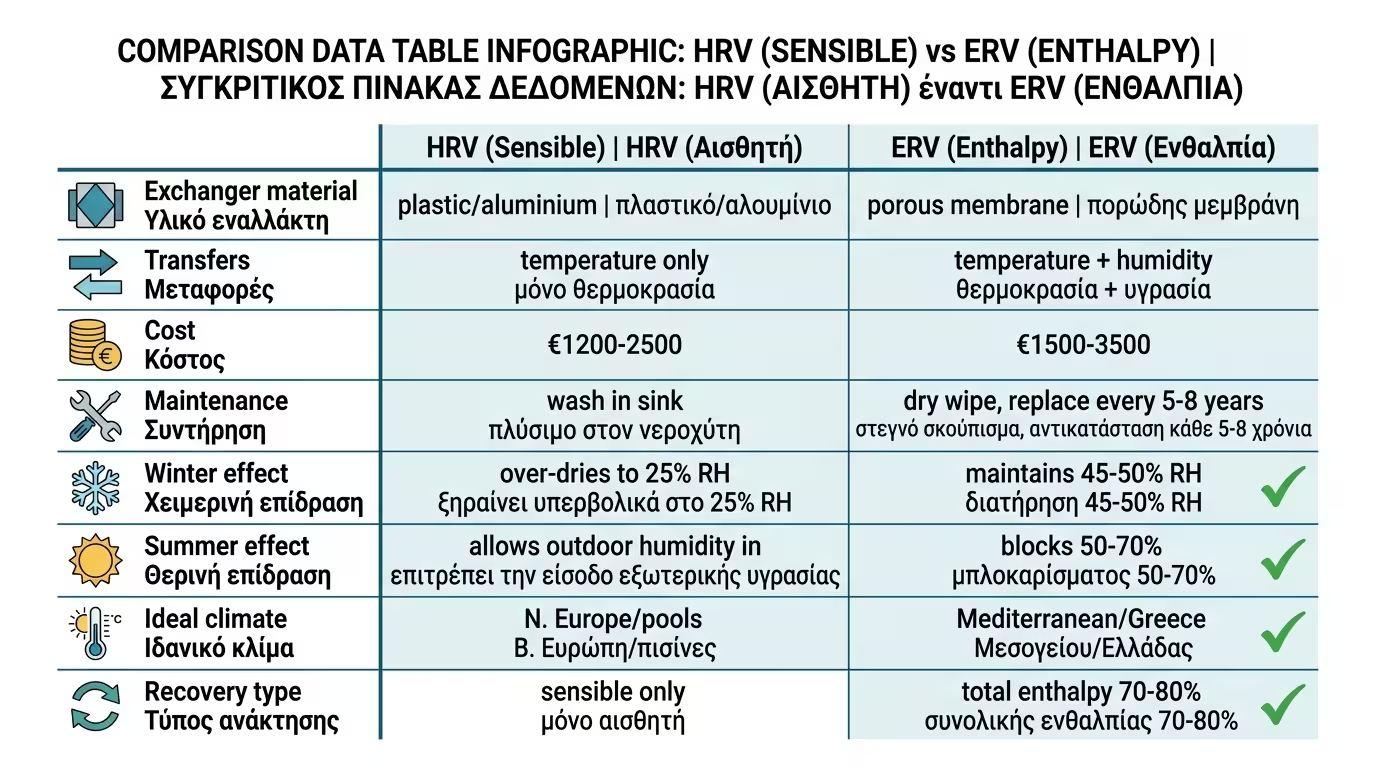
HRV: €1,200-2,500 (unit + exchanger). ERV: €1,500-3,500 (membrane costs 20-30% more). The €200-800 difference pays back in 2-3 years through lower cooling bills (less dehumidification) and zero need for a winter humidifier.
A modern ERV recovers 70-80% of total enthalpy (sensible + latent). In a Greek summer (38 °C, 70% RH), this means fresh air enters the home at 28 °C with 45% RH instead of 38 °C with 70% RH - huge relief for the air conditioning.
HRV: wash in the sink every 6 months - lasts forever. ERV: dry wipe (or low-pressure vacuum), membrane replacement every 5-8 years (cost €150-300). Both require filter changes every 3-6 months.
Choose HRV if: you live in very humid climate (N. Europe), have permanent mould, or the space produces extreme moisture (pool, laundry). Choose ERV if: you live in Greece, want balanced climate winter and summer, and don't want a humidifier/dehumidifier.
💧 In the Greek climate, ERV perfectly balances temperature and humidity - saving you from humidifiers in winter and relieving the A/C from dehumidification in summer.
Return to category.
Go to categoryReturn to the central guide.
Go to guide